
اخبار الكويت- وطن نيوز
اخر اخبار الكويت اليوم – اخبار الكويت العاجلة
W6nnews.com ==== وطن === تاريخ النشر – 2026-04-29 22:00:00
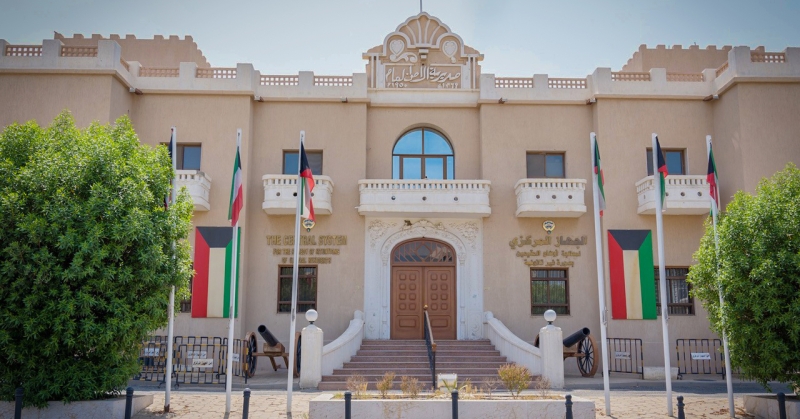
Within the framework of the continuing efforts made by the State of Kuwait to address the issue of illegal residents, according to a balanced approach that takes into account the humanitarian and legal dimensions, the Central Agency for Addressing the Situations of Illegal Residents reviewed its most prominent initiatives and services that it provided to this category, during 2024-2025, stressing its keenness to address the issue with an institutional approach that reflects the values of justice, fairness and the preservation of human dignity. In this context, the agency issued a documentary booklet on the services and facilities provided, highlighting its efforts in the areas of care. Social, education, health, labor and civil services, in addition to humanitarian initiatives and programs to amend legal status, reflecting Kuwait’s commitment to managing this file wisely and responsibly, and enhancing cooperation with government agencies and relevant institutions locally and internationally. The CEO of the Central Agency for Resolving the Conditions of Illegal Residents, Saleh Yousef Al-Fadala, said in the introduction to the booklet, “The Central Agency for Resolving the Conditions of Illegal Residents was established to carry upon itself a lofty national mission and a great historical trust, which is to address an issue with intertwined humanitarian, legal, and social dimensions in an effort to preserve national identity while preserving human dignity.” He added, “Since its inception, the agency has adopted a clear vision and a solid institutional approach based on the constitution, laws, and regulations, and is based on action.” “The agency was able, thanks to the directives of the senior political leadership and then the efforts of its employees, to achieve tangible achievements embodied in addressing the conditions of many groups and adjusting their paths.” Humanitarian care… 151,541 dinars for 322 inmates. The first chapter of the booklet deals with the care of this group, in a firm humanitarian spirit, and inspired by the values of mercy and solidarity established by the true Islamic religion. The central agency pays special attention to the groups most in need, primarily people with disabilities, the sick, the elderly, and the like. Statistics indicate the number of illegal residents in social care homes for the year 2024, where the financial cost amounted to 151,541 dinars, distributed among juvenile care services, elderly care, and family nursery services in residential and non-residential homes, for a total of 322 people. The number of juvenile care in residential homes reached 44. In the non-residential homes, there were 198 in “judicial examination” and 71 “social research”, bringing the total service provided to 313 inmates, at a financial cost of 42,151 dinars. In the elderly care service in residential homes, the service was provided to 3 cases at a financial cost of 71,950 dinars. As for the family nursery service in residential homes, there are 5 inmates, and one case in non-residential homes, with a total of 6 cases. The financial cost of the service provided to them amounts to 37,350 dinars. In continuation of the humanitarian care provided by the Public Authority for Disabled Persons to beneficiary families of the category of illegal residents for the year 2024, the number of people with disabilities from a Kuwaiti mother reached 265 cases, the number of those who were issued a disability certificate was 1927, and the number of those who were issued a disability identity card. 1,506, and the number of people who were issued a traffic plate was 699, in addition to 234 people who were issued a To Whom It May Concern certificate. The total number of people with disabilities from the category of illegal residents reached 2020, and the financial cost of aid amounted to 78,357 dinars. Aid… 119 million dinars for 13,031 families. In Chapter Seven, the booklet dealt with charitable initiatives to help the category of illegal residents, as the Central Agency continued its efforts in cooperation with government agencies and charitable committees. And voluntary institutions to provide various beneficiary cases and enhance their integration and stability within society. Forms of support – whether financial, in-kind or service, which contribute to raising the standard of living of families. This cooperation was embodied in realistic projects and initiatives that yielded tangible results during the year 2024. The statistics of the assistance provided by the Zakat House to the category of illegal residents for the year 2024 stand out, as 17,323 families benefited from the in-kind assistance at a cost of 424,370 dinars. As for financial aid, it reached 13,031 families at a cost of 11,914,220 dinars. Health… 194,903 visitors to “Jahra Incidents.” In the fourth chapter, the booklet touched on health services, as the state pays special attention to the public health sector, in recognition of its importance in human protection and community development. The statistics on the number of visitors to Al-Jahra Hospital during the year 2024 indicate that accident visitors reached 194,903 visitors, external operations visitors 186,273, and admission cases amounted to 27,781 people. The statistics of surgical operations performed at Al-Sabah Hospital for non-Kuwaitis indicate that 6,208 operations were performed, of which the number of males was 4,127, and the number of females was 2,081, while the movement of patients to Al-Sabah Hospital for all treatment departments for non-Kuwaitis in the year 2024, reaching 5027, with 4900 deaths and 97 deaths. Adjusting the situation… a step towards stability. Chapter Eight explained the mechanisms and procedures followed by the central apparatus to enable individuals to correct their legal status within the state, in a way that preserves their dignity and contributes to the organization of community life and public services, with the aim of enabling an illegal resident to apply for an organized legal path that allows him to complete his official transactions and obtain regular residency by documenting his legal status based on what is proven by official documents, taking into account the principles of justice. And fairness and the requirements of national sovereignty. With regard to the Central Agency’s part of research and auditing, the booklet stated that “through the research efforts conducted by the Central Agency in databases and old records at various state institutions, birth reports, port and passport records, population census statistics…etc.,” the agency noted cases indicating the existence of official documents indicating that illegal residents belonged to their mother nationalities. It was found that some individuals had, in previous periods, hidden or disposed of these documents, seeking to show themselves that they were They do not hold any known nationality, in the hope of obtaining benefits in one way or another. Based on these data, the Central Agency follows purely administrative and organizational procedures aimed at recovering the truth and correcting the data, which include: matching available records and documents between the various official authorities to determine the person’s identity and affiliation, correcting administrative records in light of the available evidence, and updating individuals’ data in accordance with their legal status. This path aims to confirm true affiliation and correct the administrative situation without prejudice to human rights, while ensuring justice in dealing and preventing unjust use. In the third chapter, the booklet dealt with the issue of social solidarity, as it stated that the Central Agency for Addressing the Situations of Illegal Residents provides a package of social services that contribute to strengthening family cohesion and stability, through civil transactions, the most prominent of which is the issuance of marriage contracts, birth certificates, and other civil transactions that guarantee the preservation of rights and official documentation. According to the Ministry of Justice’s statistics for the total number of legal transactions and documentation for the year 2024, marriage transactions and certifications amounted to 1028, divorce 510, and review 47, while heir registration transactions reached 101, legal division 126, and official notifications 13 thousand. International cooperation… Strengthening the principle of transparency and trust. In Chapter Nine, the handbook addresses the agency’s efforts to cooperate with international organizations, which are partnerships that enhance presence and document credibility, as the Central Agency for Addressing the Situations of Illegal Residents participates in its capacity as a member of the Permanent Committee for Preparing National Human Rights Reports, within the national team charged with following up on the obligations of the State of Kuwait before international organizations related to human rights. And to In addition, the Central Agency is responsible for responding to inquiries and correspondence received from embassies and human rights organizations regarding the conditions of illegal residents, in coordination with the Ministry of Foreign Affairs, in order to enhance the principle of transparency and confirm confidence in the national efforts being made. The booklet stated that the most prominent indication of these positive contributions is the honorable results achieved in the fourth comprehensive periodic report that was presented in Geneva, where 286 recommendations were fully accepted, and 4 recommendations were partially accepted out of 290 recommendations, which reflects The prestigious position enjoyed by the State of Kuwait and international appreciation for its efforts to promote and protect human rights. Work… Employment of 484 people. Chapter Five touched on work, where it noted Kuwait’s keenness to promote the values of justice and production, and out of the belief that work represents the basis of human dignity and the pillar of social stability. The state attaches special importance to providing job opportunities in accordance with legal controls that preserve rights and establish individual responsibility. In this context, the Central Agency for Redressing the Situations of Illegal Residents plays a regulatory role aimed at facilitating work opportunities for members of this category in state institutions and the sector. The private sector, in coordination with the relevant authorities, and in a manner that does not conflict with the laws regulating the labor market in the country. Statistics on the number of illegally resident workers in the public and private sectors during the year 2024 indicate that the tangible results have been achieved in this field, as the statistics on the number of workers in the Charitable Fund for Social Welfare Homes for the year 2024 stated that 22 work for the Charitable Fund. The statistics regarding occupants of religious positions (imam, preacher, muezzin) in the Ministry of Islamic Affairs for the year 2024 indicate that 33 are working among those holding religious positions. Statistics regarding employment at the Civil Service Commission show that those who were appointed from January 1, 2024 to December 31, 2024 amounted to 484, while statistics on the number of employees from the Ministry of Education in 2024 indicate that the number of males is 29 and 55 females, with a total of 84. The state made sure To develop practical mechanisms that facilitate the procedures for issuing land and sea driving licenses, in a way that ensures this category can exercise this right in an organized framework that takes into account humanitarian aspects and adheres to the laws guaranteed in the state. Efforts also included facilitating the issuance of travel documents whenever the need arises, whether for the purposes of education, treatment, completing procedures for adjusting legal status, or acquiring another nationality of their choice, within an integrated coordination framework with the relevant authorities. Statistics for the category of illegal residents (renewal – issuance) of driving licenses for the year 2024 indicate that driving licenses have been issued 2,530 and the renewal of 29,256 thousand driver’s licenses. Education… 33,749 students in public and private education. The second chapter dealt with education services, as it was stated that the central agency provides data and statistics that show the numbers of students from the category of illegal residents enrolled in various levels of education during the year 2024, which reflects the state’s efforts to support the right to education and consolidate the principles of justice and equality. The statistics of the numbers of students in the Ministry of Education for the year 2024-2025 came in private education. 13,330 male and female students, including 7,048 males and 6,282 females. In government education, the number of students reached 20,419, including 10,118 males and 10,301 females. As for statistics on the number of students in the Public Authority for Applied Education and Training for the year 2024-2025, the accepted students (first and second semester) reached 1,167 and the enrolled students (first and second semester) 4,463. As for the graduating students (first and second semester), their number reached 208. The statistics of student numbers at Kuwait University 2024-2025 indicate that the number of accepted students reached 265 male and female students, and the enrolled students reached 1,379 male and female students, while the number of registered students reached 1,362 male and female students and 154 male and female graduates. The statistics of student numbers in the universities stated. For the private colleges for the year 2024-2025, the number of accepted students is 2, the number of enrolled students is 148, while the number of graduating students is 191. Statistics on the number of students in higher education for the year 2024 show that the number of students registered in higher education (children of Kuwaiti women) reached 398.