

اخبار الامارات – وطن نيوز
اخبار الامارات عاجل – اخبار الامارات العاجلة
W6nnews.com ==== وطن === تاريخ النشر – 2024-02-13 20:09:13
T+ T – Normal size
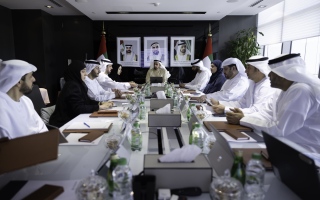
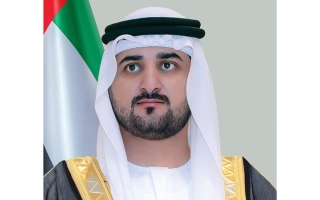
His Highness Sheikh Mohammed bin Rashid Al Maktoum, Vice President and Prime Minister of the UAE and Ruler of Dubai, may God protect him, honored the “RoboRoyal” project team to support the ecosystem from the Republic of Turkey, and the “Achieving Balance in Time” project team from the Kingdom of Spain, the winners of the Government Innovation Award. Creativity in its sixth session, which was presented at the Creative Government Innovations Platform, which is supervised by the Mohammed bin Rashid Center for Government Innovation, and is organized under the title “A New Perspective,” and includes 13 global innovations, as part of the work of the World Government Summit 2024.
13 projects in a global competition
The two winning projects competed with 11 other innovations that were nominated and presented in the Creative Government Innovations Platform, within the activities of the World Government Summit 2024, and the list of countries nominated for the award included: Canada, Guatemala, China, United States of America, Kenya, United Kingdom, Finland, Spain, Australia, India, France, Rwanda, and the Republic of Turkey.
“RoboRoyal”
The “RoboRoyal” project combines miniature robots and artificial intelligence, in a process aimed at enhancing the quality of life of queen bees, thus improving the quality of the reproductive process. A team from the Middle East Technical University, in Turkey, worked on developing an innovative cell to monitor the movements of bees to collect data about their behavior, which provides the opportunity to develop robots to replace the bees responsible for feeding and caring for the queen, in addition to facilitating the process of transferring pheromones, which increases the efficiency of the process. Reproduction and increasing numbers of bees, which ultimately supports the ecosystem and the growth of plants and animals.
Bees play an essential role in maintaining ecosystem stability and supporting agriculture, as they pollinate 75% of the total crops grown for human food production globally, requiring the pollination of 5,000 trillion flowers every year.
The “RoboRoyal” project works to explore the potential of hybrid biotechnology, and provides important data that supports the process of manufacturing highly advanced organisms based on the principle of cooperation between robots and animals, and combines robotics technology with artificial intelligence solutions to confront the decline in the number of honey bees, which contributes to ensuring the production of enough honey bees. Of food for humans, this project is also being implemented in the Czech Republic and Austria.
The first national law on the use of time
As for the draft of the first national law on the use of time, “Achieving Time Balance,” from Barcelona in Spain, it comes in the context of an unprecedented trend in developing time policies led by Barcelona, in light of the growing awareness at the state level of the value of time as a basic need and a human right, and it has It became one of the first European cities to include time use on its policy agenda, inspiring more than 75 other cities in the world to follow suit, including Strasbourg in France; Milan in Italy; and Montevideo, Uruguay, all members of the Network of Local and Regional Governments on Time.
Innovative government policies implemented by governments range from enacting “time policy laws” and appointing a “time policy executive”, to providing free education to children and reorganizing service schedules in cities to reduce peak hour traffic.
Time poverty, the scarcity of personal time, has profound implications for physical and mental health, as well as productivity, equality, and sustainability. Adopting time policies is a fundamental pillar of government policies aimed at building a more equitable, sustainable and healthy society.
Studies and estimates suggest that time use laws may positively affect 88% of employees, increasing productivity by 15% and positively impacting the gross domestic product, while statistics indicate that 35% of women currently suffer from time poverty, and it is possible to provide them with two additional hours. of free time per week. These policies are also reflected in commuting times, reducing them by 40%, and contributing to raising the level of happiness and quality of life by 10%.
Leading organizations have endorsed the Barcelona Declaration on Time Policies and meet annually in Barcelona for the World Time Policies Summit, known as Time Use Week.
“Creative Government Innovations” in its sixth edition
It is noteworthy that the Mohammed bin Rashid Center for Government Innovation launched the sixth edition of “Creative Government Innovations” through the World Government Summit 2024 platform, to introduce participants to the most prominent experiences, initiatives and innovative solutions developed by governments, selected from 13 countries.
The Creative Government Innovations Platform aims to display the most prominent innovative government experiences from various countries of the world, and constitutes an opportunity to exchange knowledge and enable officials to test innovative tools that help them prepare for the future and manage their governments in accordance with its requirements.
Parasites for urban transportation design
In addition to the two winning innovators, “Creative Government Innovations” presented eleven innovative projects, and in the Alternative Intelligence axis, the platform was known for innovative projects that included, the Parasites Project for Urban Transport Design from Canada, which is based on the use of parasites for urban planning, where a team of researchers at the University of Toronto worked. The Canadian Foundation has designed a virtual model that uses the skill of parasites to grow in division to design part of the Toronto metro. This model resulted in a network that is 40% stronger than networks that were engineered by humans. Urban planners can use this model to design new road networks or expand networks. Current.
Deep Green
As for the Deep Green project from Guatemala, it uses generative artificial intelligence to collect high-resolution data on spaces and infrastructure to develop scenarios to simulate sustainable urban development based on biological models. It has enabled the city of Guatemala to redesign landfill sites (99% of the 2,240 landfills An illegal and random dumping ground) with the Deep Green system, based on the movement of divided parasites, which provided a simulation of urban development.
The project also developed two additional proposals for the city, the first a wildlife restoration plan to enhance coexistence between humans and wild animals, and the second an urban agriculture plan to enhance food security and job opportunities for rural residents.
Recruitment of worms
As for the worm recruitment project, which was developed by a joint team from China and the United States of America, it collects biodiversity data in innovative ways, based on the use of blood-sucking worms in southwest China to collect biodiversity data. This type of worm feeds on vertebrates and can retain its blood meal for several months. . A team of American and Chinese researchers collected more than 30,000 worms and found in them the nuclear acids of all the animals that fed on them. The worm saved researchers time and costs compared to manual methods and hidden cameras, and helped measure the extent of biological diversity in a simple way. More effective.
Elephants are decision makers
From Kenya and the United Kingdom, elephants posed the decision-makers of “Animal in the Room” a question about what might happen if policymakers involved animals in decision-making. The project includes individuals who live near elephants and have information about their behavior, along with artificial intelligence tools to listen to the animals and representatives Government, environmental organizations, and non-governmental organizations.
The city of multiple beings
The “Multiple Being City” project from Finland, which the city of Helsinki is working on, is based on the following question: What if we took biological species into account and gave them a seat at the planning table? The project is based on a vision centered on the fact that government plans always revolve around human needs, but they affect the entire ecosystem, starting with plants and animals, all the way to fungi and microorganisms. The project supports the city in achieving its endeavors to become carbon neutral by 2030, carbon neutral by 2040, and carbon negative in the future.
The river time axis included projects that included one of the two award-winning projects, which was the first draft law on the use of time from Spain, which the city of Barcelona worked to develop and implement to become a model adopted by many countries.
Travel to the future
As for the Travel to the Future from Australia project, the Commonwealth Scientific and Industrial Research Organization is developing the “Climate Analog” website, which uses climate modeling to help its users identify cities that are currently experiencing climatic conditions similar to what their cities are expected to witness in the future. The platform has proven its effectiveness, especially in the agricultural sector, as it has contributed to several adaptation strategies in an area worth more than $70 billion annually in Australia.
Artificial memories
The Artificial Memories Project from Spain is examining the possibility of using generative artificial intelligence to restore the memories of patients with Alzheimer’s and dementia in cooperation with specialists. It works mainly on producing realistic visual projections of events from the past and measuring their ability to slow the progression of the disease. The project works to rebuild the memories of those who have lost the ability to Recalling their past.
Personal metrics
In the third axis: Personal metrics, I presented creative government innovations, a project by the Data Cooperative Society from India, which aims to confront the challenges arising from unbalanced control of data and the lack of value in the data economy, especially the challenges facing women.
Women’s data cooperatives have contributed to addressing the issue of exclusion from data, strengthening decision-making power, facilitating access to financial services, and creating value offers that are appropriate for women. These advantages will benefit the agricultural sector in particular, in light of the feminization of the workforce and the inability of women to use their data to achieve They have interest and value.
As for the Manthan project, the “Innovation Funding Platform” from India, it addresses the challenges faced by emerging companies in the field of innovation, with a focus on modern technologies, sustainable development goals, and centers of excellence to support emerging companies. The platform works to collect data on global challenges and connect emerging Indian companies with various opportunities, in addition to To review innovations ready to be put on the market and future research and development initiatives.
From France, creative government innovations presented the decentralized arbitration project for resolving electronic disputes, the decentralized “Clarus Platform,” which is based on blockchain technology for resolving disputes and provides transparent and effective solutions. The platform has resolved more than 1,600 disputes, usually within 3 days, while the cost is lower. The platform is about 8 to 10 times faster than traditional dispute resolution methods.
As for the Missions Instead of Majors project from Rwanda, it represents an innovative educational model, through which students at the African Leadership University define their goals instead of choosing a specific major, which gives them the opportunity to design their educational experience based on the challenges they want to solve and the impact they want to make. Africa.
From Turkey, the RoboRoyal project, which won the Creative Government Innovation Award, represented a unique application in supporting the stability of the ecosystem and improving the reality of the agricultural sector, by integrating robots with artificial intelligence to confront the decline in the number of honey bees and ensure enough food for humans.
An international jury
The innovations participating in the platform were divided into three axes: Alternative intelligence, which focuses on the possibility of using other organisms to extract information, and “river timing,” a concept that investigates new ways of calculating time, and personal metrics.
An independent jury consisting of a number of experts and specialists in the field of innovation worked in leading global and local institutions, in the governmental and private sectors, and international organizations. It included Sophie Howe, the former Commissioner for Future Generations in Wales, Gillian Dorner, Deputy Director of Governance at the Organization for Economic Co-operation and Development, and Bruna Santos. Director General of the Brazil Institute, Tamara Sintic, Director of the Innovation Office of the California State Government, Minister of Digital in the 42nd Government of Montenegro, and Pooja Warrier, Chief Partnerships Officer at APolitical, helped conduct the final evaluation of innovations, and three criteria were adopted in the evaluation process, which included; Modernity, which focuses on assessing the extent to which the new solution or idea differs from what is currently followed, and the extent to which innovation depends on new models, processes and technologies, and the participation of new entities or individuals to provide the desired effect, and the standard of replicability, which evaluates the level of innovation’s ability to stimulate new ideas and innovations in Different sectors and countries, and the impact criterion, which covers the scope and importance of the challenge that the innovation seeks to solve, in addition to the extent to which the solution contributes to improving the conditions surrounding the challenge.
It is noteworthy that the World Government Summit represents an international platform for anticipating and creating future governments, and an incubator for a group of global awards aimed at stimulating innovation and excellence in various areas of government work, through the World Government Summit Awards.
Follow UAE news from Al Bayan via Google News