

اخبار السعودية – وطن نيوز
عاجل اخبار السعودية – اخبار اليوم السعودية
W6nnews.com ==== وطن === تاريخ النشر – 2026-05-01 00:32:00
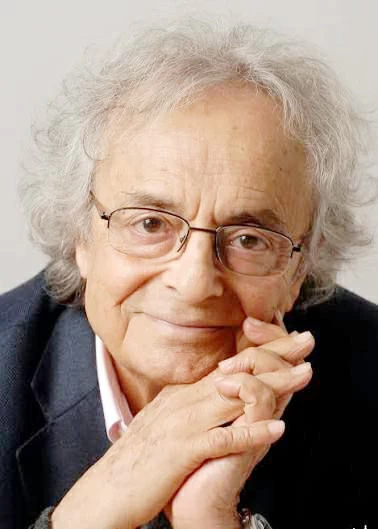
Academic critic Dr. Abdullah Al-Sufyani succeeded in restoring cultural discussions with an observational article that began with his interrogation of a “podcast” dialogue with the godfather of modernity, Adonis, entitled “From Demolition to the Cry of the Standard… Adonis versus Adonis,” in which he addressed Adonis’s turn against himself, as he was calling for metaphorical demolition, to legitimize the prose poem, and after seven decades he began calling for resorting to the normative touchstone; Because it has become a vulgar poem written by someone who does not know who he is or the origins of its writing, the article ignited the fire of tensions and polarizations, the embers of which were not completely extinguished, and the reactions varied, but what is striking is that some of those claiming to be infatuated with the author of (the Fixed and the Changing) sympathized with Al-Sufyani’s article, perhaps for their own purposes, while some supported it based on historical positions, and some expressed reservations about the article in recognition of Adonis’s cultural status. And intellectual, others remained silent; So that they do not lose anyone, and gain themselves if possible, and here we raise the issue again in an attempt to free a problem, and to hear appreciated viewpoints about a personality that was and will remain controversial. The director of the House of Arab Poetry, the poet Sameh Mahjoub, sees art as experimentation, displacement, and a tight hierarchical system, regardless of the scholasticism that academics and language teachers tried to frame with superficial definitions, which their students took as governing and definitive criteria to differentiate between what is. Art and no art. Mahjoub said: I am not in the process of responding to the statements of Adonis, to whom I appreciate the virtue of the dialectical debate taking place, regardless of its critical and intellectual value, with my reservations about calling him the “spiritual father of Arab modernity,” if there is an Arab modernity! He added: If Ali Ahmed Saeed Esber is a spiritual father to anyone, then it is for his person only! And not for the project of Arab modernity, whose manifestations and deep roots they failed to monitor and trace, and they retreated on the heels of their poetic texts that did not accommodate the burdens of their vision, language, and metaphors in favor of a prose poem that we have not yet reached, despite the noise and hollow noise poetically and critically as described. Mahjoub wondered: Is it possible that everything we know about Al-Hallaj goes back to Louis Massignon?! And that all our modern knowledge – including Adonis – about the prose poem goes back to a single book, “The Prose Poem” by the French patent holder of this name, Suzanne Bernard, which was launched in the Arab world without questioning, reviewing, or criticizing the visions and ideas it contained? He made it clear that he is not a fan of self-flagellation, or exporting crises, and does not favor creating problems around writing in general and poetry in particular, stressing that art preserves its type, as Nietzsche put it. It is also against devoting to people and sayings, even if they come from legal minds, especially with regard to the arts that rely on their own standards. The result of psychological considerations can in no way be fixed or rigid. Pointing out that he does not fear for poetry from all the revolutions that occur to it, as poetry that was born before man is able to create its own coordinates and develop them by referring to himself only. The poet Abdulaziz Al-Sharif confirms that he read Dr. Abdullah Al-Sufyani’s article about Adonis’s reviews, and he found himself between partial conviction and anxiety that he cannot ignore. There is a remarkable reading in the article that indicates the expansion of the space for “saying” in Arabic poetry in exchange for the decline of the actual “ability” to write. This is a description that seems close to the reality that we see today, while on the other hand, the proposal cannot be treated as a final condemnation of the Adonis project. Rather, I feel that it is closer to revealing a dilemma that arose from within the idea of modernity itself, not from outside it. Al-Sharif explained that Adonis, in Fixed and Mutable, was not calling for chaos, but rather for liberating poetry from the authority of the ready-made standard, and moving the center of the rule from the outside to inside the experience. However, in his opinion, this idea was not always understood with sufficient awareness, and for many it became merely an open space without tools or knowledge. He stressed that the freedom that Adonis wanted was transformed in many models into emptiness and not into creation, so the paradox of the “late Adonis” does not seem to be a contradiction as much as it is a collision with an incomplete understanding of an experience that wanted to be deeper than just breaking the rules. Adding that Al-Sufyani is right in referring to the “standard” crisis, and that he sometimes burdened the original idea more than it could bear, ignoring that the problem is not the demolition, but rather what was built after it. Pointing out that the crisis is not in breaking the rules, but in the absence of the ability to build what comes after them. The poet Abdel-Rahman Sabi said that since his first rush into the worlds of literature, which coincided with the beginnings of the modernist tide in Arabic literature, and almost swept it away with it had it not been for some constants that prevented him from attacking the side of the past with all his might, he considered (Adonis) raising the question leading to the revolution of modernity, in various areas of life; Including literature and poetry in particular, the chaos increased, and the caveats of the Arabic poem were violated and became collocations of words and fantasies that corrupt the meaning and distort the image through pure prose, the time of which has relied on its fragility. The decline of (Adonis) and the recognition of chaos, as he called it, and other masters of modernity in the Arab world, were considered evidence that many of them had slipped into the abyss of intellectual unilateralism and narcissism that had disrupted the sources and wellsprings of heritage, so that they could return to trying to catch up. With the constant, its eternity, its ability to modernize, and the requirements of the age, in an enchanting cognitive system of form and structure, criticism grants sound artistic standards and establishes a literary movement that guarantees the generation a solid ground on which to lean in the formation of a sound and literary product that gives the artistic taste a breathtaking imagination and images that give it visions that all the shifting templates were unable to draw and will remain so, as he said. Adonis: I will not discuss with a writer who did not know how to read me. “I will never discuss the author of the article, not because he criticized me, for this is His right, except that he did not know how to read me.” Regarding his retracting some of his theses, he explained that he does not retract unless he sees a mistake, and he added: What does conviction mean? Yes to a prose poem in absolute terms, and no to a prose poem written by someone who is not a poet and does not know his language, just like a meter poem written by someone who does not know meter. (Podcast). The idea of desecration (referred to Adonis), based on the time of its inception and its historical, geographical, political and other contexts, does not make it a purely creative and critical literary idea, since it is impossible to separate any idea or phenomenon from its contexts! She added: Despite this, it is credited to Adonis that he was able to establish himself – through his works and opinions – as the godfather of modernity in the Arab world at a certain historical moment in which an atmosphere prevailed that was created – with a harsh unilateral outlook. And it is limited – the idea of the center and the margin in the Arab world! This was done with acceptance and approval, but rather with a reception that was not devoid of astonishment, and was almost close to complete acceptance of everything that Adonis proposed and was approved by Arab critics and innovators who added a bright aura and expanded the scope of the fame of his views, which carried the new in a time when he was searching for the new and dazzling, and for the opposition to everything that was established and prevailing, and even for demolishing and shattering the prevailing and building on its ruins, in exchange for promoting a constructive structure. A new, separate from all that came before, and heralding a coming with a shifting compass to a new direction (that does not necessarily have to be known) away from the four fixed directions! And here lies the logical impossibility of the idea. You see that this decline is credited to Adonis – today – if that is so, as Adonis is a thinker and a creator, there is no doubt about that. Therefore, he is more deserving of reviewing his experience, and there is nothing wrong with this, even if one of the reasons for this is the change in the reality that we live in today with all its historical, geographical, political, and other implications. The idea changes over time with the change in its embrace that contained it and caused its emergence, and this is the constant that a thinker, creator, and critic like Adonis is not ignorant of. Ibrahim Zoli: Selective reading turns into a chase. The poet Ibrahim Zoli believes that serious criticism does not reduce the experience of eighty years in a fleeting podcast clip, and final judgments are based on it in a tone of decency, as if the issue has been controlled and ended. He clarifies that what is happening here is not a dismantling of an intellectual body, Rather, the rapid manufacture of a ready-made condemnation; That is, replacing reading with confiscation, and the cognitive question with the ecstasy of accusation, pointing out that the academic does not start from the media gloss, but from the text, and does not start from fleeting emotion, but from established texts, and does not build on a sentence hanging in the air, but rather on the network of concepts that give it its meaning. Zolli argued that the problem is not in Al-Sufyani’s different proposition with Adonis, as disagreement with Adonis is possible, and sometimes even required, but rather the problem is that he did not enter into his project from its major chapters, and all the rest He wrote his founding texts, entered through a narrow window, and then acted as if the window were the whole house, pointing out the danger of reading turning into a chase, and the owner of the project becomes more important than his project, and the circumstantial phrase becomes more prestigious than the intellectual structure that produced it. He added: Whoever reads Adonis carefully, knows that the man never called for a modernity that means linguistic illiteracy, nor for a blind break with heritage, nor for a general mandate for mediocrity in the name of freedom. He promised. The review is modernity, not a retreat from modernity, but rather a defense of it from within, stressing that (Adonis), at the core of his project, did not understand modernity as a license for chaos, but rather as a more severe test of language, form, and vision. For him, breaking the meter does not mean dropping standards, and the poet’s freedom does not mean that every writing is poetry, nor that every deconstruction of form is the production of meaning. He believes that Al-Sufyani’s misunderstanding of the book The Fixed and the Mutable made it seem to him that Adonis was calling for the nihilistic demolition of the heritage, as a hasty reading suggests. Rather, the book is an attempt to re-examine the Arab cultural structure, and distinguish between the elements in the heritage that are viable and renewable, and the mechanisms in it that reproduce adherence and stagnation. He pointed out that the essence of the project is Not canceling the past, but liberating the relationship with it, not glorifying chaos, but criticizing stillness and blind sanctification. He added: Cutting out the word “destruction” from a complete conceptual system, and presenting it as evidence of nihilism, is not cognitive criticism, but rather a defective reduction, closer to accusatory rhetoric than understanding. He considered holding (Adonis) responsible for every bad writing that came out under the banner of modernity a weak argument and lazy causality. Not everyone who misuses an idea becomes a witness to its corruption, otherwise every thinker would have to be accused. He believes that Al-Sufyani did not refute Adonis as much as he reduced Adonis: he replaced the book with an excerpt, the text with a footnote, and the project with a podcast. He reiterated his emphasis that what is being destroyed is not the project of modernity, but the way it reads it. Ali Makki: Adonis does not back down… it is the reading that made a mistake! The writer Ali Makki confirms that in a moment; As if it were a “review” by one of the most prominent theorists of Arab modernity (Adonis), readings were quick to describe what he said as a retreat from his project. However, a calm examination reveals that what is happening is not a retreat, as much as it is a repositioning within the project itself. Makki believes that the problem, in its essence, is not with Adonis, but in the way in which his recent statements were read, as when Adonis speaks about “the chaos of the prose poem,” he does not stand outside modernity to judge it, nor does he turn against what he founded, but rather exercises one of the deepest functions of thought about questioning the results from within the experience, stressing that critical distance does not mean retreat, but rather maturity, as it does not Any intellectual project extending for decades can remain a prisoner of its first expressions, or be frozen at the moment of its founding. Makki explained that Dr. Abdullah Al-Sufyani’s article was based on a premature reading, because it assumed that the call for “demolition” was a call for chaos, while, in its context, it was a call to dismantle the closed system in preparation for the production of a more expansive and conscious system, pointing out that the flaw in the reading is that it deals with the early texts of Adonis as final rulings, not As a moment within a shifting intellectual path. Makki pointed out that there were those who dealt with “demolition” as a self-sufficient end, not a stage within a more complex process. He added: In this context, (Adonis’) answers seem closer to an attempt at internal correction, not a declaration of remorse. Because it does not call for the “standard” as the opposite of modernity, but rather as a condition for its continuation. Freedom, in its deep meaning, is not understood as an escape, but rather as the ability to make a conscious choice, a choice that cannot be achieved without strict cognitive and aesthetic tools. He pointed out that holding Adonis responsible for the outcome of the poetic scene, or portraying him as turning against himself, simplifies a very complex path. The cultural scene was not shaped by the action of a single individual, but rather by the interaction of institutions, criticism, education, public taste, and a social context. He explained the idea in its origin and form. He believes that the question is not: Did Adonis retreat? Rather: Why did some Arab modernist experiences fail to produce their own internal critical standard? Why did “experimentation” in some cases turn into an excuse, not a creative horizon? He believes that Adonis’s recent statements are not a departure from his project, but rather an extension of it at a moment when he is more aware of its consequences, and an attempt to restore the balance between freedom and knowledge, between audacity and discipline, between breaking form and building value, adding: In the end, he (Adonis) does not retreat, but rather advances within his project, and what appears to be a contradiction is nothing but a natural transformation of a living thought. As for the error, it is not in what he said, but in how we read it?