
اخبار السعودية – وطن نيوز
عاجل اخبار السعودية – اخبار اليوم السعودية
W6nnews.com ==== وطن === تاريخ النشر – 2026-07-24 00:16:00
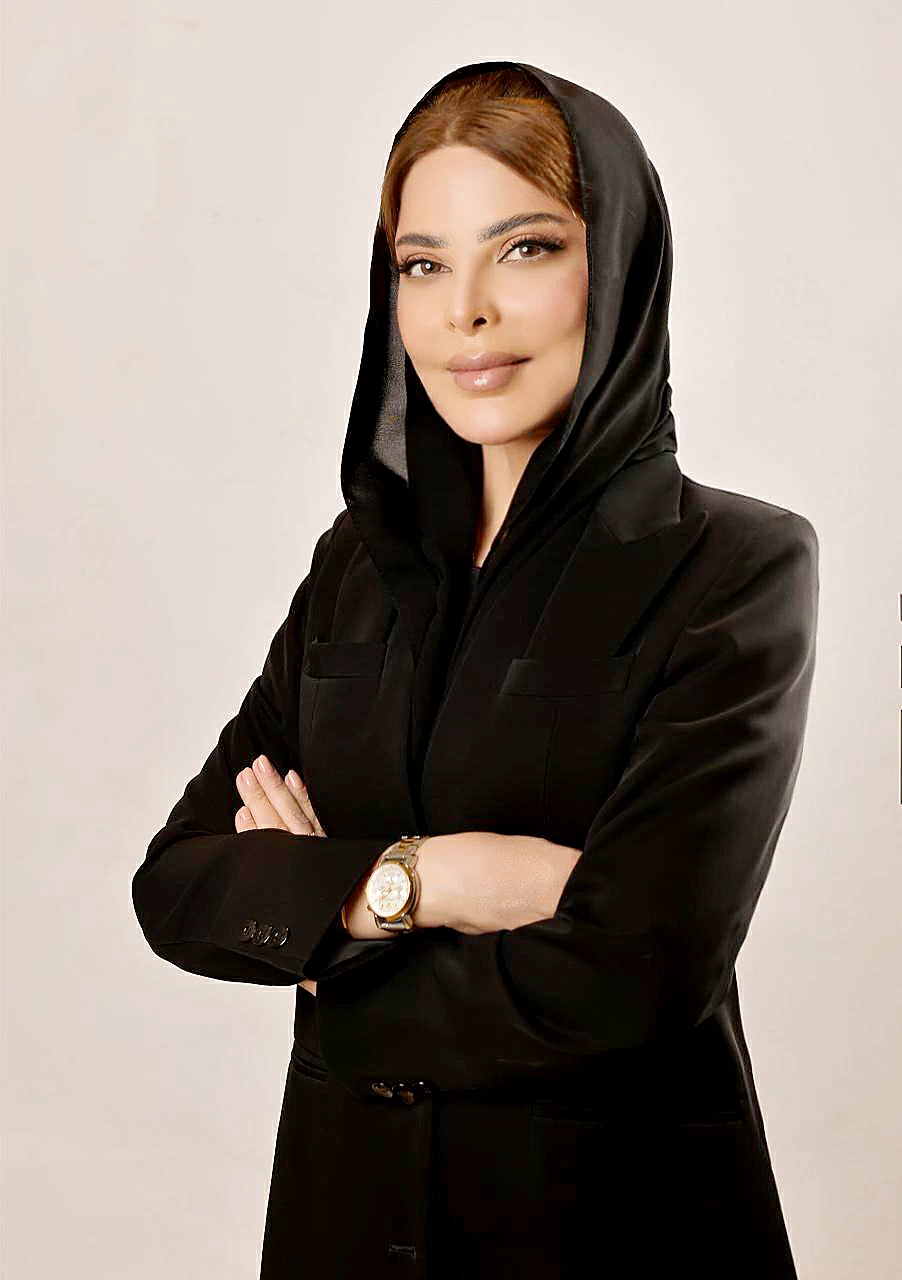
At a time when the world is witnessing rapid transformations at the intellectual, cultural and technical levels, questions related to literature, writing and human identity remain present as part of the constant search for meaning. In this dialogue with the novelist and cultural advisor Dr. Zainab Ibrahim Al-Khudairi, we open paths through which we try to reach something of the convictions our guest has reached, the ideas she collected, and the critical insights and treatments she presented, and here she is, as time and space allow, to put us before conclusions about the impact of literature on the reader, the responsibility of the writer, the future of the novel, digital noise, and artificial intelligence. So to the text of the dialogue: Do you think that literature is still capable of changing… Reality? Yes, but not in the direct way that some imagine. Literature does not change reality as a political decision, nor as a law enacted, but it changes the person who creates this reality. When our view of pain, justice, freedom, and the other changes, reality itself begins to change, albeit slowly. True literature does not invade the world with violence, but rather infiltrates consciousness, rearranges our sensitivity to things, and gives us a new language to understand what we were unable to name.• What issue do you feel has not been done justice in Arabic literature?•• I feel that the Arab person, in his internal fragility, has not been treated as it should. Much of literature has dealt with major issues; Politics, identity, women, war, but the human being from within, with his silent fear, with his loneliness, with his small brokenness, with his daily contradictions, was not always given sufficient depth. Likewise, there are issues that are not read sufficiently literary, such as psychological isolation within the family, alienation within modern cities, and the woman not only as a symbol or victim, but as a complex, thinking, and hesitant self, possessing all of her human shades.• How do you see the role of the Arab writer today between freedom and restrictions?•• The writer Arabic today stands in a very sensitive area. It writes knowing that the text is not read alone, but rather its life, its voice, its choices, and even its silence are read with it. There is more space than before, yes, but the restrictions have not disappeared. Rather, they have sometimes become more ambiguous. The restrictions are no longer always external and direct, but rather have crept inward. To the fear of misunderstanding, social interpretation, and ready-made judgments, yet I see that the Arab writer today plays a very important role, because she does not write only to express, but to regain her right to define herself outside of the stereotypes that have been written about for a long time. • What idea does writing frighten you the most? And why?•• Writing the truth scares me when it is very close to the self and memory, and it is not the big ideas that are most frightening, but rather those areas that are close to personal pain, from losses that have not healed, from questions that we are still living and not contemplating. Some texts we are not afraid to write because they are bold, but because they are too honest, and honesty in writing is costly because it strips us of the masks that we have sheltered under for so long.• Is writing a means of escape or confrontation for you?•• It is both. Together…it began as a survival, then it became a confrontation. In the beginning, we write in order not to suffocate, in order to save something of ourselves from loss, but with time, writing turns into a space of deep confrontation; Confronting the self, memory, society, and the questions we try to escape from. Writing does not always save us in a comfortable sense, but it gives us the courage to look, and this is another kind of salvation.• What is the question that no one has asked you that you wish to answer?•• I hope that someone will ask me: What did you lose in order to find your writing voice? Because people often ask the writer about what he wrote, not what he paid as a price to write in this way. Every true literary voice has its own losses; Its isolation, its doubts, its silent battles, and its emotional and intellectual cost, writing is not only a talent, but a story of survival, brokenness, growth, and slow formation.• Do you believe that the writer is morally responsible for what he writes? Or is he completely free? •• I believe that the writer is free, but his freedom does not negate his moral responsibility. Freedom in literature is not chaos, nor is it an exemption from the consequences and responsibility for what he writes. The writer is not a preacher, and he is not required to present polite or reassuring texts, but he is also not completely innocent in the face of the impact of his words. There is a difference between shaking the reader and waking him up, and between commodifying pain or promoting ugliness as heroism. Moral responsibility does not mean censoring… Imagination, rather, it means awareness of the power of the word when it enters people’s consciences.• In light of the acceleration of events globally… Do you think that the writer today is chasing reality? Or has reality always preceded literature? •• Reality today runs at an amazing speed, and literature is naturally slower, but it is not slower because it is incapable, but because it is deeper. The news precedes the novel, and the platform precedes the poem, but literature does not compete with the event in its speed, but rather in its ability to reveal its human meaning. Reality presents the facts, but literature asks: What did these facts do to our souls? Therefore, I believe that reality may precede literature chronologically, but literature sometimes precedes it existentially, because it captures what is behind the event, not just the event itself.• How do “digital noise” and means of communication affect the sincerity and depth of writing, in your opinion?•• Digital noise has created an enormous temptation for fast, bright, quotable writing, but in return it has threatened the slow spaces in which real writing matures. The problem is not with the means themselves, but with the rhythm they impose on us, to speak immediately, to comment immediately, and to produce an opinion before For the idea to ferment inside, this may make some writing closer to a reaction than to contemplation and research. However, I see that the true writer is tested here; Is he writing just to be seen? Or does he write because he has visions, ideas, and human and existential issues that deserve to remain inside his mind? Do you feel that the reader today is searching for the truth? Or just for what comforts them psychologically? •• Many readers today are not looking for the truth as much as they are looking for a text that confirms what they already feel, or gives them quick psychological reassurance. We live in stressful times, and this is a human concept, but literature does not exist to console us only, but rather to worry us, to shake our certainty, to take us out of the comfortable areas to which we are accustomed. The true reader is the one who accepts to enter the text not only to find himself and his feelings inside it, but to confront what he does not want to see. In himself and the world. • In times of crises…should a writer be a voice of resistance? Or a neutral witness?• I think that neutrality in moments of great human pain is not always an advantage. It may be an elegant form of evasion. The writer is not required to shout slogans and ideologies, but he is also not exempt from taking a humanitarian stance. He can be a resistance without losing his artistic complexity, and he can be a witness without turning into a cold documentation machine. What is more important is that he remains loyal to the human being, not to a safe distance.• What is the current issue that you see being understood superficially in Society, and do you need a deeper literary proposal?•• I see that the human issue in the age of speed is understood very superficially. We talk a lot about achievement, presence, influence, and spread, but we do not reflect enough on what all of this does to the soul. There is internal exhaustion, disguised loneliness, and a slow erosion of meaning, but they do not appear in the language of daily life. We need literature that writes about modern existential fatigue, about the noise that fills our lives and leaves us more empty, and about human fragility in the midst of massive digital abundance.• In In the shadow of the rise of artificial intelligence and its ability to produce texts… Do you think it threatens the “spirit of writing” or redefines it in a new way? •• I do not see it as a threat to the spirit of writing as much as I see it as a test of it. Artificial intelligence is capable of producing text, but text is not necessarily writing. It may create a good linguistic structure, but it does not experience anxiety, loss, remorse, or human memory that gives a sentence its special tremor. What artificial intelligence may do is that it will push us to re-ask the question: What makes a text truly human? Perhaps here lies its importance, not that it eliminates the writer, but rather that it reveals to us that writing is not just a linguistic structure, but rather an effect and existence. • Can artificial intelligence be a creative partner for the writer? Or will it create a crisis in the meaning of originality and literary identity? •• It can be an auxiliary tool, and even a technical partner at some stages; In generating, expanding, organizing, provoking and generating ideas, but it cannot be a substitute for the essence and creative depth of the writer. The crisis is not in the tool itself, but in the way we will use it. When artificial intelligence turns into a permanent crutch, it may threaten the writer’s own voice and produce similar texts that lack uniqueness. However, when used consciously, it may free the writer from some technical effort to go deeper into his aesthetic and human logic. Originality here will not be in rejecting the tool, but in the writer’s ability not to He loses his voice inside her.• How do you define yourself today? Writer? Or a researcher? Or a cultural voice?•• I see myself in the space between these definitions. Writing for me is not only a profession, but a way to understand the world. I may be a researcher when I analyse, and a writer when I feel, but in the end I try to be a voice that asks questions more than it provides ready-made answers.• In a time of digital speed… Do you feel that literature is still able to influence?•• Literature does not compete with speed, but rather survives it. In a world reduced to short clips, long text becomes an act of resistance. Literature is not consumed quickly; It is lived, and therefore I believe that its value today has doubled, because it gives man what he lost; Contemplation and hope.• There is an increasing phenomenon of the novel turning into a visual material.. How do you see this?•• It is not a new phenomenon. Since the beginning of cinema, literature has been one of the first materials to which the lens has turned. The problem is not the transformation itself, but rather that the novel is written with the eye of the camera and not with the eye of the language. When the text loses its independence, it turns into a production project, not a project of meaning. The true novel does not need to be seen… but to be felt. Since the beginning of cinema, literature has been one of the first materials to which the lens has turned, not purely Coincidence, but because the novel has a complete narrative structure; Characters, conflict, and dramatic time can be transformed into an animated picture. There is no definitive consensus on the “first novel” that was turned into a film because the early experiments with cinema were short and distributed between popular stories, myths, and theatrical scenes. But what we know historically is that the transformation of literary texts began approximately at the beginning of the twentieth century. Short silent productions inspired by Charles Dickens, such as scenes from A Christmas Carol, which appeared at the beginning of the century, and also works such as Uncle Tom’s Cabin, which were broadcast in early versions on the screen. In other words, literary adaptation has accompanied cinema since its birth, albeit in a small and experimental form. The novel is the language of words, and the cinematic image is the language of sight and viewing time. Therefore, transforming the novel into a film or series is a new reading of the text, and it may be an interpretation, criticism, or extension of it, as well. It reproduces the novel for a wider audience, forms a visual taste and refers the text to a different public horizon. This may deepen its impact or simplify it, according to the intentions of the producers. With the increasing conversion of novels into visual works, we are also witnessing an economy of stories, rights, marketing, extensions and sales chains, which raises the ethical question about the relationship of art to the market. The transformation from a novel to a visual material is a necessary meeting between two different narratives, it is translation and reinvention, and it has great aesthetic potential and the dangers of losing depth. The text or its abstraction, this phenomenon will not stop as long as the human desire to see the story remains.• How do you view the phenomenon of “commodification of cultural taste”?•• This is one of the most dangerous transformations today. Taste is no longer built through experience, but rather is constantly suggested to us until we think it is our choice. The problem is not in the recommendations, but in the absence of critical distance, when we lose our ability to ask: Why did I like this? We have lost part of our freedom. Cultural commodification means transforming cultural products and taste into marketable and profitable commodities, which creates a double effect, as it expands circulation and secures financial resources, but it tends to simplify depth, dissolve diversity, and promote the logic of the market over the value of art. Cultural commodification can serve culture materially, but it threatens its essence and aesthetics if market logic prevails. The solution lies in the balance between funding and preserving cultural depth and diversity.• Have current issues and wars affected your writing?•• Certainly… war does not only change texts, but also changes the person who writes them. There is anxiety creeping into the language, and existential questions become more urgent. I write today and I am more aware of the fragility of the world, and more attached to meaning.• What occupies you intellectually in the cultural scene? Today?•• The question of depth and meaning preoccupies me. We are experiencing cultural inflation, but we lack true accumulation. There is an abundance of content, compared to a scarcity of influence, and this always drives me to search for writing that remains, not that which passes.• Your project “The House of the Novel”… What does it represent to you?•• It is an attempt to create a real space for the novel, outside of rapid consumption. The House of the Novel is not just a platform, but an idea; Narratives can be a home for a person, a space for dialogue, thinking, and self-rediscovery.• How do you see the future of literature in light of these transformations?•• True literature is not afraid of transformations. Its media may change, but its essence is constant; man. There will always be someone looking for a text that resembles it, not just content that passes by.• A final word… What would you say to the reader today?•• Do not look for the quick text.. Look for the text that changes you, for some writings are not read, but rather rewritten again.