

اخبار السودان – وطن نيوز
اخر اخبار السودان اليوم – اخبار السودان العاجلة
W6nnews.com ==== وطن === تاريخ النشر – 2026-01-29 00:51:00
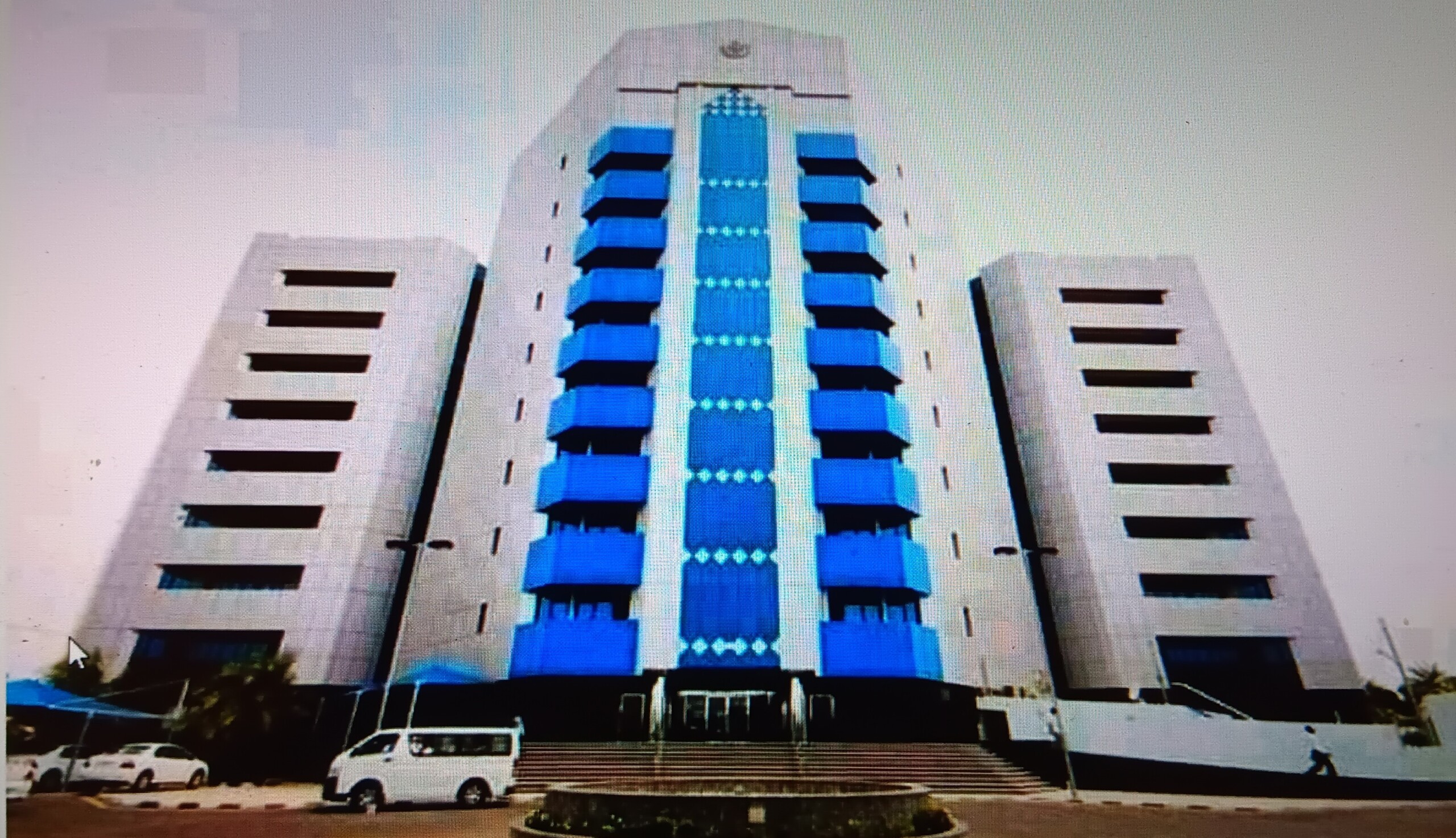
Amsterdam: Wednesday, January 28, 2026 AD: Radio Dabanga: With the return of the Central Bank of Sudan to resume its activities from the capital, Khartoum, on the twenty-third of this month, Governor Dr. confirmed. Amna Mirghani said that the bank has actually begun to carry out its duties from its headquarters in the capital, and that the next stage will witness decisive decisions to support monetary stability, strengthen supervision of banks, and direct financing towards production priorities and basic services, in a way that serves the citizen and restores the state’s financial prestige. The Central Bank of Sudan has issued its financial and monetary policies for the year 2026, which are based on reforming and restructuring the banking system, modernizing the infrastructure of payment systems, and focusing on directing financing towards productive sectors and priority activities, which contributes to reducing inflation and flexibility and stability of the exchange rate to support the restoration of overall balance, adopting the principles of sustainable financing and green financing in line with global trends, and improving the management of the national currency. Government approach: Banking analyst Ahmed Bin Omar says in this context: “In my estimation, the Central Bank of Sudan’s decision to ban financing a number of activities in the 2026 guidelines is part of a broader government trend to redirect funding towards what is real and productive, especially in light of the great damage to the economic sectors due to the war, which is somewhat positive for the idea of reconstructing and operating the country after the major impact on the capital and the states.” He believes in his interview with “Radio Dabanga” that the Central Bank’s approach does not start with the funding guidelines for the year. 2026 is a negative description of the financing experience in previous years insofar as it is linked to the post-war vision, which seeks to employ the banking system as an effective tool in leading the recovery and development process. He adds: “With an economic growth target of about 9% within the 2026 budget, the monetary authorities believe that directing bank financing towards productive sectors has become a basic condition for achieving this goal, ensuring that credit contributes to expanding production capacity, restarting affected sectors, and stimulating real investment, instead of remaining confined to short-term activities with limited impact. “Developmental financing.” Raising the efficiency of financing. Banking analyst Ahmed Ibn Omar believes that the government is seeking, through the Central Bank, to raise the efficiency of the financing granted, meaning that every pound that comes out of the banking system must go to an activity capable of employing workers, increasing production, supporting exports, or restarting a damaged project. Therefore, financing was restricted to non-productive activities, in exchange for opening it up and preferring it to agriculture, industry, exports, energy, and reconstruction projects. He confirms that the main benefit of this step is that it reconnects finance and the economy. The real thing, he says: When credit goes to sectors actually affected by the war, its impact is not only monetary, but rather structural by operating production chains, reducing imports, and improving the external balance. At the same time, the pressure on the exchange market decreases because part of the demand for the dollar was linked to bank-financed speculative activities. He indicates that this trend may create pressure on some commercial activities in the short term, and the market may feel a relative scarcity of liquidity. He continued, saying: “But this, in my opinion, is a side effect of a necessary correction.” The real problem is not the lack of financing, but rather its misdirection, and these policies are trying to address this defect.” Banking analyst Ahmed Bin Omar concluded that what is happening is an attempt to transform bank financing from a tool that fuels inflation and crises, into a tool used to rebuild the affected sectors and raise real production. The success of this step will ultimately depend on the strictness of application, the expansion of productive financing portfolios, and coordination with financial policy, so that the guidance does not remain only theoretical. Neglect of the local trade sector. The banking and financial expert and financing policies, Abdul Latif Ali Ibrahim, expressed Some observations on these guidelines for the year 2026 that were issued in previous years, which he believes neglected the local trade sector. He continued: The brothers in the Bank of Sudan may view it as a marginal sector, but I say that it is a very influential sector in the economy. In an interview with Radio Dabanga, Ibrahim considered that the local trade sector is the one that pays taxes and local fees, and also activates and moves the transportation sector, and contributes to supporting many accompanying services, and that the number of workers in this sector is very large, as any market in Sudan includes large numbers of dealers in local trade. Ibrahim confirms that financing local trade is not marginal financing, but rather financing that contributes directly to revitalizing the economy. He also points out another observation related to the directives, as they allow financing imports. Some goods that are considered basic commodities, such as solar energy goods, production inputs, and capital machinery and equipment. He wondered why financing the import of these goods, despite their cost in hard currencies, is not allowed. Why is financing the local trade sector not allowed to deal in the goods themselves? He points out that allowing financing local trade in the solar energy sector would stimulate dealing in these goods and provide citizens with capital goods in a more efficient and effective manner. Banking and financial expert Abdul Latif Ali Ibrahim points out the importance of capital goods and production inputs For small industries, indicating that allowing the local trade sector to deal in production inputs could make it possible to provide them to small industries in different regions of Sudan. Accordingly, banking expert Abdul Latif Ali Ibrahim believes that allowing financing of local trade is very necessary, and that this matter should not be left only to microfinance, as some of these goods require large amounts of money to be provided in different markets. He also touched on the pharmaceutical trade, considering that special attention should be paid to financing pharmacies, given the widespread diseases in Sudan. And the urgent need to provide medicines in multiple regions of the country. The banking expert explained that pharmacies are the entity responsible for providing medicines, whether through purchases from importers or from local pharmaceutical factories, which makes local trade in medicines of great importance. He added, saying: Local trade also helps in revitalizing local factories and helps in increasing the speed of turnover of locally produced goods. He called on the brothers in the Bank of Sudan to take these observations into consideration and give the local trade sector the attention it deserves, even if this is by setting a percentage of the financing ceiling for banks A percentage ranging between 20% and 25% of the total bank financing is allocated to local trade, which contributes to the flow of goods in various markets and their provision to citizens in their places. The war imposed challenges. Banking and financial expert Abdul Latif Ali Ibrahim believes that this war has imposed major challenges for the Sudanese economy, considering that the negative effects of these challenges will not be stagnant, but will be reflected in the coming years in the short, medium and long term. Ibrahim, who is currently the Director-General of the International Business Development Center in Khartoum, says that establishing policies that limit… These negative effects become necessary, adding that the integration and harmony of financial policies, on the one hand, which are set by the government, which is represented by the state’s general budget, and the monetary policy, which is set by the Central Bank, on the other hand, there must be complete agreement between them in order for economic stability to be enhanced. He adds, saying: Therefore, if there is economic stability, there will be economic growth and there will be positive rates for the economy, considering that the financing policy, which is part of the monetary policy issued by the Central Bank, is a guide or directive for how to exploit the banking system and homes. Financing in relation to available resources, priority and financing controls. He points out that the financing policy is issued and accompanied by the objectives of the year and the priority sectors that have a significant impact on economic performance, and in the financing policy they are specified by name, for example, the industrial sector, the agricultural sector, and the export sector. He confirms that all of these sectors are a priority and the financing policy directs them to focus on them and gives them some preferences in dealing and the like. He believes that this policy contributes directly to directing resources towards these sectors. Regarding the financing controls, the banking expert believes that they are used to direct the banks’ limited resources. Directing them towards the best economic use, and in order for this to happen, the priority sectors must be identified. He adds: “As I mentioned earlier, the financing policy has identified those sectors, which are agriculture, both animal and vegetable, the industrial sector, the export sector, and others.” It is believed that identifying these sectors or activities prevents the dispersion of resources to other activities. Likewise, banning some sectors means automatically directing resources towards the priority sectors. Regarding the risks within the banking system, banking expert Abdul Latif Ibrahim believes that any financing has risks in general and says: There are There are two types of risks: market risks and credit risks. He believes that in terms of market risks, the financing policy prohibited some activities that have high market risks, such as stock trading activities and even gold trading. On the other hand, he adds that risks related to financing, and in order for risks to be reduced, there must be guarantees that can be liquidated in the event that financing is exposed to any risks or becomes difficult, indicating that risks do not prevent financing, but they can be reduced through procedures established by the financing policy to reduce risks and how to achieve a balance between banking safety requirements and meeting needs Productive and service sectors. Banking expert Abdul Latif Ali Ibrahim says: “When we come to defining banking safety, it is necessary for the operation and continuity of banks, as its absence means that the bank will collapse within a certain period of time.” He believes that the presence of banking safety aims primarily to ensure the continuity of the bank and raise its efficiency. He believes that there are a set of procedures and controls that aim to achieve the stability of banks. He pointed out that there are basic requirements for maintaining banking safety, which are represented by the “Basel decisions” and subsequent decisions, which include. These requirements are capital adequacy, asset quality, risk management, control and compliance, and other standards that were established with the aim of maintaining banking safety, and here what is important is the quality of assets, as banking expert Ibrahim believes, and he says: This point is directly related to the question at hand, as maintaining the quality of assets requires balancing between two basic goals: the first is to maintain banking safety, and the second goal is to meet the needs of the various productive sectors, in order to ultimately achieve profitability and reduce risks Ibrahim said that banking safety inherently tends towards conservatism, reducing risks, and tightening controls. On the other hand, customers in productive sectors require flexible financing, and this often requires long terms and taking some calculated risks. Hence, the balance between these two aspects dictates the optimal situation for banks. He points out that banks’ resources mainly consist of customer deposits, which may be current, investment, or savings deposits, and all of these deposits are converted into financing assets, but in the end these assets must be… It must be returned, but it must be in accordance with controls that help return these funds and at the same time contribute to achieving profitability for the bank. He believes that the tools or controls that the bank can use to achieve asset quality are many, and two basic areas of guarantees can be mentioned here: guarantees must be available that can be liquidated in the event of financing failure or there are high risks for financing. “The bank can follow other measures, such as increasing profit margins, or increasing participation margins in financing operations, in addition to following some additional measures that aim to maintain the integrity of the financing.” Finance. In this context, there must be clear mechanisms for distribution that allow achieving both goals at the same time,” according to Ibrahim. The banking expert believes that commitment to implementing policies is the primary test for their success. He continued: “When we come to implementation, we find that some banks have committed some violations and some banks have been subjected to warnings and penalties from the Central Bank,” but he considers that some practices occur and these are exceptional cases. He points out that there are challenges that the banking system faces during the year, and they may arise as a result of changing economic conditions, such as the exchange rate, inflation, in addition To the nature of banking operations themselves, these factors put banks in somewhat difficult situations