

اخبار السودان – وطن نيوز
اخر اخبار السودان اليوم – اخبار السودان العاجلة
W6nnews.com ==== وطن === تاريخ النشر – 2026-07-05 23:19:00
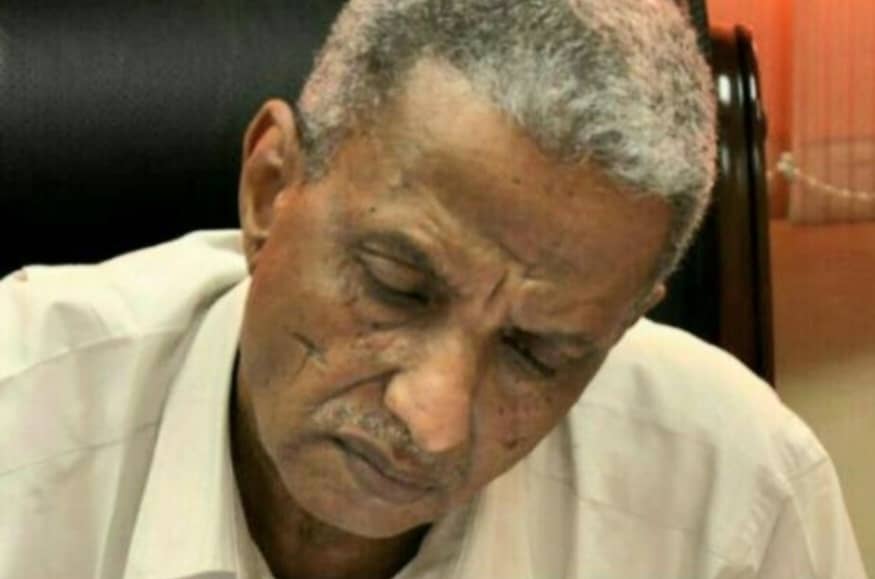
When gratitude to the teacher does not grow old… after sixty years… I am still your student. My dear cousin, Sister Ibtihal Morsi Siraj, gave me a short video tape the day before yesterday. Given the huge amount of messages, audio and video clips that flood social media these days, I have become accustomed not to paying much attention to these materials, out of concern for spending time on what is most useful and preserving feelings at this stage of life, when souls can no longer tolerate any nonsense or fabrication, nor any news that increases the sorrows we live in. Originally at this time. However, my knowledge of Sister Ibtihal and the wisdom, wisdom in choosing, and respect for others’ time prompted me to open the clip and listen eagerly to the dialogue that took place in it. After I finished following up, I quickly thanked her for this valuable gift. She answered me that she felt from the beginning that this clip and the dialogue it included with the guest would resonate with me in a special way. So I told her: Your feelings are true, my cousin, and you are always honest. You have made this day one of the few distinguished days in a time in which the days became similar and the pace of life accelerated until a week passed by as if it were a day, and a month passed as if it were a week, and with this acceleration we all go on the journey of a life that is decreasing day by day. I was saddened by a sadness I had never experienced before. It was a day that was appropriately described as “bittersweet” in name only, in which moments of feelings alternated between sweetness like honey and bitterness like gall. Between these two contradictory situations, my confused mind found no way but to pour out these turbulent feelings with words on this paper. The guest of that conversation, which I listened to with my heart before my ears, was a man of the stature of education in Sudan, who spent the flower of his youth and the life that followed between the blackboard and the chalk and the morning queue, and the Nabatshia of studying the night classes, punishing the student clowns, and correcting the notebooks in his house after the night’s Nabatshia. This was his day, his night, his month, and the years of his life until he retired into retirement after spending more than fifty years in teaching and administration. Then he remained at home in the upscale suburb of my neighborhood, Dabrosa, reminiscing about memories among his close family members after most of his generation of teachers and colleagues had departed to the afterlife. There are people whom God has endeared to love people and follow the news of good men and women who were generous and beneficial and who had favor over the general public and successive generations. Among these men is the teacher’s son. And the journalist, Mr. Rifaat Jaroun, whose profession has become great as a teacher for generations, and his other profession is as a journalist who documents the journey of great men and women in the city of New Halfa and its extended villages. Professor Rifaat, may God raise him to one position upon another. His memory of a man who was one of the purest men, the most honorable, the most generous in giving, and the least in reward came to his mind, so he carried with him (the work kit) of cameras and microphones and headed in his mini car to the Dabrosa neighborhood. Al-Raqi, and in the alleys of Block 11 of that neighborhood, he knocked on an ornate door and then entered that house with his equipment and equipment. I was watching the videotape and I was full of passion without knowing anything about this house. The guest of the program, the son Rifaat, cursed until he entered a bedroom arranged with two beds. The guest of the interview got up from his bed, not standing, but rather sitting on the same bed. The son Rifaat greeted him warmly and with all respect, and greeted him and made him understand the purpose of the visit, and then the conversation took place between them. Here was the unexpected surprise. I never mind, as the guest of the episode was the distinguished professor Ahmed Abdel Jaber Ali. This teacher taught me English at Wadi Halfa National Intermediate School until 1963, after which I moved to the secondary stage at Wadi Saydna Secondary School in Omdurman. This was immediately followed by the High Dam and the migration to New Halfa in 1964. This means that I have not met the venerable Professor Ahmed Abdel Jaber for more than fifty-three complete years. The strange irony is that throughout these years, his presence never left my mind, and one of my wishes was to meet that professor whom I admired and admired, and who had become a symbol in my life from the sixties of the last century until today. I was longing even to just hear his news, and that is the weakest of faiths. Yesterday, Professor Refaat achieved for me what I thought was the utmost that I could achieve, or what I thought was the weakest of faiths. But with what he did, he extinguished some of the flame of longing in the heart, quenched some of the thirst of the soul, and alleviated some of that eagerness that I had always carried towards my venerable teacher, Professor Ahmed Abdel Jaber. They were short moments in the life of time, but they were great in their impact, as they restored to the soul a warmth that had been missing for a long time, and renewed in the heart gratitude beyond words. What pleased me and made me very happy in those moments was that I saw my teacher Ahmed Abdel Jaber and heard his usual voice, and what pleased me even more was to see him enjoying good health and with the same sound mind, except for a small amount of what time had spoiled, as he said about himself, with regard to hearing and memory, but his speech was orderly and focused as usual, and kept up with questions. The interviewer was keen to hear his answers about the details of his life, his studies, his fellow teachers, the students he taught, his large and small family, his opinion of education now and in the past, and the appreciation he received from others. The venerable Professor Ahmed Abdel Jaber answered all the questions in a satisfactory, comprehensive and frank manner without receiving any help from his daughter, Rawya, who was sitting next to him, eager to merely remind him of names if necessary. For the few who do not know Professor Ahmed Abdel Jaber, by virtue of age and generational differences, he is a well-known figure in the field of education and administration, especially in the Wadi Halfa and New Halfa regions. He was born in Wadi Halfa in 1935, in the upscale Dabrosa neighborhood in the city. He studied primary school at Wadi Halfa Western School, then middle school in Wadi Halfa Princely School, then moved on to secondary school and joined Ahfad Secondary School in Omdurman, graduating from it and eventually joining the Bakht al-Rida Institute. He eventually joined the field of education in 1959 and was appointed as an English language teacher at Wadi Halfa Private School in the same year. Professor Ahmed did not leave or move from Wadi Halfa and New Halfa to any other place. Rather, his work remained confined to these two regions only since his appointment. Therefore, he associated with a large number of teachers in that region. I mention a number of them while memorizing their titles. They are as he mentioned and as I know: the senior professors Ahmed Sharif, Hassan Ahmed Rushdi, Bibi Talisman, Ahmed Abbas, Ahmed Khalil Bayram, Siraj, Al-Sawy Muhammadi Batik, Mahsoub Hassan Kashif, Fathi Sayyed Dahab, and the two engineers, Abdullah Sabbar and Sayyed Harith. They studied with Professor Ahmed Abdel Jaber during their summer vacations. They were engineering students at the University of Khartoum, and the senior principals were Professors Dahab Abdel Jaber, Ali Ahmed Ali, Ahmed Awad, Mohamed Hassan Al-Sheikh, Hussein Al-Nour, Mohieddin Mohamed Ahmed, and Ikrimah. May God have mercy on those of them who died and prolong the lives of the rest. Among the students whom Professor Ahmed Abdel-Jaber studied and remembered in this interview are colleagues Mohamed Abdallah Barkia, Mohamed Mahdi Ahmed Ali, Anwar Zamblitta, Mohamed Khalil Siam, and Kamal Jabra. And Muhammad Abdel Jaber and Mahmoud Zamrawi. It seems that these students have never left his memory because they graduated from high school and became teachers and were honored to partner with him in the teaching profession in New Halfa. After many years spent with the students, the blackboard, the chalk, and the morning queue, my teacher, Ahmed Abdel Jaber, culminated that journey in being promoted to the position of director of education for the Atbara River region, concluding his long career, from which he was referred to retirement in the 2000s. My teacher, Ahmed Abdel Jaber, belongs to the Idris family in the village of Murshid, south of the city of Wadi Halfa. – Currently, Village 10 in New Halfa – He has many relatives in the villages of Dabira and Ishkit, and the large family resided in the upscale neighborhood of Dabrosa in the city of Wadi Halfa. He has an older brother, the well-known generational teacher, Mr. Dahab Abdel Jaber, who worked as headmaster of the Central Emiri School and then was transferred to the Ministry of Education in Khartoum as director of education. There are schools in his name in New Halfa and Wadi Halfa in memory of his memory and his great contribution in the field of education. His brothers, Hassan Abdel Jaber, is a market trader, Ali Abdel Jaber is a merchant, Mohamed Abdel Jaber is a farmer, and Khalil Abdel Jaber is an employee. Among their children who studied with us is our colleague Mohamed Hassan Abdel Jaber, and his nickname was “Dutch.” I do not know the reason for this name. Perhaps he resembled the Dutch only in character. I remember that Deutch used to say to us out of intimidation: If you see my uncle Ahmed Abdel Jaber with black glasses on his eyes, know that he was not happy that day, so be careful of him. He was without glasses, so know that he was happy, and the rug was Ahmad. God blessed Professor Ahmed Abdel Jaber with three flowers, Dalia, Rawya, and Ruaa, who work and live with him in New Halfa, and he has one son, Dahab Ahmed Abdel Jaber, who works and lives in the capital, Khartoum. My special relationship with my venerable professor, Ahmed Abdel Jaber, had many dimensions. Firstly, I was impressed by his personality as a capable teacher who possessed all the characteristics of a teacher, especially in his teaching of the English language, and secondly, I was “familiar.” The class taught by Professor Ahmed Abdel Jaber, and as you know, familiarity is always considered one of the closest students to professors. Thirdly, my relationship with his colleague and the son of his village, Mr. Hassan Ahmed’s mentor, and I will explain that relationship later. Fourthly, my professor Ahmed Abdel Jaber had knowledge and relationship with my father, may God have mercy on him, and he would provide him with verbal reports about my academic level if he met him. Fifthly, I was an athletic and distinguished student, especially in gymnastics, and also a football player on the school team, and Professor Ahmed Abdel was Al-Jaber cares about this aspect and attends all sporting events as a supervisor, guide and encourager. As for what I mentioned about the relationship with Professor Hassan Ahmed, the man was educated and familiar with books and newspapers, and was familiar with the events taking place in the world through his reading, and since I lived in the Tawfiqiyah neighborhood due to my father’s work and close to the city market, Professor Hassan Ahmed assigned me to stop by the Hajj Qarqouda Library on the street number two in the market on Mondays and Wednesdays of each week in order to deliver the newspapers and magazines to him. He was a subscriber to all of those newspapers, including Al-Musawsar, Akhir Sa’a, Rose Al-Youssef, and Good Morning. He was a subscriber to all of those newspapers, and I would pass by the library when I returned to school from breakfast for four years. Professor Ahmed Abdel Jaber and Professor Hassan Ahmed shared one office at school, and when I entered their office carrying Egyptian newspapers and magazines, my teacher Ahmed Abdel Jaber would meet me with enthusiasm and warmth, and every time he would ask me the same question: What is the news in the newspapers, Abu Al-Rish? Then he hurriedly browsed through those magazines and absorbed what was in them before Professor Hassan Ahmed appeared from his class. That journalistic mission also created a quasi-cultural or media relationship with my teacher, Ahmed Abdel Jaber. Since I was a student in middle school, I have seen my teacher, Ahmed Abdel Jaber, as a role model and an influential personality with his qualities and charismatic personality. He was sincere in his teaching, and with his insistence, we learned the English language from him in its basics. He was a firm and strict professor when the situation required, but in his essence he is a kind, cheerful, and humorous personality, the opposite of what he appears to be of sternness and severity. He is also a frank, articulate, and present person. He was intuitive and one of the teachers who cared the most about his appearance and grooming, which influenced my personality and the personality of a number of his students to this day. I mentioned to you before that when I watched the videotape and listened to that dialogue, I was happy as I had never been happy before, and at the same time I was overwhelmed by a deep sadness that I had never felt before. As for my joy, it was because I saw my venerable teacher, Ahmed Abdel Jaber, and heard his voice, which I will never forget after many years of wandering around. As for my extreme sadness, it had two reasons: the first was that a man like Professor Ahmed Abdel Jaber, who spent his entire life raising generations, educating young people, and instilling values and knowledge in the souls of thousands, was left alone without a hand of loyalty or appreciation extended to him from the officials who succeeded him in the state and the localities. What hurts the most is that many of them are from the region and who know very well the status of this man. The venerable professor, as they know, is the great role played by his family in general in the process of education. Professor Ahmed Abdel Jaber was a symbol of giving and deserves official and popular honor befitting what he gave to his country and its children. Such greats should be honored while they are among us, to feel the fruit of their lives and to taste the ecstasy of pride and achievement while they are alive. What is the value of honoring after passing? True gratitude is what is given to a person in his life and not as most Sudanese claim and say, “God will answer the day you thank you.” The second is that the questioner in that dialogue touched on honoring and what is the reward for his long service, so the professor answered with all frankness and foolishness: No one asked about me and I was not given anything, not a house, not an inch of land, not even a word of praise. He said, “You are the first to visit me in my home and have such a meeting with me, and it was a brilliant gesture on your part, my son, and what you have done in my life towards others is for the sake of God Almighty.” The questioner, son Rifaat, quickly realized the situation and said to him: (By God, you deserve a big statue on Al-Hurriya Street). He said it sincerely and trying to raise the professor’s morale and promised him a great deserved honor from the state and the locality in New Halfa. In the midst of this heavy feeling of injustice and sorrow, my teacher, Ahmed Abdel Jaber, broke the silence with a calm question to Ibn Rifaat, “Did the household fulfill their duty of hospitality?” It was a simple question in its appearance, but great in its meaning, reflecting his sophistication, generosity, presence, and great politeness. The impact of Professor Ahmed Abdel Jaber will remain present in generations of doctors, engineers, teachers, scientists, and others, who owe him credit and remember him with all goodness. The poet Ahmed Shawqi was right when he said, “The teacher was almost a messenger.” As for me, it was one of my dearest wishes to meet him after these long decades, but the son Rifaat shortened the distances for us with modern technology until I felt that time had taken us back to those days in the Wadi Halfa Private School. If they say that the image is half of viewing, then what about the video, which combines the image and sound together? Despite the distance, it brought back some of the warmth of the encounter and revived in us memories that I thought were out of reach. In conclusion, I repeat what Mr. Rifaat said: You were a great man who served your country and contributed to the upbringing and education of successive generations, and meeting you was a source of happiness and pride. I ask God to extend your life and grant you abundant health and well-being, and I hope that the state government and Halfa locality will honor you in a manner befitting your status and generosity, out of fulfillment and appreciation for your great contributions that will remain a matter of respect and reverence. Shawqi Abu Al-Rish Doha – Qatar July 2026 reeshs@hotmail.com The writer