
اخبار العراق- وطن نيوز
اخبار العراق اليوم – اخر اخبار العراق
W6nnews.com ==== وطن === تاريخ النشر – 2026-02-07 14:22:00
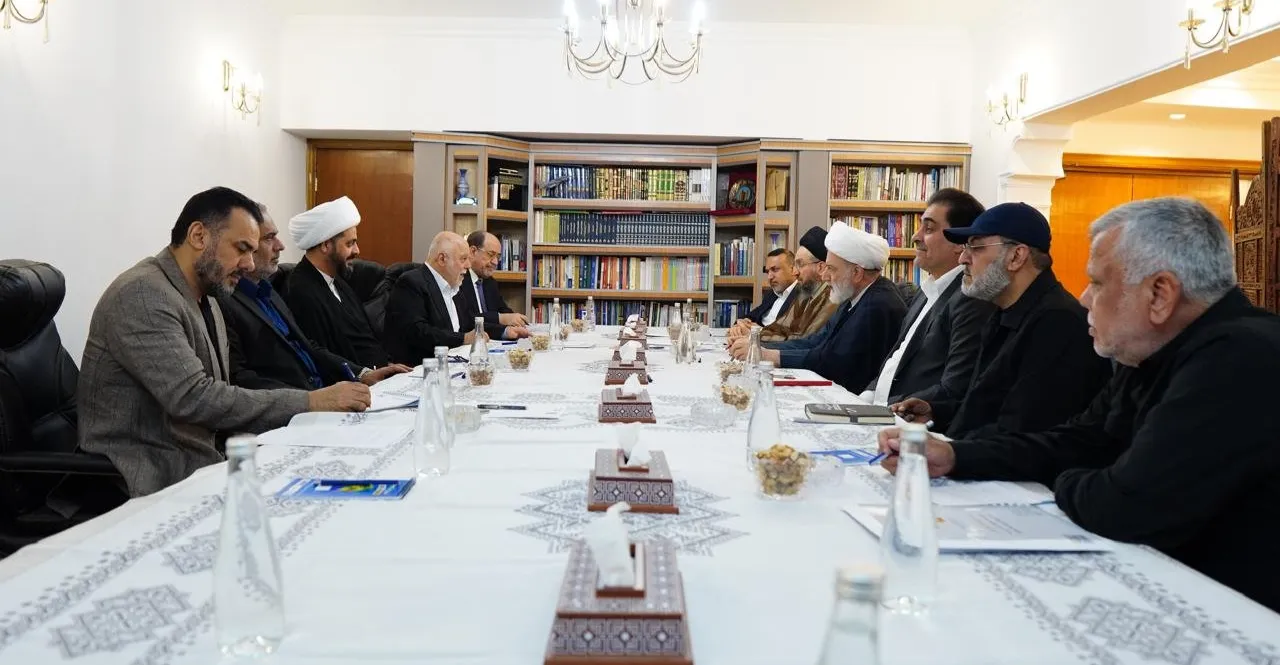
Shafaq News – Baghdad The Coordination Framework Forces, which brings together the Shiite political forces, are holding discussions to discuss the political impasse amid expectations that a settlement candidate will be put forward as an alternative to the leader of the State of Law coalition, Nouri al-Maliki. A member of the Coordination Framework, Abu Mithaq al-Masari, told Shafaq News Agency, “The Coordination Framework Forces will hold discussions prior to the meeting of the State Administration Coalition scheduled to be held in the middle of this week, in addition to discussing the issue of the political impasse in choosing the candidate for the presidency of the republic, and granting the representatives of the framework the freedom to vote for whomever.” They deem it appropriate if the Kurds present candidates for the position.” According to Al-Masari, the discussions will also discuss the inter-relations between the components of the political process and maintaining “the principle of respect for others,” in reference to the statements of the head of the “Taqaddum” Party, Muhammad Al-Halbousi, against Al-Maliki. He pointed out that “the framework may call for the political forces and the House of Representatives to convene and elect the President of the Republic, in addition to discussing the American threats in the region.” Al-Masari added, “The state administration coalition will meet to discuss adherence to constitutional timings and relations.” The interaction between the political components, in addition to other paragraphs.” Meanwhile, sources within the coordination framework told Shafaq News Agency, “The discussions will address, unannounced, the mechanism for replacing Nouri al-Maliki, with an acceptable figure or a settlement candidate,” indicating that “the potential personality will be named and recommended exclusively by al-Maliki.” She indicated that what is being circulated behind the scenes of the coordination framework suggests the name Muhammad al-Khuzaie, but he may not have internal support. And international. The sources continued their talk by saying that “there is a figure that is being kept secret that may be put forward, or go to the first frame scenario, which is naming Haider al-Abadi as a settlement candidate,” stressing that “everyone is busy with how to address the political impasse and spare the country from any unforeseen consequences.” It is noteworthy that the US State Department revealed to Shafaq News Agency, last Thursday, a firm and strongly worded position regarding the map of upcoming political alliances in Iraq, stressing that the American administration is ready to use “a complete group.” One of the tools” to ensure the implementation of President Donald Trump’s vision regarding the Iraqi file and prevent Al-Maliki’s candidacy for the position of prime minister of Iraq. The US Bloomberg Agency also reported, last Tuesday, that Washington had informed Iraqi officials, during the past days, that it may reduce Iraq’s access to oil export revenues if Nouri Al-Maliki is appointed prime minister, in light of the United States’ view of him as close to Iran, which has increased pressure on the coordination framework, according to observers. The leader of the State of Law coalition, Nouri Al-Maliki, has renewed His adherence to running for the position of Prime Minister in the next government, despite the American refusal to do so, stressing that choosing the prime minister is a national matter subject to the will of the people and constitutional institutions. Political stalemate in the Kurdistan Region: repercussions and risks Ali Hussein Faili/ The ongoing political stalemate between the two main parties in the Kurdistan Region leads to the disruption and delay of crucial decisions related to the future of the region, putting its prestige and external standing at stake, in a spot that over the past years has long been a relative model of political stability. And security. This political impasse, and the apparent faltering in forming the regional government, comes as an extension of public and long-term disputes between the two main poles. As this situation continues, the delay, which exceeded a full year, resulted in the imposition of heavy economic costs, estimated to range between several percentage points and may exceed 10% of the region’s gross domestic product, in the absence of a fully-powered executive authority capable of managing the economic and financial files. The impact of the failure to form the government is not limited to the economic aspect only, as this intersects with the disruption of Parliament, and the lack of consensus on the issue. A joint candidate for the presidency of the Republic of Iraq at the same time. This accumulation of political paralysis and constitutional tools imposes increasing political, security and social burdens, and at the same time opens the way for the rise of regional and international influence, as the decision-making gap is exploited to promote foreign agendas at the expense of weakening the negotiating position and the position of the region. These conditions have contributed to creating a clear crisis of legitimacy, which has been reflected in the decline of public confidence in institutions, as the continued paralysis of Parliament has disrupted the legislative and oversight roles and stopped the passage of laws It is vital that affects the lives of citizens and the future of the region, while there is currently an increasing erosion in confidence in democratic institutions as a tool for representing and resolving crises. More than a year of political and institutional vacuum has weakened Kurdistan’s representation, leaving the region suspended without a clear compass in its dealings with Baghdad or with a regional environment that is witnessing accelerating escalation and tension. Here, the cost is not measured in numbers alone, despite its weight, but rather it turns into a strategic pressure factor that works against the region, not in its favor, and limits it. From its ability to maneuver and protect its gains. What is more dangerous is that the continuation of this blockage redraws the balance of power at the expense of the Kurdistan decision, while society silently pays the price of the crisis. The question no longer revolves around who caused the crisis as much as it is related to the size of the political, economic and security bill that will be paid, before the losses turn into a permanent reality that is difficult to remedy. In the bottom line, this stagnation establishes a culture of crisis management instead of resolving it, and turns political disputes into a permanent mode of governance, in which sensitive files are managed by the logic of waiting. Compromise is not based on the logic of the state and institutions. With the absence of a clear time horizon for a solution, the region’s negotiating capacity with Baghdad is eroding, and its position before international partners is weakening, while the continuation of this path does not only mean the loss of opportunities for development and stability, but also threatens to redefine the region as a permeable entity, after it had been presented for years as a space of exception in a turbulent environment. The most dangerous thing is that this blockage may redraw the balance of power at the expense of the Kurdish decision, as society silently pays the price. But the real question is no longer who caused the crisis, but rather how much its cost will be before it turns into a fait accompli that cannot be remedied. What makes the situation more dangerous is that this stagnation entrenches the culture of managing the crisis instead of resolving it, and transforms political disputes into a permanent mode of governance, where sensitive files are managed by the logic of waiting and bargaining rather than by the logic of the state and institutions, and with the absence of a clear time horizon for a solution, the region’s negotiating capacity with Baghdad is eroding, and its position vis-à-vis international partners is weakening, while the gap between authority and society deepens as this continues The path does not only mean the loss of opportunities for development or stability, but rather threatens to redefine the region as a fragile, permeable entity, after it had been presented for years as a space of relative exception in a turbulent environment. Political analyst Marhan Sheikh Raouf revealed, in an exclusive interview with a Shafaq News Agency correspondent, that the main reason behind the delay in forming the Kurdistan Regional Government, despite more than a year and four months having passed since the region’s parliament elections, is due to the absence of a permanent constitution that regulates the political process and sets constitutional timings for resolving sovereign positions. And the formation of the government, as is done at the federal level in Baghdad. He explained that the absence of this constitution for the Kurdistan Region made the issue of forming the government completely subject to political understandings, which opened the door to prolonging the negotiations, especially with the escalation in the volume of differences between the winning parties in the elections. He pointed out that these differences cast a shadow on the general situation in the region and on the Kurdistan street, in light of the current government continuing to work in a caretaker capacity, which restricts its ability to Many financial, legal and administrative issues were resolved. Sheikh Raouf indicated that the crisis in forming the regional government coincides with the crisis in forming the federal government, but he considered it unfair to hold the Kurds alone responsible for the obstruction, as some media outlets are promoting, by linking the matter to a lack of agreement on the position of the President of the Republic. He pointed out that there is also an absence of consensus within the forces of the coordination framework regarding the personality of the Prime Minister, in addition to the presence of parties that benefit from the continued delay in order not to finally resolve their political files. He stressed that the dispute over the position of President The Republic is linked to the lack of a final consensus, whether within the Kurdish House or among the political forces in Baghdad, which made this entitlement part of a broader political equation related to the balances of forming the federal government. He called on the Kurdish forces to give priority to the public interest over partisan interests, pointing out that the Kurdistan Democratic Party obtained the position of Deputy Speaker of the House of Representatives, which is an important sovereign entitlement, which in his opinion calls for joint work with the Patriotic Union of Kurdistan to reach understandings regarding the rest of the entitlements, most notably the position of President of the Republic. And the ministries allocated to the Kurdish share, to ensure the unification of the Kurdish position in Baghdad. He pointed out that the delay in forming the two governments in Erbil and Baghdad had a direct impact on the citizens, especially in the file of salaries of Kurdistan region employees, which is still stagnant in the absence of two governments with full powers capable of concluding binding agreements. He considered that this file will be among the priorities of any future political settlement when the two governments are formed. In the context of comparison with previous stages, Sheikh Raouf pointed out The intensity of the current differences was not so clear during the era of the late President Jalal Talabani, indicating that that stage witnessed a greater convergence of views between the two main parties in the region, which contributed to resolving the political problems within short periods of time. He explained that the current absence of consensus and unity, in addition to the intertwining crises related to the formation of the regional government and the election of the President of the Republic, made the political scene more complex than it was during Talabani’s era. He concluded by pointing out the possibility of changes in the political equations within the region, especially after Announcing an alliance between the Patriotic Union of Kurdistan and the New Generation Movement, considering that this alliance may be one of the factors for redrawing balances, especially after resolving the presidential file and the other variables that could result from it in the Kurdistan and Iraqi scenes. ————– Political analyst Suzanne Mahmoud revealed, in a special statement to Shafaq News Agency correspondent, that the file of delaying the election of the President of the Republic and the formation of the two governments in Baghdad and the Kurdistan Region is linked to political crises. Accumulated between the two main parties in the region, the Patriotic Union of Kurdistan and the Kurdistan Democratic Party, noting that the roots of the dispute go back to the faltering formation of the Kurdistan Regional Government more than a year ago. She explained that the accumulation of political and organizational differences made consensus on the position of President of the Republic more complex, pointing out that the passage of time without solutions exacerbates the problems and creates additional obstacles to any future political entitlement, which portends that the current crisis will be more difficult than previous sessions. She indicated that the divisions do not It relates only to the presidency, but also includes the repercussions of the Iraqi parliamentary elections, the competition between the winning Kurdish blocs, in addition to security and economic files, including the targeting of sensitive sites in Erbil and Sulaymaniyah, and the ongoing salary crisis, in addition to the absence of a unified vision for dealing with Baghdad regarding financial entitlements and the sovereignty of the region. With regard to delaying the formation of the regional government, she confirmed that most political forces deal with a narrow partisan mentality instead of a comprehensive national vision, which has led to a crisis of mutual trust between the parties themselves on the one hand, and between them and the citizens. On the other hand, she added that the essence of the dispute revolves around the distribution of sovereign positions, as the National Union adheres to obtaining one of the basic presidencies or a sovereign ministry such as the Interior, while the Democratic Party adheres to the principle of “electoral entitlement” and granting the largest share to the first winner. She suggested that the traditional political equation based on the consensus of the two parties may change this time, especially with the movements of political forces in Sulaymaniyah to form new alliances that may affect the form of the next government, stressing that deciding the position of the presidency of the republic will determine the path to formation. The governments of Baghdad and Erbil together. She also indicated that the presence of the late President Jalal Talabani in the previous stages was an important factor in facilitating political agreements, given his strong relations with various Kurdish and Iraqi parties, especially with Masoud Barzani, which gave the position of the presidency political weight and wide acceptance, data that she believes are no longer available today. She warned that the continued delay in forming the two governments was directly reflected in the street economically and administratively, in light of the delay in forming the two governments. Disbursing the salaries of the region’s employees for several months, and turning the regional government into a caretaker with limited powers, in addition to the absence of the federal budget and the adoption of the 1/12 disbursement system, which caused a delay in the salaries of retirees and the families of martyrs and high taxes and fees. She concluded that the internal challenges coincide with regional and international pressures and interventions, including statements by former US President Donald Trump regarding the form of the next government in Iraq, stressing that the current stage requires accelerating the formation of a comprehensive national government capable of protecting the rights of all components and addressing financial crises. And the worsening political situation, to avoid greater repercussions on general stability in the country.