
اخبار تونس- وطن نيوز
اخر اخبار تونس اليوم – اخبار تونس العاجلة
W6nnews.com ==== وطن === تاريخ النشر – 2026-05-26 12:37:00
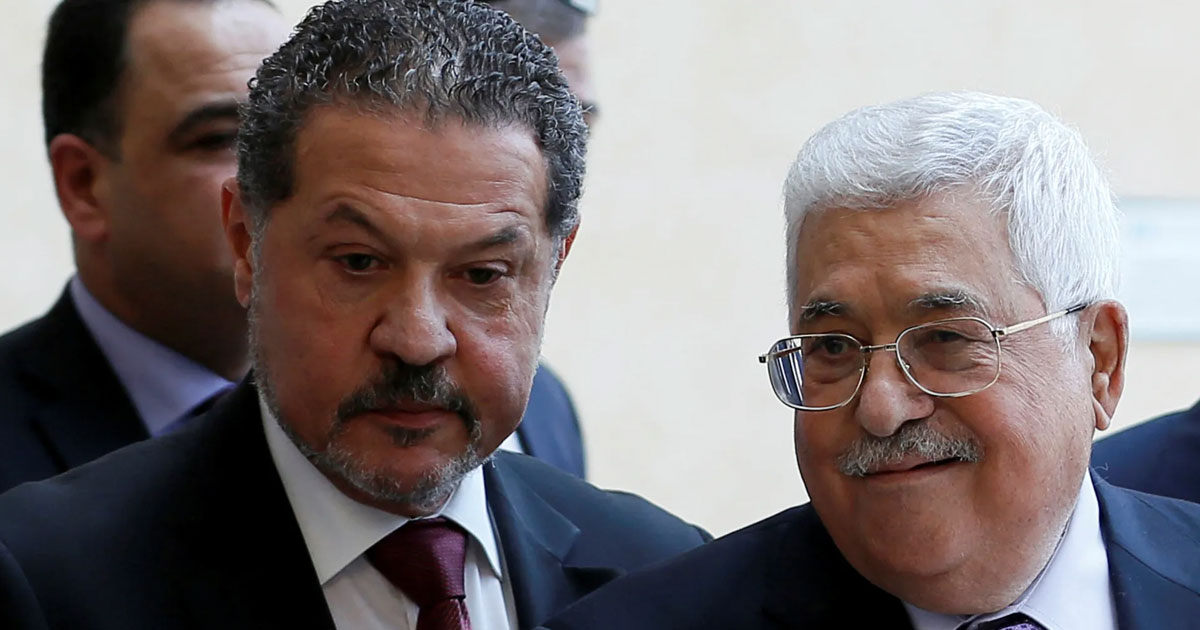
The eighth general conference of the Fatah movement, which was held simultaneously on May 14, 2026 in Ramallah, Gaza, Cairo and Beirut, with the participation of more than 2,500 members, constituted a very important political and organizational station in the Palestinian scene, not only because it brought together thousands of cadres and leaders from various places of the Palestinian presence, but because it produced a new leadership through the election of members of the Central Committee and the Revolutionary Council through secret ballot. This conference came at a critical moment characterized by a decline in popular confidence in the movement, continued internal division, and increasing regional and international pressure on the Palestinian leadership. Dr. Hassan Al-Assi * The election of the Central Committee, which is the highest decision-making body within Fatah, carried implications that went beyond the organizational dimension, as it rearranged the balance of power between the various movements, and brought new names into the leadership circle, including Yasser Abbas, son of President Mahmoud Abbas, which sparked a wide discussion about the future of the movement and the problem of political succession. In this context, the conference seemed like a testing ground for the extent of Fatah’s ability to renew itself and rebuild its internal legitimacy, at a time when questions are rising about the succession after the president, and about the nature of the role that the Central Committee will play in shaping the features of the next stage. In this sense, the recent Fatah conference can be viewed as more than just an organizational entitlement; It is a reflection of an internal conflict over leadership, and an attempt to reproduce legitimacy in the absence of general elections, which makes its results the focus of attention within the Palestinian interior as well as regional and international parties. The conference resulted in the election of 18 members of the Central Committee and 80 members of the Revolutionary Council. The victory of Yasser Abbas, the son of Palestinian President Mahmoud Abbas, as a member of the Central Committee of the Fatah movement sparked widespread debate about the issue of “political inheritance” and the future of leadership within the movement, especially as the president grows older and the debate over his succession intensifies. Initial results showed that Yasser Abbas had become a member of the movement’s highest leadership body, which opened the door to questions about family influence within Fatah. In a moment fraught with symbolism and controversy, Yasser Abbas, 64 years old, a businessman who resides most of his time in Canada, and the son of Palestinian President Mahmoud Abbas, won membership in the Central Committee after having been a special representative of the president for five years. Thus, the president’s son entered the heart of the political equation by winning membership in the Central Committee of the Fatah movement. This event is not just a passing detail in the record of organizational conferences, but rather a political earthquake that opens the floodgates of questions: Are we facing the beginning of an organized inheritance of power within the movement? Or does it reflect an attempt to reproduce the leadership with new faces carrying different blood but linked to the presidential house? The entry of the president’s son into the highest leadership body in Fatah raises a storm of connotations: from the economic and political backgrounds surrounding him, to the circumstances that accompanied his election, all the way to what this development could mean for the future of the movement and the Palestinian Authority. It is a moment that goes beyond the person to ask a question about the nature of the Palestinian political system: Is it in the process of transforming into a closed family model, or is it seeking to rearrange its cards in the face of internal and external challenges? The political backgrounds and implications of the rise of Yasser Abbas. Yasser Abbas’s entry into the Central Committee of the Fatah movement cannot be read in isolation from the historical and organizational context of the movement, nor from the nature of the Palestinian political system that his father has led for more than two decades. The man, known mainly as a businessman who owns companies in contracting, insurance, and real estate, was not present in the first ranks of the movement, but he gradually appeared through special assignments from the president, such as following up on the Lebanon file on behalf of the Palestine Liberation Organization, and then accompanying his father in international meetings with leaders such as Vladimir Putin and Abdel Fattah al-Sisi. This rise raises fundamental questions about the nature of legitimacy within Fatah: Is it militant legitimacy based on a long history of struggle, or is it turning into family legitimacy linked to the presidential house? The numbers that accompanied the movement’s eighth conference reveal that Yasser Abbas was not among the names who received the most votes, compared to, for example, Marwan Barghouti, who received approximately 1,900 votes, or Majid Faraj, who came second. However, his mere entry into the Central Committee, Fatah’s highest leadership body, represents a game changer. Politically, it can be said that this development reflects an attempt to rearrange the internal house in preparation for the post-Mahmoud Abbas era. The movement, which faces internal challenges from the division with Hamas, and external challenges from the blockage of the horizon for a settlement, seems to be opening the door to new faces, but they are faces directly linked to the president himself. This raises serious implications: Are we facing the beginning of an organized transfer of power within Fatah, similar to what other Arab regimes witnessed? Or is it just an attempt to introduce an economic-managerial personality who can add different experience to the leadership? The economic figures linked to Yasser Abbas add another layer of controversy. The man is estimated to have a fortune worth millions of dollars from his companies in Palestine and abroad, which raises questions about the intersection of money and politics within the movement. This overlap may be seen as a strength, but it also opens the door to criticisms of transparency and popular legitimacy. The entry of the president’s son into the Central Committee is not just an organizational event, but rather an indication of a profound shift in the nature of leadership within Fatah: from militant legitimacy to familial-economic legitimacy. This step carries indications that the movement is preparing for the post-Mahmoud Abbas era, but it does so in a way that may deepen internal divisions and raise widespread debate about the future of the Palestinian political system. The circumstances and profound implications of Yasser Abbas’s entry Yasser Abbas’s entry into the Central Committee of the Fatah movement cannot be isolated from the organizational and political circumstances surrounding the movement’s eighth conference. This conference came at a critical moment, as Fatah suffers from a decline in its popularity in the Palestinian street, and faces internal challenges from the division with Hamas, in addition to external pressures linked to the blockage of the horizon for a settlement with Israel. In this context, the introduction of the president’s son into the highest leadership body seemed like a double message: on the one hand, an attempt to consolidate the influence of the presidential house within the movement, and on the other hand, an indication that the leadership is preparing for the post-Mahmoud Abbas era by introducing new faces. The numbers that accompanied the internal elections reveal that Yasser Abbas was not among the names that received the most votes, compared to Marwan Barghouti, who topped the results, or Majid Faraj, who came second. However, his mere entry into the Central Committee, despite his limited struggle, reflects a special political weight derived from his father’s position. This paradox opens the door to a wide debate about the nature of legitimacy within Fatah: Is it a militant legitimacy based on a long history of struggle, or is it gradually transforming into familial-economic legitimacy? Economically, Yasser Abbas is not an ordinary figure; He is a businessman who owns companies in contracting, insurance, and real estate, and his wealth is estimated at millions of dollars. This economic dimension adds a new layer of controversy, as it raises questions about the intersection of money and politics within the movement, and about whether his introduction into the leadership reflects a desire to benefit from his administrative and financial experience, or is it merely a step to strengthen the family’s influence. The circumstances also reveal complex internal balances: while names such as Barghouti and Al-Zubaidi rose, who are symbols of militant legitimacy, Yasser Abbas entered as a controversial new face, which reflects an attempt to create a balance between the internal generation and the new guard associated with the president. This balance may be seen as a step to rearrange the internal house, but it may also deepen divisions and raise fears of an orderly inheritance of power. The implications of this event go beyond the individual to raise a question about the future of the Palestinian political system: Are we facing a reproduction of leadership on familial and economic foundations, or is Fatah seeking to introduce new faces to face the upcoming challenges? In any case, the entry of the president’s son into the Central Committee represents a defining moment in the movement’s history, a moment that carries within it contradictory possibilities between renewal and closure, between reform and inheritance, and between popular legitimacy and family legitimacy. Caliphate after Mahmoud Abbas In the context of the search for the identity of the Palestinian leadership after Mahmoud Abbas, the name of Yasser Abbas emerges as one of the controversial elements. His election to the Central Committee of the Fatah movement during the Eighth Congress gave his political presence new weight, but at the same time it opened the door to a wide discussion about the nature of succession within the movement, and whether this rise reflects a path towards the inheritance of power or merely a redistribution of leadership roles. From an analytical point of view, Yasser Abbas does not have the same militant or organizational credentials as his rivals within Fatah, as he is mainly known as a businessman who lived for many years outside Palestine, which makes him closer to the image of “the son close to the president” than to being a field commander. This dimension weakens his popular legitimacy, especially in light of the decline in public confidence in the movement, and makes any attempt to present him as a direct successor to his father fraught with objections. However, his introduction into the Central Committee solidifies his position within the organizational structure, and gives him a platform that can later be used in the battle for succession. The controversy around him goes beyond his person to reflect a deeper crisis in Fatah: Will the movement remain captive to family and security influence, or will it move towards internal reform that will open the way for leaders with a symbol of struggle such as Marwan Barghouti, or administrative and security figures such as Hussein al-Sheikh, Jibril Rajoub and Majid Faraj? In this context, Yasser Abbas becomes a symbol of a broader conflict between disparate currents: one movement seeking to consolidate family influence, and another movement demanding the renewal of leadership and the rebuilding of popular legitimacy. The future is therefore open to multiple scenarios. Yasser Abbas may be imposed as successor thanks to his family closeness to the president, but this option will face major internal and external challenges, and may lead to further divisions. On the other hand, another figure who is more popularly and organizationally acceptable may emerge to lead Fatah in the post-Abbas era, which will determine the features of the Palestinian Authority in the coming years. Fatah faces a test of legitimacy and renewal. The eighth conference of the Fatah movement was not just an internal electoral occasion, but rather a revealing moment about the nature of the crisis that the movement and the entire Palestinian political system is experiencing. While Fatah sought to project the image of an organization capable of renewing itself through secret balloting and rearranging the internal house, the introduction of Yasser Abbas into the Central Committee sparked a wide debate about the meaning of legitimacy at this stage: Is it militant legitimacy based on a long history of struggle, or is it gradually turning into familial-economic legitimacy linked to the presidential house? This paradox makes the results of the eighth conference the focus of attention both internally and externally. Internally, the organization faces a challenge in regaining the confidence of the Palestinian street, which sees the absence of general elections as a prolonged legitimacy crisis. Externally, regional and international parties are closely following these transformations, because they realize that the future of the Palestinian leadership will directly affect the course of the entire Palestinian issue. The entry of the president’s son into the highest leadership body in Fatah is not just an organizational event, but rather an indication of the nature of the next stage: a stage that oscillates between renewal and closure, between reform and inheritance, and between searching for true popular legitimacy or being satisfied with closed organizational legitimacy. In this sense, it can be said that the Eighth Conference put Fatah to a historical test. Either it will succeed in rebuilding its legitimacy on democratic and participatory foundations, or it will sink into the succession controversy that may deepen divisions and weaken its position in the face of national and regional challenges. It is a defining moment, a moment that requires Fatah to clearly define its course, because what happened at the eighth conference will only be read as an indication of the nature of the Palestinian future, between the legitimacy of the organization and the problem of political inheritance, the future of the Fatah movement in light of the results of the conference. The results of the eighth conference of the Fatah movement are not limited to the redistribution of seats within the Central Committee, but rather carry deeper implications for the movement’s relationship with Palestinian society and the surrounding regional environment. From a social perspective, the organization faces a challenge in regaining the confidence of the younger generation that feels alienated from the traditional structure of the movement, which makes the introduction of new faces such as Laila Ghanem and Zakaria Al-Zubaidi a test of Fatah’s ability to address different social segments. At the regional level, the emergence of names directly linked to the president, such as Yasser Abbas, puts the movement under the microscope of Arab countries and international supporters who are monitoring the extent of Fatah’s seriousness in internal reform in exchange for consolidating family influence. At the institutional level, the conference revealed an urgent need to redefine the relationship between the Central Committee and the Revolutionary Council, so that it does not remain merely formal structures, but rather turns into effective tools for producing new policies capable of confronting the Palestinian division and rebuilding national legitimacy. In this sense, Fatah’s future after the eighth conference will not only be decided within the corridors of leadership, but rather in its ability to reconnect what was cut off with society, address the balance between family influence and popular legitimacy, and present an institutional model capable of withstanding internal and external pressures. * Researcher in anthropology.