
اخبار سلطنة عُمان – وطن نيوز
اخر اخبار سلطنة عُمان اليوم – اخبار سلطنة عُمان العاجلة
W6nnews.com ==== وطن === تاريخ النشر – 2026-05-26 14:50:00
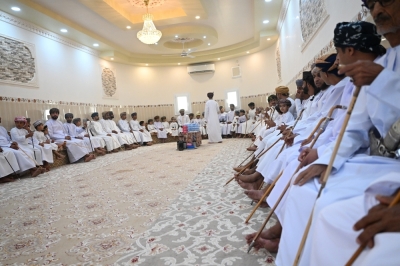
Poll – Laila Al-Hassani “Photo by: Abdul Wahed Al-Hamdani” Social specialists believe that family councils on Eid days represent a rich social space that contributes to consolidating relationships between family members, and is also a vital channel for transmitting values, customs and traditions from one generation to another in a natural and spontaneous way, through practice, experience and direct interaction, in a way that enhances the preservation of the social and cultural identity of society. Abdullah bin Salem Al-Hashimi, an educational and family specialist, said: The councils Family gatherings during Eid are not just formal gatherings or a passing social presence, but rather a human space in which feelings of familiarity, love, and kinship ties are renewed. It gives family members a valuable opportunity to meet away from the pressures of life and its daily preoccupations, and restores warmth and sincerity to relationships. It also enhances the spirit of family belonging and strengthens ties that may be weakened by life’s concerns and the long days apart. He added that Eid, in its essence, carries meanings of tolerance, forgiveness, and opening new pages, and is therefore considered one of The most appropriate times to resolve differences and reunite. A family atmosphere full of joy and psychological comfort contributes to softening hearts and breaking down barriers, and a sincere word or a simple gesture of kindness may be enough to end years of estrangement. Family elders also play a pivotal role in bringing viewpoints closer, spreading the spirit of familiarity, and restoring the warmth of relationships between family members, in a way that enhances the unity and cohesion of the family fabric. Challenges Al-Hashemi pointed out that the most prominent challenges facing communication within the family today are the increasing preoccupation with electronic devices, social media, and the digital world as a whole, in addition to the pressures of life and its accelerating pace, which has contributed to reducing the attendance of family meetings and their weak frequency. The decline in dialogue between generations and the divergence of interests have created a gap in family communication, and some have become inclined towards digital isolation instead of direct family sessions that enhance human closeness. Al-Hashemi explained that children can be encouraged to participate in family visits by involving them in preparing for them, and by introducing them to the value of family ties and its profound impact on religion and society. Also, making the councils closer to the interests of young people, and giving them a space for dialogue and participation, are factors that help enhance their integration and their sense of the importance of their role within the family. Family role models continue to have a significant impact. The parents’ keenness on maintaining family ties and family communication entrenches this behavior in the hearts of their children and turns it into a permanent practice. He pointed out that the elders of the family represent a fundamental pillar of its cohesion. They are the ones who create an atmosphere of welcome and inclusion, and transmit authentic values and customs to generations. Their presence also gives the councils a special prestige and warmth, and plays an important role in bringing hearts together and bringing viewpoints closer, as well as telling stories, experiences, and news that strengthen family ties and instill meanings of belonging and Omani character. He added that activating the role of family councils can contribute to reviving the culture of calm dialogue, enhancing mutual listening, and not being satisfied with social niceties, so that it turns into a positive space for raising family and community issues in a sophisticated and constructive manner, and exchanging expertise and experiences in a way that enhances the values. Understanding, cooperation and social solidarity. Al-Hashemi concluded by emphasizing the importance of achieving a conscious balance between family privacy and family ties, so that family relations are not at the expense of each family’s privacy, but rather are based on respect, support and affection. Organizing visits, and respecting the times and circumstances of others, contributes to the sustainability of relationships in a healthy and comfortable way for all, and enhances the continuity of communication without pressure or confusion. Human Relations Al-Rayyan Al-Ghafri, a member of the Omani Social Association, says: The radiance of the Eid morning in Oman goes beyond the boundaries of rituals and traditional festive appearances and resides deep within the “Omani Majlis” or “Sabla”, where generations meet across the distances imposed by the busyness and acceleration of life. She believes that this renewed annual meeting is not just an inherited social tradition or a passing habit, but rather a vibrant human space in which bonds are renewed, and through which the values of solidarity, cooperation and community harmony are transmitted. As a person is preoccupied with the details of work or study and the pressures of daily life, Eid comes to give individuals the opportunity to “positively separate” from burdens and return to the warmth of their first relationships, through spontaneous meetings, the exchange of congratulations, and the recollection of memories that form the memory of society. She pointed out that family gatherings contribute to enhancing the feeling of security and belonging during the days of Eid, and this is evident in the shared details that family members experience together, starting with the unity of appearance and traditional dress; When an individual sees everyone, from children to the elderly, wearing the dishdasha, masri, and dagger for men, and traditional clothing for women, his sense of belonging to one social entity is strengthened, and his feelings of pride in the Omani identity deepen. She added that these councils play a pivotal role in meeting one of the most important psychological needs in Maslow’s pyramid, which is the need for belonging. These gatherings represent an emotional anchor that strengthens an individual’s identity, especially for children and emerging generations. By listening to ancestors’ stories, learning about family history, and exchanging common memories and attitudes, the individual develops a solid emotional awareness and a deep sense of belonging to his family and community. This belonging also generates a growing sense of security, because the individual feels that he is part of a cohesive social support network that supports him psychologically and materially in various circumstances. She explained that the digital age, with its accelerated virtual communication, has contributed to the widening of the circle of social isolation among some individuals, and here the importance of family meetings in breaking this isolation is highlighted. Direct human contact during Eid, with its handshakes, friendly conversations, children’s laughter, and adults’ invitations, constitutes live interactions capable of melting the ice of loneliness and breaking down the psychological barriers that may be imposed by the pressures of work, study, or expatriation. She indicated that activities associated with Eid in Omani society, such as family visits and gatherings in traditional events such as “Eid festival,” and participation in arts such as “Al-Razha,” contribute to renewing psychological activity and raising the morale of individuals. The positive atmosphere, mutual smiles, and friendly conversations directly reflect on mental health, and relieve daily stress and tension, making Eid a space for restoring psychological and spiritual balance. For her part, Sariya Al-Ghunaimi, a social researcher and member of the Omani Social Society, says: “The Majlis,” “Sabla,” or “Diwaniya” are multiple names for one place present in every Omani home, which constitutes one of the most important tributaries of socialization since childhood. It represents an incubating environment for acquiring the authentic Omani values, customs, traditions and character. She adds that councils are considered one of the most prominent social manifestations that reflect the strength of family and community cohesion, especially during holidays and occasions that witness the gathering of family, relatives and neighbors, as the holiday is not limited to being only a religious occasion, but rather turns into a renewed space for strengthening the ties of kinship and consolidating the values of solidarity and direct communication between members of society. She pointed out that despite the technical development and the spread of social media, family councils still maintain their position as a real space for human dialogue, exchange of feelings and rapprochement. emotional; Real presence gives individuals a deeper sense of confidence, and enhances social and religious values through direct interaction based on good reception, generous hospitality, and the exchange of conversations and news, in addition to what Omani society knows as “Azzam,” which reflects the authenticity of society and the warmth of its human connection. She added that councils enhance the spirit of cooperation and social solidarity, whether through exchanging support or caring for the conditions of others and supporting them in various circumstances. This is evident in spontaneous social initiatives, such as opening some majlis by neighbors to receive the guests of relatives or participating in receiving guests, in a scene that reflects the depth of human interdependence in Omani society. Also, the councils are not limited to the family only, but extend to include neighbors, friends, and neighborhood people, in a way that embodies the nature of Omani society based on familiarity and continuous communication. Feelings of belonging Haniya Al-Subhi, a member of the Omani Social Association, said: Councils in Oman have historically been linked to tribal, rural, and urban structures, and have formed, through various stages, a social space for communication between notables and members of society, and a field for managing daily life affairs, resolving conflicts, and discussing public issues. With the formation of the modern state, the concept of “Sabla” evolved from being a traditional space of prestige and mediation to a national symbol that reflects the depth of social cohesion, while continuing its authentic and renewed social roles. She added that councils play a pivotal role in building trust among members of society, and enhancing feelings of belonging, kinship and social solidarity, by expanding networks of mutual support in times of need, which is one of the basic components of what is known as “social capital” in its associative and bridging dimensions. She pointed out that the hospitality system and the associated exchange of roles and bearing costs among members of the local community, especially on social occasions such as weddings, holidays, and funerals, represent a solid social message that reflects the spirit of collective responsibility, and the keenness to strengthen community cohesion and the sustainability of interconnectedness between individuals. Family Connection Mona Bint Saeed Al-Abri says: Family councils in Omani society have a high social value, and represent a basic pillar within every home and in every village, as they contribute to strengthening family cohesion. On the one hand, and strengthening community cohesion in the neighborhood or village on the other hand. She explains that it represents a lively space in which individuals present their ideas, discuss their issues, and share their concerns and joys. It also gives the individual a feeling of belonging to a supportive social entity that is present at all times, making it a symbol of familiarity and solidarity among people. She added that she is keen for her son to be present in men’s gatherings on a regular basis, accompanied by his father, as it is a rich educational environment from which he learns customs and traditions in a practical and repeated manner, starting from the etiquette of speech and the arts of hospitality, all the way to learning about the experiences of the family’s elders, all the way to learning about the experiences of the family’s elders. In solving problems and making decisions, she stressed that the Omani councils represent “social schools” that transmit values between generations. She pointed out the importance of the role of parents in encouraging children to attend men’s and women’s family councils, because of their direct impact in instilling moral and social values, and reducing excessive reliance on electronic devices, which has led some children to reluctance to participate in these meetings. She also stressed the need to motivate children through encouragement and praise and make the atmosphere of the councils more attractive and interactive, especially in light of the accelerating lifestyle and the dominance of digital media. She pointed to the emergence of some workshops and courses concerned with teaching children customs and traditions, considering this an indication of the need to strengthen this aspect, despite its importance, stressing at the same time that true learning is not complete except through live experience within the councils and direct interaction with social reality, which consolidates the values and makes them more stable and profound in the behavior of generations. Emerging.