
اخبار سلطنة عُمان – وطن نيوز
اخر اخبار سلطنة عُمان اليوم – اخبار سلطنة عُمان العاجلة
W6nnews.com ==== وطن === تاريخ النشر – 2026-03-23 20:12:00
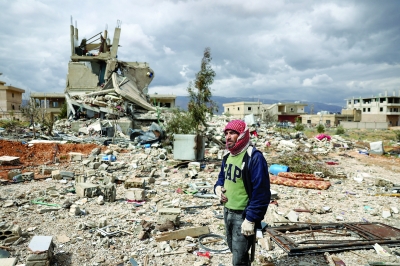
Hezbollah targets the Kiryat Shmona settlement and Israeli occupation army gatherings Beirut “Agencies”: The United Nations Interim Force in South Lebanon (UNIFIL) announced on Monday that its general headquarters in the town of Naqoura was hit by a projectile likely launched by a “non-state” party, shortly after Hezbollah announced targeting Israeli forces inside the town. The coastal town is located in the far south of Lebanon on the border with Israel, and since the end of last week it has become one of the points of confrontation between the party and the forces of the Hebrew state, amid a conflict that has entered into. Its fourth week in the wake of the war in the Middle East. The UNIFIL force stated in a statement, “Just before noon today, a projectile hit a building inside the UNIFIL headquarters, and peacekeepers who specialize in defusing explosives are working to deal with the matter, and we believe that a non-state party was the one who launched it.” This came after Hezbollah claimed responsibility for at least two missile attacks today against Israeli forces in Naqoura, one of which at eleven o’clock Beirut time targeted “a gathering of soldiers.” The Israeli enemy army in the vicinity of the Naqoura municipality building,” and the second after two hours of a similar gathering “near the Naqoura school.” After the ceasefire agreement that put an end to the previous war between Hezbollah and Israel in November 2024, Israel kept its forces at five points inside southern Lebanon, one of which was in Labouneh, located less than three kilometers southeast of Naqoura. The party had previously announced that its fighters clashed “with an Israeli force that attempted to penetrate… toward” the municipality. Naqoura. UNIFIL said in its statement on Monday that it had observed, during the past forty-eight hours, “intensive gunfire and explosions” in the town and its surroundings. “Bullets, shrapnel and projectile fragments hit the buildings and open areas inside our headquarters,” adding that “as a result, peacekeepers were confined to shelters to avoid casualties.” The international force reminded “all parties of their responsibility to ensure the safety and security of peacekeepers, and to avoid any action that might expose them to danger, including activities She stressed that “there is no military solution to this conflict,” calling on the parties to “put aside their weapons and commit to working to find a long-term solution.” In the context of daily hostilities, Lebanese Hezbollah announced in separate statements on Monday that its members targeted Israeli settlements, including the Kiryat Shmona settlement, and also targeted Israeli army gatherings in several towns in southern Lebanon, and at the Israeli site of Miskaf Am. Israeli media reported earlier that a person was wounded. Seriously, as a result of shrapnel from a missile fired from Lebanon falling on a bus in Kiryat Shmona, northern Israel. According to the Israeli Channel 13, “A series of sirens were heard throughout the day in northern areas, and a 50-year-old man was injured between moderate and serious as a result of shrapnel that hit a bus in Kiryat Shmona.” It indicated damage to the bus and in various locations in the city, pointing out that after the attacks in Kiryat Shmona, warnings were issued about the penetration of drones into Metulla and the region. On the other hand, today, Monday, Israeli warplanes raided and destroyed the bridge of the town of Qaqia in southern Lebanon. Israeli warplanes launched, at dawn today, a violent air strike on the bridge of the town of Qaqia, the bridge that connects the Nabatiyeh area to Wadi al-Hajir and the Ghandouriya sector in southern Lebanon, and destroyed it. Yesterday, Sunday, the Israeli warplanes bombed the Qasimiya Bridge at the coastal highway on the River The Litani and its destruction. Lebanese President Joseph Aoun confirmed today that targeting the bridges of the Litani River, the vital artery for civilian movement, is an attempt to cut off geographical communication between the area south of the Litani and the rest of Lebanese territory and hinders the arrival of humanitarian aid. It falls within suspicious plans to establish a buffer zone, stabilize the reality of the occupation, and seek Israeli expansion within Lebanese territory. For his part, Lebanese politician Fouad Siniora denounced and condemned “the escalation of Israeli aggression.” On Lebanon, its people and its architecture, and in particular, its attempt to blow up bridges and roads linking the southern Litani area to the north of the country, the latest of which was the destruction of the main Qasimiya Bridge on the main coastal line, with the dangers and grave repercussions that this entails on more than one level. Its buildings, making it difficult for its people to return to it. This is in addition to his plan to throw in a larger number of displaced Lebanese to escape the hell of bombing and targeting, and to cause the problems of the displaced Lebanese to increase and deepen and to increase their suffering and the suffering of the places of asylum. And he rejects all Israeli plans to cause strife among the Lebanese.” He addressed the Arab and international communities, asking them to “provide the necessary support to Lebanon and the Lebanese, for their ability to withstand and confront these heinous crimes against Lebanon, its sovereignty, and its citizens.” Municipalities in southern Lebanon receive Israeli communications requesting the evacuation of the displaced. Meanwhile, a number of municipalities in the border region in southern Lebanon announced that they had received communications in recent days from the Israeli army, in which they were instructed to evacuate. The displaced people who fled from neighboring towns are affiliated with Hezbollah, which is waging a war with Israel. The war, which has entered its fourth week, resulted in the displacement of hundreds of thousands of Lebanese, especially from the party’s strongholds in the southern suburb of Beirut and in the south of the country, which included evacuation warnings issued by the Israeli army to the residents. The mayor of Kawkaba, Eli Abu Nqoul, told Agence France-Presse that 21 displaced families are leaving the town located in the Hasbaya district today, Monday. Based on an Israeli request, he explained to Agence France-Presse by phone, “I received a call from the Israeli occupation army, asking me to leave the village within 24 hours. I have 21 displaced families and 200 families from the town, so who can I protect?” He added, “I had no choice but to protect the displaced families from any Israeli targeting and protect the people of my town from danger.” Since the beginning of last week, Abu Naqul narrates that he received calls from the Israeli occupation army, which He asked him to provide him with the names of the displaced people in his town. He had informed the authorities and the army of its content, before receiving the last call requesting the departure of the displaced. He said, “I refused to provide him with names, considering that this violates Lebanese laws, and stressed that the members of the displaced families are civilians and innocents in an attempt to keep them,” pointing out that he informed the authorities and the army of the content of those communications. The neighboring village of Abu Qamha, according to what its mayor Michel Abu Rashid announced, received a similar call on Sunday from the Israeli army, which also requested to provide it. With the names of the displaced people residing in the village. He said that he did not comply with the request. The war erupted in Lebanon on March 2 after Hezbollah fired missiles towards Israel, in response to the killing of Iran’s Supreme Leader Ali Khamenei. Since then, Israel has responded with large-scale raids, and its forces have penetrated from several directions in southern Lebanon. The Hasbaya region includes many towns inhabited by Druze, Christians, and Sunnis, and it is adjacent to the Marjayoun region, where Israeli forces have penetrated a number of towns, especially Khiam and Kafr Kila. Hezbollah announces that it has targeted Israeli forces there or engaged in direct clashes with them. During the last week, several towns, not affiliated with Hezbollah, communications from the Israeli occupation army, in which residents were asked to remain in their homes, refrain from moving on the outskirts of their towns, and evacuate the displaced from them. The municipality of al-Mari in the Hasbaya region announced in a statement “its commitment to these coercive directives resulting from the delicate security and military conditions that the region is going through,” expressing its regret for the decision that was imposed on it “forcefully,” in reference to its informing the displaced people from neighboring villages that it must leave. The first was killed. An Israeli civilian with an artillery shell. In the Israeli context, the occupation army said on Monday that its forces mistakenly fired artillery shells that killed an Israeli farmer near the border with Lebanon. He is the first Israeli civilian to be killed in the latest clashes that are taking place in conjunction with the Iran war. Ofer Moskowitz (60 years old), an avocado farmer in the town of Misgav, spoke to Reuters last week, expressing his concern about the fighting over The border. Major General Rafi Milo, commander of the Israeli army’s Northern Command, said in a statement, “Moscowitz was killed by fire from our forces during an operation whose primary goal was to protect them.” The army initially blamed his death on an attack from Lebanon when it announced the incident yesterday. Israel is launching a ground attack and a large-scale air campaign on Lebanon to eliminate the Hezbollah group, which began firing again toward Israel in support of Tehran two days after the start of the air strikes. The Israeli-American attack on Iran. The Lebanese authorities say that more than a thousand were killed, and more than a million were displaced from their homes in Lebanon. The killing of Moskowitz is the first civilian to fall from the Israeli side. The army says that two Israeli soldiers were killed during clashes in southern Lebanon. “Every five minutes you hear the sound of bombs,” Moskowitz told Reuters last week. The army statement said that the forces opened fire to support operations for soldiers in southern Lebanon, but “serious problems and operational errors” occurred. He added, “The artillery shell was fired at the wrong angle, and the required protocols were not followed… As a result, five shells were fired.” Artillery fire on the Misgav Heights in Am instead of aiming it at a hostile target. For his part, Israeli Army Chief of Staff Eyal Zamir today renewed his warning that his forces will “intensify their specific ground operations” in Lebanon and prepare for “weeks of fighting” against Hezbollah, after Beirut denounced a “flagrant violation” of sovereignty against the backdrop of the Hebrew state’s targeting of infrastructure in the country. The Israeli Army Chief of Staff said in a statement that “the operation against the Hezbollah organization is still in its infancy.” (…) It is a long-term operation and we are ready for it.” He added, “We are now preparing to intensify specific ground operations and raids, according to an organized plan. We will not stop before removing the threat from the border and ensuring long-term security for the residents of northern Israel.” In a separate statement, Israeli occupation army spokesman Evi Devrin said that the Hebrew state will begin expanding the scope of the ground operation in the coming weeks. Israel responds by launching large-scale raids as its forces penetrate southern Lebanon, killing 1,029 people. More than a million were displaced, according to the Lebanese authorities. Israeli Defense Minister Yisrael Katz announced that he had instructed the army to “immediately destroy all bridges on the Litani River that are used for Hezbollah activities.” The Litani River is located 30 kilometers north of the Israeli border. Katz said in his statement that the army had received instructions “to accelerate the destruction of Lebanese homes in the villages adjacent to (the border) with the aim of eliminating threats to Israeli towns.” The Israeli army blew up “a number of Houses in the town of Taybeh in southern Lebanon near the border with Israel, according to the National Agency. For its part, Hezbollah announced launching at least 60 attacks against Israeli forces in southern Lebanon and Israeli army bases in the north of the Hebrew state.