

اخبار سوريا اليوم – وطن نيوز
سوريا اليوم – اخبار سوريا عاجل
W6nnews.com ==== وطن === تاريخ النشر – 2024-01-09 14:50:55
Not much time had passed since the killing of the Deputy Head of the Political Bureau of the “Hamas” movement, Saleh Al-Arouri, who was killed in a recent Israeli raid in the stronghold of the “Hezbollah” militia in the southern suburb of Beirut, until military and religious leaders affiliated with the opponents of the Syrian President rushed to mourn him and pray for him. Despite the presence of many pictures showing Al-Arouri with the Iranian Supreme Leader, Ali Khamenei, and with the former commander of the Quds Force of the Iranian Revolutionary Guard, Qassem Soleimani, who was killed in early 2020.
The prominent jurist in Hay’at Tahrir al-Sham (formerly the Al-Nusra Front), Abd al-Rahim Attoun, who also serves as the head of the Supreme Council for Fatwa in Idlib, wrote a long obituary on his channel on the “Telegram” platform in which he described al-Arouri as being killed “in the context of defending the honor of this country.” Nation”.
Al-Arouri also mourned the commander-in-chief of the “Ahrar Al-Sham Movement,” Amer Al-Sheikh, who is allied with “Tahrir Al-Sham,” and described Al-Arouri in his account on the “X” platform (formerly Twitter) as “brother.”
The successive statements of condolence against Al-Arouri were a continuation of the position of the Lebanese “Hezbollah” regarding the crime, which it claimed “will not pass without response or punishment,” describing, through its Secretary-General, Hassan Nasrallah, that “the crime is a continuation of the crime of assassinating the leader, Sayyed Radhi al-Moussawi.” Al-Moussawi is known to be close to Qassem Soleimani and Hassan Nasrallah, and one of the most senior advisors to the “Quds Force” in Syria, before he was killed in an Israeli raid on a farm near the Sayyida Zeinab area in Damascus.
Iran and Islamic groups
The condolence statements take us to study the state of the relationship between Iran and Islamic groups with their various ideological, sectarian and sectarian colours, from Al-Qaeda, the Taliban, and the Islamic Group in Egypt (the nucleus of Al-Qaeda) all the way to Hamas, Islamic Jihad, and The Muslim Brotherhood,” and the Iranian sponsorship accompanying the stages of these movements’ work, or at least the formation of common consensual interests, even if temporary, under necessary conditions that in themselves represent the highest degree of political pragmatism.
It can be seen that Iran has drawn broad lines of understanding with “Al-Qaeda” and extremist groups when there is no direct clash. It supports “Al-Qaeda” in Yemen to confront the “Arab Coalition” forces and obstruct the liberation of Yemen, and it reaches an understanding with the “Taliban” to confront the threat of “ISIS” on the outskirts of its borders. It hosts senior leaders of Al-Qaeda, such as Al-Zawahiri and Bin Laden, and gives them all the capabilities to issue their statements that attack the Arab countries that Iran is hostile to.
Returning to the incident of the American air strike in the Afghan capital, Kabul, on Ayman al-Zawahiri, the leader of Al-Qaeda, a large number of whose leaders reside on Iranian soil, the legitimate leader of Tahrir al-Sham, Atoun, who is described as the “architect of pragmatic transformations,” appeared alongside a number of “Tahrir al-Sham’s” leaders. Tahrir al-Sham,” denouncing the incident that took place in August 2022.
Atoun described him as “a mujahid and a resistance fighter for the sake of God for more than half a century,” before he appeared again taking off the guise of jihadism, taking advantage of the Taliban’s rise to power in Afghanistan to promote his organization as a model with its own characteristics, identity, and geopolitical reality, in a special symposium. In it, he also compared the local Islamic “resistance” movements, which he identified with three movements: the “Taliban” in Afghanistan, the Iranian-backed Palestinian “Hamas,” and his organization, “Tahrir al-Sham,” the third leg of the resistance trinity, which moved from the concepts of global jihadism or “ Al-Qaeda” to the concepts of moderate nationalist jihadism.
Not far away is the statement of “Hay’at Tahrir al-Sham” issued in June 2022, which clarifies the state of contradiction or political appeasement, through which “Tahrir al-Sham” commented on “Hamas’ announcement of the return of relations with Damascus, calling on the movement to “review its policy and restore its compass to what takes into account their principles.” “original,” considering at the same time that “its attachment to Iran may distort the legacy of its resistance.”
What do condolence statements mean?
Statements of condolence issued by leaders of “Hay’at Tahrir al-Sham” or “Ahrar al-Sham,” the wing loyal to “Hay’at Tahrir al-Sham,” may reflect a true desire and orientation of their leadership without their official positions provoking hundreds of thousands of victims of the Iranian militias that appeared to be allies of the “Hamas” and “Hamas” movements. Islamic Jihad.”
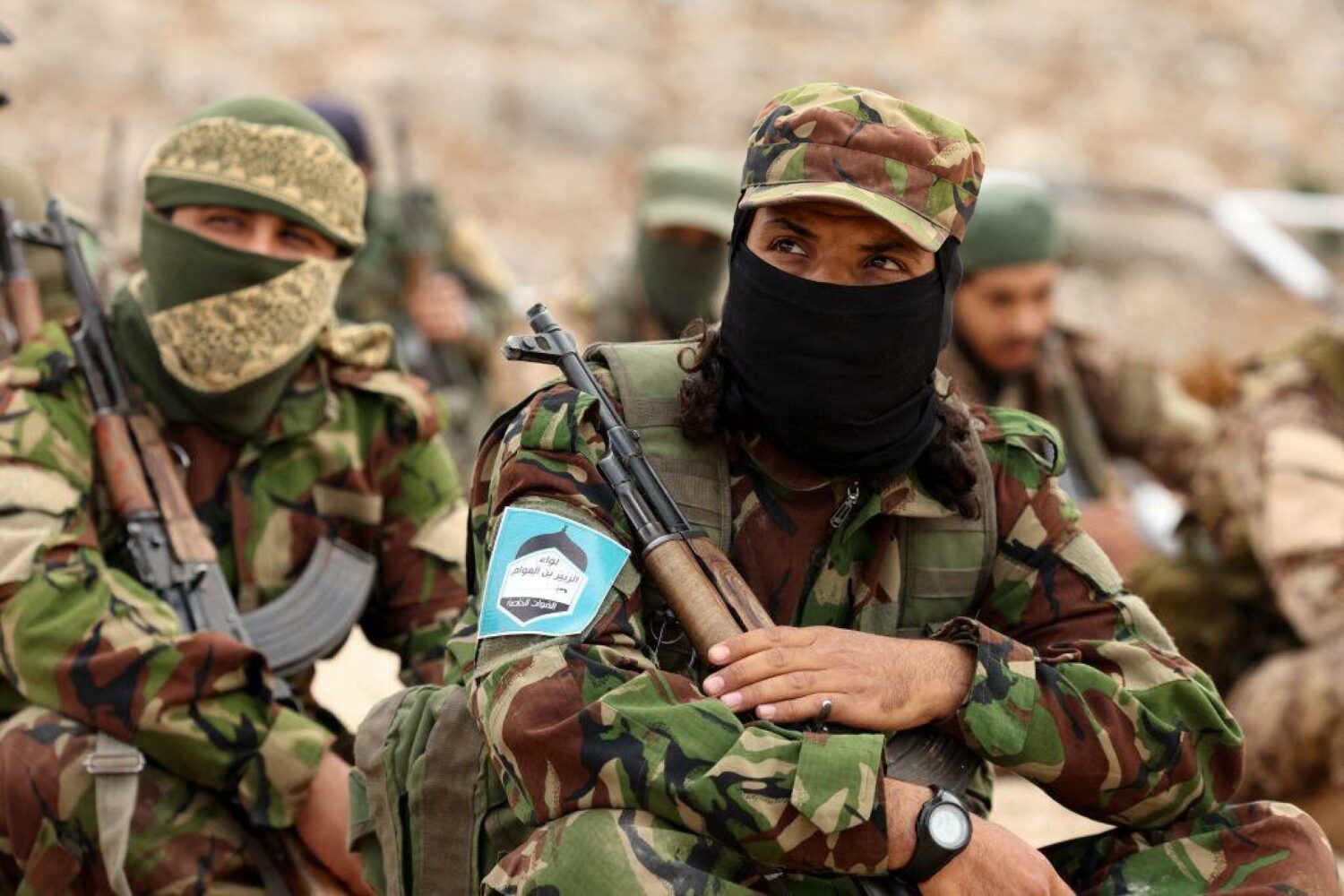
The leadership of the two factions lacked enough courage to issue official statements of condolence over the killing of the leader Al-Arouri in the southern suburb of Beirut, which is subject to the security supervision and management of the Lebanese Hezbollah, one of Iran’s most prominent loyalist arms, which played the most important role in the genocidal crimes to which the Syrians were subjected early in the year. The outbreak of protests in 2011.
At the same time, the leaders of the two factions instructed prominent leaders to express the positions of the two organizations in their personal capacity to avoid embarrassment in front of hundreds of thousands of families of victims of the Iranian militias, as the alliance of the “Hamas” movement with the Lebanese “Hezbollah” within what is known as the “Axis of Resistance” put all the arms of the axis under control. In the same basket of hostility and sharing responsibility for the crimes committed against the Syrians.
The researcher on jihadist movements, Abdul Rahman Al-Hajj, believes that “Tahrir Al-Sham” wants to reserve a position for itself in Arab and Islamic issues. In other words, it wants to exploit the Palestinian issue like all those who invest it for their political interests, and it is clear – according to Al-Hajj’s talk to “The Solution.” Net” – that it wants to use condolences for “Hamas” as a means of strengthening its social base at a time when it is launching a campaign against those accused of collaborating and working against Al-Julani with external parties, especially the “coalition” forces.
Does the sun rise from Tehran?
In August 2019, the Middle East and North Africa Observatory “MENA” issued a report entitled: “The Secret Relationship between Al-Julani and Iran,” which indicated that the Iranian “Revolutionary Guard” had received the Ahwazi Iranian prisoner, Sadiq Abdul Ali Al-Saadi, the ISIS operative who had been arrested. “Hay’at Tahrir al-Sham” in ISIS’s Salqin camp, summer 2018.
The “MENA” report was based on confessions published by “Tahrir al-Sham” of Al-Saadi and matching his photo with what was published by “Ahwazna” website, an Ahwazi Arab website opposed to the Iranian regime, on May 12, 2019, including names and photos. It said that they were prisoners of war with Iran, and some of them were punished as much as The execution, and Al-Saadi’s name and photo were mentioned along with others after they were held responsible for the attack on the “Revolutionary Guard” during a military parade in Al-Ahwaz, February 2019.
The private sources that MENA relied on said that a political and military deal was concluded between Al-Julani and Tehran, according to the equation of “Ahwazi prisoners in exchange for Idlib.” Therefore, the number of Iranian fighters in the recent Idlib battles was less, and Iran relied on small local militias that were not directly affiliated with it. of the Iranian Revolutionary Guard, while Russian officers took to the battlefield.
In 2015, Asharq Al-Awsat newspaper revealed in its investigative report that there was a close connection between Iran and ISIS, before announcing the disengagement between Al-Nusra, which later became Hay’at Tahrir Al-Sham.
The newspaper said at the time that it had learned from informed sources that Olmzun Akhmedovich Sadiqiyev, known as Jafar Uzbek, was considered one of the most important members of Al-Qaeda in Iran, and had high facilities, as a result of his relationship with Iranian officials, especially since the US Treasury Department She confirmed that Jaafar Al-Uzbek is working “with the knowledge of the Iranian authorities” to recruit fighters for the “Al-Nusra Front” – currently Hay’at Tahrir Al-Sham.
The “MENA” report was preceded by an important event, which was the “Four Cities” deal that took place in April 2017, which stipulated the evacuation of the Shiite cities of Al-Fuah and Kafriya of their residents, in exchange for the exit of opposition militants and their families from the cities of Zabadani and Madaya, which were under a stifling siege by a militia. “Hezbollah,” as this agreement was reached after direct negotiations in the Qatari capital, Doha, between representatives of Iran and others from the “Army of Conquest” – consisting of elements of Hay’at Tahrir al-Sham and the Ahrar al-Sham movement, in addition to other factions.
This was considered by some to be a demographic change orchestrated by Iran and Tahrir al-Sham, which at that time was able to overcome the difficulty of the negotiations in stages and their paralysis that plagued the political opposition, reaching directly to the Iranian capital, noting that the emptying of many opposition cities and towns was before the agreement between Tahrir al-Sham and Tahrir al-Sham. Iranians.
“Brotherhood.” He held the stick from the middle
The “Muslim Brotherhood in Syria” had also mourned Al-Arouri, describing him as “the mujahid sheikh,” while the “Syrian Islamic Council” (based in Turkey), which is considered the legitimate fist of the group, deliberately did not mention Al-Arouri by name in its statement, directing its condolences to “his family.” Almoravids in Palestine.
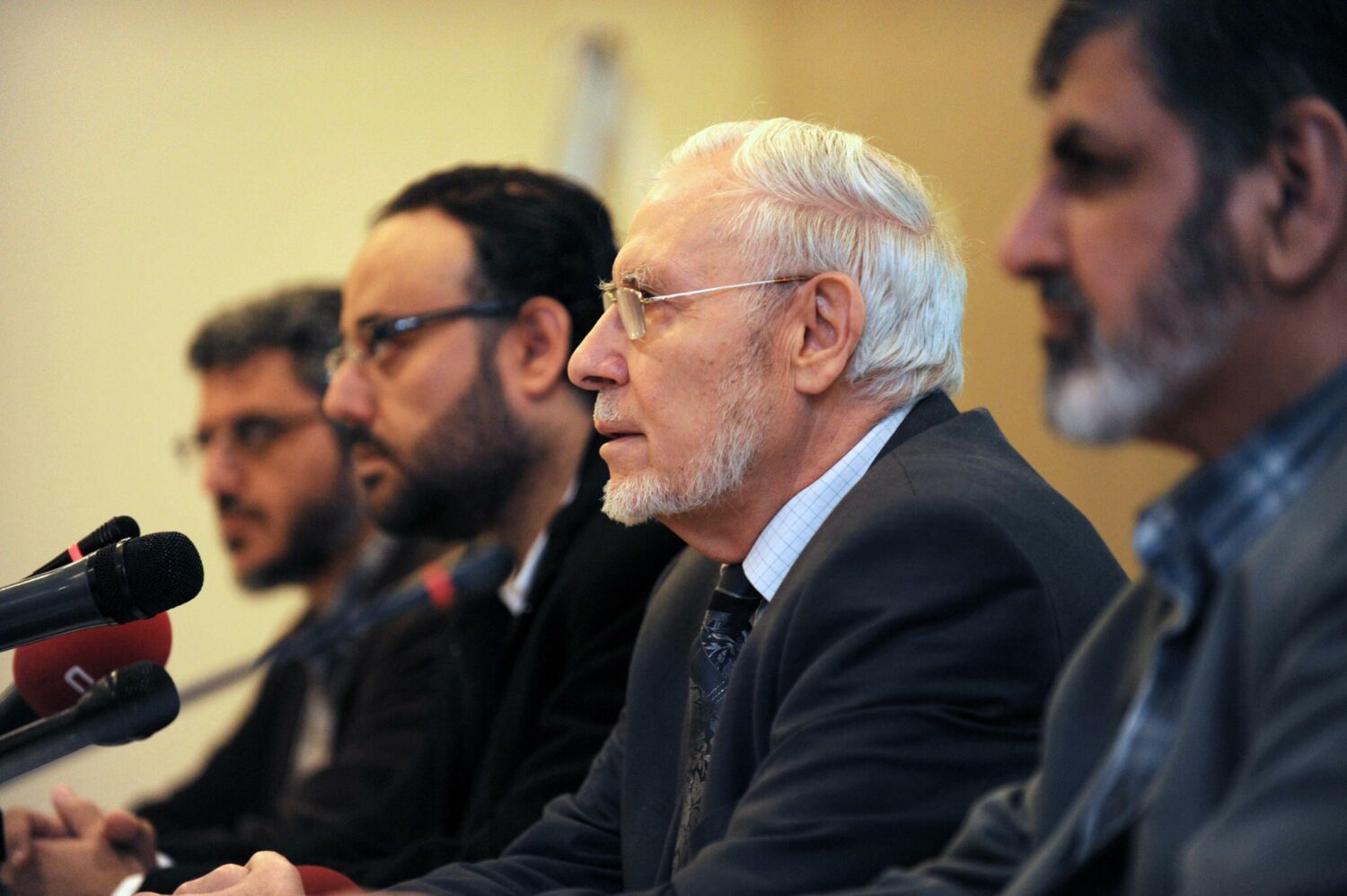
The case of the Syrian “Muslim Brotherhood” differs from other models of the movement in other countries in terms of its relationship with Iran and its loyalist arms, especially “Hamas” and “Islamic Jihad,” as geopolitics played a role in the separation of the “Muslim Brotherhood” from the Iranian theocracy in the early 1980s.
As analyst Raphael Lefebvre explains in his book, “Ashes of Hama,” when the Syrian Muslim Brotherhood stood against the Syrian regime during the era of Hafez al-Assad, it received broad support from Assad’s Baathist rival in Baghdad, Saddam Hussein. Iranian clerics, who were then engaged in a brutal war against Saddam’s regime, also supported Assad in his fight against the “Muslim Brotherhood” in Syria, especially in their stronghold of Hama.
Then the matter was repeated again after 2011, through the Iranian regime’s support for Assad Jr. against all his opponents, including the “Brotherhood.” However, it cannot be denied that the real political, cultural, and social opponent of the “Muslim Brotherhood,” according to the alphabet of its principles, is the West, its concepts, democracy, and human rights. It includes freedom of thought and belief.
Therefore, the group finds its natural place with the enemies of this West, namely Iran, which shares with it the convergence of ideological concepts, ideas and fundamentalist references in political Islam, and the use of the slogan “Islamic unity”, in order to market the idea of rapprochement between the Sunni and Shiite sects.
It can be noted that the Iranian and Muslim Brotherhood sides have not achieved anything actual from this unity on the ground. However, it is not impossible for Iran to seek to establish interests of the type of its relationship with “Hamas” with other factions of the Syrian “Muslim Brotherhood” based on necessities and importing a position Similar to Hamas’ position on Iranian support for it and its reasons and circumstances, especially if it makes concessions regarding its support for Assad.
In his talk to Al-Hal Net, the researcher on jihadist and Islamic movements, Raed Al-Hamid, points out that there do not appear to be any systematic obstacles or obstacles preventing the building of relations between Iran and those groups that form part of the system of political Islam in Syria and its extensions in the region, but The pro-Assad political stance is what prevents this.
Al-Hamid pointed out in his speech that on the methodological level, and in contrast to the “ISIS” organization, most of the jihadist groups that adopt the “Muslim Brotherhood” approach, including “Al-Qaeda” and its sisters, do not adopt a ruling declaring Shiites as infidels, which removes any doctrinal obstacles that prevent the building of relations. Between these groups and Iran.
In conclusion, we can say: The condolence statements issued by leaders of “Hay’at Tahrir al-Sham” or “Ahrar al-Sham,” the wing loyal to “Hay’at Tahrir al-Sham” and the “Muslim Brotherhood” in Syria, as well as the “Syrian Islamic Council,” are a true desire of their leadership and their orientations to Drawing a spectrum of the Iranian regime to their side, even indirectly, to repeat the situation of “Hamas,” “Taliban,” and perhaps the Shiite version of “Houthi” and “Hezbollah.”

