

اخبار فلسطين – وطن نيوز
فلسطين اليوم – اخبار فلسطين اليوم
W6nnews.com ==== وطن === تاريخ النشر – 2026-07-30 11:44:00
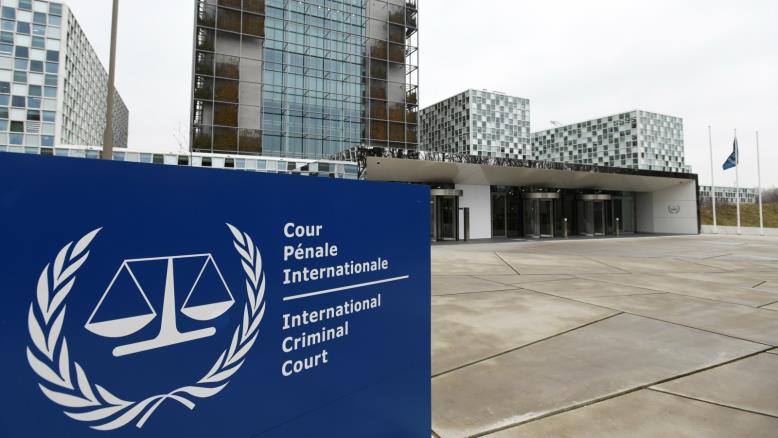
The Palestinian Information Center The Euro-Mediterranean Human Rights Monitor warned of the frequency of coordinated steps aimed at dismantling the International Criminal Court and paralyzing its ability to exercise its jurisdiction, which was recently evident in the announcement of both “Venezuela” and “Chad” to begin withdrawal procedures from the Rome Statute. The Observatory indicated in a statement on Thursday that this came in conjunction with the American public incitement against the court and the imposition of sanctions on its officials, as well as the failure of European states parties to deal seriously with the arrest warrants issued against Israeli officials. This represents an extremely dangerous path aimed at weakening the international criminal justice system and depriving victims of international crimes of one of the few accountability mechanisms available, in a way that enhances the impunity of perpetrators and provides political and legal cover for the continuation of serious violations of the law. International. He expressed his deep concern about the Chadian government’s announcement of the start of withdrawal procedures from the court, noting that this step came a few days after Venezuela announced that it had notified the United Nations of its decision to withdraw, and after similar notifications submitted by Niger, Mali, and Burkina Faso, revealing a worrying expansion of the trend towards withdrawal from the Rome Statute, inside and outside the African continent. He explained that “Chad” has a practical and pivotal role in the file of investigations related to the “Darfur region” due to its direct borders with the region and its hosting of large numbers of refugees, survivors and witnesses, in addition to its recent facilitation of the court’s team’s access to them to document the crimes. He stressed that although its withdrawal does not legally eliminate the court’s jurisdiction over the “Darfur” crimes, it may seriously hinder efforts to reach victims and evidence and implement mutual cooperation requests. The Euro-Mediterranean Monitor indicated that Venezuela’s move is particularly dangerous, as it comes in the midst of an ongoing investigation conducted by the court into allegations of crimes against humanity committed since April 2017, in which members of the state security services, civil authorities, and people loyal to the government are suspected of being involved, which raises serious fears that the withdrawal will turn into a tool to obstruct cooperation and reduce the chances of holding those responsible for the crimes under investigation accountable. He explained that the coincidence of the decisions of Venezuela and Chad to withdraw with similar decisions taken by other countries reveals a systematic path to undermine the court based on two complementary paths. The first is an intensified external attack led by the United States with the support of Israel, by imposing sanctions, issuing threats, and publicly inciting states parties to withdraw. The second is internal undermining carried out by the governments of states parties, whether by withdrawing in light of existing investigations or commitments to cooperate with the court, or by selecting the decisions that they implement and refusing to arrest and hand over wanted persons. He pointed out that the American welcome of the withdrawal of “Venezuela” and “Chad” cannot be separated from the systematic campaign announced by the administration of President Donald Trump to dismantle the court, as Washington welcomed the decision of “Venezuela” on July 25, 2026, and then the decision of “Chad” on July 27, following the announcement by US Secretary of State “Marco Rubio” on July 13 of the launch of an official American campaign to dismantle the court. He pointed out that these successive withdrawals do not punish the court as an institution as much as they harm the victims themselves, reduce their ability to access justice, and give perpetrators of international crimes a wider scope for escaping punishment in the absence of effective and independent national judicial alternatives. The Euro-Mediterranean Observatory confirmed that the criticisms directed at the International Criminal Court regarding the slowness of its procedures, its selectivity in dealing with files, and the limited results of its results, especially regarding crimes committed outside the African continent, are legitimate criticisms that require serious structural reforms that enhance the court’s independence, efficiency, and consistency of work. It stressed that addressing these imbalances is not by dismantling the court or withdrawing from it, but rather by reforming it from within, enhancing its effectiveness, and ensuring that it exercises its jurisdiction without Selectivity or political interference. The Euro-Mediterranean Monitor stressed the need not to use the shortcomings that marred the work of the court in previous stages as a pretext to target it and undermine its work, stressing that the selectivity that the international justice system suffers from requires reforming accountability mechanisms and expanding the scope of their application in a consistent manner, not weakening one of the few mechanisms available to prosecute those responsible for the most serious international crimes. He pointed out the blatant irony of the US administration making use of African objections to the court’s selectivity, at a time when it is escalating its systematic campaign against the international judicial system, essentially after the court’s work extended to include officials in Israel, its main strategic ally. He stated that Washington’s decision to impose financial sanctions and travel restrictions on the court’s prosecutor, judges, and deputy prosecutors, due to their work on files related to American and Israeli officials, represents a blatant and direct interference in the independence of the international judiciary, the effects of which extend to intimidating the court’s workers, obstructing its access to the financial and technical resources and services necessary for its work, deterring banks, companies, organizations, and experts from cooperating with it, slowing down investigations, obstructing the implementation of its decisions, and reducing the victims’ opportunities to reach justice. Justice, in addition to establishing a dangerous precedent that allows powerful countries to punish international judiciary whenever they approach their officials or allies, thus expanding the circle of impunity. The Euro-Mediterranean Monitor recalled that on November 21, 2024, the Pre-Trial Chamber of the International Criminal Court had issued two arrest warrants against Israeli Prime Minister Benjamin Netanyahu and former Defense Minister Yoav Galant after its judges concluded that there were reasonable grounds to believe they were criminally responsible for war crimes and crimes against humanity committed in the Gaza Strip. He stressed that the two arrest warrants are still in force, and that the state parties are obligated to cooperate with the court to implement them, stressing that the claim that the court lacks jurisdiction because Israel is not a party to the Rome Statute is not based on a legal basis, as its jurisdiction is based on the occurrence of the crimes under investigation in the territory of the State of Palestine, which is a state party, and this jurisdiction includes the Gaza Strip and the West Bank, including East Jerusalem. Therefore, Israel’s failure to join the Rome Statute does not immunize its officials from accountability for crimes that They are suspected of having committed it on the territory of a State Party. The Euro-Mediterranean Monitor explained that Greece, Italy, and France allowed a government plane carrying Israeli Prime Minister Benjamin Netanyahu to cross their airspace during his recent trip to the United States, even though the three countries are parties to the Rome Statute and knew of the existence of an effective arrest warrant against him, raising serious questions about the consistency of this behavior with their commitment to cooperate in good faith with the court and not undermine the implementation of its decisions. He considered that granting the plane prior permission to cross the airspace was not a measure imposed on these countries, but rather a sovereign decision that they could reject. It practically facilitated the movement of a person wanted by the court on suspicion of being responsible for war crimes and crimes against humanity, and undermined the purpose of the arrest warrant, revealing a stark contradiction between the obligations of these countries and their repeated declarations of support for the court on the one hand, and their actual decisions that help the wanted persons avoid the risk of arrest on the other hand. He stressed that the political support declared by the European Union for the Court loses its credibility and practical value when its member states use their discretion to facilitate the movement of a judicially wanted official through their airspace, instead of denying permission to transit and taking what falls within their powers to prevent the use of their territories to undermine arrest warrants. The Euro-Mediterranean Monitor stressed the need for Greece, Italy and France to provide legal clarifications of the basis on which they granted transit permission, and the need to adopt strict protocols that prevent facilitating the movement of wanted persons and ensure their immediate arrest and handover to the court if they enter their territories or land at their airports, in accordance with what is dictated by their strict adherence to the Rome Statute. In a related context, the Euro-Mediterranean Monitor pointed out the necessity of completely separating the accountability procedures related to the personal and professional conduct of the court’s public prosecutor, Karim Khan, from the investigations and judicial decisions issued by the court’s departments, explaining that dismissing Khan or subjecting him to investigation is an institutional issue legally separate from the validity of the arrest warrants. He added that holding any court official accountable for misconduct, whenever proven through independent and fair procedures that guarantee the rights of all parties and protect those reporting and those affected, is an institutional duty that enhances the integrity of the court and does not affect its independence. He warned against turning the accountability of an individual into an excuse to distort an existing investigation or invalidate independent judicial decisions, and rejected any exploitation of the Khan case to challenge the investigation into the situation in Palestine or the arrest warrants for Netanyahu and Gallant, since they were not issued. The two memorandums are not from the Prosecutor in his personal capacity, but rather from an independent Pre-Trial Chamber, which concluded, after evaluating the materials presented by the prosecution, that there are reasonable grounds to believe that they are responsible for crimes within the jurisdiction of the court, and the effectiveness or legal validity of the memorandums is not dependent on Khan remaining in his position. He pointed out that the dismissal of the Public Prosecutor does not affect the legal and institutional continuity of the court’s work, and does not cancel the ongoing investigations or valid arrest warrants, including the two investigations into the situations in the State of Palestine and Venezuela, nor does it relieve states parties of the duty to fully cooperate with the court and implement its effective judicial orders and decisions. The Euro-Mediterranean Monitor stressed the necessity of conducting a transparent, independent and competitive process to select a new public prosecutor, based on declared standards of competence, integrity and experience, subjecting candidates to strict professional and ethical scrutiny, and protecting the selection process from political interference and conflicts of interest, while ensuring continuity of work on all files without delay or selectivity, in a way that prevents the transitional phase from being exploited to disrupt investigations or subject them to American and Israeli pressure aimed at undermining accountability and protecting officials from prosecution. Regarding the legal impact of the withdrawals, the Euro-Mediterranean Monitor explained that the announcements of Chad and Venezuela to begin withdrawal procedures do not entail an immediate departure from the Rome Statute, as Article 127 of it stipulates that the withdrawal does not become effective until one year from the date the Secretary-General of the United Nations receives the written notification, unless the notification specifies a later date. Until then, the two countries remain state parties bound by all their legal duties, including cooperation with the court and responding to its requests. He stated that Venezuela’s withdrawal, even after its entry into force, does not remove the court’s jurisdiction over crimes allegedly committed during the period of the Rome Statute over it, nor does it stop the ongoing investigation into the situation there or cancel the cooperation obligations related to the procedures that began before the withdrawal took effect. Likewise, Chad’s withdrawal does not affect the court’s jurisdiction in Darfur crimes, nor does it disrupt the cooperation procedures that began during its membership, as withdrawal does not erase individual criminal responsibility and does not stop the court’s consideration of the issues presented to it before its entry into force. The Euro-Mediterranean Monitor called on the governments of Chad, Venezuela, Niger, Mali and Burkina Faso to retract the withdrawal decisions and withdraw their notifications before they take effect, continue to fulfill their legal obligations, and work from within the Assembly of States Parties to reform the court and address the shortcomings in its work, instead of weakening the international criminal justice system and depriving victims of one of the few accountability mechanisms available. He called on the countries concerned to continue full cooperation in the relevant files and investigations, including facilitating the access of the court’s investigators to victims, witnesses, information and evidence, ensuring the protection of victims and witnesses and preserving evidence, and not employing withdrawal procedures to obstruct investigations or reduce the chances of holding those responsible for international crimes within the jurisdiction of the court accountable. The Euro-Mediterranean Monitor urged the United States to stop its campaign aimed at dismantling the court, and to abolish the financial sanctions and travel restrictions imposed on its judges, prosecutors, and collaborators, calling on the states parties, first and foremost the European Union countries, to take collective legal, financial, and technical measures that protect the court, its employees, and its collaborators from the effects of sanctions and political pressures, and to ensure its continued access to the services and resources necessary to perform its work. He called on the European states parties to the Rome Statute to transform their declared support for the court into practical measures, by refusing to receive persons wanted by the court or facilitating their movement through its airspace, and ensuring their arrest and extradition when they are on their territory in accordance with their legal obligations, most importantly the implementation of the arrest warrants issued against Netanyahu and Gallant without selectivity or submission to political pressure. He also called on states parties to review their national legislation and adopt clear and binding protocols for implementing arrest and extradition requests, and dealing with transit and landing requests and official visits of wanted persons, in a way that prevents the use of procedural loopholes to protect them. He stressed the necessity of continuing the investigation into the situation in the State of Palestine, including the crimes committed in the Gaza Strip and the West Bank, including East Jerusalem, and implementing the arrest warrants issued against “Netanyahu” and “Gallant” without selectivity or political interference, and rejecting any attempt to obstruct the investigation or influence its priorities and course. The Euro-Mediterranean Monitor urged the Assembly of States Parties to ensure a transparent, independent and competitive process for selecting and electing the new Public Prosecutor, based on declared standards of competence, integrity and experience, subjecting candidates to serious professional and ethical scrutiny, disclosing selection procedures and preventing political interference and conflicts of interest, in a way that preserves the independence of the Prosecution Office, preserves the confidence of victims and court workers, and ensures the continuity of investigations. The Euro-Mediterranean Monitor called on the national judicial authorities to activate universal jurisdiction, in accordance with applicable national laws, and to open independent investigations into international crimes and prosecute those suspected of responsibility for them whenever they have jurisdiction, in a way that expands the paths of accountability and does not limit them to the International Criminal Court alone.