
اخبار ليبيا اليوم – وطن نيوز
اخر اخبار ليبيا- اخبار ليبيا الان
W6nnews.com ==== وطن === تاريخ النشر – 2026-06-23 14:48:00
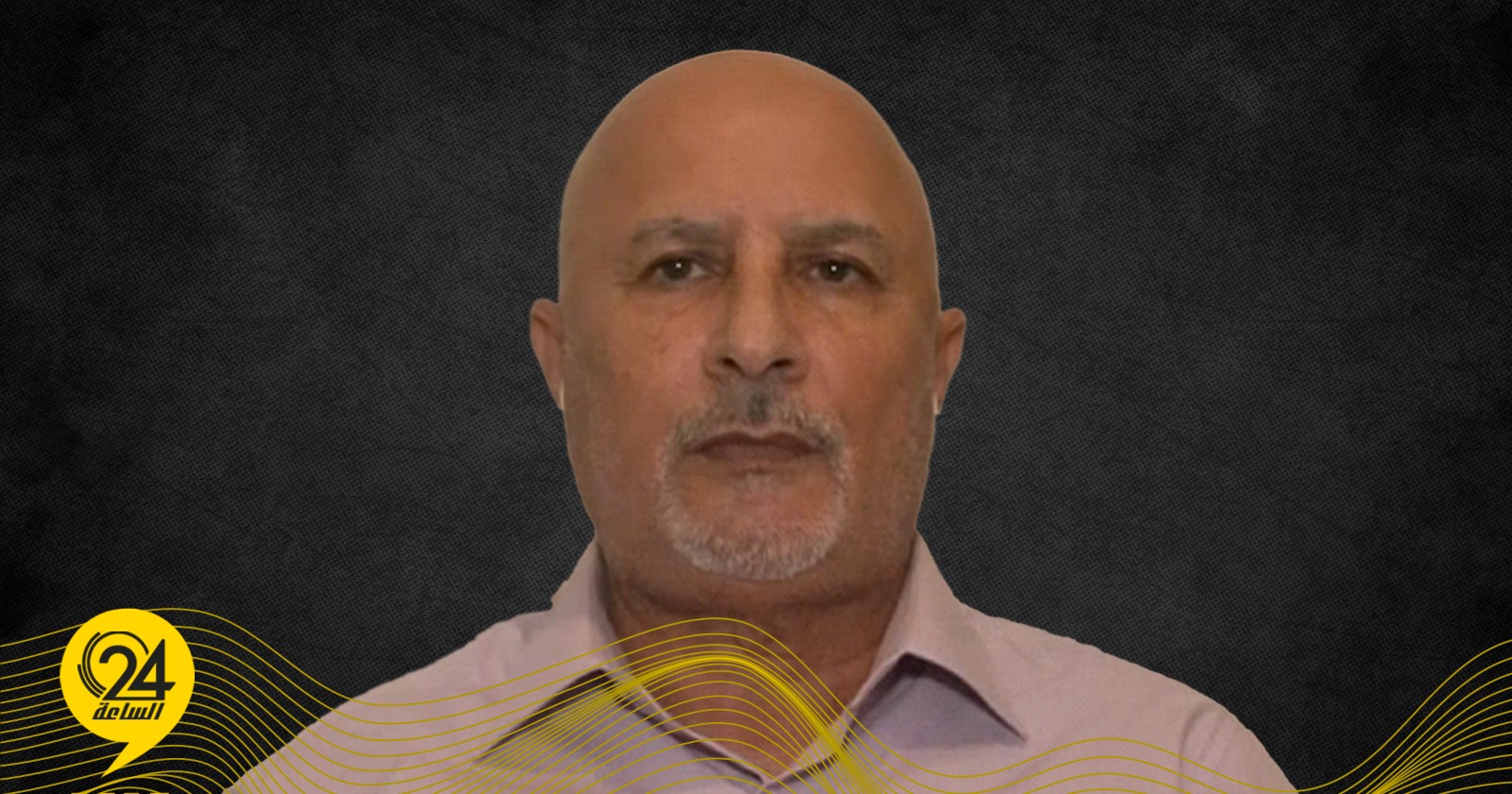
Political analyst, Abdulaziz Al-Rawaf, said that the transition of the American initiative on Libya from the stage of leaks and speculation to public presentation through the statements of US Presidential Advisor Massad Boulos, reflects a trend to reformulate a new approach to dealing with the Libyan crisis, noting that the Libyan scene since 2011 has suffered from a sharp political division, complicated by internal factors and intertwined regional and international interventions, which led to the faltering of previous initiatives and their failure to reach sustainable solutions. Al-Rawaf explained, in an intervention on Al-Masar TV, monitored by “24 Hour,” that regional and international parties view Libya as an arena in which multiple interests intersect, which makes any political initiative vulnerable to tensions and complications between influential forces. He pointed out that the current American initiative, despite the political momentum it carries, still lacks crucial details related to the form of the next executive authority, the nature of the Presidential Council, and the mechanisms for selecting the government and its locations, which opens the way for speculation and readings. Inequality. He added that not fully disclosing the details of the political initiatives may be a deliberate choice on the part of the American administration with the aim of reducing the chances of confusion or obstructing the path of understandings, after previous experiments that ended in failure as a result of early disclosure or political escalation regarding the details, but he pointed out that this approach is directly reflected in Libyan public opinion and increases the state of ambiguity and questions regarding the future of the political process. Al-Ruf believed that the absence of accurate information makes it difficult for observers, citizens, and analysts to provide a clear assessment of the initiative, whether in terms of the parties supporting or rejecting it, or the nature of the balances that may result from it. He explained that he prefers to base its evaluation on realistic data and available political and field indicators until the picture becomes more clear. He stressed that the current stage is still in the process of being formed, and that the final judgment on the American initiative remains dependent on the practical arrangements it will result on the ground and the extent of its ability to provide a balanced and sustainable political solution to the Libyan crisis. Al-Rawaf pointed out that any international initiative regarding Libya cannot have its political dimensions separated from economic considerations, stressing that the regional and international parties involved in the Libyan file are moving according to clear interests, whether it is European countries, the United States, or other active powers. He explained that American interest in the Libyan file is increasing in light of recent regional developments, especially with regard to energy markets and the security of oil supplies. He added that the essence of the problem does not lie in introducing new initiatives as much as it is related to the lack of clarity regarding their content and implementation mechanisms, pointing out that the initiative adopted by Massad Boulos has not yet been officially announced in full details or broad outlines. Al-Rawaf believed that talk about unifying military and governmental institutions remains a general proposal unless it is clarified how to implement this unification, the entities included in it, and the mechanisms for merging or restructuring, in addition to determining the nature of the future executive authority. He pointed out that previous experiences have proven that launching initiatives without clarity in the implementation mechanisms or arrangements for the transitional phase did not achieve tangible results, but rather often led to reproducing the crisis in various forms. He pointed out that some Libyan regions are still facing complex security situations, with disparities in levels of stability between the East and the West, and that resource-rich regions represent an essential part of the conflict equation, which makes the security dimension a decisive factor in any future settlement. He said that what is required today is full disclosure of the details of the American initiative, including the form of the proposed Presidential Council, the nature of the prospective government, the mechanisms for selecting it, and its executive structure, whether it is a mini-government or an expanded one, considering that the absence of these data places the Libyan citizen in a state of ambiguity and limits his ability to evaluate the initiative and its impact on the future of the country. Al-Rawaf believed that the military and economic moves being talked about, including joint training or development agreements, are not sufficient alone to address the Libyan crisis, explaining that the crisis is too deep to be resolved through partial steps or separate economic initiatives, but rather requires a comprehensive and clear political vision that is presented to public opinion and precisely determines the path of implementation. He stressed that any regional dialogue or international meetings, whether in Cairo or other capitals, remain directly linked to the American role in moving this path, considering Washington the most influential party in formulating the current initiative, stressing the need for the American administration to address the Libyans directly and transparently by announcing the details of its initiative clearly, allowing the citizen to understand its features, evaluate it, and take a conscious position on it instead of keeping the scene in the circle of ambiguity and speculation. He explained that the chances of success of any international initiative have become more linked to the extent of acceptance by the active forces on the ground, rather than to the traditional political bodies that have dominated the scene over the past years, noting that the General Command of the Libyan National Army has expressed its willingness to interact with the American initiative, in exchange for reservations or rejection from other political parties, which reflects the nature of the existing division within the Libyan scene. He added that the political bodies that have been present on the scene for more than thirteen years have not succeeded in achieving real solutions or concrete steps towards stability, despite the multiplicity of initiatives related to elections or political settlements, considering that continuing to put forward distant future dates, such as talking about the 2027 elections, without practical settlements on the ground, may be understood as time management rather than a productive path to solutions. Al-Rawaf stressed that any solution to the Libyan crisis must be based on the clarity of the general lines of the initiative, including the form of the Presidential Council, the composition of the next government, and the mechanisms for dealing with rejecting or conservative parties, stressing that the absence of the minimum information about these files creates a gap between the political track and the internal societal debate and makes it difficult for public opinion to understand the nature of the solutions proposed. He added that political initiatives, although different from military action, need a sufficient degree of clarity and transparency within their general framework to allow for building internal consensus around them, while keeping the technical details subject to negotiation between the parties concerned. In the context of comparison with other regional crises, Al-Rawaf explained that the Libyan situation differs from models such as Syria and Yemen in terms of the social structure, but he stressed that international interventions and internal conflicts during the past years contributed to the complexity of the scene and the consolidation of the division between the east and west of the country, which made any political process more complex than before. He pointed out that the Egyptian position remained, in his estimation, the most consistent in dealing with the Libyan file, by focusing on supporting state institutions, especially the military institution, without engaging in supporting armed formations or unofficial factions, considering that this approach reflects an approach aimed at preserving the Libyan state as a unified entity and not as competing spheres of influence. He explained that he does not call for publishing details of the meetings or minutes, but rather for announcing the broad outlines of the initiative, allowing the Libyan street to understand the nature of the next stage, stressing that clarifying the mechanism for unifying institutions, the form of executive authority, and the method of dealing with various parties represents a basic condition for the success of any political path. He added that talking about merging the active forces in eastern, western and southern Libya within a comprehensive political settlement may be acceptable in principle, but it needs a clear and announced framework that defines the steps for implementation in a gradual and orderly manner, stressing that any initiative that is not based on sufficient clarity and broad internal consensus will remain vulnerable to faltering, and that the unification of Libyan institutions represents the real gateway to any future political or electoral stability. He said that the evaluation of any international initiative cannot be done accurately before reviewing its implementation details and the mechanisms for implementing it on the ground. He explained that he is not opposed in principle to any project that aims to end the state of division that has persisted for nearly fourteen years, but he believes that judging initiatives must be based on clear plans and not on titles or general perceptions. Al-Rawaf pointed out that one of the most troubling files is the security situation in the capital, Tripoli, where, according to his description, the city is still witnessing the presence of armed formations and irregular forces in a number of its neighborhoods, in addition to the presence of foreign elements within the framework of previous arrangements, considering that these data raise questions about how to deal with them within any future political settlement, whether before the implementation of the agreements or during the transitional phase. He believed that the success of any initiative requires addressing the issue of the spread of armed formations and ensuring the presence of a single regular authority capable of enforcing the law and managing institutions away from the influence of armed groups. Regarding the administrative dimension of the state, Al-Rawaf pointed out that concentrating institutions in one city in light of the current security conditions may pose great challenges, explaining that some scenarios related to the redistribution of state headquarters or the restructuring of the administrative center deserve discussion, given Libya’s vast area and geographical diversity, but he stressed at the same time that any administrative vision must remain within the framework of the single Libyan state and not turn into an entry point for division. He stressed that all actors, including the General Command, are aware of the complexities of the security and political reality, and are interacting with the proposed initiatives on the basis that they ultimately aim to dismantle the irregular armed structure and build unified state institutions, indicating that any future role for local or regional powers must be within the framework of a state with a single authority and unified institutions, not within parallel areas of influence. He added that the discussion about regions or administrative models could be raised at a later stage after achieving political and security stability, stressing that the current priority remains to end the division and unify Libyan state institutions. Al-Rawaf stressed that the Libyan scene is currently witnessing a competition between two different approaches to the political solution, one of which is led by the United States through the proposed initiative, and the other is based on the existing political bodies, considering that the decision will ultimately be for whoever has the ability to actually influence on the ground. He explained that the balance of power is distributed between parties that have military and field weight and others that rely on varying political, regional and international support, which forces any political project to take this equation into account. Pointing out that the national unity government came under an international political agreement that was supposed to lead to elections within a specific period, but those elections were disrupted due to disagreements between the active political bodies. Al-Rawaf stressed that it is not possible to underestimate the importance of the House of Representatives or the role of its president, Counselor Aguila Saleh, as he is one of the most prominent actors in the Libyan political scene, but he saw that some of the recent moves issued by the House of Representatives, the State Council, and the Presidential Council were not clear enough for public opinion, especially with regard to the course of the elections. He added that the repeated calls to hold elections did not translate into practical results due to the continuing political division and lack of consensus on constitutional and executive rules, indicating that the initiatives and visions presented need greater precision in timing and presentation mechanism to ensure broader consensus between the various parties. Al-Rawaf concluded his speech by emphasizing that previous experiences, including attempts at understanding in Skhirat, Tunisia, and Egypt, did not achieve the desired results despite the efforts made, considering that the success of any future settlement will depend on its ability to combine the actual centers of power on the ground with the existing political frameworks, and that ignoring this equation may lead to reproducing the crisis instead of resolving it.