
اخبار مصر – وطن نيوز
اخبار مصر اليوم – اخبار اليوم في مصر
W6nnews.com ==== وطن === تاريخ النشر – 2026-02-25 19:08:00
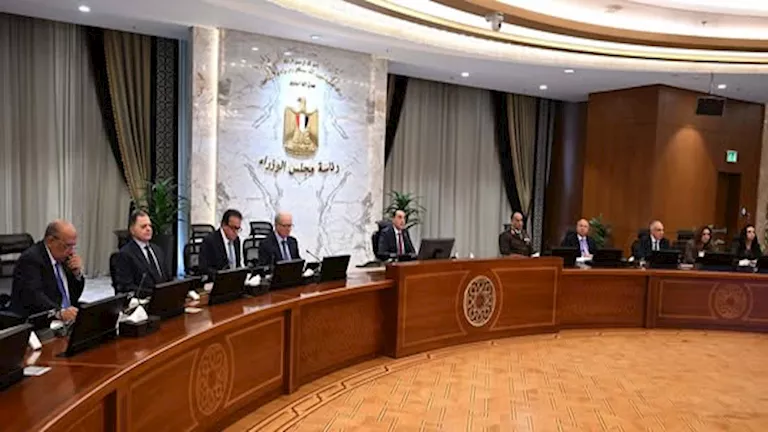
In its meeting today, headed by Dr. Mostafa Madbouly, the Council of Ministers approved 12 new decisions. These decisions include: 1. The Council of Ministers approved a draft law regarding Al-Azhar Al-Sharif Library. The draft law stipulates that Al-Azhar Al-Sharif Library will be a public legal person, reporting to the President of the Republic, and its headquarters will be in Cairo, and it may establish branches in the governorates of the Republic. The library should be a center of cultural and intellectual radiation in the Arab, Islamic and human sciences, and include Al-Azhar heritage holdings of rare manuscripts, books, precious scientific references, contents and scientific theses. The draft law also stipulates that, without prejudice to the provisions of the Antiquities Protection Law promulgated by Law No. 117 of 1983, and Law No. 8 of 2009 regarding the protection of manuscripts, Al-Azhar Al-Sharif Library shall undertake all actions and actions to achieve its mission, and take the necessary measures for that, and it may obtain studies, books, periodicals, manuscripts, and other matters related to Arab and Islamic civilization in its various eras and to scientific and intellectual heritage. And Islamic cultural records of the countries of the world, or copies of any of them, after the approval of the holder. This is in addition to collecting what is related to the biographies and achievements of people of Islamic thought and religious sciences in human history, and conducting studies related to the historical, geographical, cultural and religious aspects of the Islamic world and dialogue between different intellectual sects. The library may provide its services to others as determined by its Board of Directors. The library consists of scientific and cultural entities: the Center for Documentation of Islamic Heritage, the Center for the Investigation of Arabic and Islamic Manuscripts, the Center for the Restoration of Arabic and Islamic Manuscripts, the Center for Studies of Arabic Calligraphy, the Museum of Arab and Islamic Manuscripts, and a peer-reviewed scientific journal whose mission is to publish research worldwide in several languages in accordance with what is determined by its own regulations. The Library’s Board of Directors may establish or add other scientific and cultural entities. The Al-Azhar Al-Sharif Library will have a Board of Trustees headed by the President of the Republic, with the membership of the Sheikh of Al-Azhar as Vice-Chairman of the Board of Trustees, and a number of dignitaries from Egypt, various countries of the world, and relevant international organizations, not less than fifteen members and not more than thirty members. The Library’s Board of Trustees is responsible for supporting and following up on its activity, developing general policies and strategic plans for it, and determining methods for supervising and developing it, in a manner consistent with the nature of the library’s activity and enabling it to achieve its mission, and providing whatever guidance it deems appropriate in this regard. A decision shall be issued by the President of the Republic to form the Board of Trustees and organize its work based on the proposal of the Sheikh of Al-Azhar. The term of membership shall be four years, subject to renewal. The Council shall hold a meeting once a year or when needed at the invitation of its President. The Library’s Board of Directors shall be formed under the chairmanship of the Sheikh of Al-Azhar, with a membership of not less than fifteen members and not more than twenty-one members chosen from among public figures, thinkers, people with expertise in the scientific fields and Islamic sciences, and individuals designated by their functional qualities, provided that at least ten members among them are scholars of Al-Azhar Al-Sharif. The formation of the Library’s Board of Directors and its work system shall be issued by a decision from the President of the Republic based on the presentation and nomination of the Sheikh of Al-Azhar, and the term of membership shall be four years, renewable once. The draft law stipulates that the library’s board of directors is the body responsible for managing its affairs and managing its affairs, and it may take whatever decisions it deems necessary to achieve its purposes and objectives, and carry out its powers in the manner set forth in this law. In particular, it may supervise the implementation of the general policies of the library and the strategic plans approved by its board of trustees, and approve the organizational structure of the library after the approval of the Central Organization for Organization and Administration, and approve draft financial and administrative systems and regulations and human resources regulations after the approval of the Ministry of Finance. The Central Organization for Organization and Administration, each within its jurisdiction, approves the library’s draft annual budget and approves its final accounts. The library will have a full-time executive director, and his appointment will be for a period of two years, subject to renewal. The executive director will attend meetings of the Board of Directors and the Board of Trustees without having a counted vote. The appointment of the executive director will be issued by a decision from the President of the Republic based on the presentation of the Sheikh of Al-Azhar after the approval of the library’s Board of Directors. Al-Azhar Library is one of the most ancient libraries in the world, and the second largest in Egypt. Whereas, in the year 1897 AD – 1314 AH, a decision was issued by the Board of Directors of Al-Azhar to establish the library on the recommendation of Imam Muhammad Abduh, the Grand Mufti of Egypt at that time, and the existing library now is an extension of the old library that historians refer to, as it was found before the year 517 AH – 1123 AD in the Al-Azhar Mosque, and it was called “Al-Kutbkhana Al-Azhariya” or “House of Al-Azhar Books,” and the library occupied six separate places inside Al-Azhar Mosque. They are: Al-Aqbaghawiyah School, Al-Taybarassiyah School, Al-Rawaq Al-Abbasi, and Rawaq Al-Shawam. The Turks’ Corridor, and the Moroccans’ Corridor. Then, in 1994 AD/1414 AH, the contents of Al-Azhar Library were transferred to the new library building in Al-Khalidin Park in the study, which consists of fourteen floors. The draft law proposed to organize the library as a center for cultural and intellectual radiance in the Arab, Islamic and human sciences, which includes Al-Azhar heritage holdings of rare manuscripts, books, precious scientific references, and valuable scientific contents and dissertations, comes within the framework of a set of measures that aim to develop the library, whether at the structural level by building a new edifice for it that is in line with the latest scientific techniques for library management, or at the management level by working to amend the legislation regulating its management to be compatible with the desired objectives of this development, and to expand the scope of its jurisdiction. To include various Arab, Islamic and human sciences. 2. The Council of Ministers approved a draft decision of the President of the Republic regarding the “Mutual Judicial Assistance in Criminal Matters” Agreement between the Arab Republic of Egypt and the Kingdom of Spain. The agreement aims to enhance cooperation between Egypt and Spain in the field of combating crime, as it regulates aspects of providing mutual legal assistance. The agreement contains 26 articles that include matters related to the central authority, the scope of assistance, the contents of the request, the applicable law, expenses, appearance before the requesting party, and visual communications. One of the most important provisions of the agreement is that mutual judicial assistance is provided with regard to investigation, prosecution, and procedures related to criminal matters that fall within the jurisdiction of the judicial authority of the requesting party at the time the request for assistance is submitted. Also in accordance with the articles of the Convention, with regard to determining the location and identity of persons, serving judicial documents, executing search and seizure orders, obtaining the testimony of witnesses and experts and statements of the accused, searching for, freezing, confiscating and seizing the proceeds of crime, and any other form of assistance that falls within the scope of this Convention. The agreement also dealt with how to submit the request, its content, supporting documents, legal texts, and any other information considered useful for the requested party to implement the request for assistance. The agreement regulated the rules for obtaining witness testimony. The judicial authorities of the requesting party may request the appearance of a witness, expert, or accused in its territory to give testimony or to provide any type of information, while giving them immunity and not subjecting them to any accusation in the territory of the requested party. The agreement also indicated the possibility of transferring a temporarily detained person from the requesting party to the requested party for the purpose of assisting in giving his testimony. The agreement allowed the two parties to agree to give testimonies via video communication in accordance with the conditions determined by each case individually and in a manner that does not conflict with the national legislation of the two parties. 3. The Council of Ministers approved the draft decision of the President of the Republic regarding the “extradition of criminals” agreement between the Arab Republic of Egypt and the Kingdom of Spain. The agreement aims to strengthen cooperation between Egypt and Spain in the field of combating crime and not providing a safe haven for criminals. The agreement includes nineteen articles, and it regulates the extraditable crimes, the documents that must be submitted, the obligatory and permissible cases of refusing extradition, the central authorities, and what relates to the pretrial detention of the person requested to be extradited. These articles included an agreement between the two countries to exchange the extradition of persons present in the territory of either of them who are accused or convicted and wanted by the other party to be tried or to implement a sentence in the requesting party for a crime that requires the extradition of its perpetrators. The articles of the agreement also included the permissibility of extradition for acts that constitute, according to the laws of the two countries, crimes punishable by the legislation of the two countries with a penalty of deprivation of liberty for a period of not less than one year or with a more severe penalty. Extradition is not granted unless the remaining period of the penalty to be implemented is not less than six months. 4. The Council of Ministers approved the draft decision of the President of the Republic regarding amnesty for the remainder of the sentence of some convicts, on the occasion of the celebration of both Eid al-Fitr and the Liberation Day of Sinai, corresponding to the twenty-fifth of April 2026. 5. The Council of Ministers approved the draft decision of the President of the Republic to allocate two plots of privately owned state-owned land for use in establishing two public benefit projects within the presidential initiative “A Decent Life,” the first with an area of 5 acres in the area of Center and City. One in Fayoum Governorate, for the benefit of the Ministry of Youth and Sports, to be used to establish a youth center, and the second, with an area of 0.12 acres, located in the district of Hejaza Qebli village, Qus Center, Qena Governorate, for the benefit of the National Authority for Drinking Water and Sanitation, to be used to establish a sewage lifting station. 6. The Council of Ministers approved the contract of the Egyptian Weightlifting Federation with one of the specialized international companies, to purchase sports equipment for hosting and organizing the Arab Republic of Egypt for the World Weightlifting Championship under 20 years, during the period from May 2-5, 2026. 7. The Council of Ministers approved the contract of the Ministry of Tourism and Antiquities with one of the specialized companies, to restore and exploit the “King Farouk Rest House” in the archaeological pyramids area, as this project aims to preserve the archaeological and artistic value of the building. The rest house will be used as a center for displaying international and local artworks and antiques in cooperation with international galleries and exhibitions, which will have a positive impact on the region and the reputation of the country, in addition to placing it on the map of global artistic knowledge. 8. The Council of Ministers approved the Ministry of Education and Technical Education’s contract with a specialized company to implement the operation and maintenance of the electronic examination platform “Swift Assess” for the first and second grades of secondary school for a period of three years, starting from the fiscal year 2025/2026, within the framework of the Ministry’s efforts and the interest the state attaches to the educational process by updating the curricula to keep pace with the times, digital transformation, and training and empowering teachers in the field of developing technical and technological education, coinciding with improving the infrastructure and school buildings, as well as Investing in scientific research and developing methods to empower students with twenty-first century skills with the aim of preparing generations capable of innovation and competition in local and international labor markets. 9. The Council of Ministers approved the Ismailia Governorate’s request to contract with the Canal Electricity Distribution Company to establish a new distributor to accommodate the current and future heavy loads in the Ismailia Industrial Zone. This approval comes within the framework of implementing the directives of the political leadership to make maximum efforts to support investment, attract more investments and overcome any obstacles facing investors, in order to maximize the promising investment opportunities in Egypt. 10. The Council of Ministers approved the draft decision of the President of the Republic regarding transferring the affiliation of the State Information Service; From the Presidency of the Republic to the Ministry of State for Information, in light of the return of the Ministry of State for Information within the new formation of the government, and the positivity of this step from an organizational standpoint. The draft resolution stipulates that the Board of Directors of the State Information Service shall be formed; It consists of a president and six members, appointed by a decision from the Prime Minister, based on the proposal of the Minister of State for Information. The term of the Board of Directors shall be three years, subject to renewal. The Authority is subject to the supervision, control and direction of the Minister of State for Information, and the Chairman of the Authority’s Board of Directors communicates the decisions of the Board of Directors to the Minister for approval. These decisions shall not be effective until after their approval by him or after thirty days have passed from the date of his notification of them without objection to them, except for matters that require the issuance of a decision from another authority. 11. The Council of Ministers approved the minutes of the meetings of the Supreme Compensation Committee, Nos. 102, 103, 104, 105 and 106, held on February 4, 2026. 12. The Council of Ministers approved a draft decision regarding the formation of the temporary committee responsible for initiating the procedures for establishing the Technologists’ Union established by the law establishing and organizing the Technologists’ Union promulgated by Law No. 13 of 2024. The draft decision stipulated that the temporary committee be formed, headed by Professor Dr. Hani Ahmed Munib, a full-time professor at the Faculty of Engineering at Al-Matareya University, Helwan University, and the membership of: Professor Dr. Montaser Marassi Abdel Ati, President of Samanoud University of Technology (as representative of the committee), Professor Dr. Ahmed Munib Al-Sabbagh, representative of the Faculty of Engineering at Ain Shams University (as representative of the committee), Professor Dr. Yasser Ibrahim Ahmed Ibrahim, professor at the Faculty of Tourism and Hotels at Helwan University (treasurer), Professor Dr. Adel Abdo Hussein Ahmed, professor at the Faculty of Engineering at Assiut University, and Professor Dr. Omar Mohamed Abdel Hamid. Salman, Professor of Economics at the Faculty of Commerce at Helwan University, Professor Dr. Ahmed Mohamed Ahmed Al-Assal, full-time professor at the Faculty of Engineering at Benha University, Professor Dr. Tariq Abdel Malak Mikhail Gadallah, President of New Cairo University of Technology, Professor Dr. Gamal Abdel Mohsen Ismail Mohamed, Director of the College of Technology in Matareya, Dr. Randa Mohamed Hazem Awadallah, Vice Dean of the College of Technology in Alexandria, and Dr. Rania Mohamed Hassan Youssef El-Sharqawi, Dean of the College of Health Sciences at Borg El Arab University of Technology. According to the text of the draft resolution, the committee is responsible for opening registration and verifying the fulfillment of the membership conditions stipulated in Law No. 13 of 2024, in addition to preparing an internal bylaw that regulates the committee’s work method, its convening procedures, and its decision-making. The committee’s mission ends with the election of the union council, within a period not exceeding six months from the date of its first meeting. The minister responsible for higher education affairs is also responsible for providing a suitable place for the committee to hold its meetings and carry out its work, and supply the committee with the necessary workers to assist it in completing its work.