

اخبار سوريا اليوم – وطن نيوز
سوريا اليوم – اخبار سوريا عاجل
W6nnews.com ==== وطن === تاريخ النشر – 2024-01-12 15:53:52
Intellectual cultural interaction and cross-fertilization between peoples and nations represents one of the most important foundations on which the relations of states and human societies are based, far from political pressures and coercions, in addition to being a solid factor in producing human interactions that give the human space true outcomes for generations extending throughout history.
However, there are infiltrations taking place within the walls of society, with the aim of causing deviations in its natural course and forming incubators for specific ideas that have an ideological or politicized nature through which a complete and strategic agenda can be achieved, just as Iran is doing through cultural and religious arms in several regional capitals, including Lebanon, Yemen, Bahrain, Syria and Iraq, which intervene. In what is known as the “Shiite Crescent,” which is the vital space in which the process of “exporting the revolution” is managed according to the mullahs’ literature.
This becomes clearly visible due to several geopolitical, cultural, social and religious considerations, which reality responds to by showing the extent of the impact of these considerations in producing ideological and extremist philosophical and religious ideas, values and statements that destroy social diversity, collide with rich cultural structures and transform these structures into sectarian squares in an identity struggle and within security and military blocs. Initiates incitement with hate speech.
A new episode in the mullahs’ strategy
Political reality and its literature were devoted to employing these elements to serve foreign policies, as was the case with Iran in its Khomeini phase, especially by exploiting religious and sectarian identity as an integral part of exercising political interest. This is clearly evident in the form and features of Iranian relations with Lebanon, especially with regard to the limits of the emergence and context of thought. The work and platform of Hezbollah, the latter of which is a true model in the development of employing relations between countries and peoples to serve political motives.
Political relations between countries in general, within the space of the international system, reveal a number of pragmatic elements that impose themselves on the orientations of the political system, especially at the level of religious, sectarian, national, and ethnic beliefs, while the burden of those principles, their interactions, and their outcomes emerge in light of the dominance of an ideological system such as “ The “Legal Jurist” who makes the principles of the extremist regime the driving framework for his regional and international policies, which is known as the “militarization” of state institutions.
Likewise, Lebanon appears to be a particularly striking case in the mentality of the Islamic Republic of Iran, through which Tehran was able to employ the ideological and sectarian dimension in the geography of southern Lebanon, which has a demographic space with a Shiite majority.
This situation emerges through the political and historical changes that accompanied the founding of “Hezbollah,” as well as the general political situation in Lebanon, in favor of the “ayatollahs’” orientations and their ideological and doctrinal agendas, which is related to their dream of expanding the Iranian role across the geography of the Middle East.
Through this, the factor of strong political interest and close organic connection between Iran and “Hezbollah” is created, which has been demonstrated in many political positions since the moment of its founding and effective participation in the 1980s through full and comprehensive support, both at the level of media and institutional support, as well as continuous financial, political and military support.
“Shiite Crescent” across Lebanon
There is no doubt that the form and system of Iranian-Lebanese relations took multiple forms, one of which was the cultural issue through scholarship that Iran and Lebanon have known since the royal era in Iran during the rule of Muhammad Reza Pahlavi, and that began two years before the revolution overthrew him, as the first scholarship was For Lebanese students in Tehran, they were of the Shiite sect at the time, and their number was only about 10.
However, the emergence of the “Islamic Revolution” in Iran presented a number of challenges to these scholarships through the clerical regime’s insistence on imposing specialization on scholarship students.
There are discussions and consultations between the two parties that made exceptions for Lebanese students, as the Iranian Minister of Higher Education did not circulate this to Lebanese students, while the new decision did not include them, in a striking indication of the position in which Lebanon is positioned on Iran’s regional map and its strategic policy, and there was a state of awareness of the class. The ruling elite in Iran calls for the need to mobilize the Lebanese Shiite community on behalf of Tehran and its policies and interests.
In the mid-eighties, after the founding of Hezbollah, the Iranian regime doubled the number of scholarships for Lebanese students to reach one hundred scholarships. These grants were divided among only two movements, the “Amal” movement, which was entitled to only 10 grants, while “Hezbollah” received 90 grants, against the backdrop of political and sectarian rapprochement between them.
The scholarship includes travel, accommodation, food, and administrative expenses, in addition to granting doctoral students a monthly stipend so that they can purchase their additional needs. The number of scholarships provided by Iran to Lebanese students between 2020 and 2021 reached about 148 scholarships and short-term training throughout the year. Tehran worked to increase it to ensure the presence of functional arms when they return to their country.
This seems realistic when examining the demographic situation in Lebanon and the reality of the religious situation. Islam is considered the largest and most common religion in Lebanon and is estimated at about 69.4 percent of the population. However, the Shiite community is considered the largest sect in Lebanon and represents 31.6 percent of the Lebanese people. As for the Sunni Islamic sect, it is estimated at 31.3 percent, and the second religion in Lebanon, which is Christianity, is estimated at about 30.6 percent of the population.
Iran is also always interested in restoring religious institutions in Lebanon. It was clear after the Israeli war in 2006 that Tehran was very keen to establish a committee for the reconstruction of Lebanon, which included houses of worship and religious institutions. With that committee, Iran now owns about 42 educational centers as well as 51 houses of worship, which reflects the clear interest in Iranian support for religious institutions in Lebanon with the aim of spreading Shiite teachings throughout the country. The Khomeini version and its political and ideological template, which is expressed in the model of the “guardian jurist.” Hence, the dissemination of culture in a politicized manner to facilitate the process of employing the Iranian ideological and sectarian situation in Lebanon.
The new cold war in Lebanon
In this context, it seems clear the extent of the influence that Tehran has created in Lebanon through its direct agent, Hezbollah, which moves in accordance with the pillars and determinants of Iranian foreign policy. Hezbollah penetrated the political space in Lebanon through the parliamentary elections for the first time in 1993. At that time, it won twelve parliamentary seats and also won 10 seats in the 2009 parliamentary elections.
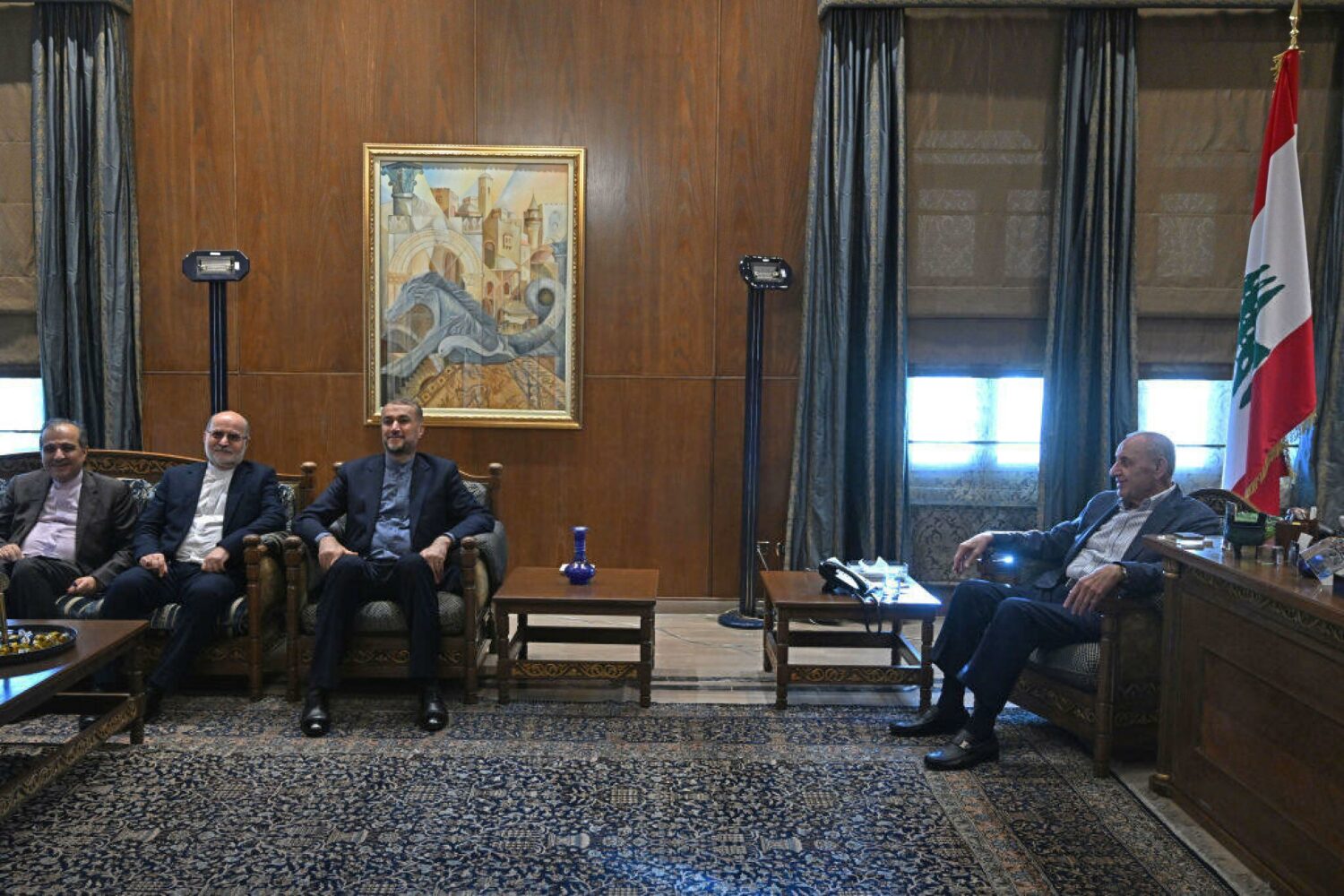
The “party” also succeeded in creating a presidential vacuum, as happened a few years ago, to achieve or impose its regional political agenda, specifically completing its military role in Syria, which caused strong opposition against it in many Lebanese political circles.
While the most prominent and dangerous political role of Hezbollah in Lebanon was during the year 2011, when it succeeded in overthrowing the Lebanese reconciliation government led by Saad Hariri through Hezbollah’s rejection of most of the government’s decisions. Because the latter wanted to obstruct the role of the “party” and its weapons, after the party controlled most of the territory of the Lebanese state, and “Hezbollah” also rejected the decisions to disarm and refused to join the Lebanese army, which ultimately led to the fall of the Lebanese government.
In addition, the Lebanese academic, Basil Farhan Saleh, goes on to say that if any shake-up occurs in the determinants and foundations of the relationship between Iran and Hezbollah, or any severing of the line between Tehran and the party, it will have a direct impact in terms of transferring money, weapons, and so on. This has a negative impact on the party’s strength.
In the context of his talk to Al-Hal Net, Saleh points out that it is difficult for any severing of the relationship between the two parties to occur, because the party is not like other allies of Iran, as it is organically linked to the Iranian leadership and doctrine. But Iran, in the end, is a country that has interests and can negotiate, in times of distress, on many matters, not to mention any possibility of change within Iran itself for one reason or another.
In its pursuit, the party created a new bourgeois class with interests that conflicted with populist proposals, and which, in the event of any wavering in meeting its interests, could lead to separation from it, after its nature changed from elements whose primary goal was to fight, to a class that aspires to power and has interests. differ from this basis.
Political researcher Basil Saleh
In the event of any vibration in this relationship, the free margin allows the party to have different calculations. It is possible for him to turn internally and completely dominate Lebanon militarily (similar to the events of May 7, 2008), and to control major geographical areas beyond those he controls in the south, the Bekaa, and the southern suburbs of Beirut, according to the Lebanese academic.
It is also possible for him to turn against the international emergency forces, which is reflected in the delivery of messages to the international community, which include that international resolutions have nothing to do with him and many other possible scenarios that he may resort to.
Lebanon is a scapegoat for Iran
In this twisted context, the Lebanese academic Basil Saleh believes in his interview with Al-Hal Net that the party may resort to all of these scenarios if it feels that the battle has become an “existential battle,” and that there is no way to protect itself and keep itself as an essential part of the table. Negotiations can only take place through them and by turning the tables on everyone.
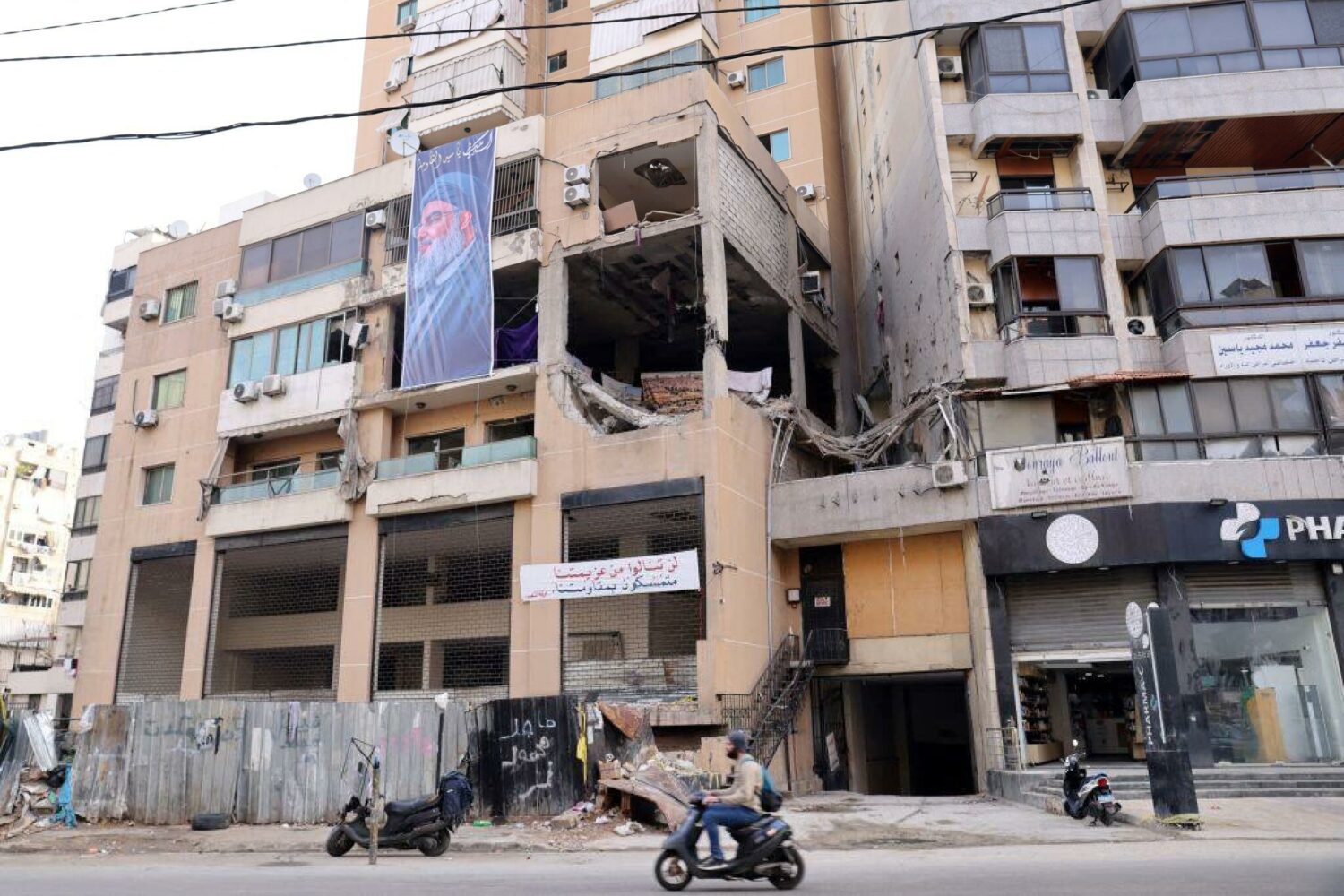
This does not mean that the party, according to Saleh, does not dominate the Lebanese state today, as it is the strongest party in it, and this is what appeared in several points, the most prominent of which was in appointing prime ministers, forming governments, and bringing Michel Aoun to the presidency of the republic.
In addition to his presence in Parliament and in making international policy for the Lebanese state, he set red lines in front of it, and the speeches of its Secretary General Hassan Nasrallah cannot be overlooked during the uprising phase of October 17, 2019, when he set an equation that summarized the authority and the state: “No fall of the regime, no fall of the government, no “The fall of the President of the Republic.”
The party decides on strategic matters and leaves the small detailed matters to the traditional forces, which allows it to play a dual role outside and inside the state, at least at the level of discourse, and which allows it to coordinate and measure the performance of those forces, in a way that does not go beyond the existing stable situation since it, as a party, does not have any alternative vision or any alternative. A different political project based on which the state is governed. Not to mention that the prevailing sectarian system is a basic condition for the existence and continuation of the party, just like other dominant forces.
The Lebanese academic concludes his speech by saying: “There is a need to pay attention to the fact that Iran has sought to strengthen its cultural and ideological identity in southern Lebanon, especially as in the rest of the Arab capitals that it dominated and which it occupied through an intensified confiscation of geography, to strengthen the survey of a national identity that is pluralistic and cross-sectarian and factional.” Regionalization is for its own benefit and for the benefit of its single cultural and ideological identity, and it has led, among other things, to changing the social customs and traditions that prevailed.
However, this change at the cultural and identity level does not wander in space, but rather is linked to economic, class, and social relations, that is, it is linked to the conditions and determinants of its continuation. Culture is linked, first and foremost, directly and indirectly, to the conditions for the production of livelihood. Otherwise, it will not withstand any shake-up that may occur to the relationship between the two parties if matters reach this point that is unlikely until the moment.