
اخبار تونس- وطن نيوز
اخر اخبار تونس اليوم – اخبار تونس العاجلة
W6nnews.com ==== وطن === تاريخ النشر – 2026-02-05 14:27:00
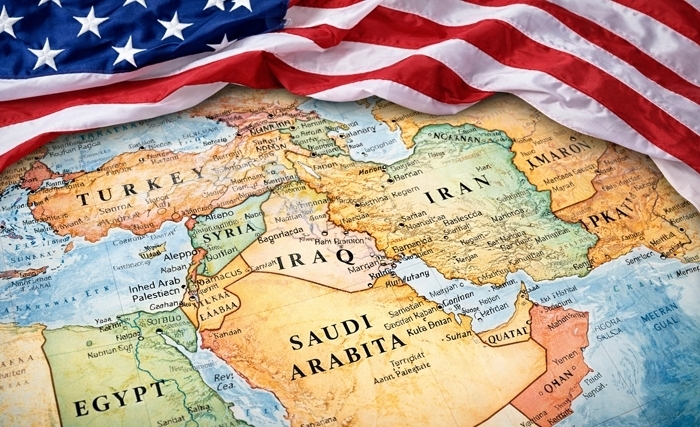
Written by Muhammad Ibrahim Al-Hasairi – In this seventh episode of my article on “The New American National Security Strategy,” I will present and comment on what was stated in the strategy about the Middle East region. From the beginning, and under the title “Shifting Burdens and Building Peace,” the strategy confirms that the United States is moving towards breaking with the way it has been accustomed to dealing with the region for at least half a century… and this break is manifested in two basic aspects, which are the following: First: ceasing to give the Middle East priority over Any other region: The strategy confirms that this is not because “the Middle East is no longer important,” but rather because it has witnessed transformations that ended “the days when it dominated American foreign policy, whether in long-term planning or in daily implementation.” These transformations are as follows: • The Middle East region was, for decades, the most important energy supplier in the world, but today energy sources have become much more diversified, and the United States has become a net energy exporter again, and with the administration of President Donald Trump canceling or easing energy policies. Restricted, and the rise in American energy production, the historical foundations of the United States’ interest in the Middle East will decline.• It was a major arena for competition between the great powers, but today this competition has turned into a competition in which the United States occupies the most impressive position, supported by the success of President Donald Trump in reviving the United States’ alliances in the Gulf, with its other Arab partners, and with Israel.• It was full of conflicts that threatened to spread to the wider world, and even to the coasts of the United States. Today, it is no longer the constant cause of disturbance and potential source of impending disaster as it once was. Although the strategy acknowledges that the conflict is still the most disturbing aspect of the Middle East, it believes that “its magnitude today is less than what media headlines suggest.” To demonstrate this, the strategy cited the example of Iran, which it described as the most destabilizing force in the region. This force, it says, has been severely weakened as a result of Israeli operations since October 7, 2023, as well as as a result of Operation MIDNIGHT HAMMER, which President Trump carried out in June 2025, which significantly reduced Iran’s nuclear program. It also cited another example, which is that of the “Israeli conflict.” It goes without saying that “it is still complicated, but the ceasefire and the release of the hostages negotiated by President Trump have paved the way for progress towards a more lasting peace,” especially since this was accompanied by “the weakening of the main supporters of Hamas or their withdrawal from the scene,” and that Syria, although it “remains a potential source of concern, may be able, with American, Arab, Israeli, and Turkish support, to stabilize and restore its natural and positive role as a pivotal player in the region.” It goes without saying that These two examples raise many questions about the extent of their application to reality, and to the expected future developments, because the talk about “severely weakening Iran” conflicts with the frantic preparations of the United States, these days, to launch a new aggression against Iran. These preparations indicate that Operation “Midnight Hammer” did not achieve the results that Washington and Tel Aviv had hoped for, and which the eccentric American President Donald Trump boasted in the speech in which He submitted it to the US National Security Strategy that he had “completely destroyed Iran’s ability to enrich uranium”… In this context, it must be noted that the strategy published by the US Department of War on January 23, 2026, confirmed, contrary to what was stated in the US National Security Strategy, that Iran “despite having suffered severe setbacks in recent months, it appears to be determined to reshape its conventional military forces.” Iran’s leaders also left open the possibility that they might try to obtain a nuclear weapon again, including by refusing to engage in serious (meaningful) negotiations. Then, as the Defense Department’s strategy adds, Iran’s proxies, “although they have been severely weakened, may also seek to rebuild their destroyed infrastructure and capabilities.” However, the Defense Department’s strategy is not satisfied with that, but rather goes on to justify attacking Iran, again, by invoking a number of other justifications, as it confirms that the United States The United States cannot “ignore the facts that the Iranian regime has American blood on its hands, that it remains intent on destroying its close ally Israel, and that Iran and its proxies routinely create regional crises that not only threaten the lives of American soldiers in the region, but also prevent the region itself from seeking the kind of peaceful and prosperous future that many of its leaders and people clearly desire.” It can be concluded from the foregoing that the United States is determined to strike Iran once again. Another, this time, the strike will be fatal, not only because of its nuclear program, ballistic missiles, marches, and support for the axis of resistance… but also for retaliatory motives, and at the same time to ensure its neutralization so as not to hinder American-Israeli projects in the region… The same question points are raised by the second example, namely what the American National Security Strategy calls “paving the way for a more lasting peace for the conflict in Palestine, and this “more lasting peace” is questionable In it, not only because Israel continues the war of annihilation that it continues, for the third year in a row, and with absolute American support, to wage against the Gaza Strip, but also because the history of the Palestinian-Israeli conflict confirms that the Palestinian people cannot neglect their rights, no matter how long it takes, and no matter how many adversities they are subjected to. They may calm down for a while, but they soon catch their breath and rise up again to declare that they are still alive, and that their cause is still alive, despite all attempts. Her grave… As I mentioned in the first episode of this article, what the strategy considered “the remarkable success achieved by President Donald Trump during his first term through the historic Abraham Accords” was one of the reasons that led to the brutal war of extermination in the Gaza Strip, the expansion of settlement in the West Bank, and Israel’s orgy in the region with its repeated blatant attacks on neighboring countries, both near and far, because these agreements attempted to leapfrog the Palestinian issue and the rights of the Palestinian people, by pushing some Arab countries to Normalizing its relations with Israel… Today, in the face of the impudence of the American president who wants to prove, at any cost, the applicability of the slogan “achieving peace by force” on the ground, and in the face of what he intends to do in the Gaza Strip, which he will share its control with Israel to make it the “Riviera of the Middle East,” and to achieve a number of other goals that are still hidden now but will be revealed in time, any sane politician should realize that the American approach to dealing with the crisis in the Middle East carries within it the seeds of a new explosion, which may It will not be too late, given the situation in Palestine in particular, and in the region as a whole in general… Second: Stop using the method of directing blame and pressuring the countries of the Middle East to force them to abandon their traditions and historical forms of rule. The American National Security Strategy describes the way the United States has always dealt with the Middle East region as a “wrong American experience” and stresses that the basis for the success of relations with the region “is to accept it, its leaders, and its countries as they are, and to work with them in areas of common interests.” The pressure on the countries of the region, especially the Gulf monarchies, to force them to abandon their historical traditions and forms of rule, is for the United States to encourage reform and welcome it when it appears in a natural way from within without trying to impose it from the outside. If the United States actually adheres to this trend, this will certainly represent a real turning point in the way it deals with the countries of the region… because it will mean that it will stop interfering in the internal affairs of these countries, in a clear fashion following the example of its competitor China, which does not tie its cooperation with other countries to any conditions or terms. Political dictates… In my opinion, this commitment is not expected because it will not be possible given the American President’s volatile mood and unruly personal whims, as well as the nature of the arrogant American policy and its inherent hegemonic tendency… However, this is what can be deduced from the return that the United States is asking from the leaders of the Middle Eastern countries and the Gulf states in particular, to turn a blind eye to their policies and accept them as they are. This return will, without a doubt, be exorbitant It will be nothing less than continuing, if not to say, strengthening American control over the region, but with the least possible burdens, and this is what is expressed by the title that the strategy chose for its talk about the region, i.e. “shifting burdens and building peace.” The strategy considers, with optimism, which I consider exaggerated, that the Middle East “is emerging today as a region of partnership, friendship and investment, a trend that must be welcomed and encouraged,” and it is based on “that President Trump was able to unite the Arab world in Sharm El-Sheikh.” In pursuit of peace and normalization.” However, this is not true because the Arab world is larger and broader than the limited number of Arab countries that joined, unwillingly or voluntarily, the Sharm El-Sheikh summit. In this context, I must go on to note that the strategy did not talk about the Arab world as a whole, but rather limited its talk to the Middle East region, specifically to some of its countries and some Gulf countries to the exclusion of others, which clearly indicates the diminishing place and stature of the Arab region in the estimates of American political thought. Regardless of that, the strategy confirms that the Middle East, as the United States envisions in the future, “will become an increasing source and destination for international investments in sectors beyond oil and gas, including nuclear energy, artificial intelligence, and defense technologies.” On this basis, the United States “can also work with its partners in the Middle East to support other economic interests, such as securing global supply chains and enhancing opportunities to open friendly and open markets in other regions of the world, such as Africa, and until the appropriate conditions are secured to achieve all of this, the countries of the region are called upon to.” To undertake, under the supervision of the United States, which will work in coordination with its exemplary ally Israel, the following tasks: • Commitment to combating extremism and terrorism while bearing the burdens of this fight financially and humanly… in order to prevent “the Middle East from becoming an incubator, or a source for the export of terrorism against American interests or against the American homeland, and for Israel to remain safe.” • Cooperating to ensure freedom of movement through the waterways in the region, including “protecting it from Iran and its agents,” so that the Strait of Hormuz remains open. The Red Sea remains navigable.• Preventing energy supplies in the Gulf from falling into the hands of a direct enemy of the United States.• Engaging in completing peace projects with Israel and ensuring its security, by expanding the Abraham Accords to include more countries in the region and other countries in the Islamic world… For its part, the US Department of Defense will work, according to what was stated in its strategy for the year 2026, to support allies and partners in the region and to enable them to bear the basic responsibility for deterring Iran and its agents, especially by supporting Israel’s efforts to defend itself, deepening cooperation with partners in the Gulf, and enabling integration between them and Israel… Muhammad Ibrahim Al-Hasairi Read more • The sixth message of the “New American National Security Strategy”: The message to Europe • The fifth message of the “New American National Security Strategy”: The message to Asia and the Indo-Pacific region • The fourth message of the “New American National Security Strategy”: The message to the “Western Hemisphere” region • From the messages of the “New American National Security Strategy” – The first message: A message to the world • The second message of the “New American National Security Strategy”: These are the principles of foreign policy American, whoever wants and whoever refuses • Three messages from the “New American National Security Strategy”: These are the American foreign policy priorities from here on out