

اخبار البحرين – وطن نيوز
W6nnews.com ==== وطن === تاريخ النشر – 2026-04-20 23:07:00
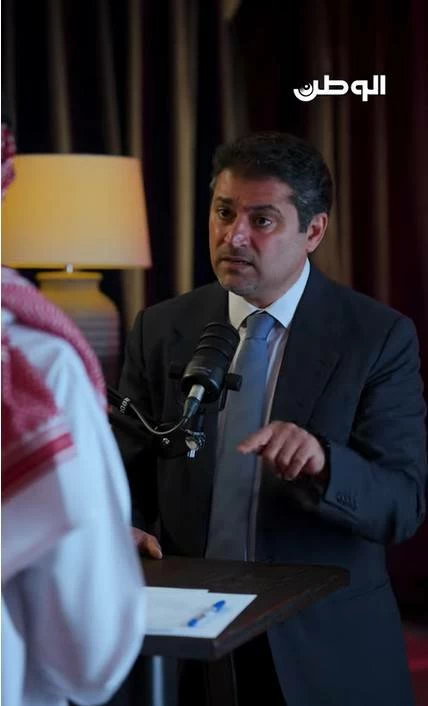
Local Affairs Editor – The only criterion for citizenship and national belonging is belonging to Bahrain alone – Accusing the homeland’s defenders of creating division is an escape from facing the facts – Turning personalities into symbols above criticism leads to the disruption of awareness and the absence of reason – The Bahraini state is linked to the citizen, shares his issues and works to stabilize him – The Arab Gulf states are working to build the human being and the state and place the citizen at the heart of development – Iran as a model is a regime that does not build the human being but rather exploits him to implement its agenda and projects. Writer Faisal Al-Sheikh confirmed that confronting Rumors and lies cannot be understood as causing division or spreading sectarianism, but rather are part of defending the homeland, which does not tolerate multiple “colours” of belonging, but rather is based on unity of position and loyalty. He explained that some parties immediately resort to accusing those who defend their homeland of provoking division, considering that this method is used to escape from facing the facts. He added in an interview with “Al-Watan” that the challenges the region is witnessing impose a clear discourse that does not accept neutrality. Either it is… A person is on the side of his homeland, or on the side of those who target him, stressing that the conversation is not about internal disputes, but rather about external threats that require clarity in the position, explaining that reducing national affiliation to sects or groups is a deliberate distortion of reality, because the criterion for citizenship – as he said – is belonging to Bahrain alone. Regarding “the sanctification of political and religious figures,” the Sheikh said: “There is no sanctity above nations, and that turning any personality into a symbol above criticism leads to the disruption of awareness.” And the absence of reason,” pointing out that Islamic history itself is based on consultation and review, not absolute submission. He considered that what is being proposed under the slogan “exporting the revolution” represents a political project, not a religious one, and relies on what he described as “fifth columns” and external arms, stressing that there is a contradiction between the declared rhetoric and the practical reality, whether inside Iran, or in its foreign policies. On the other hand, he praised the Gulf model, especially Bahrain, considering that it was able to build a modern state based on stability, development and social cohesion, despite the threats it faces, noting that recent government measures have strengthened citizens’ sense of security. And reassurance. The following is the text of the dialogue: Some people today, whenever the issue of confronting rumors is raised, especially in light of the current circumstances, are accused that the goal is to stir up division and spread sectarianism. What is that thin line between preserving national cohesion and confronting lies and rumours? – Defending the homeland has no colors, but rather it is one color. Today, when some people see that there are people defending their country and speaking forcefully, the first thing they resort to, especially if they are on the other side, is to make direct accusations. This is an issue we have lived through a lot, and perhaps we lived through it clearly in 2011. We do not carry weapons, we speak with thought and with our pen, while when the other party confronts him with arguments, and presents the facts and refutes what he says, the easiest thing for him to do is to accuse you of inciting division, or that your rhetoric is sectarian. We are talking about a situation in Bahrain, we are not talking about internal problems, natural issues, or differences, but rather we are talking about a situation in which an enemy is targeting you. So when people go out, speak from a patriotic standpoint, and defend their homeland, the question becomes: Why are those who are silent silent? Is it because he is afraid? As for the other side, we see those who glorify the enemy, deal with it, or communicate with it. What should the discourse be like here? Will it be a soft or conciliatory speech? There is no neutrality in the homeland. The issue is clear: You are with your country, or you are not with it. I have noticed that some people, unfortunately, when they see someone strongly defending their homeland, immediately say: Do not divide people. Although no one talked about doctrines or differences. We are talking about Bahrainis, and the word “Bahraini” is the deciding factor: Are you defending Bahrain or another party? Unfortunately, there is a group that resorts directly to this type of accusation, because it is the quickest way to escape, or to silence or calm voices. A previous situation happened to me – without mentioning names – in which we were accused of being sectarian, and that our writings are sectarian, while the other party was the one who started it. I answered them: We are not sectarian, but rather you are the ones who reduced an entire sect and appointed yourselves as its representatives, and this is not true. Whoever thinks that he represents an entire sect is unfair to this sect and to society. We are not talking about Sunnis or Shiites, but rather about a homeland. Bahrain was built by the hands of everyone, Sunnis and Shiites. In 1981, there was an attempted coup in Bahrain, and the Iranian regime was behind it, and all Bahrainis responded to it. There are religious figures who have opposing political positions, and some of us refuse to criticize them, considering that they are religious symbols. What is your assessment? – There is no holiness above nations. This is a constant equation. Today you are telling me that someone who attacks your homeland has holiness? You are thus justifying him to attack your country; Because it has a specific characteristic or location. This is not acceptable. He attacks my monastery while you are silent and watching? no. There are those who applaud him too. There is no holiness above nations. Those who exaggerate some political symbols confuse concepts. There is a big difference. The saying “religion is the opium of the people” has been said – and it is a controversial saying – but what is meant is how religion can be used to subjugate people and rob people of their will, so that people turn into mindless followers. Today man has reason and freedom. Even in our religion, the goal was not to abolish reason. In the Battle of the Trench, the Messenger, may God bless him and grant him peace, took the opinion of Salman the Persian in digging the Trench, meaning that advice was present. Therefore, there is no holiness that cancels the mind, or prevents thinking. The problem today is that some people are presented as above criticism, which is not true. Religion is not based on making people mindless followers. On the contrary, it is based on reason and contemplation. There are those who justify figures attacking Bahrain, then claim to be a patriot. This is an unacceptable contradiction. On the other hand, there are political figures or those linked to terrorist entities and organizations, such as the Revolutionary Guard, Hezbollah, and others, who attack our Gulf countries clearly and frankly, without any barriers, and incite harm to these countries day and night. But when the response comes from our side, we are told: These are sacred figures, these are religious symbols, and it is not permissible to attack them. Who is responsible for this concept, that is, the issue of sanctifying figures in the first place? Is it on those who sanctify them, or on those who grant them this sanctity? – The problem is that there are those who want you to sanctify them, and to consider their words as absolute and not subject to debate, and they basically use religion, or exploit the religious cover for political purposes and private agendas. The problem also is that some people have their will taken away, so they become a tool in the hands of others. When minds are absent, a person believes everything he is told without examining it. You find these people talking about freedom and freedom of opinion, but in reality they do not accept other opinions. They want you to follow their thought and ideology without discussion, even though this person may not even be from your country, and does not have any concern for your country. The real problem is a problem of awareness. We have seen in previous periods extremist groups whose goal was to eliminate independent thinking, so that there would be no free opinion, but merely subordination. A person must use his mind. Why does he allow someone to control or direct him as he wants? True freedom is for you to think and decide for yourself. In terms of contradiction and the predominance of emotion, we see today – thank God – great economic, social and political stability in Bahrain and the Gulf states. But on the other hand, those who glorify Iran talk about a country with a collapsed economy, closed markets, and rampant unemployment. How do you respond to this category? What do you think of the model we live in? – There is no comparison at all. You are talking about the Arab Gulf countries that have been working for decades to build people and build the state, and place the citizen at the heart of development. On the other hand, if we talk about Iran as a model, we are talking about a regime that does not build people, but rather exploits people to implement its agenda and projects. There is a very big difference. Yes, it is a large country geographically and has capabilities, but these capabilities are not being used for the benefit of the people. Do you think that all Iranians support this regime? There are thousands in exile who oppose the regime and demand change. What do we call these? Inside, too, there is a long history of events. Since 1979, when Khomeini returned to Tehran, there has been a clear project. The history of this system includes the establishment of revolutionary courts, executions, prisons, and sentences without clear laws. Until 1988, widespread executions occurred, documented by human rights organizations as serious crimes. So we are facing a completely different system, which cannot be compared to what is happening in the Arab Gulf states. There is also a paradox, that some of the parties that stood with Khomeini and the Iranian revolution, such as the Tudeh Party and others, later changed their position. When Khomeini came to power, it was said that there was an elected president, but the truth is that the Supreme Leader is the actual decision maker, and that the will of the state is entirely in his hands. It cannot be said that there is a democratic system in the true sense, because the final authority is not in the hands of the president, but in the hands of the Supreme Leader. We have seen many cases throughout history, including what happened with Ahmadinejad when he was president, where there were internal conflicts, restrictions on his decisions, and even intense political pressure. Likewise, Muhammad Khatami and others. History inside Iran shows that there is a closed system, closer to a strict security organization, that does not allow any dissenting voice, even if it is from within the same movement or sect. This makes the comparison with the Arab Gulf countries an unfair and incorrect comparison, because the nature of the systems is radically different. As for the issue of missiles fired at the Arab Gulf states, it reveals the extent of the true hostility towards these countries. This is not just a political dispute, but rather direct targeting. It seems clear that these targeting are not the result of the moment, but are planned in advance? – What we are witnessing today is clear and unprecedented targeting. When we talk about the party that is attacking, we are talking about known axes, whether it is the Israeli or American side in certain contexts. But the question is: Where were these missiles when the slogans of “resistance” and “objection” were being raised? Where was she when major events were happening in the region, such as what happened in Gaza or in Syria? There is a huge discrepancy between discourse and practice. The declared rhetoric says one thing, while the reality shows something completely different. – How did the recent government measures reflect on the citizens’ feelings in Bahrain and the Arab Gulf countries in terms of reassurance, especially the economic and banking facilities? – The measures in the Arab Gulf countries, including Bahrain, are very clear. These are countries that are building a modern state and working to develop people and society. For decades, Bahrain has been working to build modern state institutions, whether in education, health, or the economy, even before and after the oil era. Today, when we talk about government measures, they come within the framework of supporting the citizen and relieving his burdens, whether through directives or economic decisions. The state here is not separate from the citizen, but rather a partner with him in daily life, sharing his concerns and working to stabilize him. We have seen this during crises, such as the Corona pandemic, how the state was present and issued decisions aimed at protecting and supporting the citizen. This is a model of a state that builds humans and does not exploit them, unlike other models that use humans as tools. There is a strange paradox, as some countries that are exposed to economic and security crises do not provide justifications to their citizens, even on basic issues such as energy and infrastructure? – When we talk about Iran, we are facing a completely different model. There is political discourse that raises major slogans such as fighting Israel, but in reality there are known historical contradictions, including issues such as “Iran-Contra.” There is also a contradiction in the speech itself. On the one hand, America is described as the “Great Satan” and Israel as the “Lesser Satan,” and on the other hand, relations and understandings occurred at certain stages. History reveals many facts that are ignored or attempted to obscure. As for inside Iran, there is clear suppression of any opposition, and there have been executions and imprisonment of opponents, and this has been documented by human rights organizations. On the other hand, the concept of “opposition” in normal countries is part of political action, but in this model it is treated as a crime. There is also a duality in attitudes; Some parties that strongly criticize the Arab Gulf states are completely silent in the face of clear violations inside Iran. These are paradoxes that reveal that the issue is not human rights as much as it is political and selective positions. In recent days, we saw a media appearance by a Bahraini researcher on one of the satellite channels in a neighboring country, and he was talking about Bahrain and its cohesion, but the channel’s crew was clearly adopting the Iranian narrative… So what happened to some parties and some channels? – You are talking about a situation that happened with our colleague, Brother Jaafar Salman, and I am telling you: Look at the Bahrainis and how they interacted with him, as well as the Gulf people. Every person who is loyal to his country and honorable in his affiliation does not accept that other countries are being attacked, and therefore there was clear solidarity with Brother Jaafar. Regarding the channels you are talking about, we are talking about a channel affiliated with Iraq. The political scene in Iraq changed after 2003, and major transformations occurred, and militias and multilateral influence emerged within the state. There are also officials in Iran who spoke openly about controlling four Arab capitals, and this opens the conversation about a clear expansionist political project. As for Bahrain, it is not permissible to underestimate its history or civilization, as it extends for more than five thousand years, from the Dilmun civilization and other ancient civilizations. Bahrain has never been a weak or swallowable country. Rather, it stood in the face of multiple historical attempts, whether in the seventies or before, and rejected any attempts to undermine its sovereignty. We see today that some media outlets are clearly adopting the Iranian narrative, and neglecting to verify the facts. How do you explain this trend? – Look, what happened with brother Jaafar Salman revealed a lot. The popular interaction with him was clear, and every sincere patriotic person rejected any insult to his country or its symbols. The problem is not only in the media, but in the nature of the discourse itself. There are those who try to reduce countries, peoples, or their history, and this is unacceptable. When we talk about Bahrain, for example, we are talking about a country with a long history, a well-established civilization, and firm positions in defending its sovereignty. On the other hand, there are constant attempts to distort the image through directed political and media discourse, which adopts inaccurate narratives, or repeats narratives without verification. But in the end, the truth is clear: the homeland is the foundation, and there is no “sanctity” that transcends the borders of the homelands, and no speech that challenges it or weakens its cohesion can be justified. At the conclusion of this dialogue, what message do you send in light of these regional challenges, especially with regard to awareness and internal cohesion? – The basic message is that the homeland is the foundation, and nothing rises above it. There must be real awareness among people, and they must not be lured behind emotional slogans or speeches used for political goals. History teaches us that the countries that maintain their unity and awareness are the countries that succeed in facing challenges. As for those who are exploited unconsciously, they ultimately pay the price, whether they know it or not. The homeland is not a passing idea, but rather an entity that must be preserved and defended with reason and awareness, not just with slogans.