
اخبار الكويت- وطن نيوز
اخر اخبار الكويت اليوم – اخبار الكويت العاجلة
W6nnews.com ==== وطن === تاريخ النشر – 2026-04-29 21:59:00
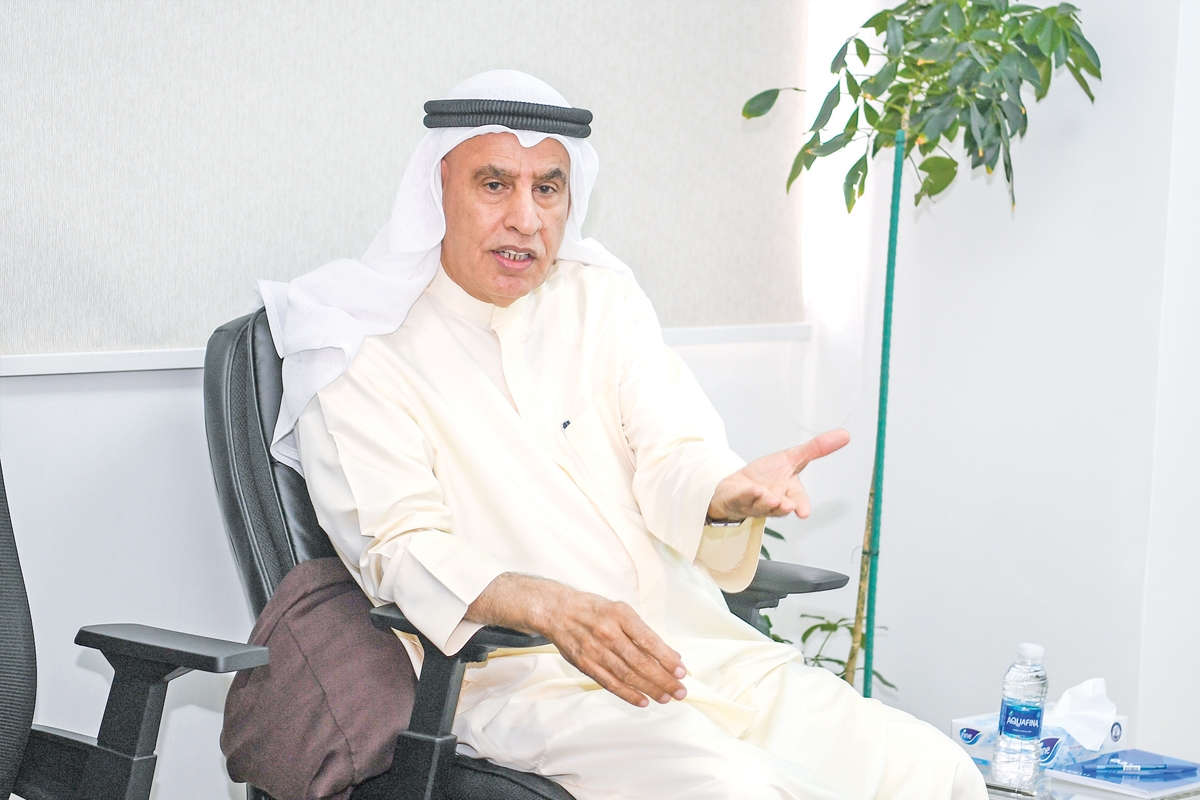
The CEO of the Central Agency for Resolving the Situations of Illegal Residents, Saleh Al-Fadala, confirmed that the agency was established to carry a lofty national mission and a great historical responsibility, which is to address an issue with intertwined humanitarian, legal, and social dimensions, in an effort to preserve national identity, while preserving human dignity. Al-Fadala said, in his speech in the introduction to a report on the services and facilities provided by the agency during the year 2024/2025, that the agency has adopted, since its inception, a clear vision and a solid institutional approach based on the constitution, laws and regulations, and based on precise methodological work, which aims to preserve rights and provide basic services according to foundations of equality and objectivity. He added that the agency was able, thanks to the directives of the senior political leadership, and then the efforts of its employees, to achieve tangible achievements embodied in addressing the conditions of many groups and modifying their paths, in a way that enhances their stability and contributes to their integration with state institutions within the framework of justice and equity. He stated that this publication, which comes in 10 chapters, highlights the tireless efforts and continuous efforts made by the agency and the national and humanitarian role it plays in dealing with this issue with humanitarian, social and legal dimensions, within a framework that reflects the approach of the State of Kuwait based on justice, compassion and respect for human dignity. We seek to preserve national identity while preserving human dignity. The agency stressed in the first chapter, which came under the title “Humanitarian Care,” that national identity is the essence of belonging and loyalty to the homeland, and an extension of a long history, an ingrained culture, and solid values that shaped the conscience of the people of Kuwait under one banner and a fixed belief. In the State of Kuwait, patriotism is manifested in love of the homeland and leadership, since the dawn of history, in the footsteps of fathers and grandfathers who sacrificed on land and sea, and created glory despite the cruelty of Waves and desert sands, and pride in identity constitutes a unique combination that combines authentic inherited customs and traditions, which exude the spirit of a cohesive Kuwaiti society, and modernity and renewed ambition towards a bright future. A model of harmony. He added: “The founding fathers instilled in us the meaning of the struggle for dignity. They built ships and waded the sea in search of a livelihood, and built the foundations of trade and urbanization, until Kuwait became a role model for harmony and cooperation. Kuwaiti identity is not only a geographical affiliation, but an authentic sense of duty and giving, and a deep belief that this small country with its area, great in its stature and achievements, is immortal in the memory of its people and the history of its nation.” The agency said that it is one of the sublime deeds of His Highness the Amir, Sheikh Mishal Al-Ahmad, that “national identity is the basis of survival and the pillar of unity and stability,” adding that, based on its powers, the central agency took the initiative to offer to the Council of Ministers the provision of benefits, services, and facilities in the humanitarian, social, and civil fields for the category of illegal residents. The Council of Ministers blessed this initiative by issuing Resolution No. 409 of 2011, which included: education, health, civil transactions, people with disabilities, driving licenses, and services. Ration and work. Regarding humanitarian care, the agency stated that “in a firm humanitarian spirit, and inspired by the values of mercy and solidarity established by the true Islamic religion, the Central Agency for Addressing the Situations of Illegal Residents pays special attention to the groups most in need, most notably those with disabilities, the sick, the elderly, and those of the like, and based on a sense of societal responsibility, the agency is keen to deliver its services to them wherever they are, through field teams that take into account their health and social conditions, and work to facilitate the completion of Their transactions are carried out without effort or waiting, in confirmation of the state’s approach to promoting comprehensive humanitarian care. These efforts come within the national efforts made by the State of Kuwait to serve the target groups, as the role of the central agency is integrated with the various state agencies, each within the scope of its jurisdiction to highlight an aspect of the work and review the services provided, supported by documented statistics for the year 2024 AD. Daily Giving shows that the numbers it presents in its publication do not only express solid statistical data, but rather tell the story of continuous daily giving that reflects the commitment of the state and the central apparatus to achieving social security and integrated care for all beneficiary groups. In this context, he stated that the number of people with disabilities from a Kuwaiti mother reached 265, and the number of people who were issued a disability certificate during that year was about 1,927, while a disability ID was issued to about 1,506, in addition to 699, the number of people who were issued a traffic plate, and a To Whom It May Concern certificate for about 234, while the financial cost of assistance to people with disabilities during that year amounted to about 78,357 thousand dinars, according to data from the Public Authority for People with Disabilities. Education is a right, in Chapter Two, which came under the title “Education is a Right for All.” The agency reviewed its efforts and stressed that education is a basic human right and a major pillar in human building and community development. The State of Kuwait firmly believes in this principle, as it is keen to enable the children of illegal residents to enroll in educational institutions at their various stages, in accordance with approved controls and laws that guarantee equal opportunities and the achievement of educational justice based on Article 13 of the Kuwaiti Constitution, which states that “Education is a fundamental pillar.” The state guarantees and sponsors it.” Since its inception, the agency has adopted a clear vision and a solid institutional approach based on the constitution, laws and regulations. He added: The interest of the State of Kuwait in this regard was not limited to education in its early stages only, but also extended to include secondary and academic education, and the provision of postgraduate study opportunities in some cases, in confirmation of its commitment to the principle of education as a right for all without discrimination. Numbers of students: The agency provided statistics on the numbers of students from this category in the Ministry of Education for the year 2024-2025, where their number in public education reached 20,419 students and in private education about 13,330 students, and their number at Kuwait University for the same academic year reached 265 accepted students, 1,379 the number of enrolled students, and 154 the number of graduates. Social Solidarity: The third chapter was titled “Social Solidarity,” which began with a reference to the text of Article 29 of the Kuwaiti Constitution, which says: “People are equal in human dignity, and they are equal before the law in public rights and duties, with no discrimination between them on the basis of gender, origin, language, or religion.” We are keen on careful, systematic work to preserve rights and provide basic services in accordance with equality and objectivity. In this context, the agency said: The State of Kuwait firmly believes that a decent social life is the basis of the stability of society, and that the family represents its solid nucleus and the source of its cohesion. From this standpoint, the state has been keen to enable all segments of society, including those residing illegally, with the components of a decent life that preserve dignity and achieve justice. In this context, the Central Agency for Addressing the Conditions of Illegal Residents provides a package of social services that contribute to strengthening Family cohesion and stability, through civil transactions, the most prominent of which is the issuance of marriage contracts, birth certificates, and other civil transactions that guarantee the preservation of rights and official documentation. Justice, according to the numbers of this section, the Ministry of Justice’s transactions in 2024 related to marriage and ratifications amounted to 1,028 transactions, 510 divorce cases, 47 reviews, 101 inheritance records, and 126 legal divisions, in addition to 13,000 thousand official notification transactions. He continued: The State of Kuwait also attaches great importance to achieving food security and ensuring decent living, as it provides ration cards to the category of illegal residents similar to citizens to enable them to obtain basic goods at subsidized and reduced prices, in a clear embodiment of the state’s humanitarian approach based on social justice and community solidarity. Sacrifices He explained that as an extension of this approach, the state appreciates the sacrifices of individuals from this category who participated in the Arab wars in defense of national issues, as the General Organization for Social Insurance disburses retirement salaries to the participants or to the families of the deceased, in recognition of their sacrifices and in honor of their national giving. These salaries are still disbursed regularly, without interruption, in confirmation of the state’s keenness to ensure a decent life for them and their families, and to consolidate the values of loyalty and gratitude towards those who contributed to defending the homelands and preserving their dignity. He added that within the framework of enhancing social stability, and in cooperation with the central agency and the Public Authority for Housing Welfare, the state provided housing units for a number of families of illegal residents, especially the children of Kuwaiti women, participants in wars, and the children of prisoners and martyrs, in order to support and consolidate their stability. For the values of solidarity, data and statistics embody these efforts on the ground, and confirm the state’s commitment to its humanitarian and national approach in caring for all groups and guaranteeing their rights, based on documented facts and compelling numbers that reflect the sincerity of work and the solidity of achievement. The number of applications submitted to the Paternity Claims and Name Correction Committee for the category of illegal residents in 2024 reached about 109, and the number of those registered with the General Organization for Social Insurance as holders of shares and pensions reached 1,195, and the total number of pension holders from that category reached 383, in addition to 13 people who were allocated housing units with the General Organization for Housing Welfare. As for the fourth chapter, it was titled “Health,” in which it said that Resolution No. (68) of 2011 was issued, which stipulated the exemption of “illegal residents from health fees, provided that they hold valid cards issued by the central agency. This decision aims to ensure their access to the necessary health care on a par with citizens, and to establish the principle of fairness in the provision of medical services.” The attached data and statistics confirm the tangible results achieved in this vital aspect, presenting statistics on the number of visits to hospitals and health centers during the year 2024. For example, but not limited to, the number of accident visitors at Jahra Hospital reached 194,903 cases, external operations visitors reached 186,273 cases, and admission cases amounted to about 27,781. Work is for the sake of dignity. Under the title “Work” came the fifth chapter, which confirmed that work is for the sake of dignity. And self-building, in which he said, “Out of the State of Kuwait’s keenness to promote the values of justice and production, and in the belief that work represents the basis of human dignity and the pillar of social stability, the state attaches special importance to providing job opportunities in accordance with legal controls that preserve rights and establish individual responsibility.” In this context, the “Central Agency” plays a regulatory role aimed at facilitating job opportunities for members of this category in state institutions and the private sector in coordination with the relevant authorities, and in a manner that does not conflict with the laws regulating the labor market in the country. He continued that this role comes within the framework of the humanitarian and social responsibility that Kuwait pursues in dealing with this group, from the standpoint of respect for human dignity and appreciation of productive effort, without prejudice to the legal status or sovereign rights of the state in regulating residence and nationality. These efforts have contributed to making room for many individuals who are able to work to participate in the local labor market, in a way that achieves living stability for them and contributes to serving society within the approved regulatory frameworks, reviewing in numbers the number of workers residing illegally in various parts of the state. The right to movement. As for Chapter Six, it was titled “Mobility is a responsibility we care for… and a humanity we uphold.” In it, he said, Kuwait has not overlooked one of the most important basic human rights, which is the right to movement, because of its direct impact on the stability of individuals and the organization of their daily lives. Based on this principle, the state has been keen, through the central apparatus, and in cooperation with the competent authorities, to establish practical mechanisms that facilitate the procedures for issuing land and sea driving licenses, in a way that guarantees this group the exercise of this right within an organized framework that takes into account humanitarian aspects and adheres to the laws. Guaranteed in the state. He explained that the efforts included facilitating the issuance of travel documents whenever necessary, whether for the purposes of education, treatment, completing procedures for amending legal status, or acquiring another nationality of their choice, within an integrated coordination framework with the relevant authorities. These efforts have yielded tangible results that reflect the balance between the humanitarian dimension and the organizational dimension, which contributes to enhancing the stability of this group and enabling them to practice their daily lives with dignity and respect for public order. He continued, and as a translation of this, 2,530 driving licenses were issued to illegal residents during the year 2024, and 29,256 licenses were renewed. The Country of Humanity While Chapter Seven came under the title Charitable Initiatives, in which the agency stressed that it is a giving that is not measured by amount… but rather by impact, it said: The State of Kuwait was named the Country of Humanity in recognition of its pioneering role in the field of charitable work, which was approved by the United Nations in 2014 when it granted Kuwait the title of “Center for Humanitarian Work.” Kuwait places humanitarian work at the top of its priorities, and in line with this trend, the Central Agency continues its efforts in cooperation with government agencies, charitable committees, and volunteer institutions to provide various forms of support – whether financial. Or in kind or services – which contributes to raising the standard of living of the beneficiary group and enhances their integration and stability within society. He continued: This cooperation was embodied in realistic projects and initiatives that yielded tangible results during the year 2024, including assistance to 2010 families from the Red Crescent Society. While Chapter Eight came under the title “Adjusting the situation,” stressing that “correcting the situation… is a step toward stability,” indicating that the general goal is to enable the illegal resident to apply for an organized legal path that allows him to complete his official transactions and obtain regular residency by documenting his legal status based on what is proven by official documents, taking into account the principles of justice and fairness and the requirements of national sovereignty. Chapter Nine, which came under the title of cooperation with international organizations, stipulates partnerships that enhance presence and strengthen credibility, as the central agency participates, as a member of the Standing Committee for Preparing National Human Rights Reports, within the national team charged with following up on the State of Kuwait’s obligations before international organizations related to human rights. Finally, Chapter Ten came under the title of services, where it reviewed the digital services it provides to close the distance and facilitate the service, including requesting the issuance of a new certificate, inquiring about the readiness of the certificate, and requesting the renewal of the review card.