
اخبار تونس- وطن نيوز
اخر اخبار تونس اليوم – اخبار تونس العاجلة
W6nnews.com ==== وطن === تاريخ النشر – 2026-06-08 01:18:00
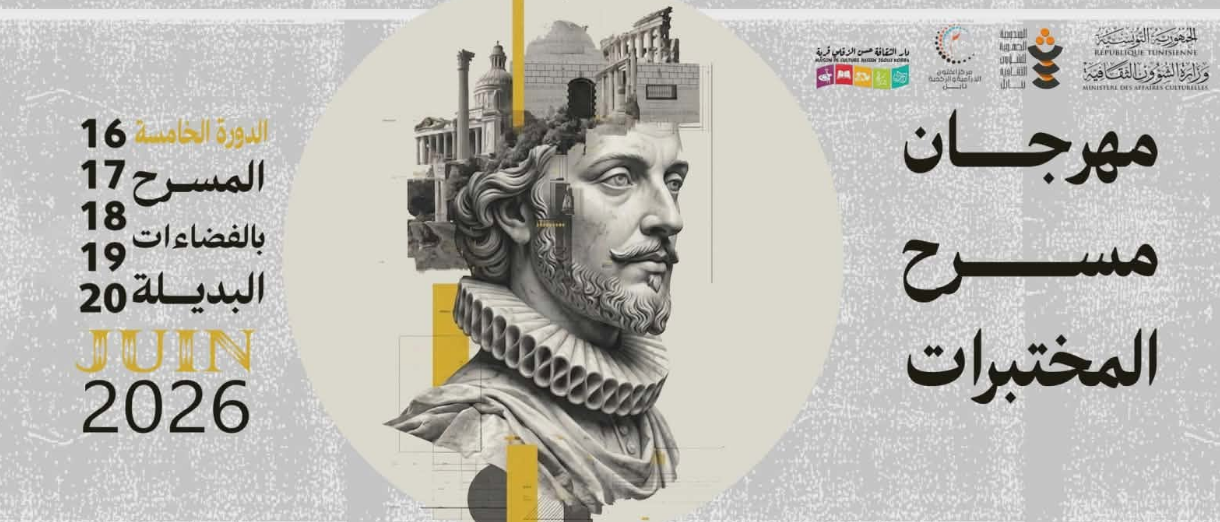
The city of Korba in the state of Nabeul is preparing to host the fifth session of the Laboratory Theater Festival, from June 16 to 20, 2026, in a new session that bets on a precise artistic and aesthetic question: How can theater leave its classical space towards alternative spaces, and through it reformulate the relationship between the actor, the place, and the audience? The city of Korba in the state of Nabeul is preparing to host the fifth session of the Laboratory Theater Festival, from June 16 to 20, 2026, in a new session that bets on a precise artistic and aesthetic question: How can theater leave its classical space towards alternative spaces, and through it reformulate the relationship between the actor, the place, and the audience? This course comes under the title “Theatre in Alternative Spaces,” in a choice that does not appear to be just a geographical move from the exhibition hall to the squares and open sites, but rather a move in the theatrical vision itself. The festival is not only looking for a ready-made show, but rather for a live experience, and for a creative path that makes the place a partner in making meaning, and the audience an active party in the artistic experience. In this context, the pivotal role of the Regional Delegation for Cultural Affairs in Nabeul is highlighted, which gives this project its institutional and cultural dimension, and through it stresses the importance of supporting regional theatrical initiatives capable of transforming culture from an occasion activity into a daily action rooted in its surroundings. The festival, with its research and formative vision, reflects a trend towards consolidating cultural decentralization and highlighting the ability of entities to produce artistic projects with intellectual and aesthetic depth. The Center for Dramatic and Performing Arts is also present as one of the main pillars in the success of this session, because of the theatrical and cognitive experience it represents capable of framing and accompanying young people’s experiences. The center is not satisfied with the role of participation, but rather contributes to building artistic and formative content that links theatrical practice and research, and between experimentation and professionalism, which gives the festival additional value and makes it a real space for the creation of the experienced actor, researcher and director. As for the House of Culture in Korba, it represents the local incubator for this project, and the space from which the cultural spirit of the festival stems. By embracing the theater laboratory and contributing to the training of young energies, the House of Culture confirms its role as the beating heart of the cultural movement in the city, not just as an administrative space or a performance hall, but rather as an institution close to the people, capable of transforming theatrical passion into a collective experience open to the audience and the surroundings. In its fifth session, the Laboratory Theater Festival is betting on liberating the actor from the confines of the traditional stage, and pushing him to test his body, voice, and psychological energy within spaces that are not originally prepared for theatrical performance. Here the place becomes part of the performance, without a background. The wall, the square, the archaeological site, and the open space are all transformed into living scenographic elements, forcing the actor and director to rethink their artistic tools. The course raises a fundamental problem related to the ability of parallel dancing to liberate the actor’s energy and reshape the recipient’s awareness outside the classical templates. From this question, other questions branch out about the relationship of the body to space, the limits of spontaneity and organization, and the possibility of transforming the audience from a consuming viewer into a participating element in the creative process. The festival is not limited to presenting theatrical performances, but rather seeks to build new theatrical thought through research laboratories, training workshops, and critical seminars. This course gives special importance to composition, through laboratories dealing with directing in alternative spaces, the physical speech of the actor, digital scenography, sound and the rhythm of speech. These are topics that confirm that theater, in its essence, is not just memorizing texts, but rather research, experimentation, and continuous questioning. The festival also has a clear public dimension, as it seeks to bring the fourth art closer to the citizens in Korba and the state of Nabeul, by taking theater to people’s daily places. In this sense, the project contributes to breaking the elitist image that may be attached to experimental theatre, and opens the door to a closer and more intimate theatrical experience, in which the artist and the audience share the same space and the same moment. The festival also gains a developmental and cultural dimension through reviving forgotten spaces and valuing the historical, natural and urban sites in the city of Korba. Art here is not limited to spectacle, but rather turns into a means of rediscovering a place, illuminating its memory, and giving it new cultural and touristic value. Several cultural and theatrical institutions are participating in this session, including the dramatic and performing arts centers in Nabeul, Zaghouan, and Sfax, in addition to the theater laboratory at the House of Culture, Korba, the private cultural space “Small Theater” in Medenine, and the “Artou” cultural space in Medenine. This multiple presence reflects a clear desire to build bridges of communication between entities, exchange experiences, and create a theatrical network capable of supporting and developing young people’s experiences. The fifth session of the Korba Laboratory Theater Festival does not present itself as just a passing cultural date, but rather as an integrated artistic project led by institutions that believe that theater can be a means of formation, thinking, development, and bringing life back to public space. Between the support of the Regional Delegation for Cultural Affairs in Nabeul, the expertise of the Center for Dramatic and Performing Arts, and the vitality of the House of Culture in Korba, the features of a cycle that bets on theater as an open laboratory for people, places and imagination are being formed. Thus, the Laboratory Theater Festival confirms that theater does not always begin from the stage, but rather it may begin from a street, a square, the memory of a place, or the body of an actor who tests the limits of the possible. When theater is liberated from its classical space, it not only changes the place of performance, but also opens up to art and the audience new questions about the meaning of spectatorship, the meaning of participation, and the meaning of theater being part of people’s daily lives. This course comes under the title “Theatre in Alternative Spaces,” in a choice that does not appear to be just a geographical move from the exhibition hall to the squares and open sites, but rather a move in the theatrical vision itself. The festival is not only looking for a ready-made show, but rather for a live experience, and for a creative path that makes the place a partner in making meaning, and the audience an active party in the artistic experience. In this context, the pivotal role of the Regional Delegation for Cultural Affairs in Nabeul is highlighted, which gives this project its institutional and cultural dimension, and through it stresses the importance of supporting regional theatrical initiatives capable of transforming culture from an occasion activity into a daily action rooted in its surroundings. The festival, with its research and formative vision, reflects a trend towards consolidating cultural decentralization and highlighting the ability of entities to produce artistic projects with intellectual and aesthetic depth. The Center for Dramatic and Performing Arts is also present as one of the main pillars in the success of this session, because of the theatrical and cognitive experience it represents capable of framing and accompanying young people’s experiences. The center is not satisfied with the role of participation, but rather contributes to building artistic and formative content that links theatrical practice and research, and between experimentation and professionalism, which gives the festival additional value and makes it a real space for the creation of the experienced actor, researcher and director. As for the House of Culture in Korba, it represents the local incubator for this project, and the space from which the cultural spirit of the festival stems. By embracing the theater laboratory and contributing to the training of young energies, the House of Culture confirms its role as the beating heart of the cultural movement in the city, not just as an administrative space or a performance hall, but rather as an institution close to the people, capable of transforming theatrical passion into a collective experience open to the audience and the surroundings. In its fifth session, the Laboratory Theater Festival is betting on liberating the actor from the confines of the traditional stage, and pushing him to test his body, voice, and psychological energy within spaces that are not originally prepared for theatrical performance. Here the place becomes part of the performance, without a background. The wall, the square, the archaeological site, and the open space are all transformed into living scenographic elements, forcing the actor and director to rethink their artistic tools. The course raises a fundamental problem related to the ability of parallel dancing to liberate the actor’s energy and reshape the recipient’s awareness outside the classical templates. From this question, other questions branch out about the relationship of the body to space, the limits of spontaneity and organization, and the possibility of transforming the audience from a consuming viewer into a participating element in the creative process. The festival is not limited to presenting theatrical performances, but rather seeks to build new theatrical thought through research laboratories, training workshops, and critical seminars. This course gives special importance to composition, through laboratories dealing with directing in alternative spaces, the physical speech of the actor, digital scenography, sound and the rhythm of speech. These are topics that confirm that theater, in its essence, is not just memorizing texts, but rather research, experimentation, and continuous questioning. The festival also has a clear public dimension, as it seeks to bring the fourth art closer to the citizens in Korba and the state of Nabeul, by taking theater to people’s daily places. In this sense, the project contributes to breaking the elitist image that may be attached to experimental theatre, and opens the door to a closer and more intimate theatrical experience, in which the artist and the audience share the same space and the same moment. The festival also gains a developmental and cultural dimension through reviving forgotten spaces and valuing the historical, natural and urban sites in the city of Korba. Art here is not limited to spectacle, but rather turns into a means of rediscovering a place, illuminating its memory, and giving it new cultural and touristic value. Several cultural and theatrical institutions are participating in this session, including the dramatic and performing arts centers in Nabeul, Zaghouan, and Sfax, in addition to the theater laboratory at the House of Culture, Korba, the private cultural space “Small Theater” in Medenine, and the “Artou” cultural space in Medenine. This multiple presence reflects a clear desire to build bridges of communication between entities, exchange experiences, and create a theatrical network capable of supporting and developing young people’s experiences. The fifth session of the Korba Laboratory Theater Festival does not present itself as just a passing cultural date, but rather as an integrated artistic project led by institutions that believe that theater can be a means of formation, thinking, development, and bringing life back to public space. Between the support of the Regional Delegation for Cultural Affairs in Nabeul, the expertise of the Center for Dramatic and Performing Arts, and the vitality of the House of Culture in Korba, the features of a cycle that bets on theater as an open laboratory for people, places and imagination are being formed. Thus, the Laboratory Theater Festival confirms that theater does not always begin from the stage, but rather it may begin from a street, a square, the memory of a place, or the body of an actor who tests the limits of the possible. When theater is liberated from its classical space, it not only changes the place of performance, but also opens up to art and the audience new questions about the meaning of spectatorship, the meaning of participation, and the meaning of theater being part of people’s daily lives.