

اخبار الامارات – وطن نيوز
اخبار الامارات عاجل – اخبار الامارات العاجلة
W6nnews.com ==== وطن === تاريخ النشر – 2026-07-02 03:05:00
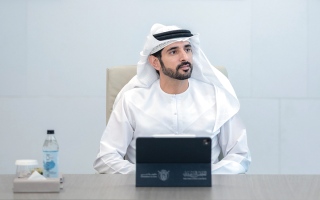
His Highness Sheikh Hamdan bin Mohammed bin Rashid Al Maktoum, Crown Prince of Dubai, Deputy Prime Minister, Minister of Defense and Chairman of the Executive Council of the Emirate of Dubai, affirmed that Dubai – which over the past decades has combined words and deeds – today tells with achievements and gains its inspiring success story, after it made, under the guidance of its wise leadership, the name of Dubai synonymous with ambition and achievement that begins and does not end. His Highness said: “With the vision of His Highness Sheikh Mohammed bin Rashid Al Maktoum, Vice President and Prime Minister of the UAE and Ruler of Dubai, may God protect him, Dubai continues its confident path towards designing its future with continuous innovative strategies, policies, initiatives and projects, and creative, renewed ideas.” His Highness pointed out that societies without culture are societies without identity and without any impact on civilization. His Highness said, “Today we adopted the Dubai Cultural Strategy 2033, which with its creative initiatives reflects Dubai’s leadership imprint and its approach to empowering creators, and its continuous care for the cultural scene, which has strengthened its local and global partnerships, empowered its talents, cadres and all its components, and expanded its horizons towards further creative and cultural development.” His Highness continued: “Latifa bint Mohammed is leading, through the Dubai Cultural Strategy, a new ambitious path that will contribute to strengthening Dubai’s position as a global cultural reference, rooted in the Emirati heritage, a pioneer in innovation, a driver of the creative economy, and a supporter of the Dubai Plan 2033 and its 33 social agenda. It will achieve contributions amounting to 5.4 billion dirhams, build a portfolio of partnerships between the government and private sectors worth 2.75 billion dirhams, and expand the area of cultural assets by more than 200%. His Highness added: “We also adopted the Dubai Customs strategy, which consolidates Dubai’s mission of providing world-class customs services, facilitating trade, expanding partnerships, and enhancing their security, in accordance with a vision that achieves flexible customs administration that creates international trade opportunities and strengthens the close ties extending between regions of the world through Dubai.” His Highness the Crown Prince of Dubai said: “We have approved the plan to develop First Al Khail Road, which will impact the lives of 2.6 million people and enhance Dubai’s ability to provide innovative leadership solutions in traffic and urban planning.” His Highness added: “We also approved the real-time census and population growth monitoring project in Dubai, which combines administrative records and smart systems, and integrates artificial intelligence techniques in data analysis and linking it to Dubai’s real-time population clock, and strengthens its global leadership in monitoring vital data and transforming it into visions, policies, and strategic development plans, in conjunction with the growth of Dubai’s population, which reached 4.58 million people by the end of 2025.” His Highness stressed the priority of providing opportunities for national cadres, especially in the private sector, by saying: “We also adopted the strategy for Emirati cadres in the private education sector, which raises the representation of national cadres in the stages of private education in Dubai, supports the consolidation of the features of national identity in the educational process, and contributes to achieving the goals of the Dubai Education Strategy 2033.” His Highness the Crown Prince of Dubai said: “We have also adopted the Dubai Investor Register, which facilitates the work of investors, protects their rights through data governance, and enhances regulatory transparency and financial compliance.” His Highness stressed: “We also adopted an innovative visual identity for the addressing system for Dubai’s regions. Our identity is unique, and with this project we want to enhance Dubai’s leadership in urban planning stemming from its heritage and the identity of its places.” His Highness approved the launch of the Global Center for Technology and Innovation in Islamic Finance, which supports the consolidation of the position of Dubai and the UAE as a leading global center for innovation in financial technology and specialized financing solutions. This came when His Highness chaired the meeting of the Executive Council of the Emirate of Dubai, which was held yesterday at the Emirates Towers, and approved a number of strategies, plans and projects with a total budget amounting to 18 billion dirhams in the sectors of culture, trade, infrastructure, nationalization, finance, investment, urban planning, and population census, in the presence of His Highness Sheikh Ahmed bin Mohammed bin Rashid Al Maktoum, Second Deputy Ruler of Dubai. His Highness Sheikh Hamdan bin Mohammed bin Rashid Al Maktoum said, in a blog post on the “X” platform, yesterday: “During the Executive Council meeting, we approved a package of specific initiatives and projects in Dubai worth 18 billion dirhams.” His Highness added: “Under the leadership of His Highness Sheikh Mohammed bin Rashid Al Maktoum, Dubai has made its name synonymous with ambition and achievement. The development process continues, the momentum of projects does not stop, initiatives are renewed, and what is coming, God willing, will always be more beautiful and better for Dubai and its people.” Dubai Cultural Strategy In detail, the Executive Council adopted the Dubai Cultural Strategy 2033, which is supervised by the Dubai Culture and Arts Authority, and through which it works to achieve the mission of making Dubai a pioneering city in innovation and cultural cooperation, a global incubator for talent, and the preferred destination for creative projects, and to consolidate its position as a global reference for the preservation of cultural heritage, and a global model for community cohesion. The strategy is integrated with the Dubai Plan 2033 and its Social Agenda 33, and contributes to enhancing the quality of life, consolidating community cohesion, and supporting sustainable economic growth through the cultural and creative sectors. The strategy is based on four main pillars: global cultural leadership, the integrated creative system, cultural identity, diversity and inclusion, and institutional excellence. The strategy includes 40 strategic initiatives supported by five sectoral strategic indicators and 23 main indicators. The most prominent of these initiatives are: the Dubai Program for Cultural and Creative Innovation, the Design Challenge for Emirati Heritage, the Program for Attracting Cultural and Creative Funding, the Governance of Cultural and Creative Industries, Culture Everywhere through Expanding and Developing Cultural Infrastructure, and the Program for Preparing Future Talents. The goals of the Dubai Cultural Strategy 2033 include developing more than 6,000 local talents, attracting more than 6,000 international creators and specialists in the cultural sector, in addition to increasing the area of cultural assets by more than 200%, raising the percentage of the contribution of cultural and creative industries to the gross domestic product in Dubai’s economy to 5.4%, and enhancing the value of the portfolio of government and private sector partnerships in the cultural sector to 2.75 billion dirhams. A customs strategy for global trade. The Executive Council adopted the Dubai Customs Strategy 2030, which seeks to provide flexible customs administration that enhances international trade and connects the world. The strategy has set a set of main objectives, including: facilitating trade, strengthening economic partnerships, enhancing security and compliance, and improving the experience of customers and partners. The goal of facilitating trade includes ensuring a smooth and fast trade experience for all segments of society, in addition to enhancing the global competitiveness of Dubai’s merchants, while the goal of establishing security and compliance focuses on protecting society by ensuring border security and a reliable travel experience. While the goal of strengthening economic partnerships achieves confirmation of Dubai’s position as a major hub for connecting the world through vital corridors, while the goal of improving the experience of customers and partners ensures raising the level of experience of internal and external customers. Continuous development and to consolidate Dubai’s leadership position in developing mobility solutions in the connected cities of the future, the Executive Council approved the First Al Khail Road development plan, which includes the implementation of a new strategic axis parallel to Sheikh Zayed Road on First Al Khail Road, which provides a solution for transit traffic, and includes the construction of the first connected overhead track with a length of 15 kilometers, with a capacity of three lanes in each direction. The project provides an innovative engineering solution that meets the requirements of the continuous urban and economic growth that the Emirate of Dubai is expected to witness in the next two decades. Work on the project will begin in the third quarter of 2027 and completion will be completed in the fourth quarter of 2030. The project will serve 2.6 million beneficiaries, support traffic in the financial, business and tourism district, and provide additional entrances and exits to the surrounding residential, commercial and industrial areas, the most important of which are the Al Barsha, Al Quoz and Al Khaleej areas. Commercial and Meydan, and reduces travel time on Sheikh Zayed Road by 51% during rush hour, enhances the efficiency of the road network, and increases the capacity by about 9,000 vehicles per hour, while using innovative technologies and modern methods in implementing the project, which contribute to speedy completion without affecting traffic movement in the region. Dubai Population Now The Executive Council approved the real-time census and population growth monitoring project in Dubai entitled “Dubai Population Now”, through which the Dubai Data and Statistics Corporation, affiliated with the Dubai Digital Authority, was able to form an unprecedented qualitative leap by adopting an advanced approach based on administrative records and smart systems, and integrating artificial intelligence techniques in analyzing population data and linking it to the real-time population clock of the Emirate of Dubai, which contributes to anticipating demographic trends, understanding patterns of movement and residence, and improving urban planning and public services. The population of the Emirate of Dubai reached four million and 580 thousand people by the end of 2025, an increase of approximately 332 thousand people compared to the end of the previous year 2024 (when the emirate’s population reached four million and 248 thousand people at that time) and a growth rate of about 7.5%. The “Dubai Population Now” initiative embodies the new generation of censuses based on real-time record data as a pioneering alternative to traditional censuses, as it gives a real-time picture of the size and composition of Dubai’s population. It also uses population data as a strategic asset to enhance Dubai’s global competitiveness and continue to improve its quality of life. The analysis of the huge data resulting from the project relies on machine learning and smart forecasting techniques, which contributes to supporting the emirate’s plans, initiatives and strategies, and anticipating the future in all development fields. Investment, urban, services, infrastructure and others. Empowering Emirati cadres: Within the framework of enhancing Emiratisation and the opportunities available to qualified nationals, the Executive Council adopted, during its meeting, the strategy for Emirati cadres in the private education sector, which aims to raise the representation of Emirati cadres in all stages of private education in Dubai, in cooperation with private educational institutions. The strategy contributes to reaching the target of 3,000 Emirati staff by the year 2033, with a focus on educational staff specifically, in addition to consolidating the national identity in the educational field, and supporting the achievement of the goals of the Dubai Education Strategy 2033, which was approved by the Executive Council in October 2024. The strategy includes a number of main indicators, the most important of which are: the percentage of Emirati educational staff in private education in Dubai, their job turnover rate, and the percentage of their representation in the teaching staff compared to administrative jobs. The most prominent initiatives of the strategy include developing a teacher qualification and accreditation academy, implementing the Success Partners Program in partnership with the private sector, in addition to the flexible Emiratisation initiative, the teaching experience, and the retiree employment path. Dubai Investor Register The Executive Council approved the “Dubai Investor Register” project; Which contributes to achieving the goals of the Dubai Economic Agenda D33, especially increasing foreign direct investment by a total of 650 billion dirhams until 2033, and represents a unified economic record for all institutions and individuals who work or invest in the Emirate of Dubai, including free zones. The “Dubai Investor Register” project aims to facilitate doing business, especially for companies and individuals who have investments in more than one region in the emirate, and attract investment capital and international companies by facilitating the registration process by making it happen in one time, and enabling the transfer of companies between multiple regions within the Emirate of Dubai without re-registering the investor, and fulfilling the requirements of the Financial Action Task Force at the level of the emirate’s economic registry and control and compliance processes, while reducing the cost and operational burdens on free zones by unifying procedures and data. A visual identity for the addressing system. The Executive Council also approved the innovative visual identity for the addressing system in the Emirate of Dubai, to give the addressing plates a distinctive urban character, inspired by the emirate’s environment, and classified according to the urban characteristics of the urban sectors, in a way that enhances the identity of the regions, and contributes to improving geographical reasoning and ease of movement, and in accordance with international best practices. The addressing and spatial reasoning system will gradually expand to include transportation facilities and smart applications for services for residential areas, according to an implementation plan covering 186 areas until 2029. Customized financing solutions The Executive Council of the Emirate of Dubai approved the launch and management of the Dubai International Financial Center, in cooperation with other global centers, for the Global Center for Technology and Innovation in the Field of Islamic Finance. The step aims to strengthen Dubai’s position as a global center for financial technology and innovation through Islamic finance, whose global market size is expected to reach $9.31 trillion by 2030. This qualitative shift contributes to expanding the scope of raising cross-border financing, stimulating Islamic finance solutions based on financial technology platforms, establishing global standards, and enhancing Dubai’s intellectual leadership in this vital field. The plan includes strategic initiatives to attract decision-makers, distinguished talents, and innovators to Dubai in this field, which includes enabling technology and innovation through the “Islamic Finance Innovation Challenge,” to transform the sector’s challenges into scalable Islamic financial technology solutions, and an innovative platform that links a number of Islamic banks with global startups, with the aim of developing ready-to-use solutions in various areas of the Islamic finance sector. In addition to this, the Centre’s talent and human resources development initiative is through the Dubai International Financial Center Academy, with the aim of qualifying more than 3,000 trainees by 2031 in cooperation with the most prominent global financial sector partners. In addition, the initiatives include achieving thought leadership and a strong global presence by organizing the “Future Islamic Finance Forum” in Dubai on November 4, 2026, as part of the activities of the Dubai Future Financial Sector Week, with the attendance of more than 1,000 participants from more than 50 countries. The new center benefits from its launch within the Dubai International Financial Center and its distinguished location linked to a well-established global financial system, based on an integrated legal and regulatory framework, a distinct dynamic environment for financial technology and capital markets, and a unique position in enhancing communication between the markets of the East and the West. Hamdan bin Mohammed: • With the vision of Mohammed bin Rashid.. Dubai Actions continues to design its future with innovative strategies, policies, initiatives and projects that do not stop. • Latifa bint Mohammed has charted an ambitious path for the emirate’s cultural journey, which will contribute to strengthening Dubai’s position as a global cultural reference, rooted in the Emirati heritage, and an engine for the creative economy. • Societies without culture are societies without identity and without any trace of civilization. To view the topic in full, please click on this link

