
اخبار الكويت- وطن نيوز
اخر اخبار الكويت اليوم – اخبار الكويت العاجلة
W6nnews.com ==== وطن === تاريخ النشر – 2026-04-20 22:14:00
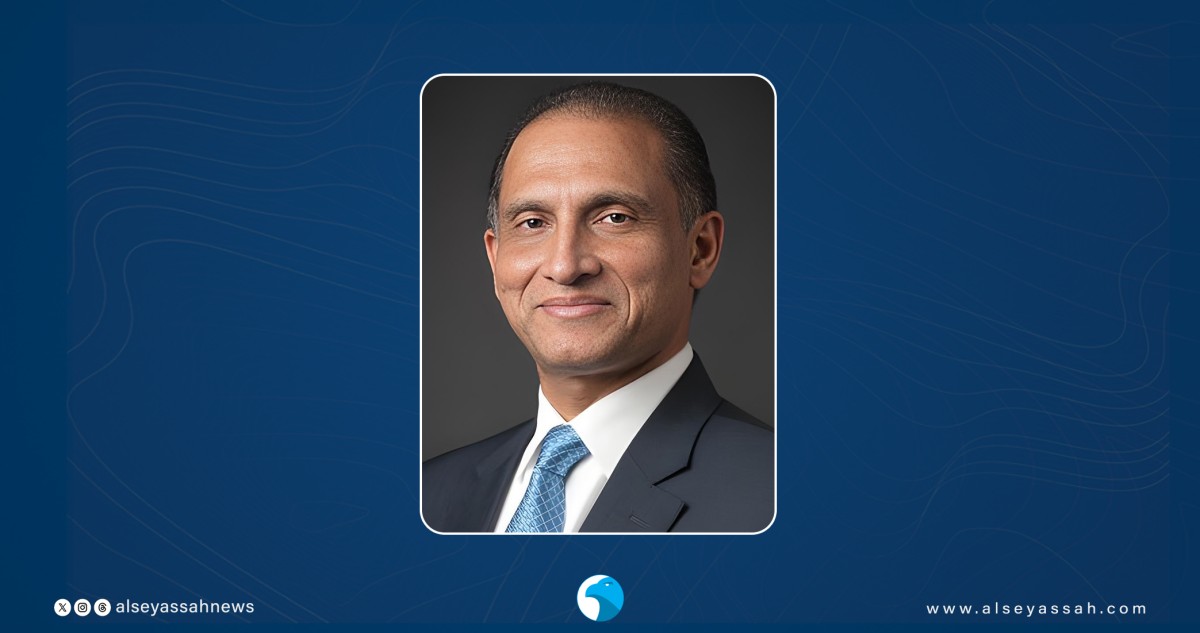
The former Foreign Minister of Pakistan is counting on his country’s diplomacy and the “flexibility” of the warring parties. Trump set two goals for the war: changing the Iranian regime and preventing the “nuclear bomb”… The result was: closing “Hormuz”! The war revealed “structural weaknesses” in the region and the need has become urgent for a “new security framework”. The Gulf states did not emerge as a “cohesive bloc”… They had to send “more coordinated” messages to Washington. It is not strange that Pakistan mediates. To reduce tension… Any crisis in the Gulf is a source of concern to him. Former Pakistani Foreign Minister Azaz Ahmed Chaudhry expected to reach a “comprehensive peace settlement” between Iran and the United States that would “benefit all countries of the region and the global economy,” attributing his expectation to what he described as the “active diplomacy” that Islamabad pursued in mediating between Tehran and Washington, and then the “flexibility” shown by both warring parties. In a private dialogue For “Politics”, Chaudhry, who held several diplomatic assignments, most recently as his country’s ambassador to Washington between 2013 and 2017, saw that the Gulf states “have not emerged, recently, as a cohesive strategic bloc…”, and that, according to him, they must “send well-coordinated messages in the future to Washington and other major powers, such as Pakistan and Turkey,” noting that this will give those countries “more weight and a more prominent voice in Issues of peace and stability in the region.” Chaudhry, who currently holds the position of Director-General of the Institute for Strategic Studies in the Pakistani capital, Islamabad, said that the recent war “exposed structural weaknesses in the region,” stressing the need for “a new security structure that guarantees each country’s respect for the sovereignty and territorial integrity of other countries.” He added that the Gulf region “is considered Pakistan’s close neighbourhood, and any crisis in the Gulf will be a source of concern for Pakistan,” pointing in this context to the strategic defense agreement signed between his country and the Kingdom of Saudi Arabia, and that Pakistan “made a sincere effort to persuade the Iranian leadership not to attack Saudi Arabia”… Here are the details of the dialogue: Pakistan officially condemned the Iranian attacks that targeted Kuwait, but, in return, maintained the possibility of diplomatic engagement with Tehran and Washington. How do you explain Islamabad’s adherence to this balanced position, in light of the escalation of regional tensions? Pakistan’s primary goal is to see an end to this war between the United States and Iran, and to help bring peace to the region. As soon as hostilities broke out between the United States, Israel, and Iran on February 28, Islamabad began proactively engaging with Tehran and Washington, as well as with the Gulf states, to facilitate reaching an agreement on a number of controversial issues. From the perspective of the United States, the goals of the war were not clear, and US President Donald Trump often mentioned two goals: stopping Iran from developing a nuclear weapon, and changing the Iranian regime, but after six weeks of the war it became clear that it did not achieve both goals, nor did it solve any of the other issues. Rather, a new issue emerged: the closure of the Strait of Hormuz by Iran. Oil and gas supplies, which had already been disrupted by the war, came under additional pressure, and with their rising prices, the global economy began to suffer. Currently, the regional issue has turned into a global problem… Here, Pakistan realized that the only way out of the conflict was for its parties to talk to each other and resolve issues peacefully, so it accelerated its diplomatic efforts. Prime Minister Shahbaz Sharif and Army Commander Field Marshal Asim Munir knew very well that if the war continued any longer, its results would be devastating to every country in the region, and to the entire world. Therefore, they, along with Foreign Minister Ishaq Dar, doubled their contacts with the leadership of the United States and Iran, and with major regional countries. A meeting was held for the foreign ministers of Saudi Arabia, Turkey, Egypt and Pakistan in Islamabad, to coordinate efforts for a ceasefire and a peaceful settlement. The Pakistani Foreign Minister also made an urgent visit to Beijing to inform the Chinese leaders of the developments. Gaining the confidence of the parties. After Pakistan gained the confidence of all parties, including the United States, Iran, Saudi Arabia, Turkey and China, the Prime Minister proposed a ceasefire. Fire, and Washington and Tehran accepted it, as world leaders welcomed it. The Pakistani leadership did not stop there, but rather intensified its efforts to use the ceasefire for a more lasting peace settlement. For its own reasons, Washington was also preparing for a settlement, especially since the American people began to realize that the war was not their war. Likewise, Iran, which had lost its senior leaders, including Supreme Leader Ali Khamenei, and whose cities and infrastructure were exposed to widespread destruction as a result of the Israeli-American bombing, became ready to find an end to the war. After six weeks of fighting, it became clear that there would be no winners in the war, and that every country in the region may be exposed to more human and material losses if the war resumes, and during talks Islamabad, April 11: The two parties are close to concluding an agreement, but they still need more time to resolve the outstanding issues. Most of the discussions focused on three issues: the Iranian nuclear program, the closure of the Strait of Hormuz by Iran, and the Israeli bombing in Lebanon. Thanks to the active diplomacy pursued by Pakistan, and the flexibility shown by Iran and the United States, there is a possibility of reaching a comprehensive peace settlement. Do the recent strikes, in your view, represent a turning point in Gulf security, or have they essentially exposed structural weaknesses that were already there? There is an unstable trilateral relationship between Iran, Israel and the Gulf states, and the recent war has exposed structural weaknesses in the region, and after the war there will be a need for a new security architecture that ensures that each country respects the sovereignty and territorial integrity of the other. Distinguished relations in In light of your work as Pakistan’s ambassador to the United States, you had a direct vision of how the Gulf states are viewed and dealt with in American decision-making circles. To what extent does the Gulf appear to be a cohesive strategic bloc in Washington, and do differences in messages or national priorities between the GCC countries complicate how American decision-makers interpret Gulf positions? Every administration in the United States has a special relationship with the Gulf states… It is known that American bases in the region provide a security umbrella for those countries, and recently the Gulf states have not emerged as a cohesive strategic bloc due to differences among them, and in the future it will be important for all Gulf states to send well-coordinated messages to Washington and other major powers, such as Pakistan. And Turkey, and this will give it greater weight and a more prominent voice in issues of peace and stability in the region. Recent developments indicate that the Gulf states’ communication with Pakistan is not always at the same level. Can we say that regional crises make Pakistan’s strategic value more clear compared to calm times? It is natural for each Gulf country to have its own and distinct relationship with Pakistan, and it is also natural for there to be common collective interests, such as regional peace and stability. In this, Pakistan can play an important role… Traditionally, Pakistanis have deep respect for their brothers in the Gulf countries, and Pakistanis working in the Gulf countries have provided valuable services for economic development in the host countries, and Pakistan is considered a foundation of stability, or what can be described as a party supporting stability in the region… Therefore, it will be important for every Gulf country to engage proactively with Pakistan, and to explore opportunities for economic cooperation aimed at strengthening this relationship based on mutual goodwill. Pakistan and the Gulf states can work together in discussions regarding possible new security arrangements for the post-war period. There are reports that Pakistan may play a mediating role in reducing regional escalation. How far can Pakistan go in this role, and what are the conditions necessary for the success of such mediation? The Gulf region is Pakistan’s close neighbor, and any crisis there will be a source of concern for Pakistan. Therefore, it was not surprising that Pakistan assumed the role of mediator in order to reduce tension in the region. With the honesty and commitment Islamabad has shown, the two most important conditions for any success, it is well placed to benefit from the trust of all parties to the conflict. The truth is that the Gulf states showed a great deal of self-restraint, and did not get drawn into the war despite the bombing they were subjected to… Here it must be noted that the situation of the Kingdom of Saudi Arabia, in particular, constitutes a source of concern for Pakistan, given the existence of a strategic defense agreement between the two countries. Therefore, Pakistan made a sincere effort to persuade the Iranian leadership not to attack Saudi Arabia, and mediated between the two countries. For its part, Saudi Arabia and other Gulf states have shown a remarkable amount of restraint. Thanks to the intense diplomacy carried out by Pakistan, the ground has been prepared for Iran and the United States to work towards a comprehensive peace settlement that will benefit all countries in the region and the global economy. It will be important for Pakistan and the Gulf states to continue working together in the future to achieve lasting peace and stability in the region. A new security framework. Do you think that the recent Iranian attacks on the Gulf states have increased the need to rethink Gulf security frameworks, especially in the areas of air defense and coordination? Strategic and crisis response? Yes, I believe that the recent confrontation has emphasized the need to begin discussions on a new security framework, and Pakistan can be a natural partner for the Gulf states, by strengthening cooperation in the areas of diplomacy, defense and crisis management. In light of recent developments, what message do you send directly to Kuwait and the Gulf states regarding stability, cooperation and the future path? Pakistan is a friend of Kuwait and other Gulf states, and it would be beneficial for the Gulf states to establish positive and constructive relations, beneficial to them and to Pakistan, which is A reliable and reliable partner… You remember when Pakistan faced aggression from its eastern side, in May 2025, how it proved to the world that it was capable of defending itself against a much larger neighbour, and since then Pakistan has been seen as a potential provider of stability in the region, especially in times of crisis. There is no doubt that Pakistan welcomes close cooperation with all Gulf states, noting that no country should look at its relationship with Pakistan from the perspective of another country. Each Gulf country, individually, will find that its strategic partnership with Pakistan is useful for achieving a peaceful and prosperous future for the region. This applies to the relationship with the Gulf Cooperation Council as a whole… I believe that with the end of the war between the United States and Iran, there will be a renewed interest among all countries of the region to review the existing security arrangements, and a new security framework will likely emerge from this review, and it will be important for Saudi Arabia, Pakistan, Turkey, Egypt and Iran, as well as the Gulf states, to engage in discussions about this future framework under the auspices of the major powers, including the United States, China and Russia. About the Diplomat Aizaz Chaudhry Ambassador Aizaz Ahmed Chaudhry spent 37 years in the Pakistani diplomatic corps, during which he rose through the ranks until he assumed the position of Minister of Foreign Affairs during the period from December 2013 to March 2017, and his last diplomatic mission was as his country’s ambassador to the United States. Since June 2018, Ambassador Chaudhry has been the Director-General of the “Institute for Strategic Studies” in Islamabad, which was founded in 1973, and is an independent, non-profit institution concerned with research. And analyses. The Institute organizes periodic seminars and meetings on strategic and security issues, and establishes cooperative relations with similar institutes around the world. It also represents Pakistan in international conferences concerned with strategic affairs, and contributes to supporting official bodies and others with research, studies and analyzes related to strategic issues and problems and what is related to them.