
اخبار الكويت- وطن نيوز
اخر اخبار الكويت اليوم – اخبار الكويت العاجلة
W6nnews.com ==== وطن === تاريخ النشر – 2026-06-13 21:59:00
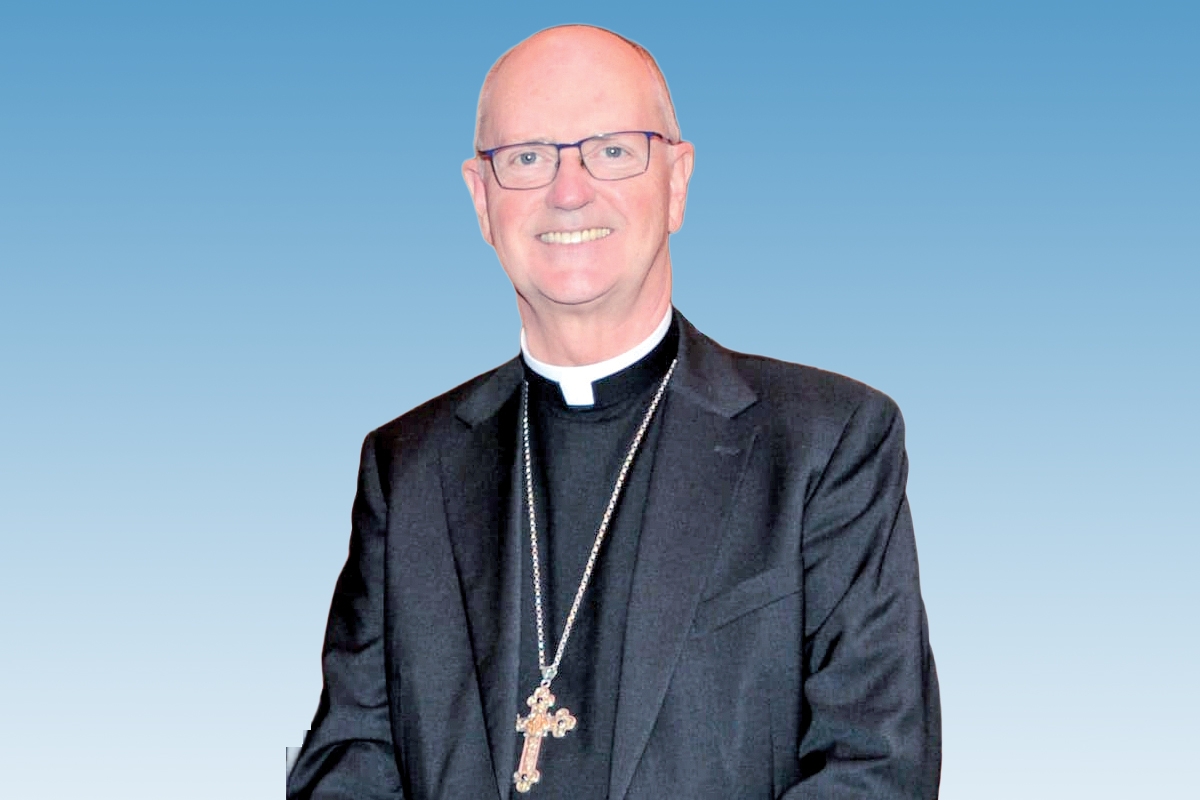
After 5 years spent in the State of Kuwait, the Ambassador of the Holy See (Vatican) to the country, Bishop Eugene Nugent, is preparing to leave Kuwait for the Czech Republic, to assume his new duties as Apostolic Ambassador to Prague, thus ending a diplomatic, humanitarian and spiritual phase full of work and relationships that he has forged with various components of Kuwaiti society. Bishop Nugent arrived in Kuwait in February 2021, during one of the most complex periods on the global level, as the repercussions of the Corona pandemic were still casting a shadow on various aspects of life, and during the years of his service the region and the world witnessed many political, humanitarian and security transformations and challenges, but that did not prevent him from continuing his diplomatic and spiritual mission, based on promoting dialogue, understanding and rapprochement between peoples, religions and cultures. In this farewell interview with Al-Jarida, the Vatican ambassador talks about his experience in Kuwait, which he described as a “second homeland” for him and a “land of hospitality, friendship and hope,” recalling the important milestones he experienced during his tenure, starting with the challenges imposed by the pandemic, through the development of the process of interfaith dialogue in the Gulf region, and reaching the achievements witnessed by the Catholic Church in Kuwait, most notably raising the status of the Church of Our Lady of the Arabian Peninsula in Al-Ahmadi to the rank of “basilica.” Saghra”, becoming the first of its kind in the Arabian Peninsula. Bishop Nugent also focused on the specificity of the Kuwaiti experience in the field of coexistence and religious tolerance, praising the openness and mutual respect he observed between the various components of society. He stressed that Kuwait provides the world with a practical model that proves that cultural and religious diversity can be a source of strength and enrichment, not a cause of division and conflict… The following is the text of the dialogue: • After 5 years of service in Kuwait, how do you describe your personal and spiritual experience in this country? What are the most prominent memories that will accompany you after you leave? – The five years I spent in Kuwait were a profound blessing on the personal, pastoral, and spiritual levels. I arrived in Kuwait in February 2021 during the difficult days imposed by the Corona pandemic, and I did not fully know what awaited me, but I discovered a country characterized by generosity, openness, and deep respect for human dignity. Spiritually speaking, I was greatly inspired by the faith of the Catholic community, which consists mostly of expatriate workers who left their homelands and families in search of a better future. Their resilience, dedication to faith, and trust in God were a constant source of inspiration and encouragement for me. Kuwait is a distinguished model of coexistence. There is a real desire to be open to others and deal with them with respect. Among the most beautiful memories that I will keep are the friendships I formed with a large number of Kuwaitis, members of the diplomatic corps, government officials, religious leaders, and ordinary families. I will also remember the great warmth that I encountered everywhere I visited. Bidding farewell to Kuwait is not an easy matter, because it has become a second homeland for me. You arrived in Kuwait during a period that witnessed many regional and global challenges. How did these events affect your work and message? – There is no doubt that the years that followed 2021 brought with them many challenges, as the Corona pandemic affected various aspects of life, and imposed on religious communities a great deal of creativity and perseverance to continue their mission. We learned new ways to pursue spiritual care while maintaining public health. The regional tensions we have witnessed in recent years have reminded us of how fragile peace is and the importance of working to preserve it. In such circumstances, the mission of the Church is not political, but primarily humanitarian and spiritual, by supporting people, encouraging dialogue, promoting understanding, and praying for peace. It provides an example that confirms that diversity can be a source of enrichment and strength, not a cause of conflict and division. These challenges have strengthened my conviction that we belong to one human family, and that cooperation, solidarity, and mutual respect are indispensable if we are to overcome difficulties together. Tolerance and Coexistence Kuwait has a long history of religious tolerance and coexistence between different cultures and nationalities. How can Do you see this experience? What distinguishes it from other experiences you have witnessed? – Kuwait has developed a distinctive model of coexistence. There are people from multiple countries, cultures, and religions who live and work together and contribute to the country’s development and prosperity. What truly distinguishes Kuwait is the sincere spirit of hospitality that I have sensed in it. Religious communities are able to practice their rituals, and there is a real desire to be open to others and deal with them with respect. This openness creates an environment in which relationships are based on trust rather than fear. In a world witnessing many divisions, Kuwait is making progress. An example that confirms that diversity can be a source of enrichment and strength, not a cause of conflict and division. • During your period of work, the late Pope Francis made a historic visit to the Gulf region, and interfaith dialogue continued to develop. How do you evaluate the course of this dialogue in Kuwait and the region in recent years? – Interfaith dialogue has witnessed remarkable progress in recent years. One of the most prominent events that I experienced in the Gulf region was the historic visit made by Pope Francis to Bahrain in November 2022, which carried a strong message affirming that dialogue, human brotherhood, and mutual respect are essential elements for building a more peaceful world. In Kuwait, Bahrain, and Qatar, I noticed an increasing commitment from religious leaders and institutions to enhance understanding and cooperation between followers of different religions. • Kuwait includes a large and diverse Catholic community, which highlighted the challenges and achievements that the Catholic Church faced in Serving this community during your period of work? – The Catholic community in Kuwait is characterized by exceptional diversity, as it includes believers who come from Asia, Africa, Europe, the Americas, and the Middle East, and this diversity constitutes one of its most important strengths. The main challenge is to provide spiritual care for a large and multicultural community, while ensuring that believers are able to practice their rituals and receive spiritual service in their different languages and traditions. Among the issues in which we hope to achieve progress is the urgent need to build a church in the Jleeb Al-Shuyoukh area. (Al-Abbasiya), where large numbers of Catholics reside, while there is no place designated for worship, and many members of the community face challenges related to being expatriate workers living far from their families and homelands. One of the issues in which we hope to achieve progress is the urgent need to build a church in Jleeb Al-Shuyoukh. One of the most prominent events that we witnessed was the visit of the Secretary of State of the Vatican, Cardinal Pietro Parolin, to Kuwait in January 2026, to participate in raising the status of the Church of Our Lady of the Arabian Peninsula in Al-Ahmadi to the rank of “minor basilica,” to become the first church to hold this status in the Arabian Peninsula, an event that was a source of great pride and joy for Catholics in Kuwait and the entire region.• What is the message that you think this message conveys? Kuwait presents to the world about coexistence and peace? – I believe that Kuwait presents a strong message to the world that dialogue and mutual respect are not just slogans or theoretical ideas, but rather can be transformed into a practical reality that is lived daily. During my tenure, I always found in Kuwaiti leaders and officials a sincere willingness for constructive dialogue and the search for commonalities, and Kuwait’s commitment to humanitarian initiatives and its efforts to promote regional stability are widely appreciated at the international level. Kuwait presents a strong message to the world that dialogue and mutual respect can To turn them into a practical reality that is lived daily. Kuwait always reminds us that peace is built through human relations, mutual respect, and the ability to listen to others.• What have you learned most from the Kuwaiti people? Are there specific values or attitudes that will accompany you to your next destination? – I learned a lot from the Kuwaiti people, but perhaps the most important thing I learned was the value of hospitality and the importance of human relations. Kuwaitis attach great importance to family, loyalty, generosity, and respect for the guest, and these are values that leave a deep impact on the soul of everyone who lives among them. I was also greatly impressed by the patience and dignity with which people face challenges and difficulties, and the interest in family life and the spirit of community solidarity are among the things that I will carry with me wherever I go, and I can say that the friendships I formed in Kuwait represent one of the most valuable gifts I received during my years of service here. The most important thing I learned from the Kuwaiti people is the value of hospitality. And the importance of human relations. As you prepare to leave Kuwait, what message would you like to send to the Kuwaiti leadership, the Kuwaiti people, and the resident communities with whom you have worked throughout these years? – I would first like to express my sincere gratitude and appreciation to His Highness the Amir, His Highness the Crown Prince, the government of Kuwait, and to everyone who gave me friendship and support during the period of my work in this dear country. To the Kuwaiti people I say: Thank you for your generosity, kindness, and openness, and how can I forget? Iftar tables during the month of Ramadan, diwaniyas, and land trips (kashtat) that allowed me to get to know the authentic Kuwaiti culture more deeply. I leave Kuwait carrying in my heart a lot of love and happy memories. As for the resident communities, especially members of the Catholic community, I encourage them to continue their positive contribution in serving this country, while adhering to their values, traditions, and faith. My prayer is that Kuwait will always enjoy security, stability and prosperity, and that it will remain a shining model of coexistence and mutual respect in the region.• What will you miss most about Kuwait on the personal and professional levels? What is your next destination after completing your mission? What advice would you like to give to your successor? – On a personal level, I will miss people before anything else. Diplomatic missions begin and end, but true friendships remain. I will miss the warmth of people, the many conversations I had with them, and the feeling of community and closeness that I experienced in Kuwait. Professionally, I will miss working with colleagues and partners who have always shown a positive spirit and great openness in supporting dialogue and cooperation. My next destination will be the Czech Republic, where I will serve as Ambassador of the Holy See to Prague, and despite my enthusiasm for this new mission, leaving Kuwait carries with it a degree of sadness because of the many friendships I have woven here. And behind me, I say: Listen carefully to people, build relationships based on trust, appreciate the richness of local culture, and continue to promote dialogue and mutual understanding. There are strong foundations built over the past years, and there are still many opportunities to continue working and building on them. • If I asked you to summarize Kuwait in a few words after five years of living there, what would you say? – I will describe Kuwait is called “the land of hospitality, friendship and hope.” It is a country rooted in its authentic traditions and values, but at the same time it is open to the world. It is a place where people from multiple backgrounds and cultures can live together in a framework of mutual respect. It also provides an important model of coexistence and human solidarity. As I leave Kuwait, I pray to God to continue to bless this country, its leadership and its people, and to bless it with peace, prosperity and harmony, and I hope that the spirit of friendship will continue. The dialogue that I experienced here continues to grow and prosper for the good of future generations.