
اخبار البحرين – وطن نيوز
W6nnews.com ==== وطن === تاريخ النشر – 2026-07-23 22:03:00
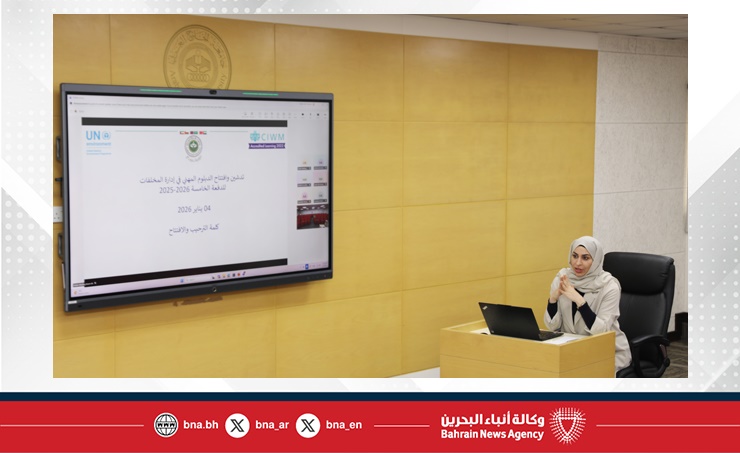
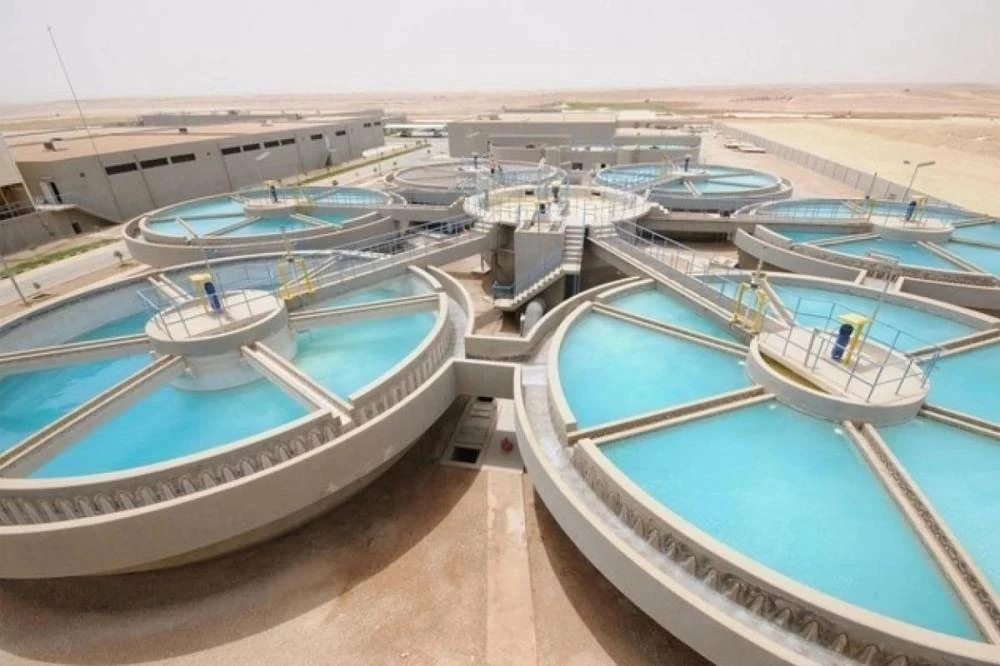
Ayman Shakal The directives of the Gulf leaders push towards preparing a road map for water connectivity projects. Implementing the unified Gulf water strategy enhances integration and faces challenges. 3 implementation scenarios… from bilateral connection to the unified network and electrical connection. Water security in the Gulf Cooperation Council region is classified as a cornerstone of national security, considering that the region is one of the most water-stressed regions in the world, as it lacks renewable surface water, and relies almost entirely on seawater desalination plants to secure more than 90% of municipal and industrial needs. In light of this situation The issue of the sustainability of water resources adopted by the Gulf states, with the Kingdom of Bahrain at its heart, stands out as one of the most frequently proposed strategies, especially in light of the geopolitical challenges that the region has witnessed as a result of the sinful Iranian attacks, and the possibility of targeting water stations, just as Iran targeted water desalination plants in sister Kuwait, and before that it targeted the ammonia tank of the Gulf Petrochemical Company (GPIC), in which one of the marches was suspended. And had it not been for the kindness of God Almighty and the efforts of officials, he would have been injured in this accident. Dozens of citizens. Returning to the issue of water in Bahrain and the Arab Gulf states, over the past decades they have witnessed great development in the construction of desalination plants year after year, but an old-modern idea was put forward during an extraordinary meeting of the Electricity and Water Cooperation Committee chaired by the Minister of Electricity and Water Affairs, Yasser Humaidan, in which the ministers concerned with water and energy in the GCC countries participated. It is the idea of a water connection between the cooperation countries to secure continuity of supplies based on the directives of Their Majesties and Highnesses, the leaders of the GCC countries. Dr. Al Fuhaid: The accelerating challenges require discussion of water connection projects. A few days ago, a workshop was launched at the Arabian Gulf University to study options and projects for water connection between the countries of the Gulf Cooperation Council, within the framework of implementing the directives of the leaders of the GCC states issued by the nineteenth consultative meeting of the Supreme Council, which was held in the city of Jeddah last April, aiming to enhance Gulf water security and establish an integrated and sustainable system for managing water resources. The workshop discussed “the possibility of building water connection projects between countries.” The Council,” with the participation of representatives of the Gulf Cooperation Council countries, experts and specialists in the water sector; To discuss the prospects for developing water connection projects and their role in enhancing Gulf water security, where the President of the Arabian Gulf University, Dr. Saad Al Fuhaid, pointed out that the accelerating challenges that the region is witnessing, and the accompanying potential risks that may affect water sources and its vital facilities, and require discussion of water connection projects as one of the strategic options that can contribute to raising the level of flexibility and readiness to face emergency conditions. Al Sheikh: Proposing flexible scenarios for projects and then gradually expanding. In turn, the Director of the Office of the Economic and Development Affairs Authority, Vice Chairman of the Committee, explained To follow up on the implementation of the decisions of the nineteenth consultative meeting of the Supreme Council, Khalid Al-Sheikh, said that the study includes assessing the current production, transport, storage and infrastructure capabilities in the GCC countries, and proposing flexible implementation scenarios that begin with implementable bilateral projects, then gradually expanding towards a comprehensive Gulf water connection system, in addition to determining the best water transport network routes and locations of pumping and storage stations to keep pace with future needs and ensure the sustainability of supplies. The current steps come to accelerate the construction of an integrated water connection system as a measure. An imperative strategy to enhance water resilience and sustainability. The technical and strategic deliberations at the meeting focused on the following basic axes: – Assessing the reality of the current infrastructure: reviewing the current capabilities of desalination plants and local transportation networks in each country, as a basic database for starting the project. – Building an integrated system for exchanging surpluses: The importance of benefiting from the huge production surpluses of desalination plants (especially in times of low seasonal demand) and transferring them to compensate for any possible shortage or interruption in other countries was stressed, which ensures operational and economic efficiency. Maximum network availability. – Providing alternative paths to ensure supplies: by studying scenarios for providing intersecting networks that secure the flow of water from stations with different geographical locations to confront extreme emergency situations. The ministers agreed to prepare an executive road map that specifies priorities, timetable, costs and risk analysis, with directives to organize an urgent workshop for senior officials to complete the collection of field data to be presented at the next ministerial meeting. Al-Watan has learned that a consultative meeting of the GCC states will be held in Bahrain within days to discuss this issue. Al-Rashidi: Sector integration Water is a strategic necessity. The issue was discussed in a symposium held in the State of Kuwait entitled “Programs for Privatizing the Water Desalination Sector in the Gulf Cooperation Council Countries,” in which the Director of the Energy Department in the General Secretariat of the Gulf Cooperation Council, Dr., confirmed. Mohammed Al-Rashidi, said that regional integration in the water sector has become a strategic necessity to face the challenges of water security and resource sustainability, noting that the GCC countries have made great strides in privatizing this sector through successful partnerships between the public and private sectors, and pioneering projects that adopt flexible strategies. The symposium was attended by a working group of desalination unit experts affiliated with the Electrical and Water Cooperation Committee for the year 2025, where the Director of the Energy Department of the General Secretariat of the Gulf Cooperation Council, Dr. Muhammad Falah Al-Rashidi stressed the importance of adopting flexible strategies and implementing pioneering projects that contribute to achieving economic, environmental and social sustainability alike. He said: The General Secretariat, based on its coordination role, was keen to support this trend through: – Preparing and implementing the unified Gulf water strategy, which represents a common framework for enhancing integration among member states. – Encouraging the exchange of experiences and successful practices in the field of privatization and institutional transformation. – Supporting regional initiatives that enhance local content, attract quality investments, and enhance the use of modern technologies in Operating and managing the water sector. He stressed that collective action and regional integration in the water sector is no longer an option, but rather a strategic necessity imposed by environmental and economic conditions, and imposed by the ambition of the Gulf Cooperation Council countries to achieve water security for their future generations. “Al-Sharaya Line”…an old project that was not completed. Al-Sharaya water desalination station and allocating a daily share of the water from the Al-Khobar desalination station to the Kingdom of Bahrain, as a support to its big sister neighbor and partner, to be transported via a pipeline under the waters of the Arabian Gulf. However, the project was not completed and news about it stopped at the beginning of the nineties of the last century. Possibilities and paths of implementing the water connection project. With the topic under discussion today being presented from a technical and geopolitical perspective, it can be noted that three main options and scenarios are usually presented in Gulf advisory reports and studies. For the possibility of implementing this strategic project: 1. The integrated bilateral interconnection option is the most flexible option as a first step, and through it it is possible to connect water networks between geographically neighboring countries, most notably Bahrain and the Kingdom of Saudi Arabia, as well as Saudi Arabia and Kuwait, the Emirates and the Sultanate of Oman, and Qatar with Saudi Arabia. This option is characterized by low capital cost, speed in implementation, and ease of control and governance through bilateral operational agreements. Which is also considered the kernel that was previously approved as a prelude to comprehensive connectivity.2. The unified network option via extended pipelines. In this mechanism, huge, cross-border water pipelines are extended from the Sultanate of Oman, as it overlooks the open Arabian Sea and the Sea of Oman, and farthest from the scope of targeting, all the way to the rest of the GCC countries, with the support of giant pumping stations and joint strategic reservoirs. The most important feature of this option is that it provides superior security protection against any threats of closing the Strait of Hormuz or polluting the low-depth waters of the Arabian Gulf.3. The “Electricity Connection for Water” option (sustainable hybrid scenario): This option was proposed by a researcher to take advantage of the exceptional success of the Gulf Electricity Interconnection Network (GCCIA). Instead of transporting water over long distances at exorbitant costs, Gulf electrical surpluses are exploited to operate desalination plants in the affected country or expand joint desalination plants at border points. This option is characterized by reasonable economic cost and high reliability that reduces the need to extend thousands of kilometers of giant pipes. But, on the other hand, it does not solve the problem of targeting, for which the second option provides a reliable solution. The technical and economic challenges associated with the project, despite the utmost strategic importance. According to one of the experts, implementation faces a number of challenges that the technical sector of the General Secretariat is working to address, the most important of which is the high capital cost, as the huge project requires pipelines, pumping stations and giant strategic reservoirs, which are considered huge financial investments. The expert pointed to another challenge, which is the difference in technical specifications and the variation in the characteristics and quality of desalinated and treated water, the quality of pipes and operational pressures. Between one national network and another, as well as the topographical challenges, the vast distances, and the desert nature that require enormous pumping energy to transport water as it is a heavy material compared to oil and gas. He said: “If we reach solutions to these problems, the cooperation countries will need to establish governance and operational frameworks, and formulate legal and commercial agreements that determine water exchange prices, and pumping priorities in cases of joint emergencies.” He added: “In order for the project to begin to materialize on the ground, work must be done to accelerate the establishment of an integrated institutional and operational framework similar to the Interconnection Authority.” Electricity to manage the future water network, linking new desalination plants and strategic tanks to solar energy systems to reduce the carbon footprint and operating costs, and building artificial groundwater reservoirs (by injecting surpluses into natural reservoirs) as a reserve line of defense next to the pipes. “When did we start… and what do we have today? According to the website of the Electricity and Water Authority of the Kingdom of Bahrain, the total daily water production amounts to 213 million gallons, pumped using 53 pumping and distribution stations, and through a pipeline network of 622 km. In 1975, Bahrain began establishing the first water desalination plant, which was the Sitra plant, with a production capacity of 5 million imperial gallons per day. Nearly 9 years later, in 1984, Bahrain began operating new water desalination plants to increase production capacity, which is the Ras Abu Jarjour plant, which produces (10 million imperial gallons per day), in addition to the Sitra plant, and the Hawar plant, which produces (40,000 imperial gallons per day), and then 10 years later, in In 1994, the first phase of the Hidd desalination plant was operated with a production of (30 million imperial gallons per day). In 2008, Bahrain decided to increase the capacity of the Hidd Power and Desalination Company to 90 million imperial gallons, and to operate the Al Dur Power and Desalination Company station in two phases to reach a production capacity of 1,234 megawatts and a capacity of 48 million imperial gallons per day. In 2016, Bahrain made a strategic decision to rely entirely on water from desalination plants. All groundwater sources began to be allocated for use in emergency situations. In 2021 and 2022, the first phase of the Al-Dur power and desalination station was operated with a capacity of 25 million imperial gallons per day, then the second phase of the “Al-Dur 2” station was operated to reach 50 million imperial gallons as a total capacity. A steady rise in daily water consumption. In 2023, Al-Watan conducted a press interview with the professor of water resources management and the coordinator of the water resources management program at the College of Graduate Studies. At the Arabian Gulf University, Dr. Walid Zubari revealed: – Total annual per capita consumption is 240 cubic metres. – Total annual water consumption has reached 432 million cubic metres. – The municipal sector consumes 258.4 million cubic meters, a rate of 60%. – The agricultural sector consumes 143 million cubic meters, a rate of 33%. – The industrial sector consumes 30.6 million cubic meters, a rate of 7%. Open data showed that the average daily consumption reached 2024, about 164.68 million gallons. According to the National Initiative for Agricultural Development, the rate of daily water consumption in the Kingdom of Bahrain has risen steadily year after year. After the individual consumed 69.91 gallons of water per day 15 years ago, this number rose to reach 78.79 gallons per day. Water desalination in Saudi Arabia The Kingdom of Saudi Arabia was able to establish 32 desalination production systems, on the eastern and western coasts, The total amount of fresh water it produced in 2020 was (1.9 billion cubic metres), with the daily production of desalinated water reaching (5.9 million cubic metres), and the Jubail and Ras Al-Khair systems are considered among the largest systems in the world in the desalination industry. Mobile stations The Kingdom of Saudi Arabia has invented a mobile desalination system where the mobile stations operate with reverse osmosis technology, with a production capacity starting from 2000 m3 to 10,000 m3 per day of desalinated water, with the aim of developing supply chains, reducing operational costs and achieving profitable financial returns. In these stations, “desalination” applies pioneering technologies and an innovative design philosophy such as the ERD energy recovery system, the developed high-pressure pump (HPP) and a mobile water outlet system. Saudi Arabia aims with this project to reduce the total energy to less than 2.2 kilowatts per hour, but it is considered the ideal solution for the water integration project between the cooperation countries, which is considered the ideal emergency system in In the event of crises in any of the countries.KuwaitThere are eight water desalination plants in Kuwait, located along the coast, with a total production capacity of 3.11 million cubic meters/day and 717.9 million cubic meters/year, which are: Shuwaikh station – Shuaiba North – Shuaiba South – Doha East – Doha West – Az-Zour South – Az-Zour North – Subiya. In general, the Gulf water connection project is no longer just a development option, but rather a valve. Geopolitical security is inevitable, and the momentum witnessed in the recent extraordinary meeting reflects a deep Gulf awareness that sustainable water sovereignty is only achieved through integration and joint collective action.