

اخبار السودان – وطن نيوز
اخر اخبار السودان اليوم – اخبار السودان العاجلة
W6nnews.com ==== وطن === تاريخ النشر – 2026-02-20 11:57:00
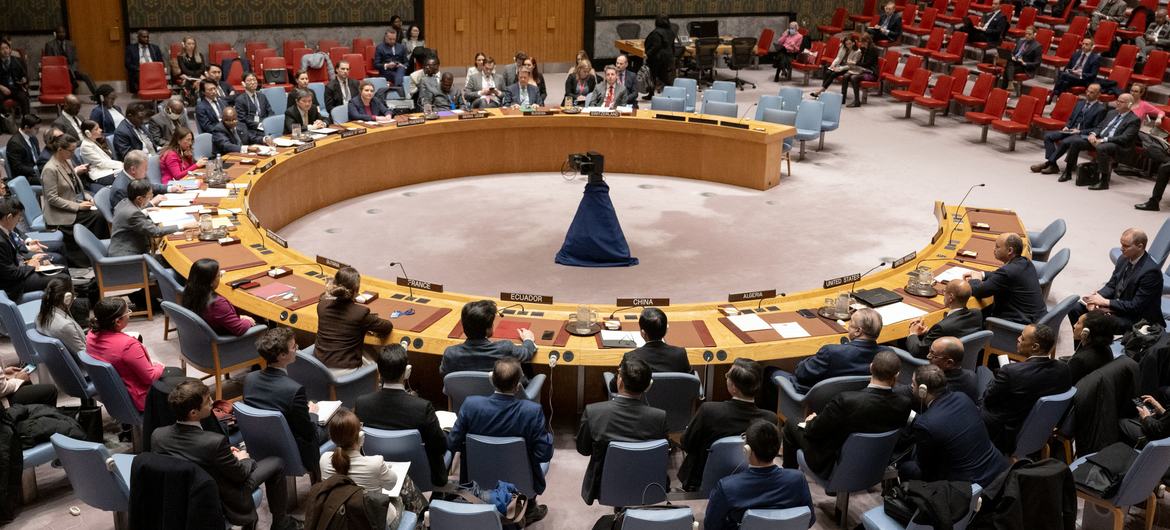
Monitoring: Radio Dabanga During the meeting held yesterday, the member states of the Security Council called for a humanitarian truce in Sudan, declaring their rejection of external intervention, while the positions of the states varied in holding either party to the conflict responsible for what is happening. There are no good parties in the conflict. Massad Boulos, advisor to the US President for Arab and African Affairs, said during his address to the Security Council meeting yesterday, Thursday, that both the Rapid Support Forces and the Armed Forces caused the people’s suffering. He added: “We must be balanced and insightful in our approach. There are no good parties in this conflict. The Rapid Support Forces are involved in atrocities, ethnic violence, and siege tactics that exacerbate famine conditions. The armed forces are also responsible for documented air strikes and bombing of densely populated areas, as well as acts of random detention and obstruction of humanitarian access.” Boulos stressed that networks linked to the former regime and Islamic movements, including figures linked to the Muslim Brotherhood, play a destabilizing role by exploiting the existing conflict. Networks linked to the previous regime. He explained that the networks linked to the previous regime worked behind the scenes to restore power within state institutions and in the military structure, indicating that these networks fueled polarization, hindered reform, and in some cases facilitated external support and the flow of weapons, which led to the continuation of the war. He added: “The United States will not accept the efforts of Islamic networks or any extremist political movements to manipulate this conflict, to impede the transition process, or to re-establish authoritarian control.” Threatening sanctions He stressed that the United States will use sanctions and other measures to hold accountable those who enable violence, undermine democratic governance, or threaten regional stability. He added: “Those responsible for the atrocities, whether they are linked to the Rapid Support Forces, the Armed Forces, or any other armed faction, will face the consequences.” He said that the United States announced sanctions on leaders of the Rapid Support Forces due to human rights violations (ethnic killing, torture, starvation, sexual violence), which include asset freezes, arms embargoes, and travel bans, in addition to restrictions on entry visas for other leaders involved in violations. The future of Sudan Musad Boulos said that the future of Sudan cannot be decided by generals, and its features should be drawn by the civilians who led the peaceful revolution, and who have been demanding democratic rule. He warned that continued fighting could lead to the disintegration of Sudan and the risk of the state collapsing permanently, which represents a serious threat to international peace and security. Massad Boulos stressed that a sustainable settlement requires a transition to a civilian government that is comprehensive, representative, and accountable, while maintaining and reforming institutions. He called for ensuring the protection of state institutions from partisan control, including militia and military structures. He also called for an immediate humanitarian truce and the preparation of conditions for a permanent ceasefire, leading to a political process that leads to civilian governance that protects state institutions, and then democratic elections that are far from control. He stressed that the requirements for the civil transition are to restore a solid institutional framework, protect state institutions from partisan and military control, prevent control over the state, and organize free and fair elections under international monitoring, in addition to ensuring political competition in an environment of transparency and peace. Five axes He called on the international community to mobilize its efforts behind five axes: reaching an immediate humanitarian truce that facilitates safe and unhindered access to aid and leads to a permanent ceasefire. He also called for coordinated efforts to ensure sustainable humanitarian access and protection of civilians, and to adopt a phased approach to negotiate a permanent ceasefire and security arrangements that contribute to a comprehensive settlement and complement civil transition efforts, along with a political process that leads to civilian governance that preserves state institutions and to democratic elections. He stressed the necessity of accompanying this path with a process of reconstruction and recovery, as the international community is ready to contribute to building infrastructure, restoring basic services, revitalizing the economy, and supporting institutional reform as soon as hostilities stop. The world should not listen to the military. For her part, UK Foreign Secretary Yvette Cooper said during the Security Council session that the war in Sudan is being waged on the bodies of women and girls. She explained that the world should listen to the voices of Sudanese women, not the military who are igniting this conflict. She stressed that the consequences of the war go beyond Sudan and its borders, but the world usually turns a blind eye to that, indicating that this war represents a serious threat to regional security and increases the risk of illegal immigration, noting that there are opportunities for extremist and terrorist groups to exploit the situation with the displacement of millions from their homeland. It called on everyone who has influence over the Rapid Support Forces and the Sudanese army forces not to ignite the conflict, but rather to exert maximum force to stop the war. Cooper said that the military do not believe in a peaceful solution because they can obtain these deadly weapons, stressing the need to stop the flow of weapons, adding that external support from dozens of countries through financing, manufacturing, training and transfer of weapons is what increases the continuation of this conflict. Worrying attacks Rosemary DiCarlo, UN Under-Secretary-General for Political Affairs, said during today’s Security Council session that drone strikes by both sides have become a worrying feature of the conflict. She stressed that the consequences for civilians and civilian infrastructure are very large, indicating that weapons are flowing through neighboring countries and that the scope of the conflict is expanding, and warned of the impact of the conflict in Sudan extending to the regional environment. She stressed that women have been subjected to sexual violence and displacement, stressing the need for both sides of the conflict to comply with international humanitarian law. Rosemary welcomed the efforts of the Quartet to ensure a humanitarian truce, and called on both sides of the conflict to deal with it without conditions, stressing her welcome of the ongoing discussions for United Nations support for the truce. She stressed ensuring everyone’s participation in the transitional period, stressing that the United Nations will continue to work in mediation within the five-year mechanism, and called for unifying international efforts and preventing the flow of weapons. Appeals For her part, Edem and Surno, OCHA’s advocacy officer, highlighted the worsening humanitarian crisis in Sudan, focusing on the deteriorating conditions in Kordofan and Darfur, the rising numbers of displaced people, deteriorating food security, and violence against civilians and humanitarian workers, in addition to an urgent appeal to the international community. She and Surno stressed that humanitarian capabilities are limited, while needs have reached unprecedented levels, with a severe lack of funding. She called on the Security Council to take action in three areas: using influence to oblige parties to respect international humanitarian law and protect civilians throughout Sudan. She also called for ensuring the protection of humanitarian workers, including local partners on the front lines. She stressed stopping the flow of weapons to Sudan and pushing for a lasting and comprehensive peace that meets the urgent needs of the Sudanese people. She also welcomed the ongoing efforts led by the American advisors and the Arab and African Quartet towards a solution. Point of no return For her part, Aisha Al-Karib, regional director of the Siha Network, warned of the deteriorating situation in Sudan towards a “point of no return,” highlighting the ongoing atrocities, especially against women and girls, and the repeated failure of the Security Council to take decisive action to stop the war and escalating genocide. Systematic violence against women She said that women are subjected to systematic violence from all sides on the basis of race, color, poverty, disability, and political affiliation. She emphasized that sexual and gender-based violence is a prominent feature of the conflict, and includes rape, torture, slavery, human trafficking, detention, kidnapping and murder. She pointed out that more than 1,294 cases of conflict-related sexual violence against women and girls were documented, most of which were committed by members of the Rapid Support Forces and their allies, deliberately targeting women from specific tribes in Darfur (Fur, Masalit, Berti, Zaghawa and Tunjar) based on their ethnic affiliation. Al-Karib said that this violence is part of a genocidal strategy aimed at eliminating indigenous African communities, and is a repetition of what happened in Darfur over decades, and it is feared that it will continue in Kordofan and the Blue Nile. The Rapid Support Forces have been accused of turning hospitals and schools into detention centers, which has been linked to disappearances and kidnappings. She said that there were 840 women who were detained by the armed forces and police forces on charges of collaborating with the Rapid Support Forces based on ethnic affiliation, and were deprived of legal representation and subjected to degrading treatment. It called on the international community to stop the violence by putting pressure on the parties supporting the Rapid Support Forces through economic, political and legal consequences. Security Council call: Hala Al-Karib called on the international community and the Security Council to deploy a mission with a clear mandate to protect civilians in Sudan, especially in Darfur, in coordination with the African Union. It also called on all member states to immediately stop the transfer of weapons, impose a comprehensive embargo on the supply of weapons to Sudan, and hold the perpetrators of these acts accountable. Praise for the American position. Ambassador Al-Harith Idris Al-Harith, Sudan’s representative to the UN Security Council, praised the Saudi-American-Egyptian initiative to stop the war in Sudan, indicating that Sudan’s channels are open for positive engagement with the initiative, and expressing Sudan’s hope that America will use its influence to stop the war. When addressing the UN Security Council session on Sudan on Thursday, he said that Sudan is keen to communicate constructively with America for the sake of peace, and added: “We demand pressure on the regional sponsor to stop supplying the militia with military equipment.” Al-Harith praised the American position towards the issue of war in Sudan, and said that it is very advanced compared to the positions of the rest of the mediators and carries a degree of seriousness following President Trump’s pledges after his meeting with His Highness the Saudi Crown Prince Mohammed bin Salman to stop the war, stressing that Sudan supports the Saudi-American-Egyptian connection, which supports stopping the war after the clear commitment issued by President Trump. He added that the war on Sudan is being marketed with misleading and false narratives under the pretext of fighting the Muslim Brotherhood, whose long rule was overthrown by the December Revolution in 2019, noting that Sudan is fighting a fierce war that the armed forces are confronting with great support and support from the Sudanese people. The Sudanese representative thanked all the countries that interacted positively with the Sudanese people, and said: “We thank Musaad Boulos’ efforts and his serious communication with Sudan in order to stop the war,” indicating Sudan’s seriousness in confronting attempts to establish a parallel government in areas controlled by the rebel militia, which is assisted by some neighboring countries. The efforts of the Quartet. The Egyptian representative to the United Nations said before the Security Council that the Quartet is consulting among itself and coordinating with the United Nations to reach the specifications and details of an agreement for a humanitarian truce in Sudan. He expressed his hope that if a common vision is reached on the specifications and details, the Sudanese will move forward towards implementing the humanitarian truce in order to end the suffering of the Sudanese people, and the United Nations will participate in implementing the truce through humanitarian aid in the most affected areas in North Darfur and North Kordofan, warning at the same time. From attempts to transfer the war to eastern Sudan. Limiting the Quartet to the political solution. Dr. Abdulaziz Al-Wasil, Saudi representative to the United Nations, stressed that the Quartet mechanism remains supportive of the political solution in Sudan, indicating that Rapid Support crimes cannot be justified. Since the outbreak of the crisis, Saudi Arabia has made diplomatic efforts to resolve the Sudanese crisis, which was embodied in hosting the Jeddah (1) and Jeddah (2) talks, which resulted in both parties to the conflict signing the Jeddah Declaration “Commitment to Protect Civilians in Sudan,” and a short-term ceasefire and humanitarian arrangements agreement. Continue Reading


