
اخبار السودان – وطن نيوز
اخر اخبار السودان اليوم – اخبار السودان العاجلة
W6nnews.com ==== وطن === تاريخ النشر – 2026-02-02 12:49:00
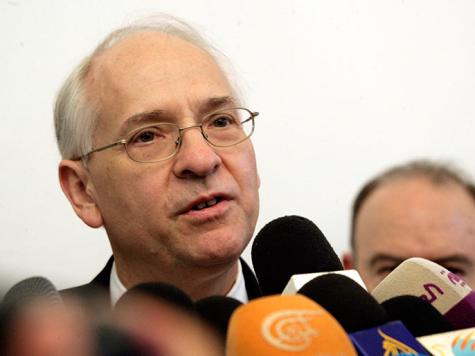
Breaking the deadlock in SudanBy Donald Booth, Areej Al-HajjThe Washington Institute for Near East Policy Decisive American leadership is necessary to resolve the escalating disputes among members of the “Quad,” neutralize obstructionists, and ensure that Sudanese civilians — not just armed factions — shape their country’s future. Ending the conflict in Sudan has become an extremely difficult task, for reasons that go beyond the complexities of the political and military scenes inside the country. The developments have created a new regional reality that cannot be ignored, which is the deep division between Saudi Arabia and the UAE, two major members of the diplomatic “Quartet” that was formed, along with Egypt and the United States, to help address the crisis. Their differences and competing interests in Yemen, northeastern Africa, and other arenas undermine Washington’s ability to secure a ceasefire in Sudan, and also impede the transition to the next phase of diplomatic efforts necessary to reach a sustainable settlement. The different priorities of the members of the Quartet. Last year, the United States reactivated the path of international mediation to resolve the conflict in Sudan through the “Quartet”, as a joint statement was issued in September calling for a three-month humanitarian truce, followed by a political transition extending for nine months. However, the translation of this initiative into practical steps quickly faltered, due to fundamental differences between the members of the “Quartet”, despite their apparent agreement on some general principles, including preventing Iran and its agents from establishing a presence inside Sudan. On one side of the equation, the UAE adopts a strict position that rejects any political role for Islamists in ruling Sudan, based on the conviction that this will undermine its interests and fuel more instability. Although Saudi Arabia and Egypt share this reservation, they believe that the issue of Islamic movements can be contained and managed later, and they have given priority to keeping the Sudanese Armed Forces in a position of power. Riyadh’s concerns, in particular, focus on securing its western borders and limiting growing Emirati influence in the Red Sea region. As for Cairo, it is focusing on ensuring sufficient flow of Nile River water, and preventing the emergence of a fully democratic and civil Sudanese government that might constitute an inspiring model for Egyptian public opinion internally. However, Egyptian and Saudi officials have arguably undermined their own stability goals by demanding the preservation of existing Sudanese state institutions – a framework that effectively means supporting the Sudanese Armed Forces, which has never been able to achieve lasting peace. Achieving a sustainable solution: Betting on cutting off support for one of the parties to the conflict with the aim of enabling the other party to achieve a decisive military victory is a misleading proposition, and will not lead to peace or stability in Sudan. Reaching a sustainable settlement requires, instead, intense American engagement at the highest political levels. This engagement should progress through three interconnected stages: first, reconciling the competing interests of the “Quad” partners; Secondly, using the influence of a unified quartet to put pressure on Sudan’s neighboring countries that continue to contribute, directly or indirectly, to perpetuating the warring parties’ ability to continue fighting; Thirdly, calling for a broad Sudanese national meeting that includes various factions, forces and political figures, with the aim of agreeing on a new political structure that allows the Sudanese to live in peace with each other. Crystallizing consensus within the “Quartet” through direct involvement from President Trump: Overcoming the existing differences between Egypt, Saudi Arabia, and the UAE requires an accurate understanding of the nature of their respective interests and spheres of influence in the Red Sea and the Horn of Africa. Both Riyadh and Abu Dhabi are seeking to build a network of regional allies that will give them access to agricultural lands, mines, ports, and military outposts. In this context, it is the responsibility of the United States to convince both parties that negotiating the sharing of these interests within Sudan will bring them greater benefits than the logic of zero-sum competition that dominates their current behavior. In fact, the dispute between Saudi Arabia and the UAE can be contained, as their common interests in the region far outweigh their differences, especially with regard to containing Iranian and Turkish influence, and securing the necessary investments to support economic transformation paths away from excessive dependence on oil. Even the issue of the Islamic role in Sudan may be more addressable than it appears at the present time. The commander of the Sudanese Armed Forces, Lieutenant General Abdel Fattah al-Burhan, has recently publicly criticized militias and Islamist leaders. If the Quartet provides unified support to him, he may be willing to cooperate in removing officers close to the Islamists within the Sudanese Armed Forces, and disarming the Islamist militias currently allied with his faction. This path would respond to the UAE red line, while at the same time preserving the security and political interests of both Egypt and Saudi Arabia. To change Cairo’s hesitation toward civilian rule in Sudan, Washington must reaffirm the established fact that stability along Egypt’s southern border cannot be achieved by supporting an unpopular Sudanese military government that is incapable of completely defeating the Rapid Support Forces or unifying the country. This model of central control may be applicable in Egypt, where the population is highly homogeneous and concentrated along the Nile River, but the population diversity and wide geographical dispersion in Sudan prevent this model from being replicated. It is certain that providing full support to Abdel Fattah al-Burhan, without applying parallel pressure to launch a comprehensive and broadly representative transitional process, may lead to an unsustainable form of military-Islamic rule, reminiscent of the model of the previous Omar al-Bashir regime. Therefore, American officials will have to deal with this path with extreme caution. Egypt may find an additional incentive to enter into a broader political settlement if Washington helps it address its concerns related to the Grand Ethiopian Renaissance Dam and guarantee its share of the Nile River waters. Any solution in this framework should be based on two basic elements: First: Negotiating an agreement that regulates Sudan’s use of Nile water at the current stage, especially after the Renaissance Dam contributed to regulating the flow of the waters of the Blue Nile tributary, as the expansion of irrigated agriculture within Sudan has become the greatest threat to Egypt’s water supplies. Second: Negotiating a mechanism to manage the Renaissance Dam – perhaps under the supervision of a neutral third party – to ensure achieving a fair balance between Egypt’s water needs and Ethiopia’s electrical energy needs. Especially during periods of severe drought. Reaching consensus on most – if not all – of the issues referred to above will likely require direct presidential involvement. In a post on the “X” platform in November, White House senior advisor Massad Boulos said, “The United States is committed to ending the horrific conflict in Sudan,” noting that “work is underway with partners to facilitate a humanitarian truce and put an end to external military support for the warring parties, which fuels the cycle of violence.” However, the president himself remains the only party capable of breaking the existing stalemate and addressing the intractable issues that simultaneously fuel the unproductive Saudi-Emirati competition in the region, as well as Egyptian security and water concerns. The quickest and most effective path may be to call for a summit of the “Quad” leaders similar to the Camp David summit, as only national leaders have the ability to muster the political will necessary to make real trade-offs that affect their perceptions of their national interests. Securing support from neighbors: Material support for fighters in Sudan passes, for the most part, through immediate neighboring countries, all of which believe that facilitating these flows best serves their national interests. However, a unified “quartet” is capable of amending these calculations. The UAE has significant influence in Ethiopia, Chad, and South Sudan, while Egypt can influence Eritrea and Libya, especially through its relationship with the Khalifa Haftar faction. Although some geographically distant actors may continue to attempt to fuel conflict, their ability to do so will remain severely limited without the support of these pivotal states. Naturally, engaging Sudan’s other neighbors in this path will require more careful compromises between the divergent local interests of Egypt, Saudi Arabia, and the UAE. It will also require dealing with interconnected regional disputes, including the long-standing disputes between Ethiopia and Egypt over the waters of the Nile, and between Ethiopia and Eritrea, which are tensions fueled by both the Somaliland file and Addis Ababa’s quest to obtain a sea port – issues that in turn intersect with Emirati interests in the region. Engaging a wide range of Sudanese factions for a lasting peace: Any US-led diplomatic initiative in Sudan must simultaneously take into account the reality of regional control and actual authority on the ground, as well as the aspirations of the Sudanese street. Without this balance, it will be difficult to restore peace or maintain the country’s unity and territorial integrity. However, defining the aspirations of the diverse Sudanese society remains an arduous task, especially in light of the existing political institutions losing a large part of their legitimacy and popular support. In this context, Washington and its partners will need to engage with a wide range of actors, including armed groups spread throughout the country, local figures with a popular presence – such as leaders of emergency rooms and resistance committees – in addition to tribal leaders, and perhaps some economic actors. All of these should be asked to contribute to developing a common vision of what unified and peaceful governance in Sudan could look like, as well as to discussing practical mechanisms that would enable the authorities to implement it on the ground. The United States is in a strong position to play the role of mediator in such discussions. It is still viewed as the most neutral party within the “Quad,” and it also has the resources and ability to exert political and diplomatic pressure when necessary. With the support of its partners in the “Quartet,” Washington could sponsor a meeting similar to the “Dayton Framework,” which contributed to ending the conflict in the Balkans during the 1990s. This would require the Trump administration to gather between 60 and 80 Sudanese participants in a neutral, isolated location – perhaps a military base – and maintain their presence there until an agreed-upon general framework for governing Sudan is reached. In this context, it may be necessary to use American or regional military assets to transport some participants to the meeting location. Conclusion: Decisive American leadership remains an indispensable element in harmonizing the positions of regional actors, neutralizing obstructing parties, and ensuring that Sudanese civilians – not the armed factions alone – are the ones who determine the future of their country. Success in this path would contribute to ending one of the worst humanitarian crises in the world, while reducing the spaces exploited by extremists and opponents of the United States. Most importantly, Washington taking the lead in Sudan will strengthen the alignment of the interests of its key partners in the Gulf, and support broader American strategic interests in the Middle East – from undermining the influence of the increasingly ruthless Iranian regime, to expanding the scope of the “Abraham Accords,” and ensuring the security of energy supplies in the face of shipping disruption threats posed by the Houthi movement in Yemen. washingtoninstitute.org/ar/policy-anal…Donald Booth Ambassador “Donald Booth” is a retired American diplomat who served as special envoy to Sudan and South Sudan twice, and also served as ambassador to Liberia, Zambia and Ethiopia. https://www.washingtoninstitute.org/policy-analysis/breaking-deadlock-sudan