
اخبار السودان – وطن نيوز
اخر اخبار السودان اليوم – اخبار السودان العاجلة
W6nnews.com ==== وطن === تاريخ النشر – 2026-01-24 02:20:00
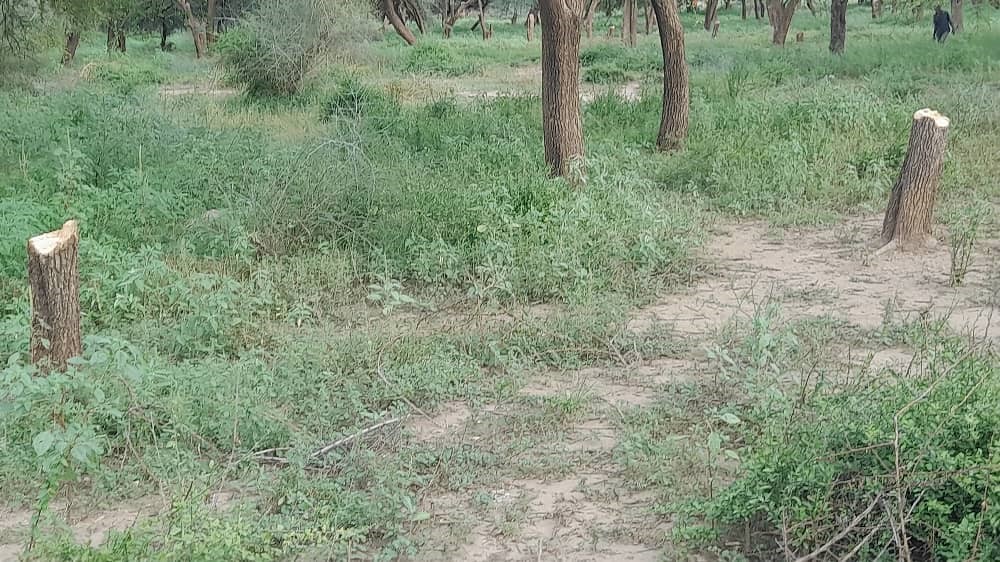
Amsterdam: January 24, 2026 AD: Radio Dabanga Report: Suleiman Serry The systematic destruction to which the “Acacia Forest” was subjected sparked a state of dissatisfaction and anger among many Sudanese, especially defenders and those interested in the field of the environment, as a result of a video clip published by a young activist in which he also expressed his regret and dissatisfaction with the complete destruction that erased the features of the forest’s existence as a result of the fierce and brutal war between the two sides of the conflict, the Sudanese army and the support forces. The fast one. “The Sandalwood Forest,” which is adjacent to the Nile and is considered an outlet for the capital, “the lung of Khartoum,” and a national wealth that includes or is considered a major station for rare and migratory birds, and a tourist attraction that, if exploited and employed correctly, keeps pace with global changes and developments in the field of the environment. Talking about the sandalwood forest may open the door wide to talk about the state’s neglect of forests and reserves, most notably the “Dindir Reserve”, and the failure to activate laws criminalizing the attack on the environment and not protecting it from pollution and damage caused to it, as many of Sudan’s forests face the same fate that the sandalwood forest faced, but to a lesser extent as a result of the unjust cutting of trees and poaching as well as indiscriminate grazing. She is not alone: The agricultural and environmental expert, Awadallah Muhammad Karshoum, confirms that the sandalwood forest is not the only one that was subjected to destruction and removal, explaining that in Khartoum, the botanical garden in the Al-Muqrin neighborhood in Khartoum was destroyed, and the trees of Nile Street, Airport Street, and others were eliminated, in addition to the trees of the various cities of the triangular capital being affected. In his interview with Radio Dabanga, Karshoum pointed out that the trees of the local neighborhoods of Karari in Omdurman, including Surat and Iskan, were destroyed, as residents were forced to cut down their trees inside and in front of their homes to use them for cooking food. But he confirms his confidence that replanting will take place and will include the cedar forest, the botanical garden, the trees of Nile Street and Airport Road, as well as the trees inside and in front of the neighborhoods, explaining that the cedar forest is a globally registered natural reserve, and represents a great respiratory lung for the residents of the capital. Regarding the general benefits of forests, expert Karshoum points out that the latest bulletin of the Food and Agriculture Organization of the United Nations (FAO) identified six main benefits of forests in the world, explaining that forests cover about 31% of the Earth’s surface, and are necessary to achieve sustainable food systems, as nearly a third of the world’s population depends on forest goods and services as a source of livelihood, food security, and nutrition. Carbon banks: Awadallah Karshoum, an agricultural expert and environmental specialist, says that forests provide approximately 75% of the fresh water available in the world, and the forest sector also provides job opportunities for at least 33 million people around the world. He adds that forests are carbon sinks, or vast areas that are also a source of sustainable wood, which makes them essential for mitigating the effects of climate change, as they are natural filters of carbon dioxide. Karshoum points out that one tree absorbs more than 150 kilograms of carbon dioxide annually, considering that trees sequester carbon, which results in alleviating climate change. He pointed out that without trees and plants, the gas would accumulate rapidly, and its concentrations could exceed the 1,000 parts per million barrier within decades, leading to a catastrophic acceleration of global warming, with the possibility of temperatures rising by more than 10 degrees Celsius, which would lead to the melting of the ice caps and drown all coastal cities. He explains that the fifth benefit of forests is essential in preserving biodiversity, as they are home to about 80% of amphibian species, 75% of bird species, and 68% of mammalian species. He continued, saying: “Our future depends on preserving our forests and managing them sustainably.” Stopping the war: Regarding the government’s statements that reconstruction may take 10 years and whether it will include forests, Karshoum stresses by saying: stopping the war first and then sitting down for all Sudanese to agree on a new social contract, and writing a constitution unanimously by all Sudanese that will be permanent for the “second” Sudanese state. He says that after that, a long-term strategic plan will be drawn up for the reconstruction and renaissance of the Sudanese state, and these plans can be implemented through five-year or ten-year plans, ruling out reconstruction within ten years without stopping the war. Regarding how to reconstruct forests, its financial cost, and the contribution of organizations concerned with the environment, Karshoum says that there is a possibility that Sudan will find support in this field. “If we draft a new constitution that preserves the environment and resources and take care to allocate from our budget according to our national plan to invest in agriculture, this will remain our share.” He adds: All partners, in accordance with the Sustainable Development Goals, will contribute with us in developing our forests, noting that Goal No. 15 of the Sustainable Development Goals concerns wildlife and focuses on sustainable forest management. He called on the state to implement the National Investment Plan program, which includes the seven areas and focus on the first area, which talks about creating an enabling environment to achieve agricultural development. Policies and legislation: Agricultural and environmental expert Awadallah Karshoum points out that this program includes four sub-programmes, the first of which focuses on legal policies and legislation and works to approve and implement approved laws in a way that leads to efficient use of resources in the agricultural sector. This includes updating existing legislation related to agriculture, livestock and agricultural manufacturing, in addition to drafting new legislation aimed at developing and protecting natural resources and sustainable management of them. He points out that one of the important issues that needs to be addressed in this context is the establishment of a land commission, as stipulated in the 2005 Comprehensive Peace Agreement and included in the 2005 Constitution, stressing the necessity of establishing a land commission to address land issues and codify rights, complete the land use map, and reform macro and sectoral economic policies that lead to the development of plant and animal production. He also stresses the urgent need to develop options for implementing the Forestry Law, which stipulates allocating 5% of irrigated lands and 10% of rain-fed land areas in Sudan to forests. As for the second subprogramme, it says that it focuses on ensuring effective management of resources by preparing studies and research activities that focus on unlocking current production capacities, studying options for enhancing the orientation towards market production, reviewing options, raising the efficiency and performance of food reserves, and identifying options to raise the efficiency of production systems. He adds that the subprogramme is implementing comprehensive surveys of resources and monitoring forest resources by updating the study conducted in 1994, on the consumption of forest products and surveying pasture resources, in addition to conducting a national survey of wildlife species, in addition to the policies and regulatory environment for the sustainable management of natural life. Big title: For his part, Dr. Taha Al-Tahir Badawy, pharmaceutical consultant and environmental expert, director of the Delta Center for Scientific and Environmental Studies and Research, believes that the impact of the war on forests in Sudan is a large and complex title in terms of approaches and thought, and needs To in-depth studies, pointing out that forests are considered the lungs of peoples. Speaking to Radio Dabanga, Badawi said that the history of forests in Sudan has been known since the English colonial period, and interest in them continued until the establishment of the national government, as forest management remained one of the very important departments in the country. He adds that the forest is a source of life for many people, including humans, animals and birds. It also represents a source of livelihood for many citizens and a source of housing for many. He shows that forests in Sudan include forests that produce many Sudanese cash crops, such as gum arabic, noting that Sudan is considered one of the countries in Africa that most regulates the forest sector, and that forests are considered an essential part of the sources of Sudanese wealth. Badawi pointed out that the diversity of Sudan’s regions and the diversity of its climates contributed greatly to the diversity of its forests, which is considered one of the very important advantages of Sudanese forests. He confirms that the forests in Sudan, in light of the ongoing war, have been negatively affected in the process of sustaining their preservation, considering that this situation is one of the important issues that the state should look into, especially with regard to how to protect forests. Deforestation is the biggest enemy of forests: Environmental expert Dr. Taha Al-Taher Badawi pointed out that there are specific reasons that must be dealt with, including issues of pollution, forest care, and the implementation of forest law, in addition to what is known as the forest community, in terms of supervision, follow-up, and preparation of periodic reports related to forests. He confirms that forests were targeted during the war as a result of the increased demand for firewood for cooking purposes, which led to the cutting down of large areas of forests, in light of the absence of the role of the Forest Service and the weakness of forest protection. He says that the disappearance of modern cooking gas in many of the cities where residents used to live led people to turn to logging, considering that logging is one of the biggest enemies of forests. Badawi also points out that the wildlife in the forests has been directly affected by conflict and war, and that it is clear that a large number of wild animals have migrated from their natural habitats, even though it is considered a national wealth and an important source of tourism and organized hunting, in addition to being an important source of life for the nests of settled and migratory birds. The sandalwood forest is reserved: The environmental expert and director of the Delta Center for Scientific and Environmental Studies and Research explained that the rehabilitation process, Dr. Taha Al-Tahir Badawi said that many forests in Sudan were affected by the war, noting that the world is currently talking about removing the pine forest in Khartoum State. He says: It is one of the well-known reserved forests in the capital, which was a destination for scholars and students in Sudanese universities. It also received the attention of local communities and environmental organizations, considering that what happened to the sandalwood forest is one of the tragedies that occurred during the war. Dr. Taha Badawi believes that rehabilitation, or what is currently called reconstruction programs, cannot be completed within a limited period of months. He says: Reconstructing and rehabilitating forests requires a long-term program. Pointing out that the current conditions in the country do not allow attracting sufficient financial support to rehabilitate a very large number of facilities damaged by the war. He explained that forest rehabilitation alone requires holding a large conference in which international and regional institutions interested in this field can participate. He pointed out that it is possible to raise forest issues in Sudan within the activities of the climate summit. Badawi affirms his confidence that workers in the forestry sector, especially in the National Forestry Authority, possess high experience and competencies, and that the authority includes qualified specialists and officials, and has a previous record of activities that exceeded imagination. Dinder Reserve: Regarding Dinder Reserve, which was also attacked, environmental expert Dr. Taha Badawi said that it was one of the conflict areas, and it extends across three states, noting that it was previously subject to support and rehabilitation programs from the International Union for Conservation of Nature, in partnership with the Government of Sudan and the Supreme Council for the Environment, but there is currently no work underway within the Dinder Reserve. He says: This question can be directed to the Wildlife Protection Police, given that its legal role is to protect reserves and follow up on their needs, pointing out that Sudan includes a number of natural reserves, including the Dinder Reserve, which is the largest reserve in the country. He also points out the existence of a reserve in Gedaref State, explaining that Gedaref forests have been greatly affected. He also points out the existence of reserves in Darfur, stressing that the ongoing conflict there has caused great damage to them. He says that there are two marine reserves in the Red Sea State, which are “Sanqanib, Donqanab, and Mharasmat,” explaining that all of these reserves depend on the support provided through international organizations. Badawi explains that the Supreme Council for the Environment has also witnessed major changes, and needs a large number of specialists, expressing his hope that the Council will return to exercising its duties. He also expressed his hope that Sudan, under what he described as the government of hope headed by Kamel Idris, would witness the establishment of a ministry specialized in the environment, which is currently called the Ministry of Environment and Sustainability, noting that no official has been appointed for it yet. Continue Reading