

اخبار السودان – وطن نيوز
اخر اخبار السودان اليوم – اخبار السودان العاجلة
W6nnews.com ==== وطن === تاريخ النشر – 2026-05-14 23:42:00
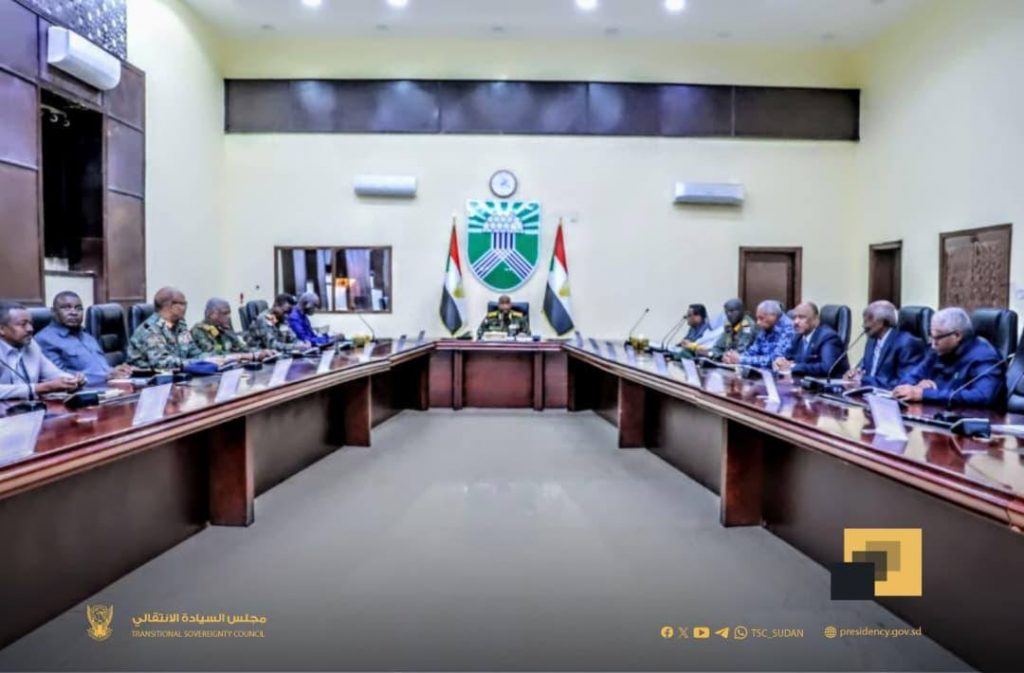
Naji Sharif Babiker, May 12, 2026. The conflict over resources in Sudan, for example, usually depends on narratives in which the controlling gangs exploit factors of difference and disparity in their societies, as levers that help them control and tighten the noose around those societies. At the same time, these gangs are keen to obscure the collective consciousness of the victims by spreading illusions and deceptions to cast doubt on common assumptions and values, and deliberately preoccupy people with empty and nihilistic dialectics that exhaust them and weaken their confidence in themselves and in their analytical abilities. It seeks to exhaust their logical and critical capabilities, in order to spoil their efforts to abstract phenomena and analyze them in a rational way that enables them to distinguish between phenomena and causes, between problems and results, and between what is right and what is false. The struggle for change requires examining the basic causes that spawn crises, without being preoccupied with side battles that distract people and weaken their efforts in striving to abstract the motives of the conflict in order to identify their opponents. The real ones and then manage the battle against them. Most of the narratives that dealt with the crises in Sudan were concerned with addressing the problem of identity, considering that the failure to resolve the issue of identity and belonging bears a large degree of responsibility for the repeated outbreak of conflicts in Sudan. To the point that many analyzes attribute the civil wars that broke out in Sudan to this failure. They think he is the devil who will not be able to put out the fire in their country until the Sudanese are able to put him back in the bottle. This publication seeks to oppose and criticize that hypothesis, by dissecting many of the facts and circumstances witnessed in the modern history of Sudan, and trying to clarify how the frantic race for control of resources and wealth was the main driver of all the conflicts that broke out since independence until the late armed conflict in Sudan between the Sudanese army and its allies of the supporting militias in confronting the Janjaweed as forces that were previously allies and supportive of the army during the regime’s wars against the rebels in western Sudan. And south of it. The problem of identity: For example, in Sudan, the dialectic of war adopted the problem of identity at a later time when it broke out in Torit on August 18, 1953, following the issuance of orders to the Equatoria Brigade to head to Khartoum to participate in the independence celebrations. The reasons at the time were no more than southerners’ fears that the British’s departure would herald Khartoum’s control over the south, and that the repositioning of the battalion was a plot to disarm it. This misunderstanding was fueled by the failure of the first national parliament to fulfill its promise made to the southern representatives to grant autonomy to South Sudan. The question of identity was not among the concerns of the southerners at that time, at least until that time. More than eight years after its outbreak, the war adopted the dialectic of identity, which at that time was represented by the southern rejection of the Arabization and Islamization laws enacted by the coup of November 17, 1958, to confront what he called the influence of church missionaries. In 1961, the Arabic language and Islamic education curricula were imposed as compulsory subjects for students in government schools in southern Sudan. This was done without taking into account the specificity of the south, where Muslims constituted a minority, like Christians, amid a society in which the vast majority of the population professed pagan religions (Pagans). It was possible to limit the activity of missionaries, without resorting to force to impose Islamization and forced Arabization. The problem of religion: As for the aftermath of the rescue coup in 1989, the dialectics of the war relied on the string of religious or ideological difference, which was represented by the declaration of holy jihad in the war against South Sudan, so that the struggle of the southerners to reject domination and guardianship over the peoples of the south and its wealth was interpreted, to serve the narrative of the conflict, as if it were a conspiracy targeting the people of the North in their Arabism and Islam. The Islamic religion was exploited as a different element that represented an effective fuel for the fire in South Sudan, and the killing continued for sixteen years, during which oil wealth was seized, with revenues exceeding seventy billion dollars. This happened amidst an ironic paradox. At a time when the gross domestic product doubled by 36% for the period between 1999-2009, the poverty rate among the Sudanese barely decreased from 68% to 62% in the same time. Period. At a later stage, on the eve of the signing of the Comprehensive Peace Agreement in Khartoum in 2005, which put an end to the southern war, the event that deprived those gangs of continued control over the southern oil fields, the conflict over resources turned automatically, so that it faced western Sudan, which was rich in gold and livestock, in addition to oil in southern Darfur, by adopting the dialectic of ethnic identity, to invalidate the effectiveness of the ideological difference this time at least, given that western Sudan historically preceded the people of the center and the north in embracing Islam, the Sufi version of it to be precise… From here it becomes clear beyond doubt how gangs, in their search for wealth, change the dialectics of conflict, as levers that enable them to control the resources of societies, sometimes religion and sometimes race, according to what is required by the various stages and windings of the conflict. Among those levers that are employed to intensify the conflict, in addition to identity and religion, there were clan or tribalism, sectarianism or interest groups and functional groups. We will present below these models, their definition and examples of their use within the various mechanisms and means of conflict: The problem of tribalism: Tribalism is the bond of ethnic affiliation between tribes and ethnic groups, as tribalism represents the utmost importance for protecting its members and defending them in cases where the central system is weak in carrying out its basic functions in providing security and extending justice to the people. In such cases, a person resorts, as a necessary measure, to his ethnic backgrounds in search of protection from the dangers posed by the unruly other. In Sudan, in the 1980s, the Mayo regime resorted to a wealthy Saudi and arms dealer to finance military formations belonging to the Nuer clans and arm them to provide protection for the Chevron oil sites in Unity State, in the face of the southern rebel forces who became active after the year 1983, and they first blew up the rig. The Frenchman who was in charge of building the Jonglei Canal, following coordination between the regime and the Egyptian government*. During the Third Democracy during the government of Sadiq al-Mahdi, the Chief of Staff of the Sudanese Army, Commander Fadlallah Barma Nasser, armed the Arab tribes in South Darfur to help the regular army confront the guerrilla war that was being waged by the SPLM in the regions of the Arabian Sea… which immediately resulted in serious violations against Dinka members in what was known as the Daein Train Holocaust, in which the activists Ashari and Baldo had issued a book documenting the events and evidence that implicated the group. Of the perpetrators, and instead of the center’s authorities investigating the tragedy and bringing the perpetrators to trial, the incident was covered up and the two writers were taken to trial on charges amounting to high treason. On the twenty-first of April 1997, while the jihadist operations in South Sudan were at their most intense, the Salvation regime signed the Khartoum Peace Agreement, with splinter factions of the SPLA. The agreement was signed by the two leaders, Dr. Riek Machar Dr. Lam Akol, in an effort that is not hidden from an observer of the tribal disparity that led their rebellion against the Sudan People’s Liberation Army. In another example of using tribalism to manage conflicts, what was done by the military faction in the Transitional Government Council, which assumed power, in partnership with civilians in accordance with the constitutional document that followed the fall of the Salvation Dictatorship in the wake of the December 19, 2018 revolution that overthrew the regime. The military partners employed one of the tribes of eastern Sudan to impose a tight siege on Khartoum and the rest of the country, by deploying armed formations of tribal activists that cut off national roads and damaged the railway tracks linking Port Sudan to the capital, Khartoum, in order to create disturbances in the supply chains and cause a scarcity of fuel and food. This was prevented by the escape of gangs and bandits who used to attack citizens inside the streets of the capital, which are crowded with surveillance cameras and police stations. All of these escapes to create suffering prepare the atmosphere for a coup against the civilian partners that was orchestrated by the Military of Partnership with funding and support from elements of the exterminated regime on October 25, 2021. It restored rule to the political gangs that owed allegiance to a regime that the masses had just overthrown after thirty years of living under the yoke of tyranny and oppression**. The sectarian problem: Sectarianism is a group of people linked by common interests, such as unions and professional groups. Sectarianism was employed during the rescue dictatorship, to extend the authority of the center and pass control projects in the face of opponents of the regime. As a first step since its coup against the regime, the Salvation Army dissolved all union formations, parties, and organizations, then followed that with amendments to the laws of unions and demand bodies, so that the Establishment Union Law was enacted as an alternative to separate unions for workers, employees, and administrators. The establishment union has become a gelatinous, unifying body that includes in its composition skilled and unskilled workers, junior and senior employees, and administrators as groups with contradictory interests, in one body, as the incentives of the human resources director depend on his success in reducing employee allocations, and the rewards of senior management depend on the savings and surplus value achieved by the facility’s arbitrary policies, in the face of all employees, including the human resources director. By passing this plot, the rescue succeeded in isolating the workers horizontally through the ability to communicate through union formations uniting each other through independent workers’ demand formations. It also isolated them vertically by stripping them of the ability to communicate their voice and grievances as a group to the management of the facility in which they work. Because integrating them into formations with groups that do not share their interests and grievances has succeeded in silencing their voices within one facility. As for the security institutions, police, and military formations affiliated with them, the rescue has worked to isolate them, as groups to which it owes allegiance, from their communities by providing independent housing plans, therapeutic support, providing them with services, and securing them through social funds supported by fees and royalties whose cost is borne by masses of simple people, while those funds provide all the requirements for funerals. And weddings and hotel services, for all members of these groups, to the extent that they prevent neighbors from spontaneously rushing to contribute by bringing food and drink, as one of the usual manifestations of social solidarity. These funds also work to provide grants, aid, and financial support to their members. All of this has led to these factional societies emerging in isolated environments and relatively luxurious islands, like the land of dreams. These reserves have grown in seas filled with poverty and suffering, where ordinary citizens live and are deprived of the minimum health, treatment and educational services, so that the treatment and education of their children is limited to what is available from the surpluses of their poor families. When crimes and major corruption operations occur by gangs supported by the regime, and when suffering, poverty, and living hardships stifle simple and common citizens, and the voices of protests demanding fairness and justice grow louder, these factional sectors automatically find themselves lining up with the tyrannical regime in the face of an entire people who are suffering in injustices and complaining about the bricks of the earth… not because the regime has the right or the argument in the facts being protested, but rather An instinctive desire on the part of these groups to preserve their interests and material gains guaranteed by the survival of the existing regime, despite its faults, injustices and grievances. Perhaps the above will be sufficient to explain how various means are employed to manage and support the permanent conflict pursued by the ruling gangs in Sudan, in order to accumulate their interests by seizing resources and wealth and managing wars and social conflicts and keeping them raging to the extent that guarantees their sufficient control and exclusivity. The other denies those resources and wealth. Identity, religion, tribalism, sectarianism, and others that we imagine are the drivers of the conflict, are only tools among other tools that played a major role in fueling it, more as fuel than as reasons for its explosion. Abstracting the conflict in a neutral manner and being fully aware of its motives and goals reveals it naked in its naked form represented by the attempt to seize people’s resources and wealth. Whatever the dialectic that the supporting narratives adopt during the stages of the conflict. Different… Why don’t the workers, peasants and simple people ask themselves, what drives them to line up alongside princes, overseers and tribal leaders who support regimes that do not take into account their interests themselves as farmers and workers and do not care about them? It may be natural for those overseers and princes to support the tyrannical ruling regimes that seek help from them and bestow upon them, and that guarantee their personal interests, this is their business and those are their interests, but whoever guarantees the interests of their subordinates among the workers and peasants who have continued to languish. In poverty, even though they have been an integral part of their tribal formations for decades. What guarantees the workers, peasants, and ordinary people their full and undiminished rights is not their tribal wards. Rather, what guarantees them to them is their integration into formations that bring them together with their fellow clans and other wards, without regard to these imaginary barriers, in order to push the demands that guarantee them full rights and a fair share in national wealth and the incomes obtained in exchange for their investment. Studies that seek to promote the aids and mechanisms of conflict as the causes from which conflict emerges may be narratives being marketed in order to automatically distract the masses from their opponents. Rather, they aim to deliberately distract them from their ongoing and inevitable battle to get rid of poverty and want and recover their usurped interests. End.. nagibabiker@gmail.com The writer