
اخبار تونس- وطن نيوز
اخر اخبار تونس اليوم – اخبار تونس العاجلة
W6nnews.com ==== وطن === تاريخ النشر – 2026-01-26 18:03:00
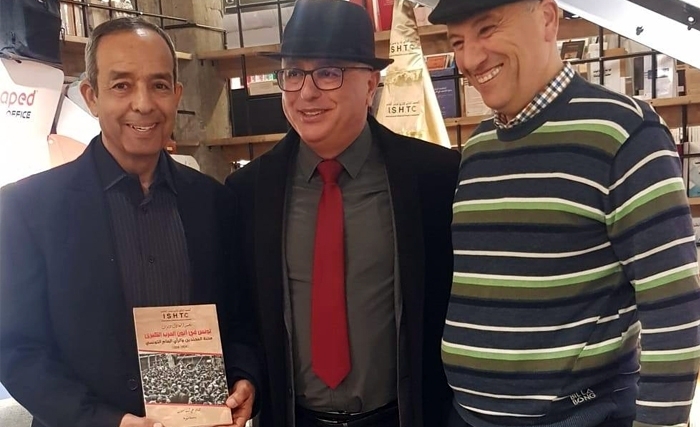
In in-depth historical research, Professor Mohamed Al-Adil Daboub reveals for the first time the secrets of the forced conscription of more than one hundred and ten thousand Tunisian youth and their transfer to France to fight in World War I (1914-1918), whether to push them on the front lines on the battle front or to work in factories and estates to replace the conscripted French labor force. In a book entitled: “Tunisia in the midst of the Great War, the plight of conscripts and Tunisian public opinion 1914-1918,” recently published by the Higher Institute of the History of the National Movement (Manouba University), the author addresses this important issue that has been absent for successive decades, examining the interaction of Tunisian public opinion with its various aspects, whether including Tunisia’s involvement in this war, or the announcement of general mobilization, the intensification of conscription, and the imposition of financial compensation. Very expensive to avoid military action, as well as censoring correspondence, obscuring the actual lists of those sent to France, and then concealing the real number of victims. In the first phase in 1919, France acknowledged the death of no less than 10,500 Tunisian soldiers, later raising this number to 16,500 Tunisians in 1936 through military documents, official reports, and family correspondence. Professor Mohamed Al-Adil Daboub removes the darkness of silence and deception from one of the most important epidemics that has afflicted significant numbers of rural youth in particular, as well as cities, the poorest and least educated. Their correspondence reveals their suffering from the extreme cold in the snow and the horror of the battles in the midst of fire, and in parallel it studies what the French colonial authorities monitored at the time in terms of their impact on public opinion and the interaction of the political and social elites. Professor Ali Ait Mihoub, a professor of history specializing in military history, mentioned in his introduction that the writer is “one of the first to address the subject of military history and the history of World War I, a subject that has long remained almost virgin at the Tunisian University for many reasons.” He added that “this book represents an enrichment of the Tunisian historical library, a qualitative addition to the histography of the Great War, and an indispensable reference for everyone who seeks to study this period of time in Tunisian history.” A very valuable book. Professor Khaled Obaid, Director of the Higher Institute of Contemporary History of Tunisia, was keen to publish it, within a new dynamic taking place at the Institute, and the author succeeded in formulating it with an accurate scientific methodology. In the following introduction, Professor Muhammad Al-Adel Daboub reveals how the idea of completing the book and its most important contents were launched. Why this book or how did the idea of writing it come about? The idea of writing the book was due to the following reasons: First: In the course of studying the course of the Great War, it became clear that the French celebration of the anniversary of the armistice of November 11, 1918 and the French victory remained and still is one of the most important national celebrations and a pillar of French collective memory more than a century after the end of the war. Indeed, the number of memorials to commemorate the dead of the Great War amounts to 37,000 monuments in municipalities and rural districts in France. On the other hand, I recorded a shocking absence of Tunisian historical memory about the event. Indeed, World War I remained a silent moment of defeat despite the participation of significant numbers of Tunisians in its battles. Rather, the erasure of memory included places of memory such as memorials and statues that were removed after independence. Therefore, I decided to delve into the study of this thorny stage in Tunisia’s history, out of a desire to preserve collective memory and prevent its decline and erosion (Contre la déliquescence de la mémoire collective). Second: It is related to a cognitive motive; Most references related to the period of the Great War (such as the works of Ahmed Tawfiq Al-Madani, Mustafa Karim, and Ali Al-Mahjoubi) consider it a period of stagnation and tranquility for the national movement (with the exception of the uprising of the southern Tunisian tribes in 1915-1916), as if it were a dull phase between two bright phases of the national struggle: the Tunisian Youth Movement (1907-1912) and the establishment of the Tunisian Free Constitutional Party. (1920) and the Pan-Tunisian Currency University (1924). For this reason, I sought to deepen research into the extent to which the aforementioned approaches correspond to the Tunisian reality and its dynamics, and whether the war period is truly a period of stagnation for the national event. What are the sources used to complete this study? We were keen to diversify the sources from the archives of the French Ministry of Foreign Affairs, the Ministry of War, and the French Public Residency, which are available in Bobines photographed at the Higher Institute of Contemporary History of Tunisia. We also relied on the series of the Tunisian National Archives (Series E, the National Movement series, MN, the Les rebelles series, and the Gens Suspects series). As the Algerian novelist Mouloud Faroun mentioned about the French language in Algeria, where he considered it one of the spoils of war (butin de guerre), I found the spoils of war or memory relics in the “Military Affairs sub-series” in the Tunisian National Archives; It includes folders related to the period of the two world wars, and many of its files included incoming and outgoing correspondence covering the period extending from 1915 to 1919, issued by the Military Postal Control Committee, including correspondence from conscripts and Tunisian workers in France and others. It allowed us to see the situation of contemporary Tunisians of events, their representations, and how they interacted with the circumstances of the war. It enabled us to accomplish an important part of the work, especially since a number of files contained tables to explore the opinions of Tunisians through their correspondence on political and military issues in the years 1917-1918, which helped us to complete a field study of Tunisian public opinion. Planning: The first chapter deals with the transformations of public opinion in Tunisia during the time of shock, emphasizing the motivating factors in its formation and development. Then the second chapter was concerned with studying the representations of Tunisian collective consciousness in the midst of World War I, and it made room for studying the narratives of Tunisian conscripts and the experiences of Tunisian workers in France during the Great War. Then, as a result, we concluded the first analysis to explore the opinions of Tunisians during the war and their positions on the issue of peace and war. The most important conclusions 1. The Great War played a pivotal role in strengthening the formation of Tunisian public opinion and the diversity of its expressions due to the internal and external events that accompanied it and the intensity of propaganda such as Turkish-German propaganda, French counter-propaganda, the propaganda of the Human Rights Organization, the propaganda of the Second International and the socialist parties calling for an end to the fighting… and also because of the multiplicity of its contents of books, newspapers, magazines, pictures and tapes. Promotional cinema. Many issues attracted the attention of public opinion, most notably compulsory conscription and how to overcome it by paying financial compensation despite its high value. Discontent also intensified as a result of the outbreak of submarine warfare and its seizure of the tribes of southern Tunisia… 2. We do not ignore the truth if we consider that the period of the Great War was not a period of stagnation for national action, as the decline of organized political activity is not considered a decline, but rather the action took other forms such as desertion movements and disobedience movements. Civil (refusal to pay taxes) and rebellion (Falafah and the southern uprising) witnessed the shift of the center of gravity of social expression from the capital and the educated elite to the destitute social segments in the countryside and poor neighborhoods in the cities. On the other hand, the context of local political thought witnessed an important development during the war with the abandonment of demands to participate in managing the country’s affairs, as included in the demand of the Tunisian youth movement to demand for the first time the independence of the Tunisian country in harmony with the global situation and in interaction with it. With US President Wilson’s calls for peace, guaranteeing the right of peoples to self-determination, and adhering to libertarian visions and a modern, Qatari concept of independence. While the influence of the propaganda trend of the Islamic League movement, based on the necessity of assimilation within the interests of the Ottoman Caliphate, began to diminish from what it was at the beginning of the war, the development of the modernizing national jurist trend was embodied in the articles of Al-Maghrib magazine and manifested itself in the content of the book Martyr Tunisia and then in the demands of the Tunisian Free Constitutional Party in 1920. 3. The living interaction of Tunisian conscripts and workers in France and other regions led to transformations. Significant changes occurred in intellectual patterns and social behaviors, as conscripts and employees demonstrated the development of civil organization in French society in the field of public services (social and health coverage) and the development of women’s role in the economy and society. Upon their return, they carried these perceptions and some of them tried to transfer them to Tunisia after the battles ended. We noticed that they adopted a number of Western behaviors in dietary patterns, clothing, and hygiene standards… Therefore, the war experience for these people was not just military and labor contact, but rather was a lever in the field of social training that reshaped part of their daily behaviors and planted some seeds of social modernization. Their awareness of the nature of the colonial system also deepened and they realized the falsity of its promises. Therefore, this may be considered one of the building blocks for the emergence of the Tunisian national and trade union movement in the early 1920s. 4. I worked in a large part of the work on the correspondence of soldiers and workers who had been conscripted, as most of it contains direct lived experience of extreme suffering, reflecting feelings of fear of death for the soldiers and anger at economic exploitation and mistreatment for the workers. However, our reliance on this correspondence raises a methodological problem: it is the contradiction between the witness and the historian (L’opposition entre le témoin et l’historien), because through their correspondence, the recruits are transformed from actors and participants in the reality of war (des acteurs) to narrators and narrators of the event (des narrateurs), thus contributing to weaving a narrative or memory narrative (récit mémoriel) that varies and can It competes with historical narrative (récit historique). The mnemonic narration is characterized by its subjective nature and its connection to lived experience, is subject to selection, is charged with emotion, representations, and values, and lacks objectivity. While the historical narrative is based on a critical treatment of multiple sources with the aim of reconstructing the facts in their temporal, political and social context in order to understand the mechanisms and structures and interpret them in a scientifically debatable manner. Therefore, we subjected the correspondence to a critical reading and compared it with other sources to transform it into historical material of great value in studying mentalities, daily life, the relationship with authority, images of war and migration in the popular imagination, and analyzing the colonial experience from below (l’histoire par le bas). 5. From a human rights perspective; The mobilization of between 105,000 and 110,000 Tunisian soldiers and workers, most of whom are young people between the ages of 18 and 20, and at most 30 years old, without their consent, is a clear violation of human values and rights, including the right to personal freedom (non-coercion), the prevention of forced labor, the right to choose one’s place of residence and work, and not to endanger human life without one’s will. If this mobilization is a legitimate measure within the colonial system, it is a blatant moral and legal violation of human rights that expresses aspects of the structural violence inherent in the colonial system. On the other hand, after the end of the war, France did not institutionally acknowledge the sacrifices of the Tunisian participants, as well as those of the rest of the colonies, in the war effort. Rather, the experience remained confined to family memory, and replaced it with a glorifying memory under the banner of “the empire’s contribution to the French victory,” which resulted in the production of a silent memory or a wounded memory (Mémoire blessée) among most of the conscripts whose recognition was delayed and did not become an effective element in the national discourse. Except later when it was invested politically in the context of demanding rights and equality in the twenties and thirties.