
اخبار تونس- وطن نيوز
اخر اخبار تونس اليوم – اخبار تونس العاجلة
W6nnews.com ==== وطن === تاريخ النشر – 2026-07-02 12:20:00
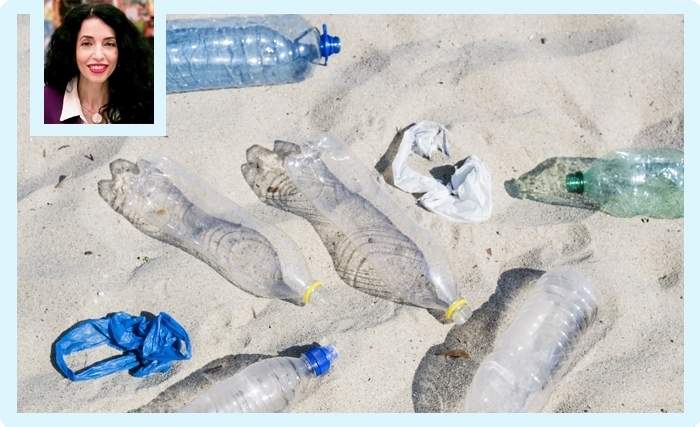
By Shehrazad Zuaiter – When I was a child, the sand beach in Bizerte was to me the most beautiful beach in the world. Today, plastic has invaded the coasts, sand dunes are disappearing, and the Mediterranean Sea is gradually suffocating. A plastic bag thrown into the Seine River in Paris, or into the Ganges River in India, may end up on a beach in Tunisia. This waste sometimes travels longer distances than some humans. Every minute, an entire truckload of plastic waste is thrown into the seas and oceans. According to the United Nations Environment Program (UNEP), the world today produces more than 400 million tons of plastic annually, a large portion of which ends up in the natural environment (1). Plastic pollution is not only an environmental disaster, but has also become an issue of human rights, governance, economic sovereignty, and international trade. In fact, under the auspices of the United Nations Environment Programme, countries, including Tunisia, have been conducting negotiations since 2022 to conclude an international treaty to combat plastic pollution, especially in the marine environment (2). However, despite the important progress they have achieved, these negotiations still clash with major economic interests. Through my research in the fields of international trade and the environment, I had the opportunity to contribute to discussions related to the international trade aspect of these negotiations. I also proposed the establishment of areas dedicated to valuing plastic waste and recycling it in accordance with the principles of the circular economy (3). Tunisia can take a worthy position in this field. Tunisia at the Crossroads of Mediterranean Flows Tunisia should not turn into a Mediterranean waste dump. It has all the ingredients that qualify it to become an organized space for waste valorization, innovation, and industrial transformation. This will represent a unique opportunity to strengthen its regional position in the field of sustainable plastic waste management, while at the same time creating economic and social value. The first thing to understand is this paradox, as the Mediterranean Sea is probably one of the most legally protected seas in the world. It is subject, in particular, to the 1976 Barcelona Convention for the Protection of the Marine Environment and the Coastal Zone, in addition to several specialized protocols relating to land-based sources of pollution, marine protected areas, and integrated coastal zone management. In addition to this are the obligations emanating from the United Nations Convention on the Law of the Sea, in addition to many European legislation applied in countries bordering the Mediterranean Sea. Despite all this, the Mediterranean continues to deteriorate. Every country defends its national interests, but pollution knows no borders. Microplastic particles travel through marine currents, fish, and commercial traffic. Waste that moves…and there is no equality that spreads with it. Our waste does not disappear, but rather moves from one place to another. Trade, whether legal or illegal, in plastic waste causes significant pollution to marine ecosystems, and has direct impacts on human health and the livelihoods of residents. Industrialized countries seek to export part of their waste abroad, while some developing countries see this as an economic opportunity in the short term. However, the environmental and social costs of these practices are often much greater than estimated. In this context, workers collecting, sorting and recycling waste, many of whom operate within the informal economy, are exposed to precarious working conditions and serious health risks, which poses a real challenge related to social protection and the development of effective regulatory frameworks. Structural deficiencies Legislation related to waste management still suffers from many gaps, especially with regard to plastic waste destined for disposal or recycling. This situation has allowed the emergence of what is known as the “environmental mafia”, which are criminal networks active in the field of environmental crimes. These networks often exploit weaknesses in the legal system, in addition to corruption and the complicity of some local parties, to achieve large financial profits by taking advantage of the increasing demand for natural resources, weak enforcement of environmental laws, and the absence of deterrent penalties. The issue of Italian waste containers that entered Tunisia illegally during the years 2020 and 2022, the bulk of which were returned to their source in 2022, revealed for the first time within the framework of the implementation of the Basel Convention, the extent of the country’s vulnerability to abuses associated with the international trade in waste (4). The return of most of this waste to its country of origin set an important precedent in implementing the Basel Convention on the Control of Transboundary Movements of Hazardous Waste and Their Disposal. This issue also highlighted the importance of strengthening national capabilities in the areas of control and international cooperation. In contrast, Tunisia still faces high rates of unemployment, especially among youth, a situation exacerbated by the economic recession and weak job opportunities in traditional sectors. Corruption also remains one of the most prominent obstacles to economic development, as it not only affects the effectiveness of public and private investments, but also affects the confidence of citizens and investors in state institutions. Proposing the establishment of a specialized zone in the circular economy of plastics while awaiting the expected international treaty. At a time when global plastic production continues to rise, and while negotiations for concluding an international treaty to combat plastic pollution are at a standstill, a new idea has begun to emerge in some circles based on transforming international trade into a tool to serve the environment. Establishing a specialized zone would contribute to attracting investments, organizing value chains, and benefiting from appropriate tax and customs frameworks. The idea is essentially to develop economic spaces specialized in recycling plastic waste, innovation, and transforming it into valuable resources, within an integrated vision based on the principles of the circular economy. These areas must be subject to a set of stringent standards, including: • Transparency; • Traceability; • Commitment to environmental and social standards; • Independent oversight; • Partnerships with scientific and research institutions. This trend is not entirely new. In Denmark, the “Kalundborg Symbiosis” experience demonstrated the success of the industrial cooperation model based on the circular economy (5). In China, several pilot industrial zones dedicated to the circular economy and eco-industrial parks have been established, with the aim of promoting material recycling, increasing energy efficiency, and encouraging environmental innovation (6). In the United Arab Emirates, Masdar City embodies the ability of an urban area to combine innovation, economic attractiveness, and environmental ambition (7). Territorial dynamism at the national level. Several Tunisian regions have integrated capabilities that qualify them to lead this ambitious project. With its deep-water port, industrial traditions, and strategic location at the entrance to the Mediterranean, Bizerte can become a regional hub for plastic waste transformation and recycling innovation. As for Sfax, the second largest economic city in the country, it is characterized by a developed industrial fabric, well-known experience in entrepreneurship, in addition to a port infrastructure that allows the development of large-scale valorization and recycling chains. As for Gabès, which has suffered for decades from environmental challenges associated with industrialization, it can be transformed into a national laboratory for environmental transformation and the circular economy, combining economic development and restoring environmental balance. Zarzis, as Tunisia’s gateway to Africa and a promising logistics platform, also has great potential to develop regional exchanges and new green economic chains linked to recycling and valorization of materials. As for Sousse, located in the heart of the Tunisian coast, it benefits from a diverse economic fabric, universities and institutions of higher education, and a service sector capable of supporting scientific research, training, and innovation in circular economy professions. The goal is not to concentrate all activities within one region, but rather to adopt an integrated territorial vision at the national level, taking into account the specificities and needs of each region, and based on existing economic dynamics. Expected benefits: Economic, social and environmental gains Adopting this approach would contribute to creating between five thousand and ten thousand jobs, directly and indirectly, in the sectors of recycling, logistics, services, scientific research, and training. It will also help: • Reduce dependence on importing raw materials; • Developing higher value-added exports; • Improving the waste management system; • Improving the quality of life and public health; • Protecting marine ecosystems. This strategy would also contribute to reducing greenhouse gas emissions associated with the production of virgin plastic, and support the preservation of natural resources in light of the environmental transformation the world is witnessing. An opportunity to strengthen Tunisia’s strategic position An initiative of this kind could enhance Tunisia’s position as a reference regional actor in the areas of sustainable development, innovation, and environmental governance. This initiative is also consistent with the National Strategy for Environmental Transition in the period 2035-2050, and with the sustainable development goals approved by the United Nations in the year 2030, especially the goals related to: • Decent work and economic growth (Goal Eight); • Industry, innovation and infrastructure (Goal 9); • Responsible consumption and production (Goal 12); • Climate action (Goal 13); • Protect underwater life and marine ecosystems (Goal 14); • Building strong institutions and strengthening governance (Goal 16); • Strengthening international partnerships to achieve the sustainable development goals (Goal 17). Governance…the cornerstone. Such a project cannot succeed unless it is based on a strong and effective governance system. In the absence of a clear institutional framework, any economic region may turn into a fertile environment for deviations, such as deregulation of activities, economic imbalances, loss of environmental control, or even into a new outlet for corruption. Therefore, transparency, traceability and strict oversight mechanisms must be at the core of this project. Industrial actors are always ready to invest and progress when they have clear rules, a coherent future vision, stability in policies, and a collective ambition that brings together various parties. Conclusion The question today is no longer whether Tunisia should engage in the path of environmental transition, as it has already developed its national strategy for environmental transition. The real question is whether it will choose to be content with bearing the effects of this transformation, or to keep pace with it with difficulty, or whether it will seek to become one of the main actors in formulating it at the level of the Mediterranean basin. Shehrazad Zuaiter is a legal expert in international law, a university professor, and an article writer. She specializes in environmental, climate, and international trade issues. She is the author of the book “The Statement Against Environmental Corruption” (2024), and the book “The Great Displacement… Climate Migration” (2025), published by Érick Bonnier. Footnotes 1) According to the United Nations Environment Programme, the world produces more than 400 million tons of plastic annually, a significant portion of which ends up in nature. https://news.un.org/fr/story/2025/06/1156206#:~:text=Environ%20400%20millions%20de%20tonnes,Journ%C3%A9e%20mondiale%20de%20l’environnement 2) These negotiations go back to Resolution 5/14 adopted in March 2022 during the session Fifth United Nations Environment Assembly in Nairobi. This resolution established an intergovernmental negotiating committee with the aim of preparing a legally binding international agreement covering the entire life cycle of plastic, from its production to the end of its life, while seeking to eliminate plastic pollution by 2040, while achieving a balance between environmental protection, economic development and social justice. 3) The proposal of the International Center for Comparative Environmental Law regarding the International Convention to Combat Plastic Pollution. https://cidce.org/fr/convention-sur-la-pollution-plastique-proposition-du-cidce/ 4) According to Jaber Al-Ghunaimi, the official spokesman for the Court of First Instance in Sousse and in charge of the case file, 282 containers of household waste illegally imported from Italy between the months of May and July 2020 by a Tunisian company remained in storage. In the port of Sousse until March 2021, although these operations are prohibited under Tunisian law and international agreements, especially the Basel Convention. The authorities of the Italian region of Campania had obligated the Italian exporting company to retrieve the containers within a period not exceeding 90 days, starting from December 9, 2020. At least 26 people were prosecuted in this case, including officials in the Tunisian customs and former Minister of the Environment Mustafa Laroui, where eight people were detained. Prison, while the manager of the Tunisian importing company remained in prison Escape.(https://www.lemonde.fr/afrique/article/2021/03/26/en-tunisie-le-scandale-des-dechets-importes-ille galement-d-italie_6074533_3212.html?srsltid=AfmBOoraLtCNv8NdnzRiGJW3pgXEKbjJAGME9l4_YI0Lqa_L36j86mnPAnd but An administrative, diplomatic and judicial path between Tunisia and Italy. 213 out of 282 containers were returned to Italy on February 19, 2022, while the fate of 69 other containers, part of which was exposed to a fire in a warehouse in the supplier area near Sousse, remained the subject of negotiations between the two countries. 5) The Kalundborg Symbiosis project in Denmark demonstrated the success of industrial cooperation based on the exchange of resources and energy in accordance with the principles of the circular economy. 6) China has established several pilot industrial zones and environmental parks with the aim of improving material recycling, raising energy efficiency, and encouraging environmental innovation. https://www.sciencedirect.com/science/article/abs/pii/S0959652609003941 7) Masdar City in the UAE represents a global model that combines innovation, environmental sustainability, and development Economic.https://www.planete-energies.com/fr/media/article/masdar-city-ville-laboratoire#:~:text=M asdar%20City%2C%20situ%C3%A9e%20dans%20l,et%20%C2%AB%20z%C3%A9ro%20%C3%A9nergies%20fossils%20%C2%BB.