
اخبار تونس- وطن نيوز
اخر اخبار تونس اليوم – اخبار تونس العاجلة
W6nnews.com ==== وطن === تاريخ النشر – 2026-02-17 22:26:00
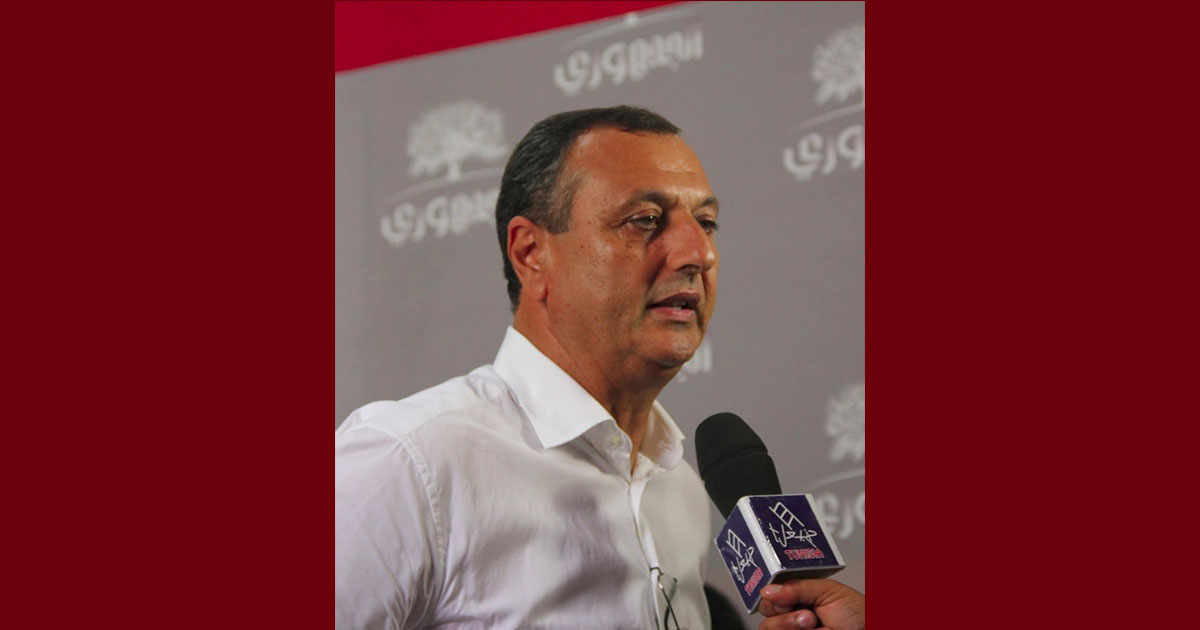
The following is a message of reassurance sent by Wissam Al-Saghir, the official spokesman for the Republic, to the detained Secretary-General of the party, Issam Al-Shabi, via social media pages. The message was as follows: “To the detained comrade, the Secretary-General, Issam Al-Shabin, I reassure you of the success of the convening of our National Council. Your comrades and female companions have returned united, adhering to the trust you gave us… We pledged to continue the path, bear responsibility, and re-establish our values and principles… until emancipation and salvation. Comrade, you are present with us… and the path continues.” It was decided during the session’s work, which bears the name of the late freedom fighter Maya Jribi, to begin re-establishing the progressive democratic project. As a reminder: Statement of the conclusion of the work of the National Council: “The National Council of the Republican Party was held in a very delicate national situation, in which political, economic and social crises intersect and regional and international risks deepen, thus multiplying the fragility of our country’s situation. While the Council recalls the magnitude of the historical responsibility placed on its shoulders, it confirms that what Tunisia is experiencing today is not a passing circumstantial crisis, but rather a temporary crisis. It is a comprehensive impasse resulting from political and economic choices that returned the country to the logic of individual rule, disrupted the path of democratic transition, weakened state institutions and burdened society. *With regard to politics, the National Council notes that the most prominent political feature of the current stage is the systematic violation of rights and freedoms and the dangerous retreat from the gains of the revolution and from the constitutional guarantees that Tunisians, both men and women, struggled to consolidate. The concentration of powers with one hand has weakened the principle of separation of powers and disabled oversight mechanisms. Accountability and transforming state institutions into executive tools subject to the logic of individual decision, and it is no longer a matter of a difference in choices, but rather a shift in the nature of the political system itself towards consecrating individual rule and the dominance of executive authority. The National Council expresses its clear condemnation of the adoption of Decree 54, which has turned into a tool for silencing the mouths and tracking down journalists, bloggers, activists and opponents, which constitutes a direct threat to freedom of expression and opinion and restores a climate of fear and self-censorship to public life. The Council also records with great concern. The concern is the freezing of the Supreme Judicial Council, the Minister of Justice practically seizing its powers, and the adoption of decrees regarding the appointment and transfer of judges, which affects the independence of the judiciary and undermines one of the most important pillars of the state of law. An independent judiciary is not a privilege for a group, but rather a guarantee for every citizen in the face of arbitrariness. The National Council recalls the refusal of the President of the State to establish the Constitutional Court despite it being the cornerstone of any democratic system that guarantees respect for the constitution and prevents the encroachment of executive power. The absence of this constitutional institution opens the door to A unilateral interpretation of texts that perpetuates the imbalance between powers. The Council also expresses its rejection of transforming the public media from an independent public facility that serves the public interest into a government-directed media subject to the logic of political exploitation, which empties media pluralism of its content and undermines the citizen’s right to free and balanced media. All of these measures reflect a political orientation based on eliminating pluralism and partisan and civil life, and on managing public affairs according to the logic of decrees instead of participatory legislation and with the logic of Exclusion instead of dialogue. The Republican Party asserts that restoring the democratic path comes through releasing all political detainees, ending the texts restricting freedoms, ensuring the independence of the judiciary, establishing the Constitutional Court, neutralizing the public media, and launching an inclusive national dialogue that restores normal constitutional life and restores respect to elected institutions. *The economic and social situation The National Council confirms that the economic crisis that the country is going through is no longer a mere circumstantial imbalance in public finances, but has become a deep structural crisis that reflects the exhaustion of the existing development model. And its inability to create wealth and job opportunities and achieve social justice. Recent national and international reports indicate the continued weakness of the growth rate and high unemployment rates, especially among young people and those with advanced degrees, the worsening public debt and the high cost of its services, which limits the state’s ability to invest in public. The erosion of purchasing power continues as a result of tangible inflation that exceeds the official figures, especially in food supplies and basic services. The National Council also draws attention to the worrying decline in the rate of internal and external investment, which deepens the growth crisis and limits The ability of the economy to create wealth and jobs. Climates of uncertainty, the volatility of the legislative and procedural framework, the complexity of administrative processes, and poor access to financing have become factors that burden institutions and postpone expansion decisions and the creation of new projects. This decline leads to a weakening of the country’s economic attractiveness and a slowdown in the renewal of the productive fabric, which requires urgent measures to restore confidence, simplify procedures, and direct incentives towards productive, value-added investment. The National Council expresses its deep concern with the continuing deterioration of the basic sectors of the social state: the social sector. Health is witnessing a complex crisis affecting its financing, organizational, and logistical structure. Public hospital institutions are suffering from increasing pressure, a severe shortage of human resources and equipment, and an accelerating migration of medical talent. The situation is becoming more serious with the continued loss of medicines, especially vital medicines, as a result of the financial imbalances witnessed in the medicine import sector, the accumulation of debts on the structures concerned with supply, and the frequent disruption of supply routes. The phenomenon of interruption of medicines for chronic and serious diseases has become a daily source of concern for patients. It directly affects the constitutional right to treatment and reveals the fragility of the national health system in the face of financial and logistical crises. The education sector is witnessing a decline in the quality of services, a deterioration in infrastructure, aggravation of overcrowding, and a weakness in investment in scientific research and training, which threatens the national human capital and undermines equal opportunities. Even the Supreme Council of Education, which was announced in 2024, has remained within the limits of the announcement. Social funds are facing accumulated financial imbalances that threaten their sustainability and stability, in the absence of… Deep and balanced reforms that preserve acquired rights and ensure sustainability. The National Council also notes the worsening regional disparities and the widening circle of poverty and social fragility, which portends escalating social tensions in the absence of a clear economic vision. The National Council also expresses its deep concern about the deteriorating environmental situation and the increasing manifestations of pollution, especially in Gabès and the mining basin, where the right to a healthy environment has become an urgent demand directly linked to public health and regional justice. In Gabès, the resulting industrial pollution continues In particular, the activities of the Tunisian Chemical Complex and the associated emissions, odors, pollution of the marine environment, and the deterioration of environmental systems, which negatively affects the health of the population and agricultural and marine activities. As for the mining basin, the environmental problems associated with extraction, accumulation of waste, and pollution of water and soil are exacerbated, in light of the weakness of treatment, oversight, and transparency. The party calls for a strict environmental policy based on law enforcement, monitoring polluters, investing in treatment and disinfection, and disseminating environmental data to the public. Linking development to environmental equity and the right of affected parties to compensation and reform. The Republican Party emphasizes that social justice is not a slogan but a condition for national stability, and calls for an economic rescue program based on fair fiscal reform, resisting tax evasion, supporting productive investment, restoring public services and reforming social funds within the framework of a transparent national dialogue, and adopting public policies based on accurate data and not on circumstantial approaches *in the regional and international context in light of the profound regional and international transformations and the decline of the rules of international law before logic The National Council follows with great concern the continuation of the war of extermination in Gaza, and renews its principled and firm solidarity with the Palestinian people in their legitimate struggle for freedom and the establishment of their independent state. The Council also expresses its concern with the escalation of international crises and tensions and their political, economic and security repercussions, and with the violations of sovereignty witnessed in the international arena and the decline in the effectiveness of international institutions. The Council affirms the importance of effective national diplomacy based on defending the country’s strategic interests and preserving its sovereignty, and rejects any action. International commitments or understandings concluded outside institutional frameworks, transparency, and democratic oversight. The National Council stresses the importance of effective diplomacy that is based on defending the country’s strategic interests and preserving its sovereignty, and rejects any international commitments or understandings concluded outside institutional frameworks, transparency, and democratic oversight. It also stresses the importance of Tunisia’s contribution to reviving and developing the Arab Maghreb Union in a way that strengthens the political status of the countries of the region and supports economic integration and solidarity among its peoples, while emphasizing the necessity of pursuing a foreign policy. Balanced, avoids the logic of the axes and serves to resolve Maghreb disputes and advance the path of the union. *Decisions of the National Council. Accordingly, the National Council of the Republican Party, held on February 15, 2026, announces the launch of the path of re-establishing the progressive democratic project, as a comprehensive horizon aimed at unifying and assembling the democratic and progressive forces on the basis of common principles and strict adherence to the rule of law, in view of the seriousness of the situation that Tunisia is going through and the political, economic and social failures that the existing ruling system has accumulated. Environmental and diplomatic, and the resulting decline in freedoms, deepening of the crisis, weakening of state institutions and widening of disparities. While the National Council recalls the pioneering experience of the Progressive Democratic Party, it affirms its determination to restore the spirit of initiative, renewal and openness and develop it in a way that responds to the challenges of the stage. It also decides to open broad political and organizational consultations and embark on a practical path to re-establishment based on the dispatch of two national committees: * The Structuring and Organization Committee: charged with preparing a new vision for a flexible regional structure. It is effective and responds to societal transformations and supports the party’s field presence. * A political committee: It is responsible for evaluating the previous stage in order to extract lessons and determine the foundations of the re-establishment at the political and programmatic levels. The establishment of these two committees comes on the horizon of organizing a summer university during the coming summer, which constitutes an essential step in the path of re-establishment, in preparation for holding the seventh conference at the beginning of the next political year. The moment we are living in is decisive and requires courage of position, clarity of vision, and responsible teamwork. The Republican Party is committed to defending the freedom and dignity of Tunisians and to working for a just, democratic state based on law, institutions, and social justice. Long live a free, democratic, and just Tunisia. *National Council of the Republican Party.