
اخبار سلطنة عُمان – وطن نيوز
اخر اخبار سلطنة عُمان اليوم – اخبار سلطنة عُمان العاجلة
W6nnews.com ==== وطن === تاريخ النشر – 2026-03-10 23:45:00
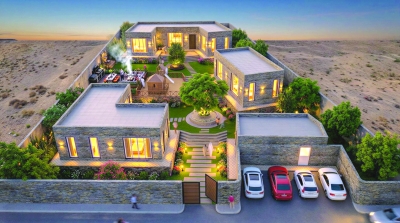
Saif Al Busaidi: – The project provides an integrated residence experience that combines privacy and opportunities for social interaction. – A flexible contribution for individuals to the Wadi Village Endowment with an expected annual return of 9%. – Investing in commercial and tourism projects does not conflict with the concept of the endowment and its provisions. Today, the endowment sector is witnessing a growing debate about the nature of its role in the next stage: Will it remain limited to managing fixed assets and distributing their proceeds? Or is it moving towards adopting productive investments that guarantee the sustainability of the asset and maximize its economic and social impact? This discussion leads to the concept of “the endowment.” The product is based on professional management, clear governance, and precise performance indicators, in order to achieve a balance between legal discipline and investment efficiency. Based on this vision, the “Wadi Village Rest House” project in the state of Jabal Al Akhdar comes as an applied model that seeks to invest in the tourism sector, while directing its revenues to serve sustainable endowment goals. Is it time for endowments in the Sultanate of Oman to move from traditional rents to sustainable tourism investment? How can a balance be achieved between preserving the asset and maximizing the return? We discuss these and other questions in this dialogue with Saif bin Salem al-Busaidi, CEO of the Imam Jaber bin Zaid Endowment Foundation. – When we talk about the “productive endowment,” what is the real transformation that you seek to establish in the concept of society? The Imam Jaber bin Zaid Endowment Foundation seeks to bring about a real shift in society’s awareness from the concept of the endowment as a fixed and returnable asset with limited returns, to it being a sustainable development tool managed with a legally and institutionally disciplined investment vision, and thus the transition With the endowment to become an engine for development and human building across successive generations, while preserving the origin of the endowment and maximizing its benefit, it can be transformed into a productive endowment by activating unexploited assets and maximizing their returns through thoughtful investments, in addition to directing the proceeds of the endowment to projects that build people and achieve a sustainable impact. Endowments are also managed according to clear governance, precise performance indicators, and complete financial transparency, which enhances the trust of the endowments and ensures the sustainability of returns and assets in the long term. – How does the Istarah project achieve Al-Wadi Village is a precise equation between preserving the endowment asset and developing its returns? Through balanced investment management that complies with Sharia controls. The project is not limited to investing in land and facilities randomly, but is based on a comprehensive feasibility study that determines the best ways to invest resources while preserving the endowment asset, and helps diversify sources of income to ensure the sustainability of returns, so that it reduces dependence on a single source of income and increases the stability of returns in the long term. In addition, periodic control procedures are applied to follow up on financial and operational performance, taking into account Sharia and social standards. This ensures a balance between achieving sustainable revenues and the project’s compliance with the objectives of the endowment. With this approach, the project is not limited to generating financial returns, but also contributes to enhancing the endowment’s productive impact in society by providing development opportunities and distinguished services to the beneficiaries, while preserving the endowment asset and the safety of its investment for future generations. – The expected return is 9% annually. How do you evaluate it among the recognized indicators in the management of endowment assets? I would like to clarify that the expected percentage of return was determined based on several criteria studied in The feasibility study, including tourism statistics for the state of Jabal Al Akhdar, the intensity of competition with similar projects, the competitive advantage of the project and its added value. As for the evaluation of endowment returns, it will be according to several main indicators, including: long-term sustainability; As the return must be sufficient to maintain the asset and cover the project’s operational expenses, and compare with market rates, the expected return is measured by the average returns of similar projects to ensure competitiveness without exposing the asset to risks. Diversifying sources of income; The return does not depend on a single source, but rather on diversifying the project’s investments, which reduces risks and enhances financial stability. Finally, the economic and societal impact, which takes into account the reflection of the economic value of the project on the beneficiaries, and the social value on the beneficiaries. Based on these criteria, the expected return of 9% annually is classified as a high level of efficiency in managing the productive endowment, and confirms the feasibility of the project in achieving sustainable development of the endowment assets with full compliance with Sharia controls. – How does the project meet the shifts in the behavior of families and groups looking for a residence experience that combines privacy and interaction at the same time? We believe that the project will provide an integrated residence experience that combines privacy and opportunities for social interaction at the same time, in a way that suits the preferences of those seeking flexible tourism experiences. The design of the project and its facilities serve this balance. Carefully, through independent accommodation units and shared spaces, which reflects a deep understanding of the needs of the modern tourism market, and enhances the attractiveness of the project for families and groups looking for this distinguished experience. – What about the direct economic impact that this project can have on Al Jabal Al Akhdar and the community? The project can have a role in stimulating local economic activity by providing direct and indirect job opportunities, and increasing the demand for local services and products. Without a doubt, the project, whatever its size, will enhance the returns on tourism investment in the region, and contribute to the development of tourism-related services, even if by a small percentage, and we hope that it will achieve It will have a positive impact on the local community, and enhance the tourism potential of the state of Jabal Al Akhdar in general. – To what extent is this model consistent with the directions of “Oman Vision 2040”? The project is directly consistent with the objectives of the vision by developing the tourism sector as a sustainable economic engine, and providing multiple sources of income for the local community, in addition to enhancing the attractiveness of the state of Jabal Al Akhdar as a distinguished tourist destination. We also believe that the project will contribute to reducing dependence on traditional sources of income, in a way that supports the Sultanate of Oman’s strategy to achieve balanced and sustainable development and enhance the benefit From local resources. – In endowment investment projects, how do you ensure the highest levels of governance and transparency in managing and disbursing returns in a way that enhances community confidence? The institutional framework of the Imam Jaber bin Zaid Endowment Foundation is integrated, including the Board of Directors, which is responsible for drawing up policies, approving strategic plans, and monitoring implementation, directly and through three independent committees: the Sharia Committee, the Investment Committee, and the Audit and Risk Management Committee. Oversight mechanisms include both Sharia oversight and accounting oversight to ensure that all operations comply with Sharia controls and approved policies, to In addition to full commitment to legitimate and legal compliance with the provisions of the Endowments Law and the Endowment Institutions Governance Charter, the specialized executive management undertakes daily operational tasks, including managing endowment assets, accounting operations, and preparing periodic performance reports, while ensuring transparency and efficiency in endowment management. The Foundation relies on clear and transparent disclosure mechanisms towards the community and the endowments, which include publishing detailed financial reports and accurate performance indicators, which enhances confidence in the professional management of endowments and ensures that the returns are spent in accordance with Sharia priorities. And development projects, in addition to maintaining the sustainability of assets and achieving a tangible social impact. – What are the mechanisms available to individuals wishing to contribute? Can the endowment be open with flexible amounts? The electronic platform, bank accounts, and direct payment at the Foundation’s office are all tools that allow contributing to this endowment project with flexible amounts, so that every donor can contribute the appropriate endowment money without a minimum. The Foundation ensures that the project’s endowment funds are managed in accordance with Sharia controls and complete financial transparency. In all cases, we seek to enhance trust and ensure that the returns are spent in a way that achieves the endowment’s goals and the interests of the recipients in the long term. – In your opinion, what does it need? The endowment sector in Oman today: more flexible legislation? Does it need innovative financing tools? Or a change in societal culture? Legislation in Oman is flexible and enjoys a high level of governance, which allows endowment institutions to operate according to institutional foundations with high efficiency. However; There is a need to move towards innovative investment and financing tools that go beyond traditional resources, such as endowment investment funds, and partnerships with the private sector, especially Islamic financial institutions, in a way that enhances the ability of endowments to invest in projects with sustainable returns. Enhancing community awareness is also important regarding the concept of endowment, the importance of asset sustainability, impact measurement tools, and building donors’ confidence in the professional management of endowments. These factors form a solid basis for the renaissance of productive endowments in Oman. They are integrated to achieve sustainability for the endowments and a tangible development impact. – What are the challenges facing the transformation of the endowment from a traditional asset with limited returns into an investment asset that operates according to the logic of the market without losing its legal identity? The most prominent challenges lie in achieving the delicate balance between profitability and Sharia compatibility; A productive endowment must generate sustainable returns without compromising the endowment’s principal by exposing it to high or ill-considered risks, as well as without violating its legitimate objectives. The ultimate goal is to transform the endowment into a sustainable productive asset that achieves a tangible development impact, while fully adhering to the legal controls that protect the essence and origin of the endowment. From the point of view of the Imam Jaber bin Zaid Endowment Foundation, the most prominent challenges in the culture of endowment asset management can be summarized; There is a need to enhance institutional competencies and understand modern investment tools in accordance with Sharia, in addition to the limited investment tools. Some traditional endowments lack innovative investment options or strategic partnerships that allow them to grow in the market, and finally manage market risks. Market fluctuations may affect the endowment assets and yield returns, which requires the application of precise legal and accounting controls, and strict governance procedures to ensure the preservation of the endowment asset. The innovative approach has been applied practically in the Gharas Endowment Investment Fund in cooperation with strategic partners, especially the Financial Services Authority, the Muscat Stock Exchange, and the managing company, Ubar Capital. Integrated governance has been established that allows controlling risk management at a high rate, ensuring the sustainability of returns and preserving the legitimate objectives of the endowment. – From a legal perspective, how do you view endowment investment in commercial and tourism projects compared to traditional types of endowment? Endowment investment in commercial and tourism projects does not conflict with the concept of endowment and its provisions, provided that it is carried out in accordance with the legal controls that preserve the origin of the endowment and achieve its objectives, as the traditional endowment is often limited to inanimate objects and the disbursement of the proceeds. Directly, while a productive endowment allows assets to be developed and invested in income-generating projects to benefit the recipients of the endowment in the long term. Commercial or tourism investment can be achieved legally, taking into account avoiding prohibitions and forbidden activities, and ensuring the preservation of the asset and the sustainability of the returns. This approach makes the endowment a tool for sustainable development that links the preservation of the asset with the creation of a tangible economic and social impact, and also enhances the culture of productive endowments in society. short; A commercial or tourism productive endowment is not a departure from the legitimate discipline of the endowment, but rather a means to expand its impact and develop its resources in a sustainable and responsible manner. – Why did you specifically choose the tourism sector to be an investment vessel for this endowment, and what gives it the ability to be sustainable? Because it combines high growth potential with sustainable returns, and is consistent with the goals of the productive endowment in achieving a tangible economic and social impact. The tourism sector in Oman is characterized by several factors that enhance its sustainability, including the growing demand for domestic and foreign tourism, which ensures the continued flow of revenues. In addition to the diversity of tourism projects, which reduces investment risks by diversifying sources of income, Sharia and sustainability standards can also be combined, ensuring continued returns while preserving the asset. In this way, the productive endowment achieves its goal of developing assets and achieving sustainable returns for the beneficiaries, while preserving the Sharia objectives of the endowment and creating a long-term societal impact. The Foundation has begun investing through financial instruments compatible with Sharia, such as in the Ghiras Endowment Investment Fund model, and the Foundation is working through this project on another experience in the tourism sector; The project was approved according to a feasibility study prepared by a specialized office, and the study showed a positive factor for this investment in the medium term.