
اخبار سلطنة عُمان – وطن نيوز
اخر اخبار سلطنة عُمان اليوم – اخبار سلطنة عُمان العاجلة
W6nnews.com ==== وطن === تاريخ النشر – 2026-07-19 19:26:00
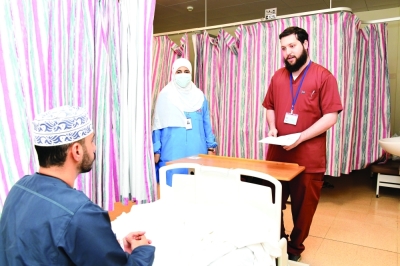
Written by – Ghalia Al-Dakhri: Khawla Hospital seeks to localize complex epilepsy surgeries. These surgeries have been carried out in the hospital in a precise and organized manner since the beginning of last year 2025 AD, achieving an improvement and recovery rate of 70%. With the number of people with epilepsy in the Sultanate of Oman reaching between 30 and 35 thousand cases, Khawla Hospital has succeeded in performing surgery on 10 cases of complex cases so far, making a real difference in the lives of patients. Dr. Saeed bin Mohammed Al-Maawali, a consultant physician in neurology at Khawla Hospital, spoke about the causes of epilepsy, explaining that it may be due to a dynamic process called “Epileptogenesis,” which is a condition that causes the cerebral cortex to not function normally, turning it into an epileptic. Thus, spontaneous and continuous epileptic seizures are generated. This condition is due to several factors, including genetic or hereditary causes, and other causes such as clots, brain infections, tumors or injuries, and in other cases the cause remains unknown, indicating that the extent of the spread of the disease ranges between 30 to 35 thousand cases recorded in the Sultanate of Oman, which is in line with the approximate global rate of 1% of the total population. Diagnosis Dr. Al-Ma’awali added that the journey of treating epilepsy patients surgically passes through precise stages; The treatment of epilepsy begins with the diagnosis stage, and here lies the biggest challenge. Some cases are not the main cause of epilepsy, but rather other problems. Some are due to behavioral disorders or heart disorders, etc. The diagnosis is made by a specialized doctor and the patient undergoes several examinations, including EEG, various x-rays, etc., after which the case is allocated and the appropriate medication is given to it. He pointed out that a large percentage of up to 70% of cases respond to medications, and cases that do not respond to epilepsy medications are referred to the surgical option, and the brain is studied carefully, and the patient then undergoes several examinations, and it takes a certain period. A period of time, after which the patient is informed of the main cause of the epileptic seizures, stating that the patient during the surgical procedure may stay in the hospital for about 3 to 5 days to study the condition of the epileptic seizures before deciding on the cause, with the possibility of benefiting from surgical intervention. The cause of the seizure: For his part, Dr. Ahmed bin Sulaiman Al-Azri, Senior Consultant in Neurosurgery at Khawla Hospital, explains that the decision for surgical intervention is not taken randomly, but rather is subject to careful study. A patient who begins to have convulsions and whose condition improves functionally through anticonvulsive medications is not considered a candidate for surgery, indicating the development in the medical protocol. In the past, the patient took two types of medications at the maximum possible dose to no avail before considering surgery, but now it is sufficient that the condition does not respond to one type of medication, so that the patient is immediately included in the list of candidates to benefit from the option of surgery in the future if a focus or clear cause is found that can be treated surgically. Dr. Ahmed Al-Azri stated that the goal of careful study of these cases and professional discussion among the specialties concerned is not to resort to surgery unless it is proven that removing the cause will actually contribute to improving the patient’s quality of life, especially since continuing to take medications for many years. It may lead to a decline in the functional efficiency of some parts of the brain. Because epilepsy surgery operations differ from one case to another, he explained that decision-making requires an intensive and extensive discussion between a multidisciplinary medical team that includes a neurology and neurosurgery team, in addition to specialists from neuroradiology, neurophysiology, nuclear medicine, and neuropsychology. This team meets to study the situation in all its aspects. Sometimes the brain appears in the x-ray to be completely normal and healthy, but it becomes clear from the study that the main cause of seizures (the focus) is located in a specific area in the brain. In other cases, the defect appears as a clear congenital deformity on x-rays. Epilepsy surgery aims to remove it in the hope that the patient will recover. When greater scrutiny is needed – which is required in some cases – fine electrical electrodes (wires) are placed in the brain to monitor seizures, and precisely determine their focus and location before dealing with them surgically, adding that in cases where resection may be futile due to multiple foci of epilepsy in the brain; New devices have been added at Khawla Hospital, such as a vagus nerve stimulator, and the hospital seeks to provide a thermocoagulation device in some difficult cases. The concept of recovery Regarding the degree of recovery of an epilepsy patient, Dr. Al-Azri said: The recovery of epilepsy patients after surgery depends on a careful case study to show the benefit and its extent after surgery, and informing the patient and his family of this benefit, as an example for a patient who had seizures on a daily basis, and after the operation he had a seizure every month; This is considered a significant improvement in the patient’s condition. Likewise, for the patient who suffers from persistent generalized epilepsy, which turns into partial seizures after the operation, it becomes a target in some cases. There are cases in which epilepsy may disappear completely after the operation. The complete disappearance of epileptic seizures is not necessarily the criterion for the success of this type of surgery. The goal is a noticeable improvement in the patient’s functional performance and in the number and severity of epileptic seizures, and a reduction in medications in such cases. In cases where the main cause of the seizures or the focus is removed, the recovery rate reaches a high degree, and here lies the importance of careful study of these cases. The Paradigm Shift Regarding the qualitative shift witnessed by the neurosurgery department in the hospital to deal with intractable epilepsy cases, Dr. Ahmed Al-Azri said: There is a noticeable and continuous development in neurosurgery over the past ten years in terms of development in the medical staff and in the devices used, indicating that epilepsy surgeries in the past were not working in the manner studied, and since the beginning of last year 2025 AD. These surgeries have begun to be performed in a studied and organized manner, and the number of incurable cases that have undergone surgery since the start of the service has reached 10 cases, and some of these cases have become routine operations, and we are working to ensure that most of these cases are treated inside the Sultanate of Oman and efficiently so that there will be no cases that require sending abroad in the near future. Al-Azri explained that careful study of cases before going for surgical intervention and discussion about the type of surgical intervention is the core of epilepsy surgeries and the basis of their success, and this is what has been focused on in our surgical program. Epilepsy. This program began about two years ago, and the first stage was to identify the areas of deficiency in the system of surgical epilepsy treatments in the Sultanate of Oman, and to study ways to enable them so that Khawla Hospital is the specialist to deal with these cases, with careful follow-up by the Ministry of Health, and to draw a vision for the stages of developing this service, which included extending a network of cooperation with specialties in the Royal Hospital, Sultan Qaboos University Hospital, and the Military Hospital, which resulted in starting the work of an integrated unit to study epilepsy patients in Khawla Hospital, and providing medical and technical staff. And nursing, providing the equipment required for this unit and surgical operating rooms, and hosting specialists from the Kingdom of Saudi Arabia to organize workshops related to surgical empowerment, and empowering specialists in functional MRI and nuclear medicine, in addition to creating courses to empower technicians in these supporting specialties. Possible complications: Regarding the possible complications after the operation, he explained that the matter depends entirely on the type of surgery and the place of the brain removed, and the patient is informed and discussed with complete transparency about the possibilities of complications and the desired improvement from surgical treatment, stressing at the same time that these complications, if they do occur, are dealt with professionally and specializedly. Patients’ concerns: Regarding the extent of patients’ acceptance of surgical intervention, he stated that most refuse to perform the operation at first, and this is due to fear of it as a major surgery in addition to lack of awareness of its nature. However, the patient’s conviction begins when he is explained to him that the rate of recovery is It reaches 70%, which guarantees a significant improvement in the quality of his life, especially since the surgery is performed with extreme precision and by a skilled medical staff, adding that the real turning point often occurs after the patient returns to his home and his epileptic seizures recur, and here the patient realizes the importance of surgery as a radical solution to get rid of these seizures, so that the stage of serious thinking and approval begins, which usually takes one to two visits to the hospital. He added that work is currently being done to intensify cooperation between Sultan Qaboos and Al Sultani University Hospitals and the Medical City to spread awareness among patients about this safe surgical solution, noting that an Omani medical staff specializing in epilepsy will join the hospital soon. Techniques used Regarding the most prominent modern technologies developed, Dr. Al-Azri said: We now have an integrated unit for monitoring epilepsy, and Khawla Hospital is in continuous and diligent work to open a new unit during this year; This unit provides a close study of the nature of seizures, studying them continuously during the patient’s hospitalization period, providing advanced radiology techniques such as functional magnetic resonance imaging, the presence of a staff specialized in neuroradiology, cooperation with the Royal Hospital to provide nuclear medicine radiology for epilepsy patients, and the use of neuronavigation technology at the time of the operation that guides the surgeon with a three-dimensional computer system during the operation to determine the location of the foci to be removed with high accuracy, and performing an EEG during the operation to show the boundaries of the parts that are surgically removed to control the epileptic foci. The next plan, during the coming months, is to implant electrodes (wires) inside the brain to study the foci of epileptic seizures before embarking on the ablation procedure. Khawla Hospital also provided a new service, which is the implantation of a vagus nerve stimulator. Some of these devices will be implanted during the next few months after identifying the patients who benefit from these devices, indicating that with modern devices the rates of accuracy and success of these operations have increased and the risk rate has decreased. Dr. Saeed reviewed some inspiring stories of cases with severe epileptic seizures; He referred to a patient in his forties who was suffering from 4 epileptic seizures a day. After undergoing surgery, he regained his life and began learning to drive a car and became the breadwinner for his family. He transformed from a person who was a burden on his family to a person who leads his life normally. Research Expansion Dr. Saeed Al-Azri indicated that the hospital conducted research studies comparing the status of epilepsy surgery before and after the introduction of the new systems and service. Regarding the future of epilepsy surgery in the Sultanate of Oman in light of the trend towards digitization of the health sector and the use of artificial intelligence in surgical diagnosis, Dr. Ahmed Al-Azri stressed that the development of technology has made the accuracy of diagnosis clearer and faster. Since reading EEG has become faster than before, artificial intelligence intervention may summarize the planning of an entire day in half an hour or an hour, in addition to the development of devices that have increased the accuracy and safety of these surgeries.