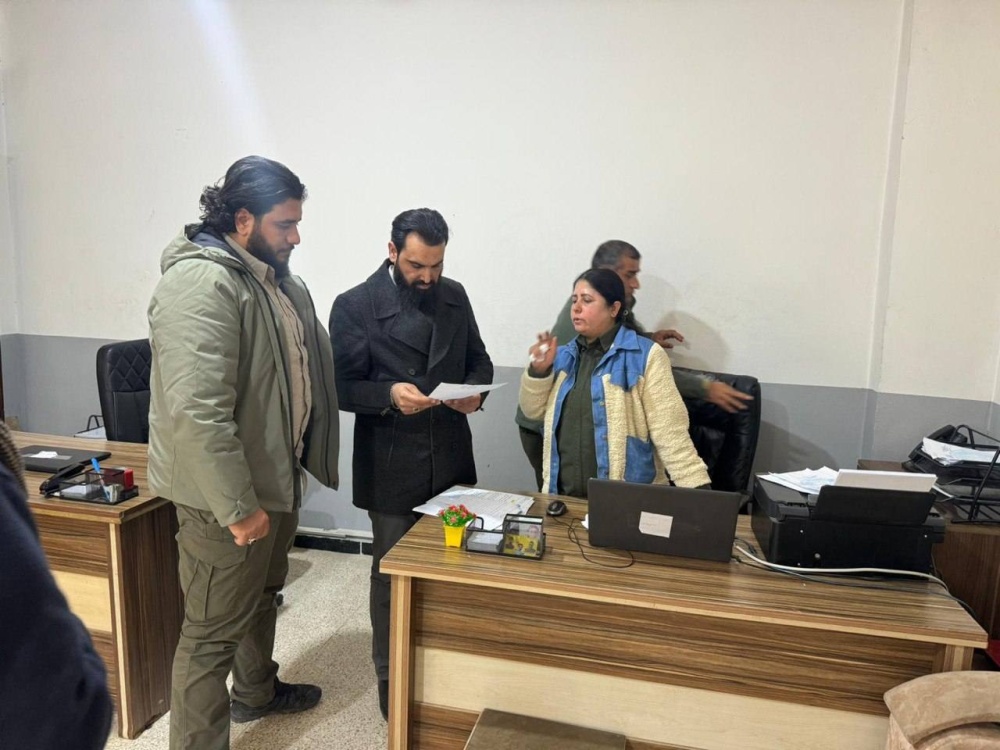


اخبار سوريا اليوم – وطن نيوز
سوريا اليوم – اخبار سوريا عاجل
W6nnews.com ==== وطن === تاريخ النشر – 2024-02-06 18:01:18
On this day, a full year has passed since the devastating disaster, which is the anniversary of the February 6, 2023 earthquake that struck Turkey and Syria, which was classified as the “worst disaster” in its modern history, as it claimed the lives of tens of thousands and caused the displacement, or even the displacement, of huge numbers of people. Population.
The February 6 earthquake killed 53,537 people in Turkey, according to the latest toll published by the Turkish authorities on Friday, while 6,000 people were killed in neighboring Syria, raising the death toll in the two countries to about 60,000 people, making it among the top 10 disasters. claimed lives over the past hundred years.
Although many people survived, the repercussions and consequences of the earthquake are still with them, especially in Syria, a country devastated on all levels as a result of the war that has been going on for more than 12 years.
Consequences of the February earthquake on children
In the context of talking about the consequences of the earthquake on children, Save the Children said yesterday, Monday, that child survivors of the earthquake in both Syria and Turkey are still suffering from anxiety and mental health illnesses, and are struggling to overcome its consequences, a year after the disaster that struck the two countries.
The international organization added in a report on the first anniversary of the earthquake that 85 percent of the children with disabilities it spoke to in Syria reported difficulties in interacting with their families, friends, teachers, and others, due to their experiences during the disaster.
The international organization’s report indicates that 70 percent of participants in a study that included five Syrian regions controlled by the Damascus government spoke of the sadness that spreads among children. They also reported that about 30 percent of children began suffering from nightmares and difficulty sleeping.
According to the “Save the Children” report, thousands of child survivors do not have access to shelter and food, in addition to an escalation in the conflict, in addition to the destruction of schools and health centers, at a time when the World Food Program suspended much of its aid in the areas affected by the earthquake.
The international report indicated that about 1.5 million people in Syria, 45 percent of whom are children, are in need of humanitarian aid this year.
In turn, the organization’s country director in Syria, Rasha Mahrez, said that Syria is fighting one crisis after another, and added: “There are no signs of recovery here yet.” We urgently need more funding to meet the needs of children. “Year after year, we see the humanitarian situation deteriorating to new lows.”
On the other hand, what is striking is that many pregnant women in the city of Aleppo in northern Syria were keen to avoid setting a date for a caesarean section on Tuesday, so as not to coincide with the first anniversary of the devastating February earthquake, and reservations for wedding halls in the city dropped to their lowest levels. According to the local newspaper, Al-Watan.
Obstetricians in Aleppo said that some pregnant women refused to undergo caesarean sections on the “day of the earthquake,” to avoid their children being born on the anniversary of the largest humanitarian disaster in 200 years.
A great tragedy for Syrians
On the other hand, the United Nations said that the earthquake disaster in Syria not only shattered the lives of millions of people, but also exacerbated the destruction of the country’s infrastructure and economy, which were already devastated after 12 years of conflict.
This came in a joint statement by the United Nations Resident Coordinator and Humanitarian Coordinator in Syria, Adam Abdel Mawla, and the Regional Coordinator for the Syrian Crisis, Muhannad Hadi, on the occasion of the first anniversary of the earthquake, which falls today, Tuesday.
According to the UN statement, the February 2023 earthquake was “a violent wake-up call to the fact that the continuation of the crisis in Syria is untenable, and a clear indication that early recovery must become an inevitable necessity.”
The statement stressed that 16.7 million people in Syria currently need “humanitarian aid,” amid bleak funding expectations and raging conflicts around the world, stressing the need to “urgently reverse this trend.”
On the other hand, the World Bank estimated, according to the Associated Press, the size of the losses of the earthquake that struck northern Syria at more than five billion dollars. What increases the tragedy in northwestern Syria is that most of the 4.5 million people depend on humanitarian aid to survive, while about 800,000 people living in tents need housing to shelter them.
What is sad, amidst all of this, is that the volume of international aid has decreased significantly, as a result of the Covid-19 pandemic, and then the wars and crises that broke out in other countries and regions.
The United Nations World Food Programme, which estimates that more than 12 million Syrians lack a regular food source, announced last December its intention to stop the basic aid program in Syria during the year 2024.
Regarding this, Tanya Evans, Regional Director in Syria for the International Rescue Committee, said that the needs on both sides of the front line in Syria have never been higher than they are today, and stressed that “families are facing a state of rampant inflation accompanied by job losses, and that is why they must make decisions.” “It is painful for them to be given food at meals, or to spend the day hungry.”
The United Nations has received only 37 percent of the $5.3 billion it needs for the humanitarian response in Syria in 2023, and David Cardin, deputy regional humanitarian coordinator for the Syrian crisis at the United Nations, said that this funding is the lowest since the start of the conflict. In the absence of a comprehensive political solution in Syria, the conflict has become a major obstacle for humanitarian organizations.
Response rates are “poor”
On the other hand, a report by the “Syrian Response Coordinators” team said, on Monday evening, that the humanitarian response rate in the region did not exceed 50 percent, stressing that despite a year having passed since the earthquake, the humanitarian response rate since the disaster reached 47.18 percent for all humanitarian sectors, while it reached The humanitarian response rate for those affected by the earthquake reached 53.73 percent.
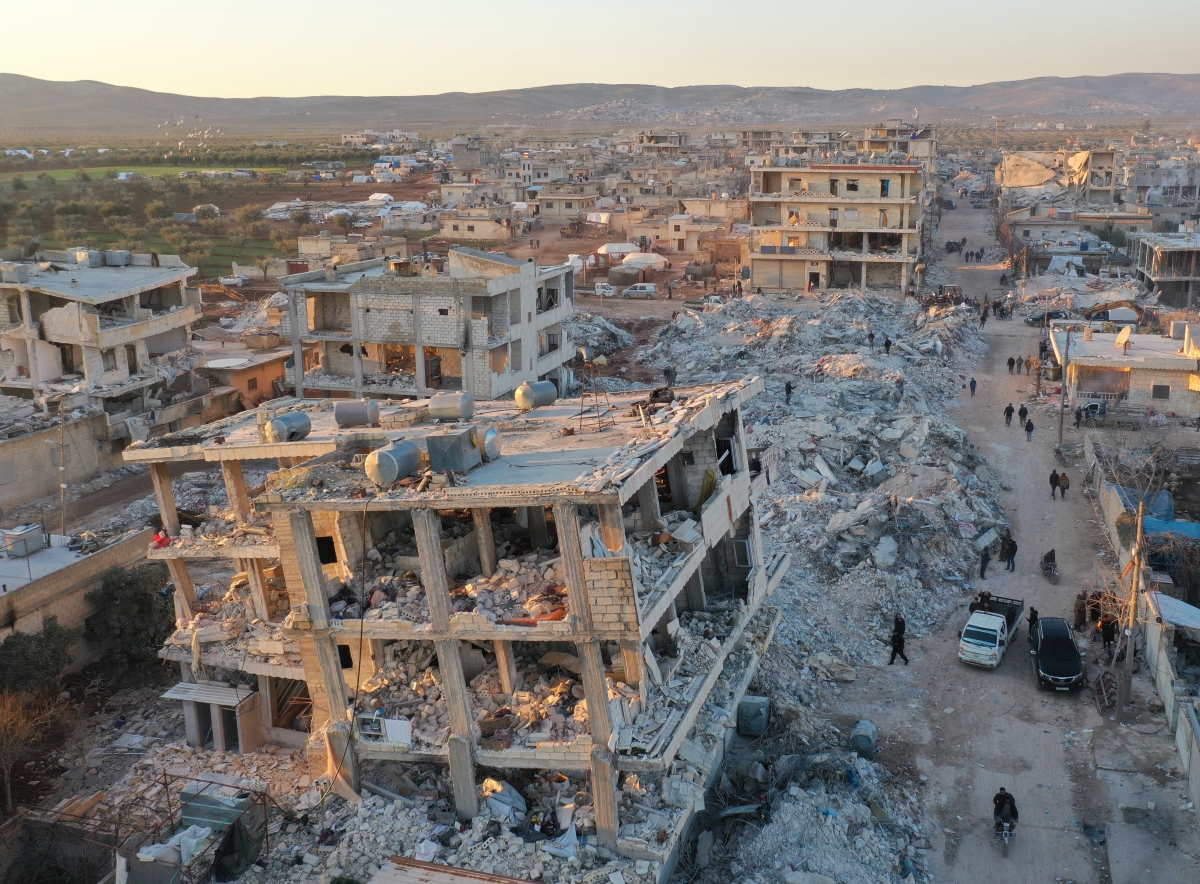
The United Nations sent an appeal to raise about 400 million US dollars to respond to the earthquake in northwestern Syria for various humanitarian sectors.
The number of humanitarian trucks and convoys arriving through the border crossings since the earthquake in the region reached 8,843 trucks, of which UN aid constitutes 56.35 percent, equivalent to only 4,983 trucks, according to what the media reported from the civil organization.
While the number of displaced people reached 48,122 families, with 311,662 individuals, 67 percent of whom were children, women, and special cases.
More than 51,931 people are still affected inside shelter centers and camps, due to their inability to return to their homes as a result of the extensive damage they sustained as a result of the earthquake.
The report also documented the killing of 4,256 civilians and the injury of 11,774 others, while 67 people are still missing, in addition to the transfer of more than 2,240 bodies from various border crossings with Turkey into Syria.
The number of victims of humanitarian workers and personnel working within institutions exceeded more than 255 people, of whom workers in humanitarian organizations constitute 59 percent.
As for economic losses, they amounted to about 1.95 billion US dollars, and include the public sector, the private sector, and other facilities, while more than 13,643 families lost their sources of income as a result of the recent earthquake that struck the region, according to the humanitarian organization’s report.
Since the earthquake disaster, the Damascus government has claimed that it provided aid to those affected, and that it distributed all aid provided by neighboring and foreign countries to those affected, which was questioned by the affected Syrians.
The damage to educational facilities exceeded 433 schools, and the damage ranged from partial to moderate, and partial demolition. While among health sector facilities, damage in 73 facilities ranged between partial and moderate, according to the report.
The damage within the camps amounted to more than 136 housing units, and the damage ranged from light to moderate, and the damage affected about 83 places of worship, in addition to 13 high water tanks, and 94 other facilities.
And private facilities and buildings. The number of buildings demolished during the earthquake immediately reached 2,171, and the number of buildings that were unsafe for return and unable to be reinforced reached 5,344 buildings. These are massive damages, and buildings that require urgent demolition.
The number of buildings at risk of collapse that were demolished after the earthquake exceeded 214 buildings, while the number of buildings that need to be strengthened to become safe for return reached 14,844 buildings (moderate damage), while the safe buildings that need maintenance amounted to more than 23,738 buildings (damages). light).
Swallowing aid
In a related context, the Governor of Latakia, Amer Hilal, claimed today, Tuesday, that the number of beneficiaries of aid for those affected by the earthquake last February reached more than 22 thousand families, with a total amount amounting to about 70 billion Syrian pounds, at a rate of three million Syrian pounds per family.
More than 980,000 people (about 194,000 families) were affected in Latakia Governorate due to the earthquake disaster, according to official statistics.
Since the earthquake disaster, the Damascus government has claimed that it provided aid to those affected, and that it distributed all the aid provided by neighboring and foreign countries, as well as individual donations from Syrians and celebrities to those affected, which was something that a large percentage of affected Syrians questioned, and they also expressed their doubts about the effectiveness of Damascus’ efforts. In distributing aid, they wondered: Where did the cash aid that was supposed to be distributed to earthquake victims go?
What supports this statement is the warning of experts in the Syrian conflict and aid workers about the Damascus government’s record of corruption.
Aaron Lund, an expert on Syrian affairs and a member of the Century Foundation, stated earlier that: “The Syrian government has exploited and manipulated the flow of aid to Syria more than once in the past, and a percentage of the aid must go to waste due to corruption.”
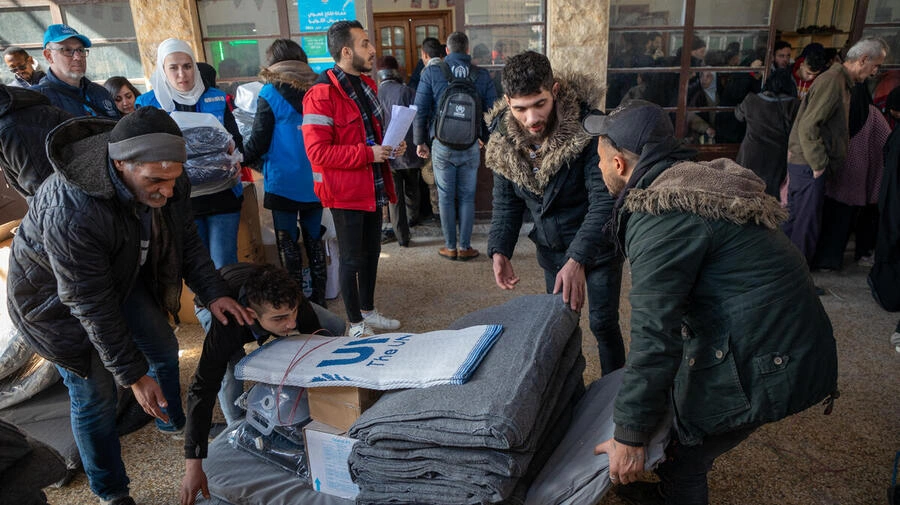
© UNHCR/Hameed Maarouf
The Syrian Observatory for Human Rights also said that there are citizens accusing Damascus government officials of stealing relief materials and insulting those affected in Latakia.
The Syrian Observatory explained in a previous report that “the security services affiliated with Damascus arrested a citizen on the basis of his criticism of the Syrian authorities in a videotape, during which he explained that relief aid distributors were forced to obtain security approval, so that they could distribute aid to those affected by the devastating earthquake that struck the Syrian regions, criticizing the actions.” Inhumanity and theft of relief materials by the Damascus government.”
The former Syrian Minister of Internal Trade and Consumer Protection, Amr Salem, spoke about “patrols headed to the town of Stamo and it was discovered that two mukhtars were distributing relief aid to their relatives, and as a result the problem was resolved and aid was distributed to those affected,” according to the Observatory.
In general, the repercussions of last February’s earthquake will extend for many more years, which experts expect to be disastrous and long-term. Given the presence of inflation and the increase in poverty rates in Syria, as well as the shrinking volume of international aid provided to Syria, the situation will get worse at the present time and in the near future, and thus the situation will deteriorate in general and across the country, and not just for those affected by the earthquake, and part of these expectations is It is happening gradually in the bleak Syrian reality.