

اخبار سوريا اليوم – وطن نيوز
سوريا اليوم – اخبار سوريا عاجل
W6nnews.com ==== وطن === تاريخ النشر – 2024-01-17 14:26:42
Economics and politics represent a vital and effective syndrome in the political scene of any society. It is also an effective path for every authority when it wants to achieve its goals and objectives, in addition to being together a way to reveal the class situation that dominates and dominates the means of production, as well as the capabilities of the influential authority, which allows the production of… And the generation of disparate class segments, some of which are organically linked to the interests of power and associated with it, while others are from the weaker and marginalized groups who rise to obtain rights and privileges.
Hezbollah, in turn, since the 1980s, has implemented its work methodology and movement in Lebanon towards working to build its military arsenal, as well as moving forward towards establishing and developing its economy outside the official institutions. Through which he established and built the structure of the parallel economy in Lebanon through multiple different institutions. In addition to the balances of external financing that come directly through Iranian support, which some sources estimated at amounts exceeding 600 million dollars.
Sectarian money network
There is a real and objective connection between money and the economy, and the emergence and birth of political Islam organizations in their Sunni and Shiite variations. It is certain that you will find objective links, and certain evidence, between these organizations and the economic gains that were available to them and made them dominate the social space, the public and political sphere, and the social classes and segments that represent this, especially in the stages of societal, economic and political transformation and transition.
The parallel economy in which Hezbollah in Lebanon manages its network of sectarian funds includes a group of social institutions, such as the “Martyrs Foundation” and the “Al-Imdad” Charitable Society, contracting companies and infrastructure works undertakings such as the “Al-Bunyan” Engineering and Contracting Company, in addition to consumer cooperatives. Such as “Al-Mousawi Star” supermarket, dairy and cheese production companies, synthetic rubber manufacturing companies, and car trading companies.
While Hezbollah continued to infiltrate Lebanese society and grow on its social and economic frontiers as a mass movement, working to do so through the party’s internal organizational structures and its large network of various institutions, the latter worked to penetrate the party’s ideas into the Shiite community and impose its influence by providing the necessary services. Through four vital sectors: the community propaganda role, religious institutions, media and cultural activity, then education and youth work.
The Swiss academic of Syrian origin, Joseph Daher, in his book: “Hezbollah: The Political Economy of Hezbollah in Lebanon,” engages throughout the book’s chapters with the dialectic of money and Islamist organizations by highlighting “Hezbollah” as a model for those organizations in their Shiite form, and exposing their working mechanisms. Its hidden and declared work is to produce a Shiite bourgeois class that guarantees the integrity of its structure and the continuity of its work within an environment that embraces its goals and expresses its interests.
Through this, Joseph Daher engages in his book with the issue of the development of the Lebanese political economy in the period between 1990 and 2020. This period covers the end of the civil war and the tremendous transformations that Lebanon underwent until reaching a political impasse and approaching bankruptcy, and each of them began and there is an expressive crisis known as the waste crisis, which The Lebanese expressed it in their first uprising as “You Stink” in reference to the corruption of the ruling class before the recent October Uprising.
Regarding the Lebanese Shiites, we can observe the erosion of the Shiite incubators, the political ostracism of Hezbollah, and its loss of legitimacy, specifically as a result of the social crises, the extreme dependency on Iran, the involvement in the conflict in Syria, and the return of the Lebanese youth in coffins in a war in which “they have no camel or camel.”
A new Shiite bourgeoisie
It cannot be overlooked that the Lebanese Shiites had a significantly lower political, economic and social status than the rest of the Lebanese sects at the end of the civil war. Then the situation changed and changed in a remarkable way, as did the divisions of their class segments against the backdrop of the development of “Hezbollah” as a political organization with economic, financial, sectarian and regional goals par excellence. .
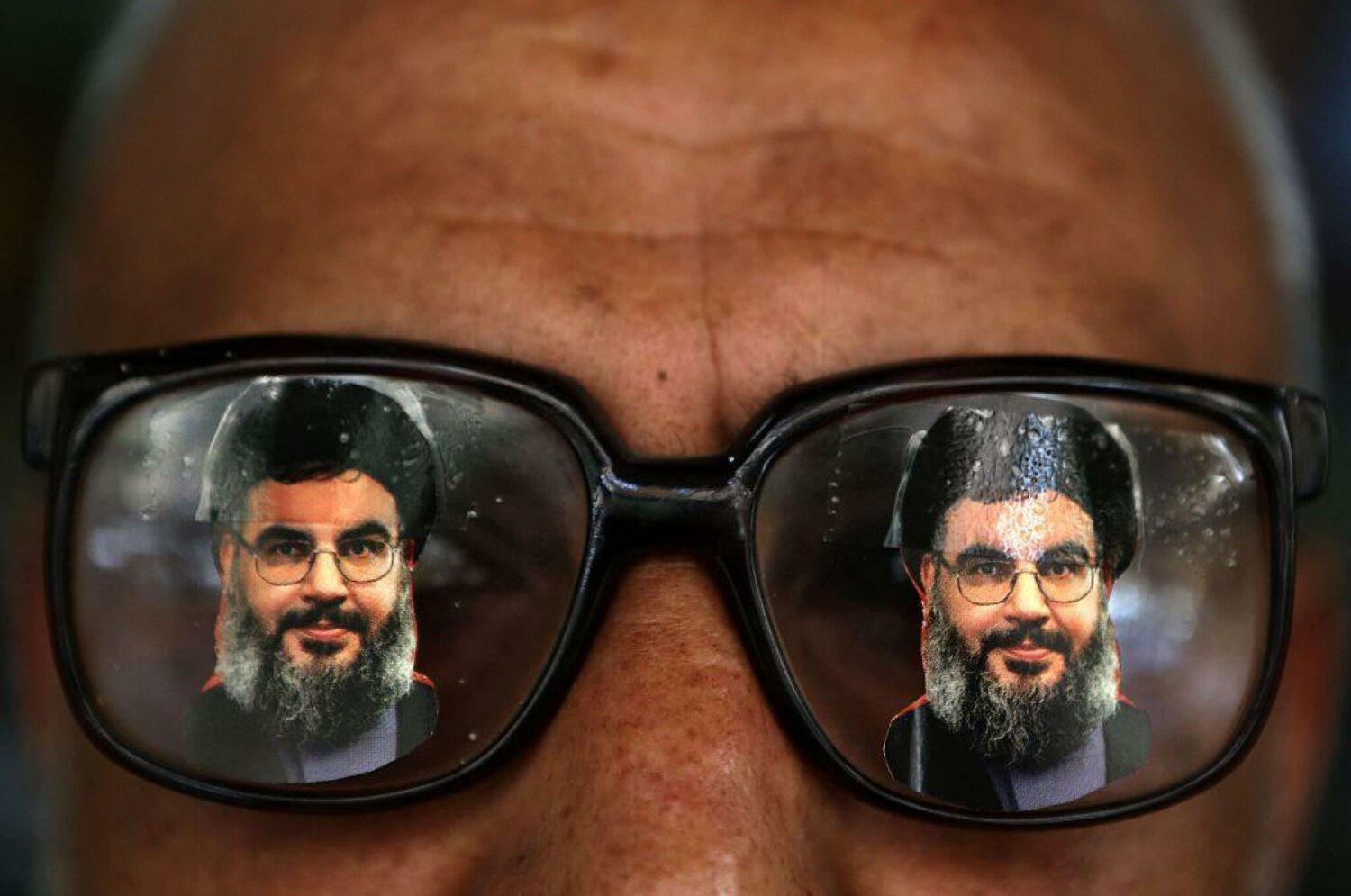
Joseph Daher explains this in his book The Political Economy of “Hezbollah” in Lebanon in remarkable detail. He presented the development of his idea by examining three case studies in areas where Hezbollah enjoys great influence and control: the management of urban policy in the municipality of Ghobeiry, attitudes to rent control laws in Beirut, and agricultural policy in the Bekaa Valley.
In addition, the author believes that all of this had a major impact on shaping the class anatomy of Lebanese society, especially at the level of the Shiite population, which led to the formation of what was called a “new Shiite bourgeoisie” within the various sectors of the economy.
This also contributed, in one way or another, to “rebalancing sectarian power at the country level.” However, he added, this did not allow the concept of justice and fair competition to be implemented among the members of one society, and thus many Shiites remained in a state of marginalization in all important rural and urban areas after that.
The plan of the parallel economy and infiltration of state institutions was demonstrated by Hezbollah’s establishment of the “Al-Qard Al-Hassan” Association following the Israeli invasion of Lebanon in 1982, and its licensing from the Lebanese Ministry of Interior in 1987.
Although it practices banking work, this association is not included in the list of banks licensed by the Bank of Lebanon, and information indicates that the “party” allocates a large budget to the association and distributes some of its members’ salaries through it.
Lebanese media sources indicated that the institution recently introduced the automated teller machine (ATM) service and began adopting it in some of its branches spread across Lebanese territories, adding, according to what was reported in the book, that “the ATM card provides the subscriber with several facilities, including withdrawing funds in US dollars for customers who have an account in dollars,” which Raising major questions about securing liquidity at a time when Lebanese banks are reducing their services and setting low ceilings on withdrawals in Lebanese currency and dollars, according to press and media statements.
“Hezbollah” and brainwashing
Likewise, the Lebanese writer and journalist, Hanna Saleh, links the emergence of “Hezbollah” as a direct result of Iran’s political investments in the Middle East, through the formation of the militia arms that Tehran created to accumulate Iran’s assets in its expansionist regional policy and its hegemonic project.
“Hezbollah” mobilizes in the heart of this militia, alongside the “Popular Mobilization Forces” in Iraq and the “Houthi” militias in Yemen and others, which are external defense lines for Iran that it uses to confront the West and the United States of America.
Saleh continues in the context of his statements to Al-Hal Net, saying that since the inception of “Hezbollah” it has relied on what is known as the “axis of resistance” since the mid-eighties to the political authority in Syria and Tehran, and from the first moment it seemed consistent with the mentality and doctrine of the “Guardianship of the Jurist.” “By forming organizations on the borders of state institutions.
Through this, we find that “Hezbollah” in Lebanon established an army and a number of institutions as a backup within the state, and through this, the judiciary, courts, prisons, and most importantly in the “Hezbollah” system gain insight into the economic aspect and financial work.
Through this, you find the “Al-Qard Al-Hassan” Association, which is Hezbollah’s bank, which relied on “brainwashing a broad Lebanese group” in order to place their money with it, and it became a major financial and economic movement covering its activities. However, Hezbollah, as a major organization in the Quds Force, undertakes tasks that are far greater than it can afford inside Lebanon.
Therefore, it relies on Iran for exorbitant sums amounting in some estimates to hundreds of millions of dollars, as well as the role of “Hezbollah” in the drug smuggling operation and the smuggling of “Captagon” in agreement with the Syrian army, and all the prohibited cases that generate large amounts of money for the Iranian militias, according to the Lebanese journalist Hanna. righteous.
In his statements to Al-Hal Net, Saleh formulates the context of Hezbollah’s work within the gap of Middle Eastern countries in political and democratic practices through the countries of the region’s keenness to establish armies and security forces to protect the seats of the system of power.
Likewise, Hezbollah benefited from being an alternative to the state institution in its modern sense, which monopolizes the tools of power according to Max Weber’s theory. However, the reality of Hezbollah and its counterparts is that they dominate power and exercise it from outside it. This means that it dictates to the country the visions of real authority as a de facto military, political, economic, and financial force from outside the state.
Parallel economy
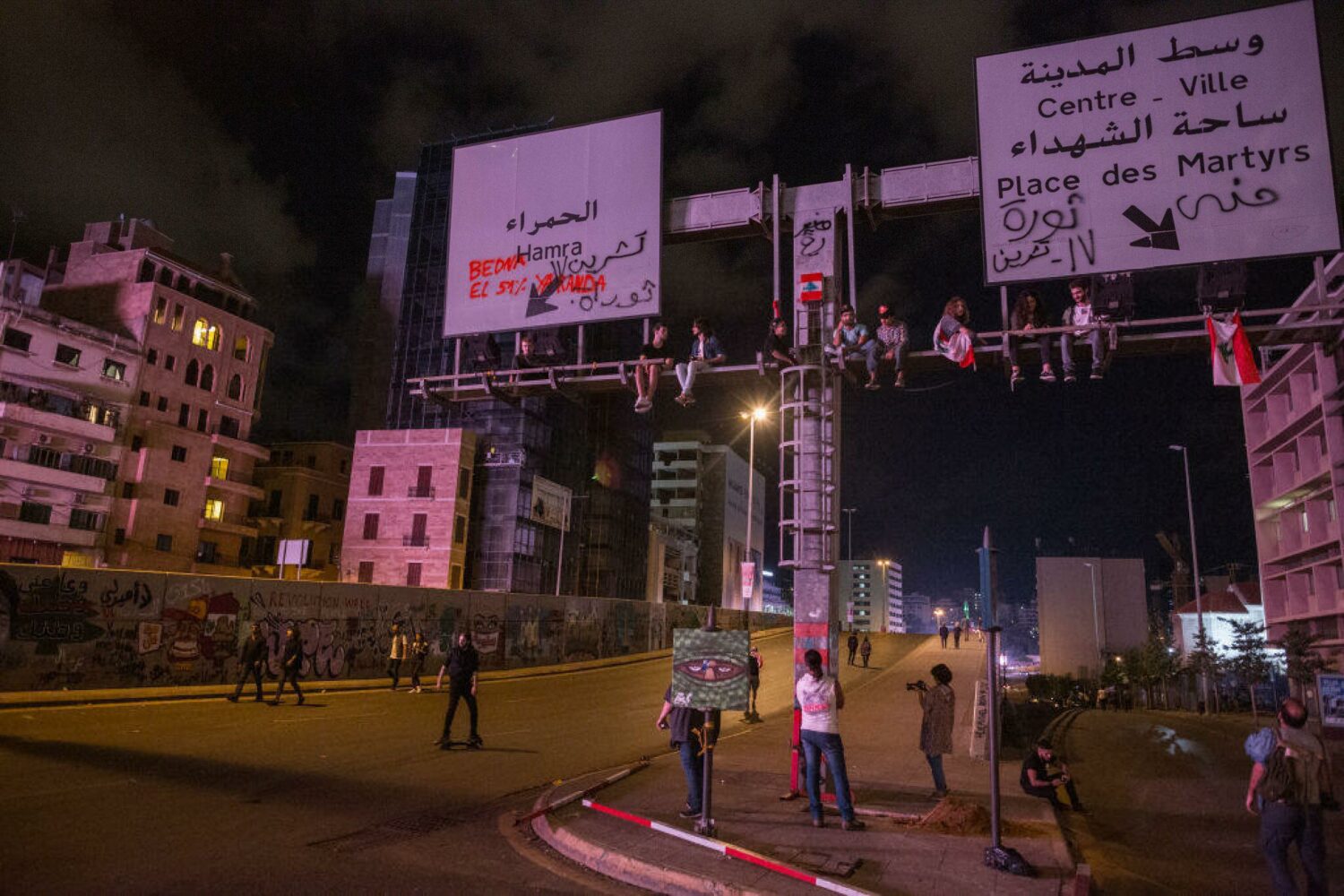
Hanna Saleh refers to a political framework during the outbreak of the events of October 2019, against corruption and dependence on external decisions such as Iran, as Hezbollah became aware of the concern at the time that this was the first time that the Lebanese people moved from the far south to the north and across all sects, transcending all traditional divisions. The regional, regional, sectarian and security squares that it formed, and it seemed at the time that the movement would lead to the weakness and dissolution of the movement.
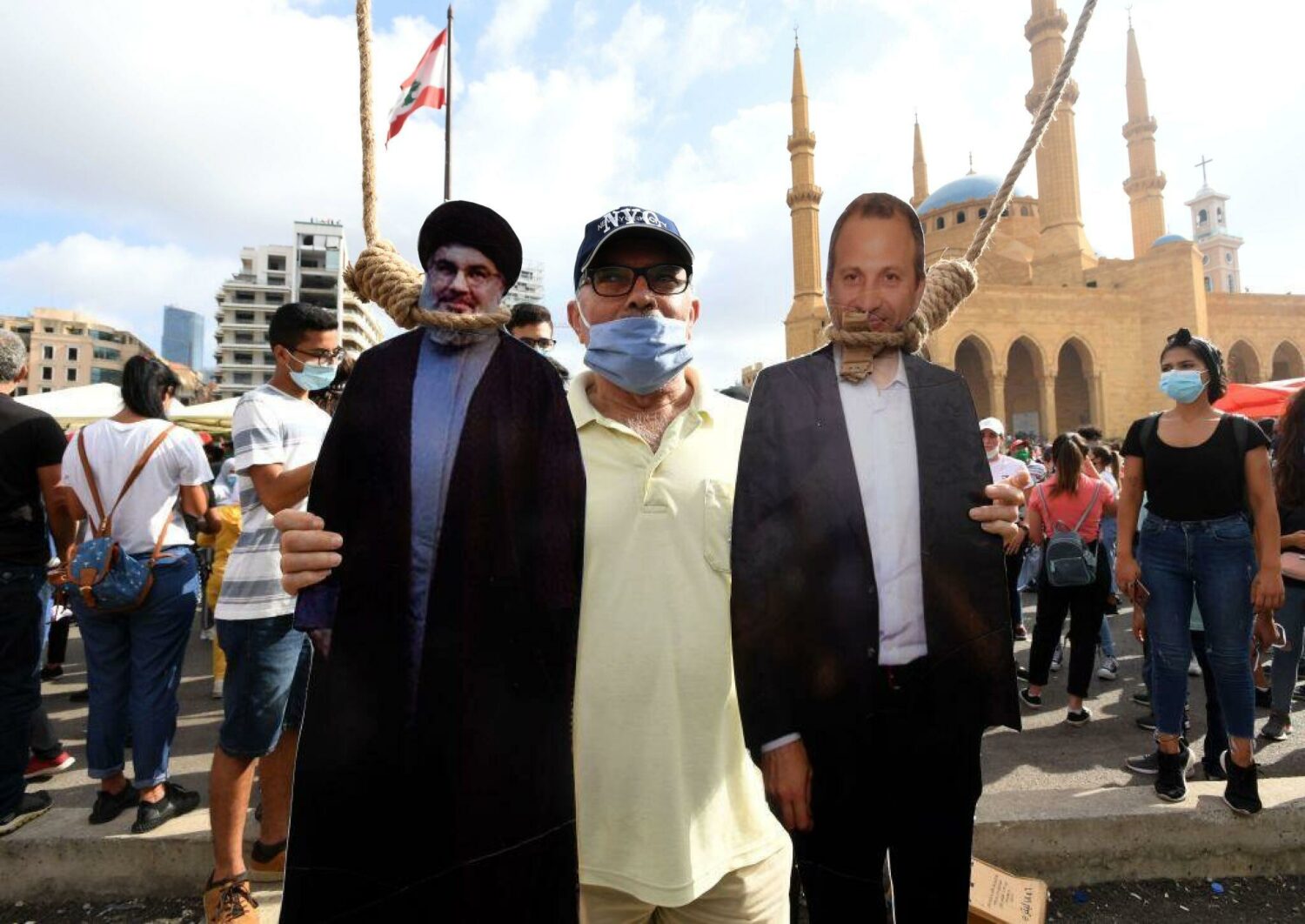
Certainly, Hezbollah cannot threaten an entire people in the street, and bring out hundreds of thousands of them every day in all regions. Therefore, “Hezbollah” was aware of the danger from the first moment, and began to single out the revolutionary groups, burning tents, blocking squares, preventing gatherings, and attacking the demonstrators, while the political class decided to disappear.
At that time, Hezbollah appeared, the first and main defender of the sectarian quota system, which distributes shares among the pillars of the political class, and the cost and returns of this are always in the pockets and future of the Lebanese.
In his statements, Hanna Saleh goes on to say that Hezbollah’s social base centered around the poor Shiites and some components of the petty bourgeoisie, but it later expanded among the components of the Lebanese Shiites to include all social strata, which gave it great political and social support among the growing Shiite bourgeoisie present at home. Lebanese.
The Lebanese journalist concludes his talk to Al-Hal Net by saying: Through all of this, Iran was able to create a parallel state in the Lebanese space through Hezbollah, and this is similar to the theory of the “guardian jurist” in Iranian sectarianism, which comes above the state in its political sense, as he did. With Hezbollah in Lebanon.
The latter possesses weapons, money, and a parallel economy, contrary to the idea of the state in the modern era, meaning the exclusivity of weapons, the state’s monopoly on violence, and the regular army’s protection of political borders. In Lebanon, this happened through Hezbollah.
In short, Hezbollah, Iran’s local agent in the region, sought to undermine the state and its administration by controlling its joints and dominating its depth and vital institutions.
In all cases, it is the idea of contemporary political Islam, historically, which does not have visions for creating and establishing a state through which it can exercise its rule. Rather, it seeks all the time to jump on the modern state, towards which it harbors hatred and hostility, and describes it as “infidel,” and then Islamizes it immediately. This is precisely what happened in Iran, and it turned into a political desire among similar forces, which they failed to achieve repeatedly, as happened in Egypt and Tunisia after the Arab Spring.
Therefore, we find “Hezbollah” in Lebanon, just as there is the official economy, the state banks, and the ministers of economy and finance. There is a parallel economy and penetration into the state structure, represented by ministers and officials through “Hezbollah” and its institutions, which represent a symposium of all state agencies.
Through this, you can verify the fact that Hezbollah and Iran possess, in one way or another, several economic, commercial, and financial organizations and institutions around the world to manage smuggling, specifically with regard to oil and the method of selling it, and to utilize their international relations, especially with Russia and Venezuela, to escape Western sanctions, in the sense of inaugurating a system. An economist on the margins of the known and accepted economic system.