


اخبار سوريا اليوم – وطن نيوز
سوريا اليوم – اخبار سوريا عاجل
W6nnews.com ==== وطن === تاريخ النشر – 2024-01-18 12:22:21
Yesterday, Wednesday, the United States reclassified the “Houthi” militia in Yemen as a “global terrorist group,” in a decision that will take effect thirty days from now, according to what the State Department announced, and said in a statement: “The American government will conduct broad communication with the parties concerned, and those providing Aid and important partners to facilitate humanitarian assistance and commercial import of essential goods in Yemen.”
It seems that this classification comes within the framework of the American role that it is playing to confront the “Houthi” threats in the Red Sea, as it aims to undermine the activity of the “Houthi” militia supported by the Iranian “Revolutionary Guard”, which is militarizing international shipping and continues to pirate commercial and oil ships. In addition to sea mines. These activities, which threaten Western and American interests, affect oil prices in the world and exacerbate the regional and international situation.
This step has serious political and economic repercussions in the future for the Houthi group and the region they control, as it undermines their dreams of transferring their authority to a system whose legitimacy is recognized by the United Nations. The dreams of its leader, Abdul-Malik al-Houthi, to visit countries of the world as legitimate officials, with the red carpet laid out for them and receiving congratulations on the occasion, have evaporated. National holidays, and they will remain just a militia ostracized by the international community that rules a part of Yemen by force of arms, and only meets with the Iranian guide, Ali Khamenei, and Iranian leaders.
“Houthi” returns to the blacklist
The US State Department said that it is working to limit the repercussions of classifying the “Houthis” as a terrorist organization on Yemenis and that it will take additional steps against the “Houthis” when necessary. She also confirmed that classifying the Houthis as a global terrorist organization would limit their funding, pointing out that the Houthis had strengthened their capabilities after being removed from the terrorist list for the first time. The US State Department also pledged that Washington would impose sanctions on anyone who supports the Houthis.
Meanwhile, an American official said that the goal of classifying the “Houthis” as a terrorist group is to “eliminate their financing and arming,” noting that their attacks on American military forces and international ships in the Red Sea and Gulf of Aden are “a literal definition of terrorism.” The American official explained that Washington wants this classification to force the Houthis to move away from Iran.
While Iran denies accusations of involvement in planning the attacks launched by the “Houthi” militia on commercial ships in the Red Sea. But the British newspaper “The Telegraph” reported that the “Houthis” received training at an Iranian naval academy under the supervision of the “Revolutionary Guard” forces.
The British newspaper report said that about two hundred members of the “Houthis,” which control large areas of Yemen, received training in Iran at the hands of the “Revolutionary Guard” at the “Khamenei” Academy of Marine Science and Technology in the coastal region of Zibaknar, according to what it reported from defense sources.
The report explained that the details of the training collected by intelligence sources in Iran “show Tehran’s direct involvement in expanding the conflict in the Middle East,” according to what was reported by the Al-Hurra website.
A special training course was allocated for foreign fighters, including members belonging to the “Houthi” group, and it lasted for about six months under the leadership of the “Quds Force” of the “Revolutionary Guards.” The first course for the “Houthi” rebels in marine science and technology was launched during the month of January. From the year 2020, the British newspaper said that the Houthis were “housed separately from other students who were prevented from interacting with them to prevent the leakage of intelligence information.”
“The Houthis” and the Iranian propaganda war
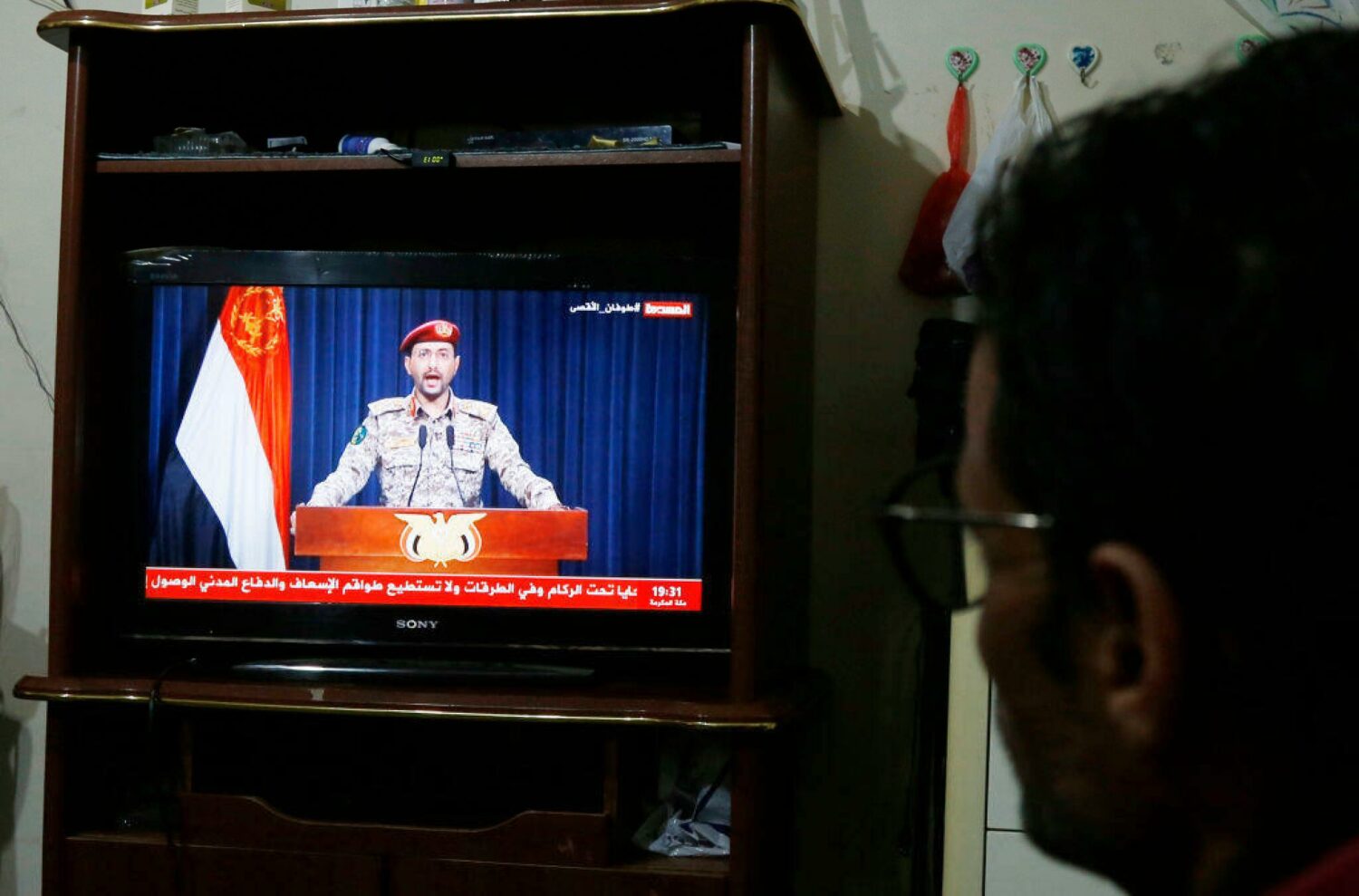
Speaking to Al-Hal Net, former Pentagon official David De Roche said that understanding the United States’ decision to list the Houthis as a terrorist organization comes in the context of the fact that President Joe Biden’s administration is forced to take some kind of military action against them to ensure their freedom. Navigation.
But according to De Roches, the current administration does not want to divide Biden’s base in the “Democratic” Party, which does not want another war in the Middle East. The president must show members of his party that he has done everything he can to avoid war, and that means using sanctions.
The sanctions are being used reluctantly as a measure to prevent the Houthis from expanding their limited missile launch capabilities in order to ensure freedom of navigation in the Red Sea.
Former Pentagon official, David DeRoche.
De Roche, a professor at the Near East and South Asia Center for Strategic Studies at the National Defense University in Washington, points out that the issue of the recent Houthi militia’s complete connection to the Gaza war is nothing more than a Houthi pretext and propaganda.
It should be remembered that the Houthis fired on US Navy ships in 2016 when there was no war in Gaza; They did not fire on ships in the Gaza conflicts of 2019 and 2021. In reality, the work of the “Houthis” revolves around strengthening their control over parts of Yemen and trying to obtain international recognition. Gaza is only a pretext.
A tactical role for Tehran
In this context, all of this is consistent with the organic ties that extend between the “Houthi” militias and Tehran and the extent of the former’s loyalty to achieving all of Tehran’s strategic goals in the Middle East region, and deepening the image and influence of the Shiite Crescent geostrategically, as well as working towards the field ability to intensify the “Houthis” of their strikes. This has been evident in recent weeks across the borders of the Red Sea against the backdrop of the conflict that has been raging in Gaza since the seventh of last October.
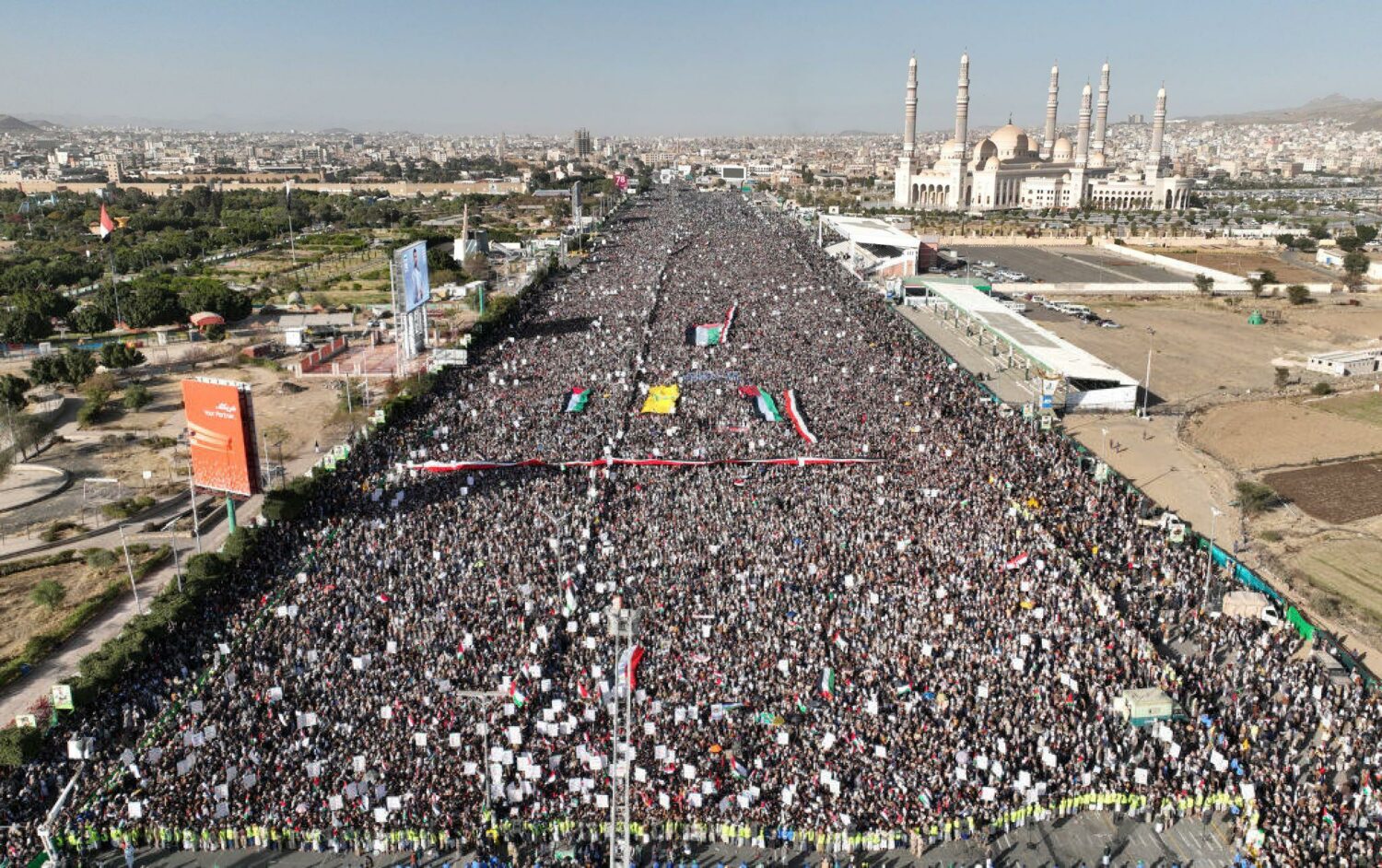
In these operations, the “Houthis” ostensibly target commercial ships linked to Israel or heading to Israeli ports near the strategic Bab al-Mandab Strait at the southern end of the Red Sea. They say that they are launching these attacks in solidarity with the Gaza Strip, while deep within that they are playing a tactical role on behalf of Tehran through the impact and repercussions of these strikes on the level of global trade. These attacks threaten navigation in the waterway through which about 12 percent of global trade is transported.
It is extremely difficult to deal with the issue of the Houthis entering the war on Gaza in a context far from Iran’s tendencies to expand the circle of conflict and expand the hot fronts.
Which leads to a regional burden that leads to a further deepening of the crisis inside Yemen and the geography of the Middle East, which places the scenarios for American dealings with Tehran and its affiliated militias towards a lot of contradiction, against the backdrop of the multiplicity of burning arenas and the contradictions in their foundations and determinants, given the clash of those arenas. The complexity of its paths and the overlapping of its solution mechanisms.
This was preceded by the United States’ decision to establish coalition forces from ten countries (America, Britain, France, Norway, Bahrain, Canada, Italy, Spain, the Netherlands, and the Seychelles). Battleships and fleets are gathering off Yemen to protect commercial ships coming from China and Asian countries, and they should undertake the task of war on the “Houthis” and eliminating their threats in the Arabian Gulf and the Red Sea.
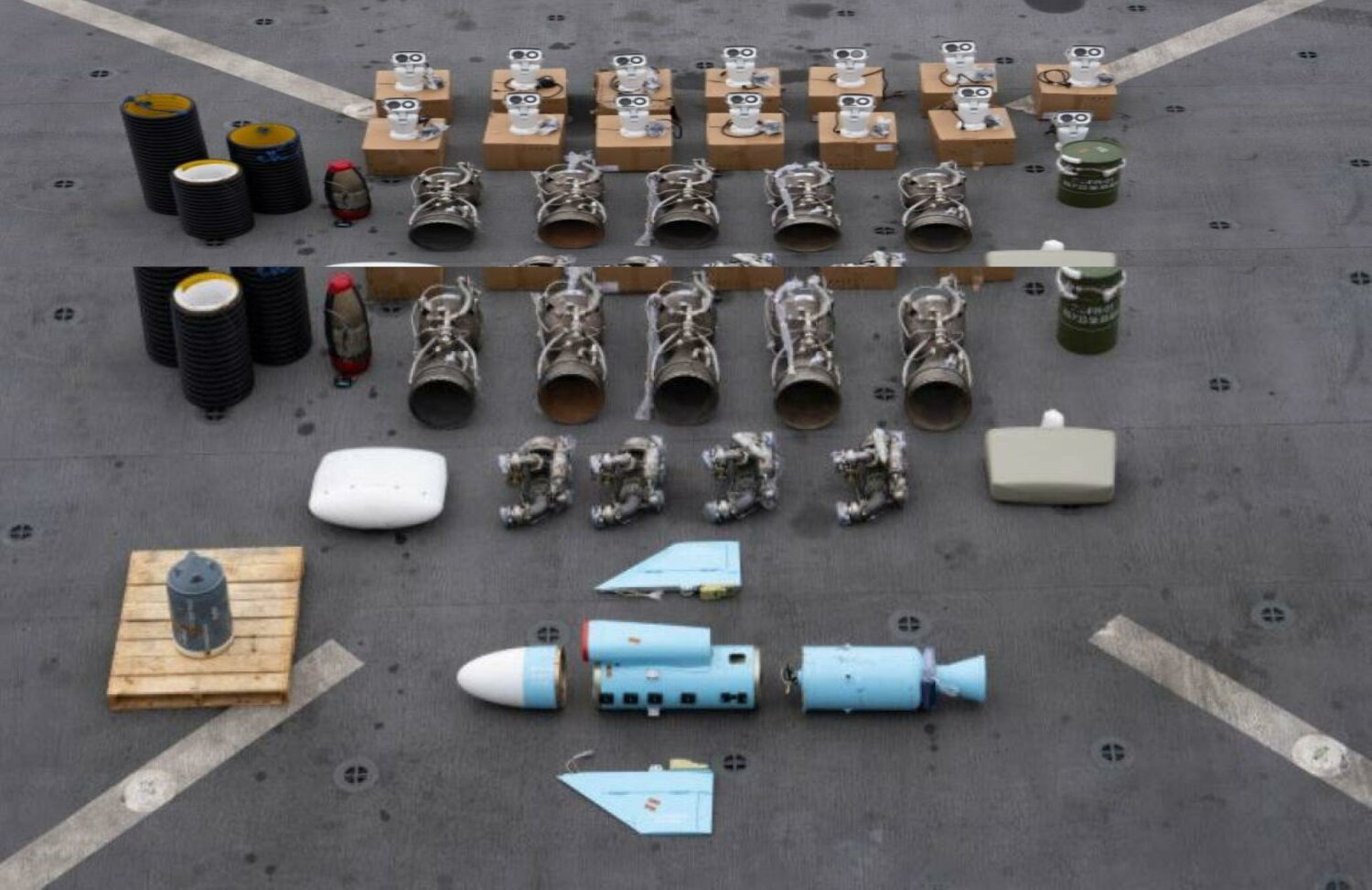
Through the Gaza War, Iran also worked to move its arms extending from the borders of the White Sea and Gaza to the southern Red Sea. Through this, the American forces and the international coalition confront these movements at a level that varies in severity according to the level of activities of the armed factions affiliated with Iran, whether in Syria or Iraq, and confront that according to the requirements of the situation, especially with regard to issues such as energy sources, international trade, its maritime routes, and what threatens it in terms of terrorism linked to a political project for this country or That axis.
Therefore, the context of the war in Gaza, by tactical necessity, required that the Hezbollah front, through the Lebanese-Israeli border, and against the background of the principle of “unity of resistance areas,” revolutionize and heat up that front, followed by Tehran’s tactical approach by the “Houthi” militia escalating and heating its front. Considering that the repercussions of this are less costly than the threat of Hezbollah’s presence and its effects locally and regionally.
An American strategy to repel Iran
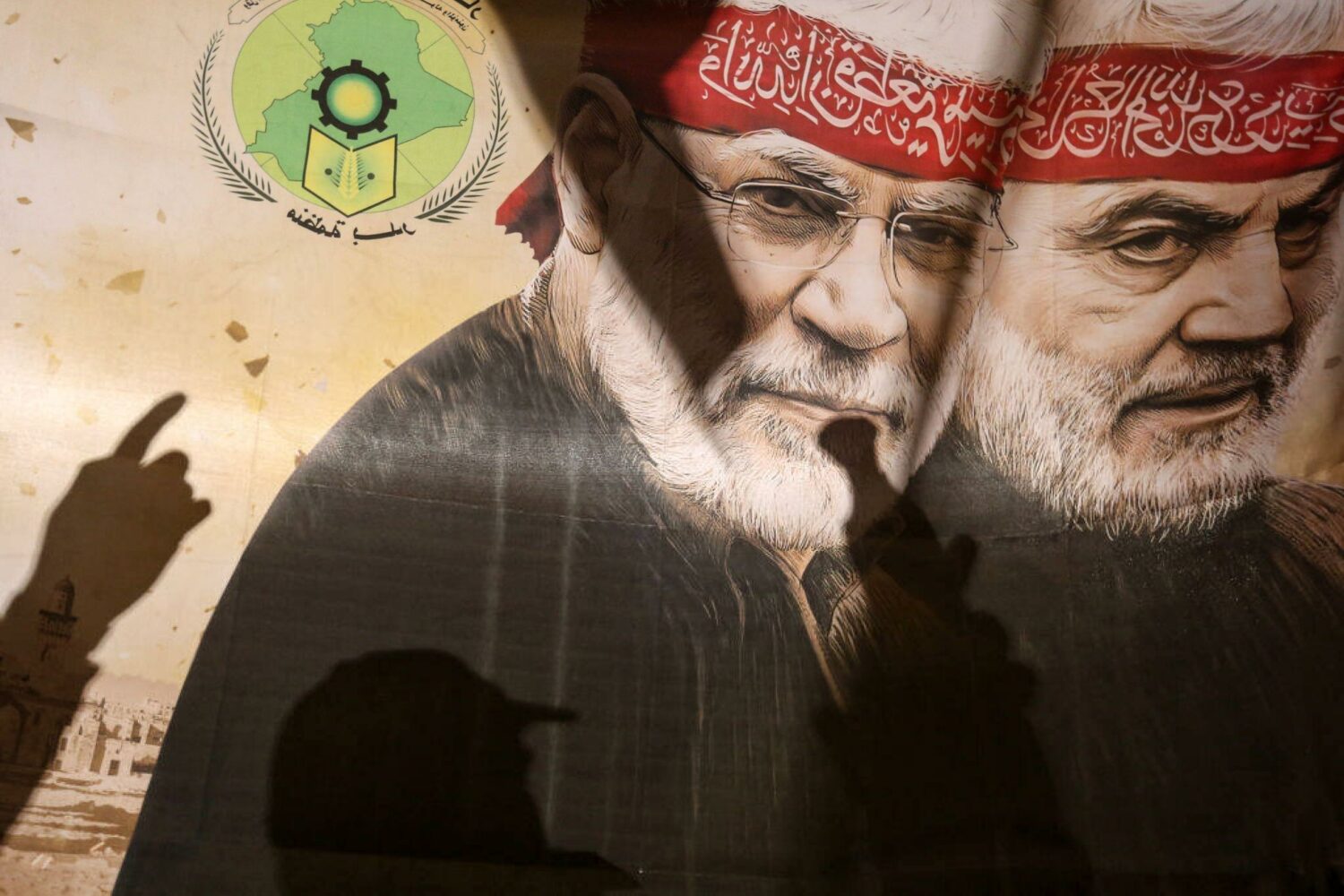
Based on this, Iran is seeking to integrate ties with its agents in the region, and it certainly aims to reduce pressure on its main symbol in Lebanon, “Hezbollah,” and work to transfer the influence towards another region through the “Houthi” militia and the geography of the Red Sea.
This is what you can consider with the statement of the US National Security Advisor when he said: “If the Houthis stop their attacks in the Red Sea, Washington will consider lifting their classification as a global terrorist organization,” with the aim of isolating that militia from the Iranian regime or stopping the “Houthis” from their attacks deep in the sea corridor. the Red.
In this context, the Yemeni writer and political analyst and member of the Yemeni consultations in Riyadh, Dr. Thabet Al-Ahmadi, points out that the “Houthi” group is a terrorist group in the eyes of the Yemeni people, in the eyes of neighboring countries, and in the eyes of the Arab League.
Al-Ahmadi continued, saying in his statements to Al-Hal Net: We, the Yemeni people, will continue to deal with “Houthi” as a terrorist, as it contradicts the interests of the Yemeni people, the difficult reality in which the Yemeni people live, and putting the trust of the international community, or the major players, at stake and prompting everyone to say A decisive chapter and decision regarding this militia, which is ravaging the reality and future of an entire people and is now threatening global trade and the safety of an important waterway like the Red Sea.
On the other hand – and the Yemeni researcher Thabet Al-Ahmadi is still talking – the decision is not yet final, and there are thirty days to begin implementation, which is enough time to negotiate with Iran specifically, explaining that the “Houthis” may be removed from the list, and it may continue, taking into account Considering that influencing the decision must be accompanied by several more decisive decisions against Iran specifically, as it is the main party that moves its agents in the region.
He added: “The terrorist Houthi group does not care about the matter; As a criminal gang, we have seen their behavior during the last period following their inclusion on the list at the end of the term of former US President Donald Trump, and we also saw their behavior at the beginning of the term of President Joe Biden, who removed them from the list, and today he brings them back with the same pen with which he crossed them out.”
Artificial pragmatism
Regarding Bab al-Mandab, we must know that what happened during the last period were merely “skirmishes,” and the “Houthi” wanted to score some “imaginary and pragmatic goals,” to increase his popularity, and escape from internal and external entitlements imposed on him, and the Gaza war represented a refuge for him. Then the Red Sea events that he created, and still are, because the Yemeni public almost “destroyed him by demanding the salaries that he had been stealing for years,” says Thabet Al-Ahmadi.
For his part, Dr. Kamal Al-Zaghoul, a former international observer at the United Nations and a researcher in American affairs, said that the decision to include the “Houthis” on the terrorist list was expected, in my estimation, for several reasons, including the pressures of the American primaries, the defense of Israel, and the defense of the planned American strategy. Already in the Middle East and the world, and the global economy was also affected by what was happening there in the Red Sea.
This will affect the strategy in the Red Sea; Because the “Houthis” are not affected by financial sanctions because they do not have assets abroad, because of their geographical location on the sea, and because of the sensitivity of the global economy after the Ukraine war, the Gaza war, and the effects of the “Corona” virus on international monetary policy.
Al-Zaghoul continues in his statements to Al-Hal Net, saying: “From this standpoint, the decision to include the Houthis’ name on the terrorist list can be understood by saying that it will not deter them from their goals because they are still not recognized internationally, and they have nothing to lose and they have fought many wars and have the same spirit.” Long in wars.
However, the problem is that Yemen imports approximately 90 percent of its products from abroad. Therefore, any escalation towards a comprehensive war or towards an intention to siege will lead to an exacerbation of the humanitarian crisis, and for Iran’s proxies, Iran will not abandon their support as long as there is a threat to eradicate “Hezbollah” in Lebanon and a threat of bombings occurring on Iranian soil, meaning that Iran wants to secure “Hezbollah.” God” and its agents in Syria by ending the war on Gaza.
Therefore, it considers Yemen as a means of pressure to end the war, and the pressure from Iran will increase. Because we are approaching negotiations to retrieve the Israeli prisoners, and on the Western side, what is paving the way for the conflict in the Red Sea is Britain and the strikes are carried out by America. If there is a comprehensive war, Britain will be the encourager without accounting for the results, as it did before during the war on Iraq, and Israel will be the root of the dilemma. Where I started in Gaza.
Al-Zaghoul concludes his statements by saying that America set a thirty-day deadline in the hope of calming the scene of events; Because it is practically and realistically putting pressure on Israel at the present time to calm the horizon of the conflict and freeze the situation on the ground. It has previously announced that the tension in the West Bank and the Gaza Strip must end at the end of this January, and move to the stage of precise goals here and there and not enter into a war in the north, and therefore Codifying the decision with a time limit is linked to that strategic vision of the United States.

