


اخبار سوريا اليوم – وطن نيوز
سوريا اليوم – اخبار سوريا عاجل
W6nnews.com ==== وطن === تاريخ النشر – 2024-01-22 14:26:36
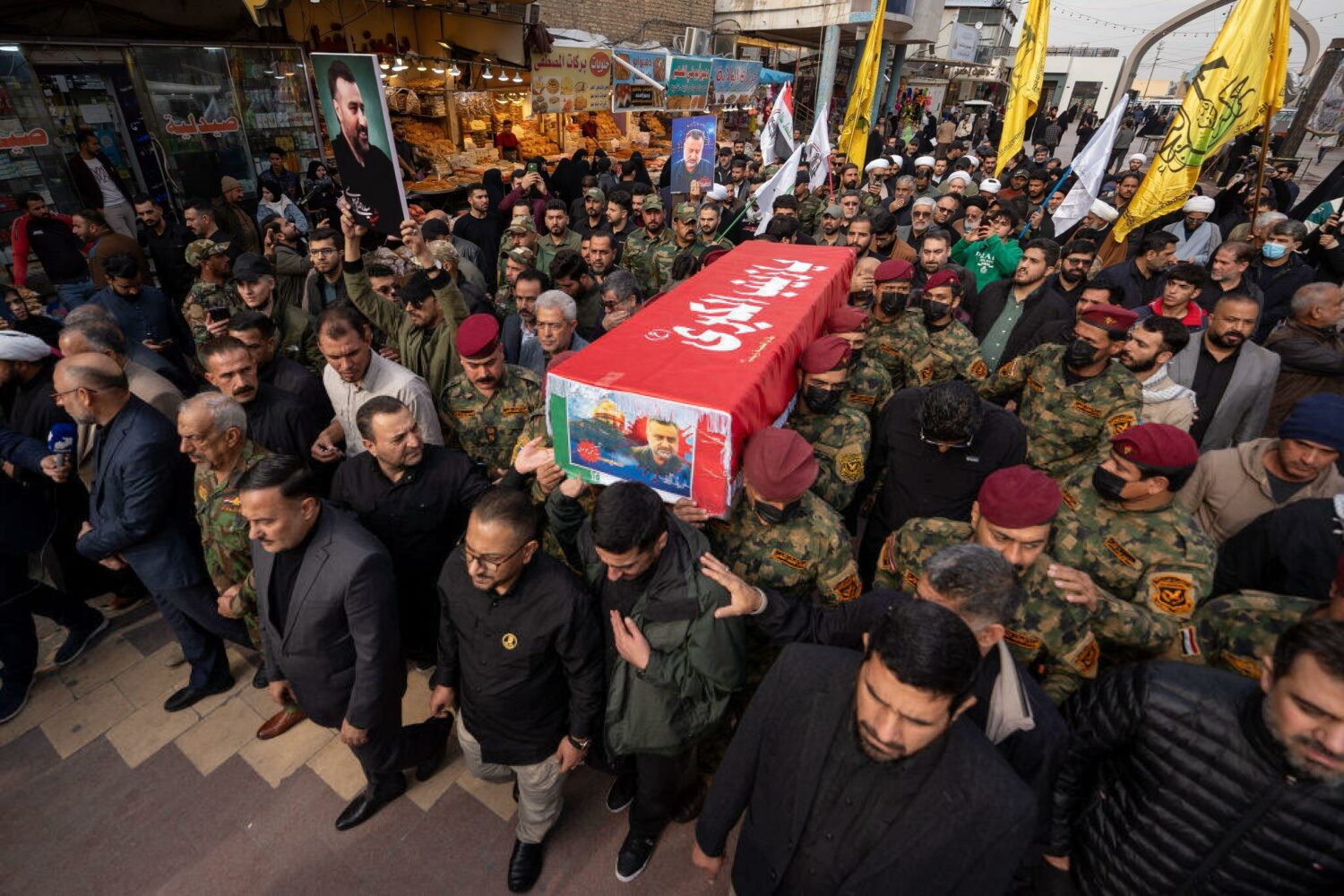
Not a month had passed since the assassination of the prominent leader of the Iranian Revolutionary Guard, Radhi Mousavi, by an Israeli strike in the Damascus countryside, until the capital, Damascus, woke up the day before yesterday, Friday, the 20th of this month, to a severe blow inflicted on the Iranian “revolutionary”, which was 6 senior commanders were killed, the most important of whom was the Quds Force intelligence official in Syria, Sadiq Amidzadeh.
The killing of the six leaders came as a result of an Israeli missile strike that targeted a residential building that was leveled to the ground that was being used by the “Revolutionary Guards” in the Mezzeh neighborhood (western villas) west of Damascus, an area that is located within a very fortified and complex security square and in which a number of embassies and international organizations are gathered. It is only 2.8 kilometers from the Presidential Palace, and approximately 2.6 kilometers from the Iranian Embassy.
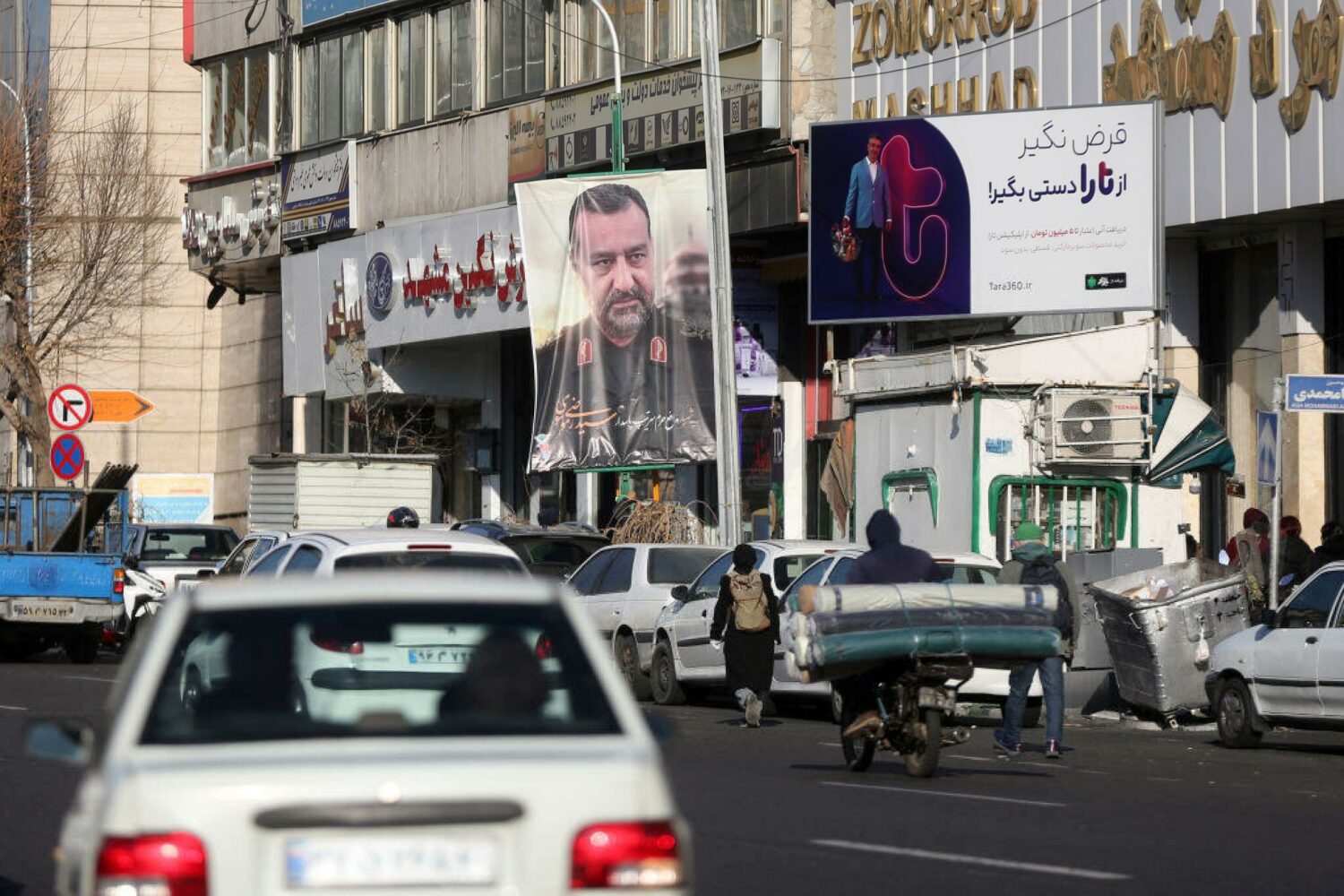
Perhaps it is funny to say that the meeting of Iranian leaders in the building was aimed at discussing Israeli assassinations against Iranian officials in Syria, especially after the assassination of Radhi Mousavi in Sayyida Zeinab, south of the capital, Damascus, who is considered the black box of the “Quds Force,” and the most important figure after Qassem Soleimani. .
Who is “Hajj Sadiq”?
The “Revolutionary Guard” published through a statement the names of its dead, whom it describes as “advisers,” and they are Hojatollah Amidar, also known as “Amid Zadeh,” and his nom de guerre is Haj Sadeq, Ali Agha Zadeh, Hossein Mohammadi, and Saeed Karimi, while the Iranian “Mehr” Agency reported that Among the advisors is the Quds Force intelligence officer in Syria, Sardar Haj Sadiq Omid Zadeh, nicknamed “Hajj Sadiq,” with the rank of brigadier general, and his deputy, Gholam Muharram, nicknamed “Jihadi Haj Muharram.”
Sadiq’s responsibility was the intelligence aspect within the “Quds Force” of the “Revolutionary Guard” in Syrian territory, and according to intelligence documents included in a report by the “Washington Post” newspaper in June 2023, “Sadiq Zadeh” was charged with the task of escalating attacks against the US forces. United States inside Syria.
Zadeh specifically identified Humvee and Cougar armored vehicles as specific targets, and he is also responsible for sending unidentified elements to take reconnaissance photos of the roads used by American forces in northern and eastern Syria.
A simple look at search engines shows that Sadiqzadeh was rarely seen. He was one of 48 Iranians captured by the “Al-Baraa Brigade,” one of the opposition organizations in Eastern Ghouta, on the road to Damascus International Airport in 2012, before they were released through Qatari mediation and in exchange for a large sum of money that he received. The opposition faction at the time.
His name was first published by the People’s Mojahedin Organization of Iran (PMOI) in 2012 as a terrorist among a group of terrorists exported to the mullahs’ regime to suppress protests in Syria.
Security breach
The Israeli targeting of Iranian figures who are considered to be first-ranking leaders in the Iranian Revolutionary Guard has raised widespread questions about how Israeli aircraft hunt down these intelligence figures, who are supposed to be surrounded by extensive security reinforcements and precautions that make it difficult and impossible to reach them, especially since Israel has previously It hunted one of the Iranian leaders, Mousavi, in a scene completely similar to the scenario of hunting Sadiq.
Perhaps the location of hunting Sadiq with his companions is what confirms that Israel is adopting a policy of deterrence that undermines Iran’s ability to use Syrian territory in any place it deems a threat to its security. This is what we saw clearly: it targeted Sadiq within a security square that is the most complex in terms of fortification and control, completely reminiscent of the assassination of the former leader. In Hezbollah, Imad Mughniyeh, in 2008 within the Kafr Sousa area, which includes high-level government and security headquarters and luxury residential units for senior officials and state employees.
It is well established that the intelligence strategy requires providing vast information about the target to be hunted, along with the possession of all technical and precise equipment and smart weapons. Despite this, the occurrence of gaps and failures, even if they are rare, within any assassination operation is very common in Israeli operations.
However, what is notable is the success of all Israeli assassination operations so far, which necessarily means the presence of a party from the top structure of the Syrian political authority and influential figures in the security services who scrutinize the intelligence information before it reaches the Israeli “Mossad”, which tends to activate the assassination wing whenever the need arises.
Following the Mezzeh incident, Ismail Kothari, a member of the Parliament’s National Security Committee, said in an interview on the “Iran Observer” channel, in response to whether the Damascus attack was due to an intelligence penetration of the Damascus government and the “Axis of Resistance,” that “Israel was in Lebanon and Syria, and there are agents.” In the neighborhood, spy agents must be arrested in Damascus.”
Meanwhile, the Iranian journalist, Seyed Sadeq Hosseini, was accused of… His account On the “X” website (formerly Twitter), Russia clearly leaked information to Israel, stating that “since the Russian presence in Syria increased, we have witnessed an increase in assassinations and air strikes launched by Israel against Iranian forces,” and explaining that the two recent successful assassinations (Radi Mousavi and Haj Sadegh Omidzadeh), led to an increased need to reconsider relations between Iran and Russia in Damascus.
As for the Iranian writer and political researcher, Mossadegh Pour, he saw in an interview that Israel’s liquidation of the commander of the “Quds Force” intelligence in Damascus is a painful blow, and that there is an intelligence penetration on Syrian soil, and the Iranian side always faces this problem on Syrian soil and not in other places where it There is Iran.
Controlling Iranian influence in Syria
It is not unlikely that the Syrian authorities will give the coordinates of the locations where Iranian Revolutionary Guard officers are stationed, as this is part of its cooperation with Israel in a way that meets its requirements and serves its interests and its continued presence and maintenance of power in Syria, especially since the Damascus government, after being rejected by the international system, knows The key to international acceptance is in the hands of Tel Aviv.
On the other hand, Israel welcomes the official cooperation from Damascus, and the transformation of its relationship with it, which has been going on for nearly half a century, into a more formal nature. It realizes that it is the best option for its national security compared to any actor that passed through Syria during the past decade, which is the realization that prompted it to prevent Her fall.
The “Israel Hayom” website had published a report in April 2022 about a multi-stage plan indicating that the Israeli Prime Minister, Benjamin Netanyahu, sought to re-legitimize the Syrian President, Bashar al-Assad, through a regional initiative to return the latter to the “League of Arab States.” .
In return, an agreement obligating him to “withdraw Iranian forces” from Syria. However, in light of the failure of the elections in Israel to produce an agreed-upon government and the necessary change in the top of the pyramid in the American presidency following the presidential elections that toppled Trump, this plan was written to remain in the drawer.
For its part, the “Hmeimim” base witnessed, in December 2020, a meeting between Bashar al-Assad and an Israeli security official, in the presence of Russian military and intelligence, and according to reliable information, al-Assad presented several demands, including obtaining financial aid to pay off the Iranian debt, and thus opening He has the opportunity to expel Iran from Syria, and support him to stabilize his rule, which is in line with Israel’s demands to remove Iran from Syria completely.
Israel’s focus on selectively targeting the leaders of the Revolutionary Guards can be understood as an attempt to distance Assad from its conflict with Iran, which has now enjoyed influence within the political and military class in Syria, and which continues to demand from Assad its debts amounting to about 50 billion dollars, while feeling dissatisfied with Damascus’s allocation. Russia has the majority of commercial opportunities in the country, despite Iran’s clear economic footprint in diversifying its investments, and its ability to extract major sovereign concessions from Assad, who in turn refrains from implementing dozens of economic agreements he signed with Iran on the one hand, and the response to the Israeli strikes that targeted its security headquarters on the other hand.
The “Second Administration for West Asian and North African Affairs” had prepared a 27-page report in preparation for Raisi’s visit to Damascus, which was scheduled for December 27 and 28, 2022, but the visit was postponed at that time due to Assad’s refusal to sign drafts of an agreement that included treating the Iranians in Syria in a similar manner. Syrians in specific areas, which confirms Assad’s desire to break away from the Iranian mantle or at least set limits to its extensive interventions.
The strategic analyst, Colonel Malik Al-Kurdi, saw that Al-Assad was subjected to a strong wave of criticism from his supporters before his opponents over those economic agreements that he concluded with Iran and Russia, which in their entirety strip the Syrian state of the last vestiges of its sovereignty, weaken it for a long time, and reflect negatively on the life of the future citizen who lives… Hoping for an end to the Syrian ordeal and an exit from the pit of economic deterioration.
He pointed out in his interview with Al-Hal Net that Bashar al-Assad realized that he was in a big dilemma as he could not move forward with the implementation of his pledges to pay the war bill, so he found in procrastination an opportunity to get rid of it in the hope that the Iranian role in Syria would decline under international pressure.
Therefore, he secretly seeks to weaken this role by providing intelligence information to the countries concerned, while the Iranian insists on collecting the bill sooner for fear of increasing pressure and being expelled from Syria without achieving the goals for which he entered and the loss of millions of dollars that he spent in the Syrian war and in which he supported the pillars of the Damascus government.
The struggle of the Iranian and Russian wings
Iranian arrogance is what has begun to frighten Assad and its interference in sovereign political decisions and its project of long-term survival on Syrian territory after the Iranian regime contributed to its survival in power since 2011.
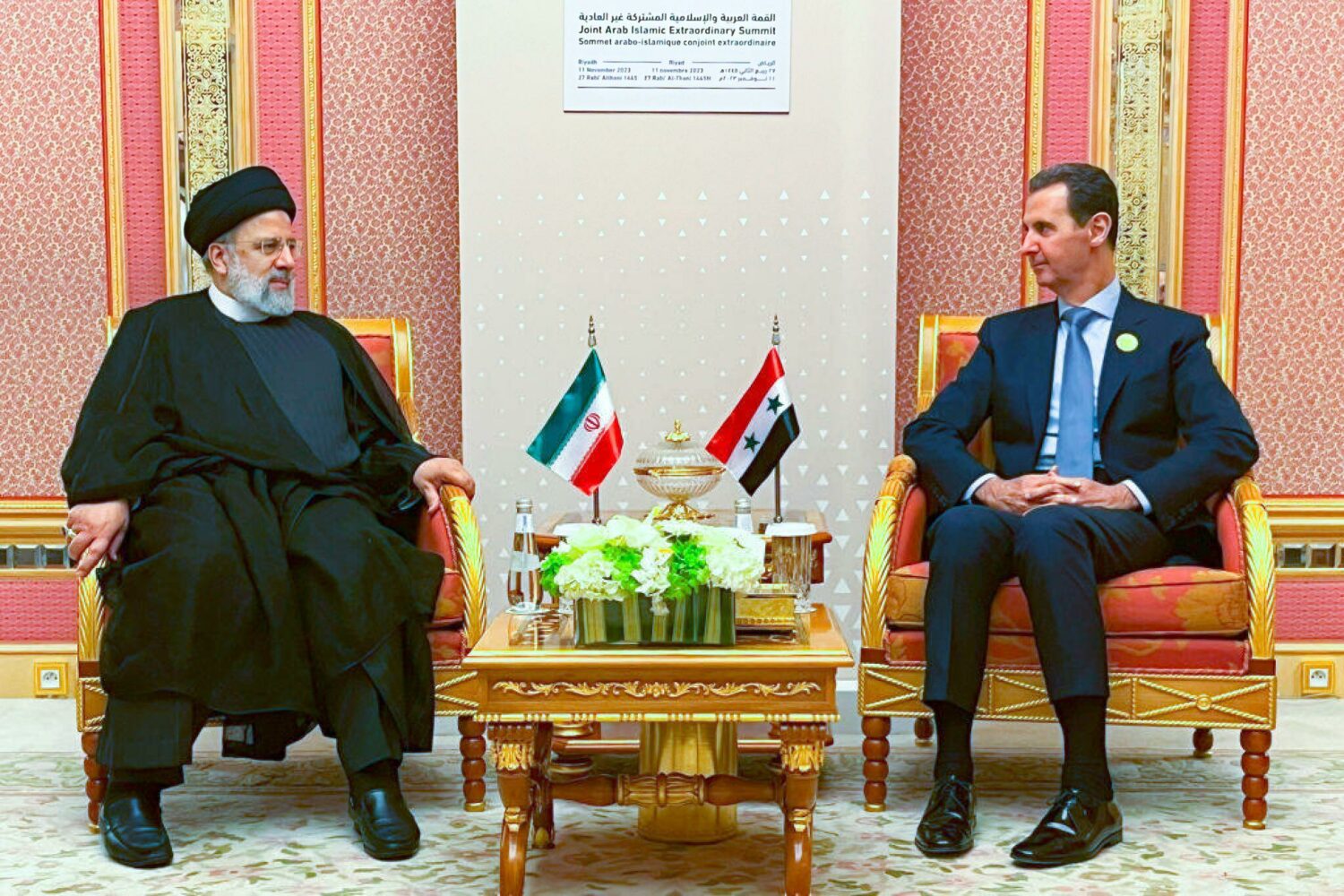
According to Assad’s perspective, Iran has done what it was brought to do, and its influence controlling the state’s joints and decisions must be controlled, as it has now had the largest military presence in Syria and is present militarily, financially, and intelligence, and through its loyal local and foreign arms of the Shiite militias that are absolutely loyal to Tehran, in addition to the division of the security branches. Syria, its officers, and the Alawite incubator between the Russian and Iranian camps, which is what has begun to confuse Assad, violate his understandings from a distance with Tel Aviv, and put him in embarrassment with the Russians.
Although the Damascus government is somewhat more reassured by the Iranian position than any sudden changes that may occur in the Russian position and its intertwined interests, Iran, in return, realizes that Damascus’s relationship with it is purely pragmatic, and that it is actively searching for a way to bring it back into the international system and help it get rid of it. From its restrictions.
Al-Assad does not want his areas of influence to be a reserve front for Iran, and he does not want to maintain the signs of war in the country that Iran insists on pursuing, and the memory of Tehran is still fresh for Al-Assad the father, who drew limits for it in the alliance in his balancing game with the Arab world and the West, and in the war. The first Gulf between the Iranians and Saddam Hussein.
According to the Kurdish researcher, Iran is certain that the ruling system in Syria is divided by two wings: the first leans toward the Russians, which obstructs the Iranian presence and provides intelligence information to weaken it, while the other wing supports the Iranian presence, but it is gradually weakening among many Alawite officers who have begun to turn to The other wing explained this shift by saying that “the officers have become aware that the Iranians are working to erase the Syrian personality, including the Alawite personality.”
It seems that Assad, in front of these two wings, is trying to play on the balance between the two sides, but the weakness of the Russian role due to the Ukrainian war and the Iranians’ awareness of the threats that are haunting them. In recent days, he has made changes in the Syrian security leadership in his favor, exploiting this Russian weakness, in an attempt to exclude intelligence men loyal to the Iranians and Their head is Ali Mamlouk.


