
اخبار فلسطين – وطن نيوز
فلسطين اليوم – اخبار فلسطين اليوم
W6nnews.com ==== وطن === تاريخ النشر – 2026-03-01 10:09:00
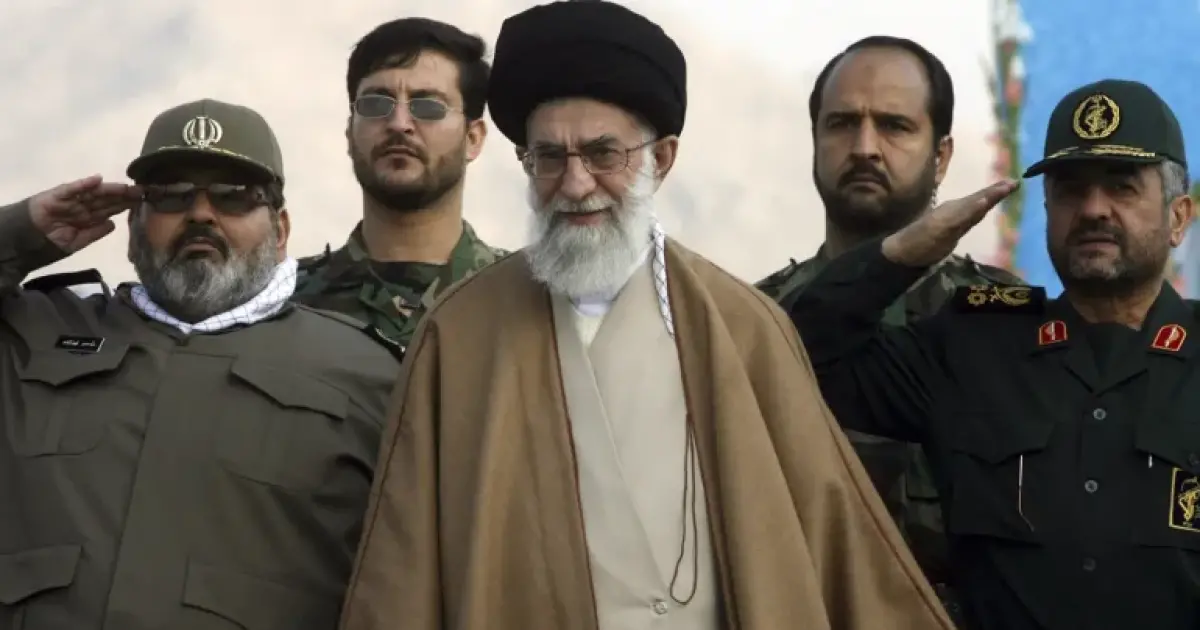
Ali Khamenei is an Iranian politician and religious scholar. He participated in the revolution against Shah Mohammad Reza Pahlavi and contributed to Imam Khomeini’s rise to power. He believed in the guardianship of the jurist, but he did not reach the position of guide until after a constitutional amendment allowing the mujtahid to assume leadership after it had been limited to the jurists. Khamenei is considered one of the students of the leader of the Iranian revolution, Ruhollah Khomeini, and he played an important role in it, to the point that it has become said that Khomeini sparked the revolution, but Khamenei orchestrated its continuation and export, as he was, since his youth, one of its pillars and symbols and one of the influencers on its course. US President Donald Trump announced his death in an Israeli raid that targeted his underground location with 30 bombs on February 28, 2026, as part of the US-Israeli operation against Iran, before Iranian television announced his “martyrdom” after repeated denials from Iranian officials. Birth and upbringing Ali Javad Hosseini Khamenei was born in the city of Mashhad in Khorasan Province, northeastern Iran, on September 8, 1939, in a poor family and from a family famous for its knowledge and literature. His ancestors’ origins go back to the city of Tafresh in central Iran, but they migrated to the Iranian region of Azerbaijan and then to Najaf. His father is an Azerbaijani Turk who immigrated from Tabriz to Mashhad, and for this reason Ali Khamenei masters the Turkish language well, and his grandfather was an Azerbaijani Shiite scholar in Najaf. His father returned to study at the seminary in the city of Najaf again, before moving to the city of Mashhad to settle there and become the imam of the Kuharshad Mosque. As for his mother, Khadija Mirdamadi, her origins are from the city of Isfahan. She was a memorizer of the Holy Qur’an, and she is one of the descendants of Mir Burhan al-Din Muhammad Baqir Istarabadi, nicknamed “Mirdamadi,” one of the most famous scholars and calligraphers during the days of the Safavid state. Khamenei is the second among 8 brothers, three of whom – including himself – are scholars specializing in Islamic legal sciences according to the Shiite doctrine. He married in 1964 and has 6 children: Mustafa, Mojtaba, Masoud, Maitham, Bushra, and Hoda. He says about himself in his memoirs that he lived a difficult childhood, and that there were nights when he did not find anything to eat, and he adds that his mother used to sew for him and his brothers what they wore of his father’s worn-out clothes. He and his brothers grew up in a poor neighborhood in Mashhad, in a house that did not exceed 70 square metres, consisting of one room and a dark, narrow basement, until some of his father’s students bought a plot of land adjacent to the house and expanded it until it had 3 rooms. Study and training Khamenei began his studies in the book at the age of four, where he learned to read and began memorizing the Holy Qur’an. His mother also taught him poetry, Persian literature, and Iranian Islamic arts from a young age. He studied primary school in the city of Mashhad until the fifth grade, then he began studying seminary (religious) lessons with his father and religious scholar Jalil Hosseini Sistani. After completing the primary stage at the Religious Education House (religious primary school), he joined evening studies in the government school and obtained the intermediate (preparatory) certificate. He then completed his secondary studies after that, and obtained the secondary certificate. He moved to the city of Najaf in 1958 with his father, and there he studied under several religious authorities, including Mohsen al-Hakim, Abu al-Qasim al-Khoei, and Mahmoud Shahroudi. Then he returned again to Mashhad and continued his studies under the supervision of the religious authority Muhammad Hadi Milani. He traveled to the city of Qom in 1959 to study religious sciences, and there he studied with several sheikhs, most notably Khomeini, Muhammad Hussein al-Tabtabai, Hussein Bajanordi, Morteza Haeri Yazdi, and Muhammad Mohaqiq Mirdamad. He returned to Mashhad in 1964 after his father lost his sight, and there he began teaching jurisprudence and interpretation to young students, with his old teacher Melanie. During that period, he began to promote among his students the idea of overthrowing the Shah’s regime, and he was able to recruit many of them who later participated in the revolution that toppled this regime in 1979. Khamenei is fluent in several languages, and has a wide knowledge of poetry and literature, and those close to him narrated that an Armenian left-wing communist activist was teaching him English in Qezel Prison in Tehran in the early 1960s. He was famous for his passion for reading novels and stories, whether Persian, Arabic or international. It was said that he had good luck in criticizing literary and poetic works, and that he had relationships with many poets, writers and intellectuals of his time, including the Iraqi poet Muhammad Mahdi Al-Jawahiri. During his youth and academic career, he was influenced by the positions and opinions of the late thinker Ali Shariati, the pioneer of the “Islam without clerics” school of thought, but his greatest influence was by Khomeini, who was imbued with his ideas and visions, and became one of the symbols of the Shiite jurists who believed in and defended the guardianship of the jurist. Political experience Khamenei grew up in a political family, and his paternal uncle was executed during the Shah’s rule. He was one of the leaders of the revolution that toppled his regime in 1979, and a key negotiator in the hostage crisis of the American embassy in Tehran, which was stormed by Iranian students in support of the revolution, and they held 52 American residents of the embassy hostage for 444 days (from November 4, 1979 to 20 January 1981). Since the beginning of the sixties, he has been involved in the ranks of the movement opposing the Shah’s rule, and he was arrested 6 times. In 1965, during the Shah’s era, intelligence (the SAVAK apparatus) prevented him from leaving the country for 10 years, and in 1977 he was deported to the city of Iranshahr in the Sistan and Baluchestan province. In 1952, he met Mojtaba Nawab Safavi, leader of the underground “Fedayeen al-Islam movement” in Mashhad. He was arrested for the first time in 1962 because of his participation in a protest meeting of members of the organization in support of the Palestinian cause in the same city. His political activities opposing the Shah involved Morteza Motahhari, Akbar Hashemi Rafsanjani, Mahmoud Taleghani, Abolfazl Zanjani, Mehdi Bazargan, Yadollah Sahabi, Abbas Shaybani, Kazem Sami, and other Iranian leaders. Khamenei met the leader of the revolution, Khomeini, for the first time in 1957, where he studied him and was influenced by his ideas. He met his companion, as Ali Akbar Hashemi Rafsanjani describes him, in the same year in the city of Karbala in central Iraq. Two years later, they met again in the city of Qom, where they were studying religious sciences. They rented a house and lived together for several years, and this relationship between their families continued until Rafsanjani’s death in 2017. In 1977, he was chosen as a member of a committee of 11 people formed by Khomeini to reform the seminary in Qom and prepare its ground politically for the coup against the Shah. This led to the founding of the Association of Mujahideen Scholars, which later turned into the Islamic Republican Party. This association was working to recruit students of religious sciences and educate them politically so that they would be the nucleus of a future movement to overthrow the Shah’s regime. The SAVAK apparatus was able to uncover it and arrest some of its members in 1964. Khamenei was able to escape, but he was arrested in Mashhad in 1965 and sentenced to 6 months in prison. Khamenei returned to his political activities as soon as he was released from prison, and was imprisoned again because of his speeches and lectures opposing the Shah. He also returned to Mashhad in 1978 to lead the revolutionary movement against the Shah’s regime in Khorasan Province. Khamenei, along with others, including Mohammad Beheshti, Rafsanjani, and Mousavi Ardebili, founded the Islamic Republican Party, which later controlled the political decision in the country for several years, until it was dissolved in 1987 by a decision of Khomeini. On June 26, 1981, he was subjected to an assassination attempt by members of the Mujahideen-e-Khalq Organization, who planted a bomb in a recording device placed in front of him while he was preaching at the Abu Dharr Mosque in Tehran. He survived it, but he was seriously injured and the nerves in his right hand were torn and paralyzed, so he was forced to leave the pulpit for a long time. Khamenei also participated as a volunteer on the battlefront in the Ahvaz region in the Iran-Iraq war, which lasted from 1980 to 1988, and he was among those who convinced Khomeini of the necessity of forming an “expediency council” to resolve disputes between state institutions. After the revolution, Khomeini appointed him to the Revolutionary Committee, which he announced to form a new system for the “Islamic Republic of Iran.” In addition to him, it included: Morteza Motahhari, Muhammad Beheshti Mahdavi, Kani Akbar Hashemi, Rafsanjani, Muhammad Javad Bahnar, Abdul Karim Mousavi Ardebili, and this committee took over the administration of the country during the revolution, and led negotiations with the Shah’s government and Western countries, including the United States, in the transitional period. One of the most important decisions of the Revolutionary Committee was the formation of military forces to protect the revolution, called the Revolutionary Guard, Revolutionary Committees, and Popular Mobilization (Basij). Khamenei supervised these forces until late 1979, when he resigned to run in the Shura Council (parliament) elections. Tasks and responsibilities In his political and scientific career, Khamenei assumed several responsibilities at different levels, whether within the ranks of the revolution or in the cabinets of the state after the overthrow of the Shah’s regime. The most prominent of these responsibilities are: – Responsible for media in Khomeini’s office. – The third Secretary-General of the Islamic Republican Party after Muhammad Beheshti and Muhammad Javad Bahanar. – Khomeini appointed him as the Imam of the Friday prayers in Tehran on January 14, 1980. – He was elected to the Shura Council in February 1980 (in the first elections after the revolution) and served until October 13, 1981, after he was elected President of the Republic. In October 1981, he was chosen as the third President of the Republic, and held this mission for 8 years. – Chairman of the Defense Committee in the Shura Council. – The first president of the Expediency Discernment Council on February 6, 1988. – After the death of Khomeini on June 3, 1989, Khamenei was elected Supreme Leader of the Republic. In 1980, he was appointed a member of the Defense Council, representing the Revolutionary Command Council. In the same year, he was appointed Undersecretary of the Ministry of Defense. On February 1, 1979, he became commander of the Revolutionary Guard. On August 30, 1983, he assumed the presidency of the Supreme Council for the Cultural Revolution. – First Deputy Chairman of the Assembly of Experts and the Council for Reconsideration of the Constitution. In 2012, Forbes magazine chose him as one of the 19 most influential people in the world. Writings and Works Khamenei wrote and translated many books, especially in the field of Sharia sciences and political theorizing, and translated a number of books by the Egyptian thinker Sayyid Qutb into Persian, including In the Shadows of the Qur’an and “The Future of This Religion.” Among his other most prominent works are: 4 original books for the science of men. Anatomy of the vision of Islam in the Qur’an. Honest model. A report on the history of the seminary in the city of Qom and an explanation of its condition. Imamate. State. Research in Islamic thought. Lessons in knowing Islam. The general project of Islamic thought in the Qur’an.. Government in Islam. The role of Muslims in the Indian revolution. His assassination On Saturday, February 28, 2026, Israel and the United States launched military strikes on Tehran, Qom, Isfahan, Tabriz, and other Iranian cities, as part of an operation they called “The Lion’s Roar” and “Epic Rage,” and said it targeted Iranian officials and high-ranking figures. Israeli Channel 12 reported that the Israeli Air Force bombed Khamenei’s underground location with thirty bombs, and Prime Minister Benjamin Netanyahu said, “There is increasing evidence that Khamenei is no longer alive,” before US President Donald Trump announced that “Khamenei is dead.” Trump said that Khamenei “could not escape our highly advanced intelligence services and tracking systems,” stressing that “he and the leaders who were killed with him could not have done anything.” Tehran had repeatedly denied through its officials that Khamenei had been killed, before Iranian television announced his “martyrdom,” a few hours after Trump’s announcement. Fars News Agency reported that the Iranian Leader was assassinated in his office while he was at work on the morning of Saturday, February 28, 2026. The Iranian government declared general mourning in the country for 40 days, with official departments closed for 7 days, and the Supreme National Security Council said that “the testimony of the Leader Ali Khamenei will be the starting point for a great uprising against the tyrants of the world,” while the Iranian Revolutionary Guard pledged revenge.