
اخبار فلسطين – وطن نيوز
فلسطين اليوم – اخبار فلسطين اليوم
W6nnews.com ==== وطن === تاريخ النشر – 2026-02-26 16:20:00
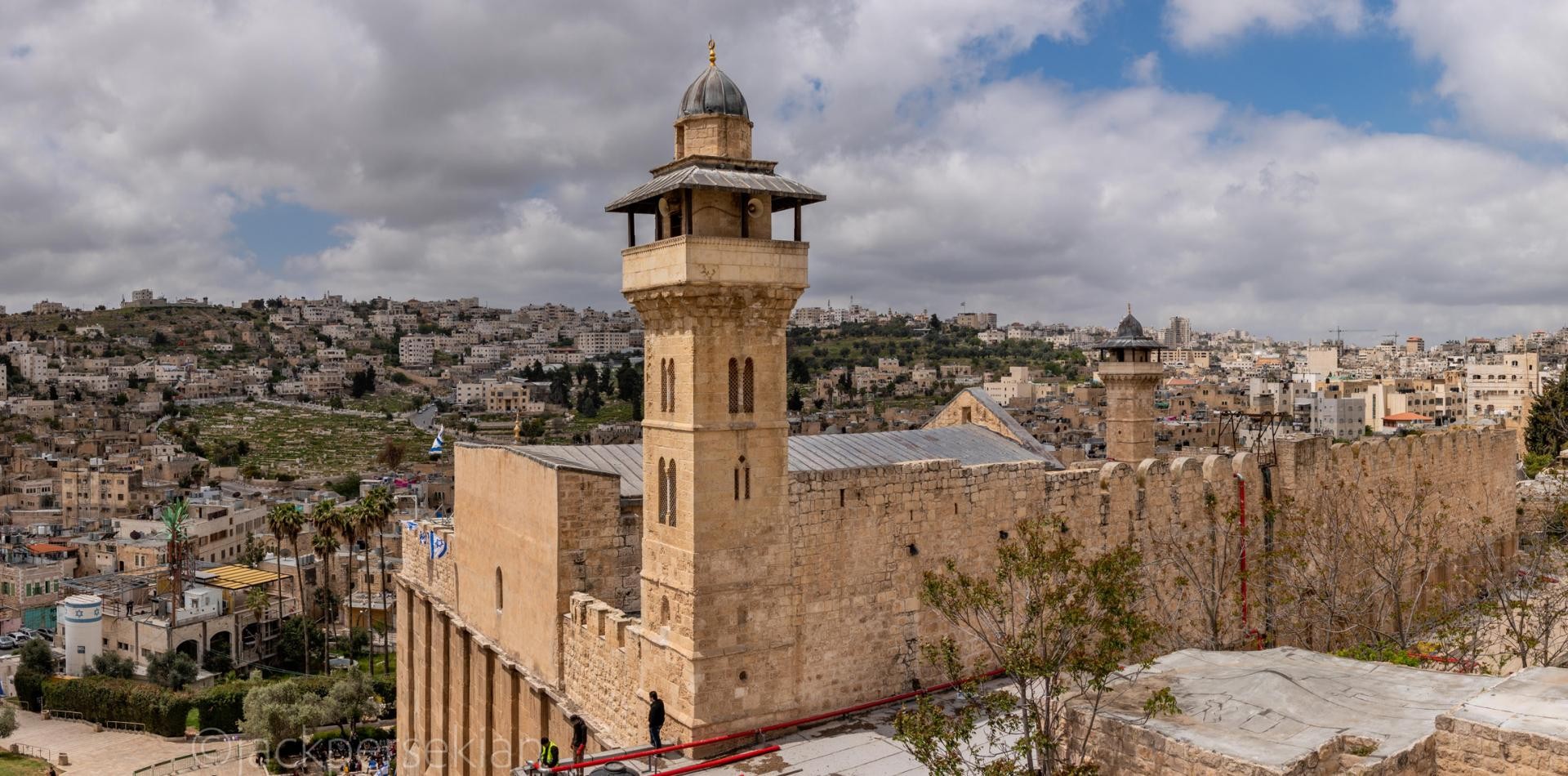
Hebron – Quds Network: Thirty-two years after the 1994 massacre, the Ibrahimi Mosque in Hebron is facing an unprecedented phase of tightening Israeli control, intensifying restrictions imposed on worship, and escalating threats to its Islamic character and historical identity. When an Israeli settler killed dozens of Palestinian worshipers during the month of Ramadan inside the Ibrahimi Mosque in 1994, the repercussions of the shock were not limited to the city of Hebron, but rather extended to the entire Palestinian scene. The massacre represented a pivotal and tragic turning point in the history of the holy site in the occupied West Bank, and a direct blow to its Islamic identity. Subsequently, Israel tightened its grip on the mosque, consolidated its control over it, and imposed an escalating series of restrictions on Muslim worshipers. Today, 32 years later, the atmosphere inside the mosque seems darker than ever. Husni Al-Rajabi (74 years old), one of the survivors of the massacre and among the 125 Palestinians who were injured in it, still insists on performing prayers at the ancient site, leaning on a wooden stick. While stopping in a covered corridor after leaving the mosque, Al-Rajabi says that the nightly Ramadan prayers this year are burdened with deep concern about the fate of the mosque, Hebron, and Palestine. Al-Rajabi confirms that the extent of the suffering that society is experiencing today exceeds, in his opinion, what followed the massacre three decades ago. Access to the mosque has become almost impossible, in light of the Israeli restrictions and constant harassment. The basic Ramadan necessities – such as water and dates – are also prevented from entering, and vacuum cleaners are prohibited, which places workers facing great difficulties in maintaining the cleanliness of the place, and some imams are completely prevented from entering the mosque. In parallel, a package of new decisions issued by the Israeli government threatens the site and its Palestinian and Islamic character in an unprecedented way. Al-Rajabi tells Middle East Eye: “These are very difficult times.” Earlier this month, Israel approved measures granting it civil and administrative powers in Palestinian cities, in steps widely seen as consolidating actual annexation. Hebron, with the Ibrahimi Mosque in the middle, was one of the most prominent cities affected by these measures. Many Palestinians see these developments as the culmination of a decades-long campaign to transform the mosque into a synagogue. Today, this possibility no longer seems so far-fetched. Al-Rajabi adds: “The situation of the mosque is unfortunate, as if we are living outside of normal time. The suffering is enormous. We do not like to show people the extent of what we are suffering, but there is daily suffering.” Occupation The site of the Ibrahimi Mosque has a religious status among Muslims, Christians, and Jews alike. It is also known as the “Cave of the Patriarchs” or the “Cave of Machpelah.” It is believed to contain the graves of the Prophet Abraham – the common ancestor of the three religions – along with his son Isaac and grandson Jacob. The building was first built as a Byzantine church during the era of Byzantine rule, before it was converted into a mosque in the seventh century during Islamic rule, and it remained that way for centuries except for the period of the Crusades. However, this reality began to change after Israel’s occupation of the West Bank and Gaza Strip in 1967. Shortly after taking control of Hebron, a synagogue was established within the mosque complex. Since the late 1960s, the “Kiryat Arba” settlement was established on confiscated Palestinian land near the Old City, close to the mosque. The expansion of the settlement led to the strengthening of the military presence in the city, in parallel with the escalation of settler violence against Palestinians and the recurrence of mosque raids. In 1972, Jewish prayers were held at the site for the first time, despite Palestinian objections. Tension has been rising for years, in light of repeated attempts by settlers to impose broader control over the place. These tensions reached their bloody peak on February 25, 1994, the fifteenth day of Ramadan. A turning point. As worshipers gathered to perform the dawn prayer, an Israeli settler from Kiryat Arba, wearing a military uniform, entered the mosque and opened fire on about 800 Palestinians who were inside. The attack resulted in the killing of 29 people and the injury of more than 125 others, in one of the bloodiest settler attacks against Palestinians. The massacre represented a decisive turning point, not only on the Palestinian level, but also with regard to the Islamic character of the mosque. Following it, the mosque was closed for nine full months, and the call to prayer and prayers stopped during that period. Later, the Israeli government distanced itself from the attack and formed a unilateral investigation committee, whose recommendations led to the division of the site between Muslims and Jews. Two-thirds of the prayer space was allocated for Jewish worshipers, compared to one-third for Muslims. Jews were also granted full access to the site during 10 Jewish holidays annually, during which entry to Muslims is completely prohibited. On the other hand, Muslims were allotted 10 days during Islamic holidays to access the entire site, but this arrangement was not always implemented in practice, and Shuhada Street, the main artery leading to the mosque, which was once the commercial heart of Hebron, was closed and remains closed to this day. The remaining entrances to the mosque were placed under tight military control, with worshipers subjected to routine inspection procedures. A special protocol was imposed after the massacre that further restricted religious practice, as the daily Maghrib call to prayer was prohibited, in addition to other restrictions at specific times on Saturdays, and even the muezzin was accompanied by Israeli soldiers before the call to prayer was called. According to the mosque’s director, Sheikh Moataz Abu Sneineh, the massacre reshaped the place into a virtually divided space. He says: “A metal door separates Muslim worshipers from the settlers. Sometimes, noisy celebrations and Talmudic prayers are held in parallel with Muslim prayers.” Divided Hebron In 1997, Israel and the Palestinian Authority signed the “Hebron Protocol,” which stipulated the division of the city into two administrative areas, H1, which is under the control of the Palestinian Authority, and H2, which is under Israeli control. The H2 area constitutes about 20 percent of the city’s area, and includes all the Israeli settlements in Hebron, which are inhabited by approximately 700 settlers. All settlements established in the occupied Palestinian territories are illegal under international law. About 40,000 Palestinians also live in H2, while the area includes the Old City of Hebron and the Ibrahimi Mosque. Under direct Israeli control, Palestinians in this area face one of the strictest movement restrictions in the West Bank. According to the United Nations, more than 100 physical obstacles are spread throughout the area, including 20 permanent manned barriers and 14 partial barriers that separate the settlement enclaves from the rest of the city. On the other hand, about 700 settlers are protected by approximately 2,000 soldiers deployed in the city, and some streets have been designated exclusively for the use of settlers, while Palestinian pedestrians are prevented from passing through them, forcing them to take long and winding roads. The markets, which were once bustling with life, gradually lost their activity, and about 1,500 stores were closed, including about 500 under military orders. The Israeli human rights organization B’Tselem describes this reality as an embodiment of the “principle of separation.” Under the Hebron Protocol, the civil affairs of the Palestinians in H2 were supposed to remain within the jurisdiction of the Palestinian Authority, and the management of the Ibrahimi Mosque was left in the hands of the Islamic Endowments and the Hebron Municipality, both of which are affiliated with the Palestinian Authority. This arrangement provided the Palestinians with a margin of authority, enabling them in some cases to obstruct Israeli attempts to make changes to the features of the mosque or its surroundings. Based on what it described as Israeli violations and attempts to change the historical and religious character of the site, the Palestinian Authority submitted a request to UNESCO to include the Old City of Hebron, including the Ibrahimi Mosque, on the List of World Heritage in Danger, which was approved in 2017. UNESCO confirmed at the time that the site was “at risk due to the ongoing activities carried out by Israel,” including “settlement construction, archaeological excavations, and movement and access restrictions.” “Control and Hegemony” Today, the Old City of Hebron appears as an interwoven fabric of ancient Palestinian homes and markets, interspersed with corridors that are only allowed for Israeli settlers and foreign tourists, in addition to huge military barriers and checkpoints through which residents face repeated harassment while trying to accomplish the simplest details of their daily lives. Praying in the Ibrahimi Mosque is one of these daily details that, due to Israeli restrictions, has turned into an almost impossible task. Despite the Palestinian efforts, the settlers and the Israeli authorities continued to establish control over the mosque, in parallel with undermining the powers of the Palestinian Authority and the Islamic Endowments. In 2017, Israel announced a plan to install an elevator inside the mosque complex, even though construction powers belong to the Palestinian municipal authorities, and the site belongs to the Islamic Endowments. These measures accelerated following the October 7 attacks and the ensuing Israeli war of annihilation in Gaza. The director of the mosque, Sheikh Moataz Abu Sneineh, said: “The scale of attacks and violations since then exceeds anything we have witnessed since the 1994 massacre. There is a clear acceleration in attempts to control and dominate.” Today, Palestinians are only allowed to enter the mosque through one entrance, which is closed by the Israeli authorities for most hours of the day. With many roads closed to residents, worshipers are forced to take winding, arduous, and sometimes dangerous, paths to reach the mosque. At the checkpoint leading to it, the queue moves very slowly; Men, women and children move forward with heavy steps, while the turnstile controls their movement according to the decision of the heavily armed soldiers supervising it. In some cases, women are detained mid-cross, stuck inside a cage without knowing why or how long to wait. While waiting, the call to prayer is called and goes on, causing many to miss prayer time, even though they leave their homes early. An old man says wryly: “They always do this to make us miss prayer.” Inside the mosque, the number of worshipers appears remarkably limited, a shocking scene for a place of such holiness during the month of Ramadan. According to Abu Sneineh, the number of worshipers who are able to reach the mosque has decreased by about 50 percent, in light of the difficulty of accessing it, especially with the continued closure of Shuhada Street since 1994. The measures also affected the mosque’s employees and those in charge of it, who face bans, physical attacks, insults, and restrictions on performing their duties. Abu Sneineh was among those against whom these measures were applied. Last month, he and the head of the mosque’s custodianship, Hammam Abu Marahiya, received a decision banning him from entering the mosque for 15 days without giving a reason. Such decisions, which can be extended indefinitely, have become a frequent practice. Although this decision constituted the third ban against Abu Sneineh since the beginning of 2025, it was the first written order issued against an employee or curator at the mosque. He said: “All of this comes within the framework of a systematic effort to exclude the mosque’s administration and strip it of its religious authority.” In April 2025, locks were placed on a number of rooms and gates in a move aimed at establishing complete control over the site. Since October 2023, other violations have been recorded, including extending the periods of the call to prayer, the entry of settlers into the mosque carrying firearms, in addition to holding noisy evening celebrations, including wedding parties, in the mosque’s courtyards. Seizing powers However, the most serious measures affecting the Ibrahimi Mosque emerged earlier this month. On February 8, Israel announced a broad package of changes to the governance system in the West Bank, expanding its civil powers in areas that had been under military administration since the 1967 occupation. Critics see these steps as consolidating actual annexation, even in the absence of an official announcement. Hebron was explicitly mentioned in these decisions. Under the new procedures, powers to issue building permits and approve projects in the city were transferred from the Palestinian Authority to the Israeli army. This shift came after a series of previous steps that had gradually reduced the Palestinians’ powers regarding the Ibrahimi Mosque. In July, the army announced its intention to unilaterally assume some municipal powers from the Hebron municipality, with the aim of proceeding with a plan to build a roof over the mosque’s inner courtyard, a project that the Palestinians categorically rejected. Israeli media reported at the time that these powers would be transferred to the “Kiryat Arba” settlement. Although the importance of these reports was later downplayed, Abu Sneineh told Middle East Eye that they may have constituted an attempt to test the Palestinian reaction before moving to official steps. The Israeli “Peace Now” organization, which monitors settlement expansion, warned that Israel is “playing with fire and with the security of all of us.” The organization added that the new procedures allow structural changes to be made in the mosque without Palestinian coordination or approval, considering this a violation of international agreements to which Israel is a party. According to Abu Sneineh, the official decisions were preceded only by gradual field restrictions. The army actually began restricting access to electricity, water, and sanitation services, and prevented the Hebron Rehabilitation Committee from carrying out restoration work for years. Before the start of Ramadan, mosque employees were prevented from bringing in basic supplies, such as dates and water, as a result of tightened inspection procedures at the gates. Abu Sneineh also indicated that he had received a warning against allowing journalists to conduct interviews inside the mosque. Today, after the official transfer of planning and construction powers from the Palestinian Authority to the Israeli side, fears are increasing that physical changes to the site will be accelerated. Abu Sneineh explained that legal objections had been submitted before the Israeli courts, warning at the same time that “the occupation is racing against time to impose new facts on the ground.” He added: “We affirm our adherence to our right to this place, our rejection of any change in its religious or historical features, and the steadfastness of our presence there despite all measures and violations. We have no power or strength except in God.”


