
اخبار فلسطين – وطن نيوز
فلسطين اليوم – اخبار فلسطين اليوم
W6nnews.com ==== وطن === تاريخ النشر – 2026-05-20 21:52:00
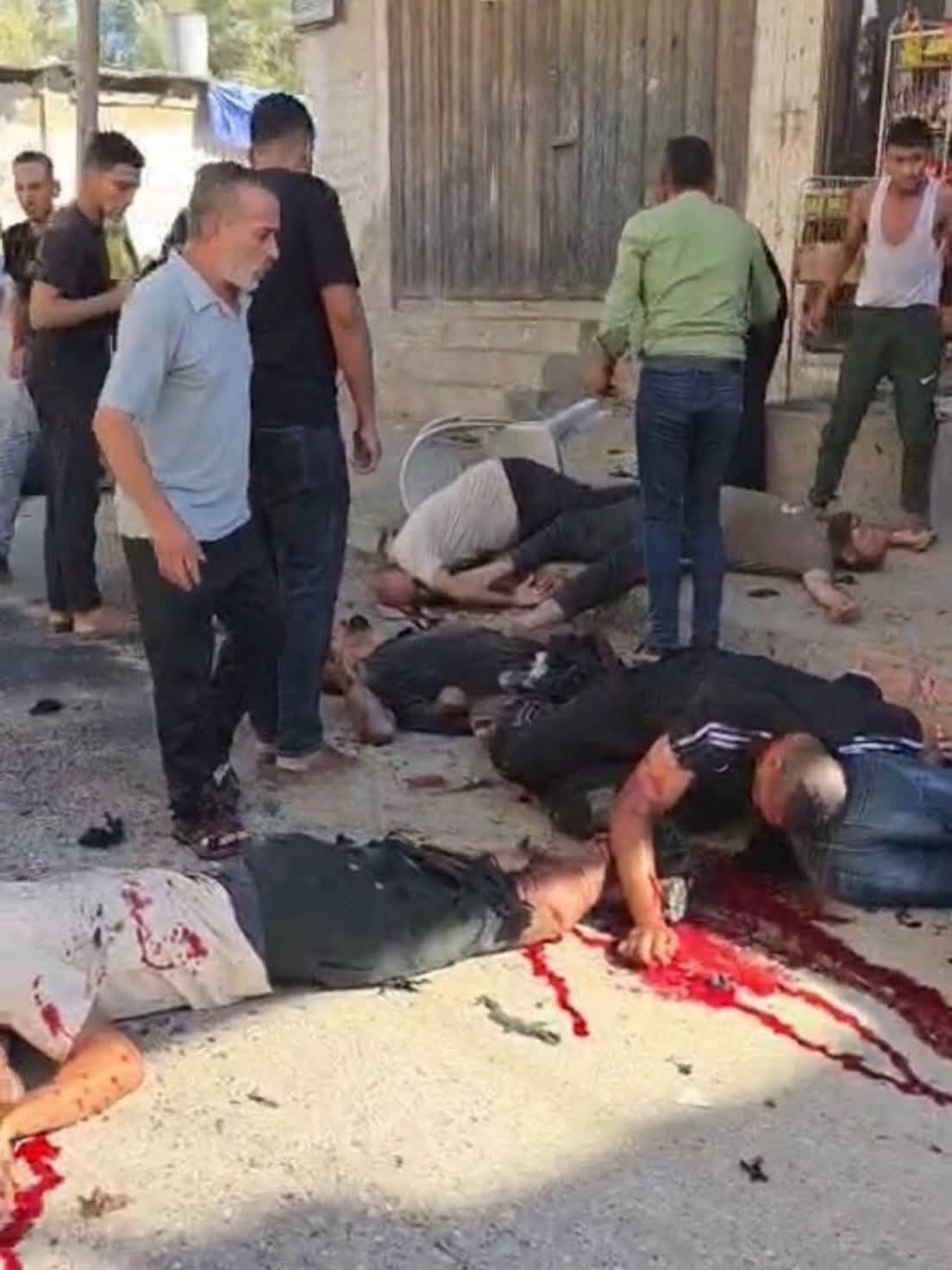
The assassination of Izz al-Din al-Haddad, the fourth commander-in-chief of the Qassam Brigades, was a carefully composed message, the timing of which was chosen in a very significant way, at a moment when the anniversary of the Nakba intersects with the intensification of international pressure, the faltering negotiations, and the escalation of Israeli talk about the next day and the disarmament of the resistance. The occupation conducts its war by producing the psychological and political meaning of the strike, and turning the assassination into a parallel negotiating tool, used to reshape the Palestinian consciousness, break the incubating environment, and confuse the decision-making structure within the resistance. In this context, the assassination of the son of the leader, Khalil Al-Hayya, came shortly before the operation, as part of the policy of personal pressure on the negotiating delegation, a policy that attempts to transfer the cost of negotiation from the political table to the family and emotional circle, thus turning blood into a tool for direct political blackmail. Here, the targeting is directed against the psychological ability of the leadership to withstand and make a decision away from exhaustion and emotional drain. The most dangerous thing is that this escalation coincided with the Palestinians’ commemoration of the Nakba, with the symbolism it carries related to uprooting, breaking the will, and reproducing defeat, as if the occupation seeks to use the collective memory itself as a battlefield, by suggesting that every attempt to cling to weapons or political steadfastness will be met with more bloody attrition, and that negotiation will only take place under the roof of force and subjugation. But the decades-long Palestinian experience indicates that assassinations, despite their ability to cause immediate shock, have never succeeded in resolving the confrontation or dismantling the intellectual and organizational structure of the resistance. Hence, the most important question arises: Is the occupation actually trying to achieve a security achievement, or is it waging an open psychological battle to compensate for its inability to impose its conditions politically and on the ground? Assassination as a tool to break negotiations and re-impose conditions. The occupation views assassination as part of the engineering of negotiated subjugation. That is, turning blood into a tool of political pressure used in parallel with fire, siege, and starvation. The targeting of Izz al-Din al-Haddad, the fourth commander-in-chief of the Qassam, came at a time when pressures related to the disarmament file were intensifying, and attempts to impose a formula of surrender disguised as the next day were expanding, as if the occupation wanted to say that the negotiation was taking place under the guillotine of open attrition. Shortly before that, the assassination of Khalil Al-Hayya’s son came to confirm the occupation’s transition from targeting the military structure to direct emotional pressure on political leaders. Here, the sons become part of the bank of bloody messages, and personal pain becomes a tool for political blackmail intended to reshape the decisions of the negotiating delegation under the weight of loss and psychological exhaustion. But Gaza, which is negotiating under bombardment and searching for water under the rubble, no longer reads these messages in the way the occupation wants. The people who sleep to the sounds of fire belts, and stand daily in temporary life lines for a bag of flour or a liter of water, realize that the war is no longer just about weapons, as much as it is about the collective will itself. Therefore, the assassination did not produce a general state of collapse as much as it reaffirmed the conviction that the occupation is trying to extract what it was unable to resolve on the ground through a table. Negotiation. Leaders who paid their full price…the family at the heart of the battle. One of the scenes that the occupation is most trying to obscure is that the resistance leaders did not live the war behind the walls or outside the circle of danger, but they paid its personal and family price in full. The children, grandchildren, and in-laws who became martyrs were part of the economy of existential sacrifice that had formed inside Gaza since the start of the war. The Israeli narrative has tried to market a stereotypical image that separates the leadership from the people, and presents the battle as if it were a burden borne by civilians alone, while the facts on the ground reveal exactly the opposite. The leading families themselves experienced displacement, hunger, and loss, and stood before the shrouds of their sons, as did thousands of Gazans whose lives were turned into diaries of postponed survival. In Gaza, where the smell of burnt bread mixes with the smell of rubble, the legitimacy of the leadership is measured by the amount of its own blood it paid. This is why the images of leaders who lost their children and grandchildren seem more influential in the popular consciousness than all psychological warfare campaigns, because they reformulate the relationship between the leadership and the fostering environment as a partnership of loss and not the management of a battle from afar. The assassination of leaders and the failure of the vacuum industry. Over the course of many years, the occupation bet on what could be called the strategy of a deadly vacuum, that is, the belief that the liquidation of leaders would automatically lead to the collapse of the organizational structure and the confusion of field decision-making. From the assassination of the first founders, all the way to the targeting of the fourth Commander-in-Chief of the Qassam, Izz al-Din al-Haddad, this bet remained present as one of the pillars of the Zionist security doctrine. However, the field in Gaza repeatedly revealed the opposite phenomenon. Every assassination prompted the organization to reproduce its leadership structure in a more flexible and complex manner. A state of comprehensive collapse did not appear, and field performance did not stop, as operations and battle management continued at a pace that indicates the existence of a resistance succession structure that was established to reduce the impact of leadership shocks. What confuses the occupation even more is that Gaza, despite the genocide, siege, and collapse of the civil structure, is still capable of producing a state of popular rally around the resistance. The funeral scenes, which were filled with children and young people from various social spectrums, seemed like a field referendum on the choice of steadfastness, and in a city exhausted by hunger, displacement, and loss of security, the continuation of this popular rally becomes an indication that the assassination did not succeed in creating the vacuum that the occupation wanted, but it contributed to reproducing the symbolic meaning of resistance. Within the Palestinian collective consciousness. Psychological warfare in the face of Palestinian consciousness. The occupation is waging its war in Gaza through what is called perception management under fire. That is, an attempt to reshape the Palestinian awareness of the resistance, and to transform the scenes of assassination and destruction into long-term psychological deterrence messages. Every assassination is presented by the Zionists as a declaration of superiority, penetration, and control, in an attempt to create a feeling that no one is immune from targeting, and that the leadership structure of the resistance has become exposed and capable of being dismantled at any moment. But the problem facing the occupation is that the Palestinian environment does not receive these messages according to the Zionist dictionary itself. In Gaza, which lived through months of slow daily extermination, in which tents were transformed into temporary housing units, and aid into battles for survival, fear alone is no longer capable of producing political breakdown. When people lose their homes, children, and safety all at once, the nature of the relationship with death itself changes, and steadfastness turns from a political choice into a collective survival instinct. This is why the character of the resistance leader within the popular consciousness appears different from the image that the occupation is trying to market. Leaders whose children and grandchildren were martyred, and whose families lived through displacement, hunger, and siege, are no longer seen as mere military leaders, as much as they have become symbols of existential participation in Palestinian pain, and this point in particular fails one of the most important goals of Zionist psychological warfare, because the popular environment does not see the assassination as an end to the story, but rather an extension of it. What is striking is that the more the occupation tries to create an image of broken leadership, the more it collides with the opposite image produced by Gaza itself. Children raise pictures of martyrs among the rubble, mothers bid farewell to their children with a speech that goes beyond individual loss to a collective meaning of steadfastness, and young people emerge from under the siege more attached to the idea of resistance, not less. Here, Palestinian consciousness turns into a psychological absorption system that re-dismantles messages of deterrence and turns them into counter-moral fuel. The funeral was considered a popular referendum on the option of resistance in Gaza. The funerals of leaders turned into an intense political space that revealed the true popular mood, far from opinion polls and official speeches. The scenes of the funeral in which children, youth, and women from various social sectors came out, despite the bombing, fear, and hunger, seemed like a live field referendum on the option of resistance in the most brutal moments of the war. It was not a fleeting scene when the destroyed streets were filled with crowds while planes were still flying overhead, and children exhausted in the tents carried pictures of the assassinated leaders, as if Gaza was saying that the war, despite its brutality, did not succeed in dismantling the emotional bond between the people and the resistance. On the contrary, it may have deepened this bond through a collective feeling that what is happening is a battle over existence, dignity, and the right to survival. In a city that lives in an exhausted economy of survival, where life is measured by the number of hours of electricity and the amount of drinking water, people’s funeral attendance becomes an act that goes beyond grief to a declaration of a political and moral position. The masses who walk behind the coffins of the leaders are the same ones who lost their children, their homes, and their small dreams under the rubble. Therefore, this popular presence can be read as an expression of a deep-rooted conviction that retreating under pressure will not stop the machine of extermination, and that the cost, no matter how great, does not result in a collective willingness to abandon the option of resistance. What is most dangerous for the occupation is that these scenes undermine one of its basic bets: transforming the incubating environment into a resentful environment. Instead of assassinations and genocide leading to the social isolation of the resistance, the funeral moments reveal a resistant emotional cohesion that reproduces popular legitimacy from the heart of the pain itself. This is why funerals in Gaza appear closer to scenes of redefining national identity under fire, as the martyr turns from an assassinated individual into a collective symbol that re-integrates society to the idea of steadfastness and survival. In the end, the battle of assassinations in Gaza appears to be an open confrontation over the meaning of the Palestinian will itself. The occupation, which tried to turn blood into a tool for negotiation, and assassination into engineering for subjugation, collided with a more complex truth: that Gaza, which is buried under rubble every day, is still capable of producing a new leadership, a new awareness, and a popular rally that transcends hunger, fear, and genocide. By assassinating Izz al-Din al-Haddad and targeting the families of the leaders, the occupation wanted to sow a void and brokenness, but it found itself facing a society that was making its leaders Shiite as if it were renewing its covenant with them and not bidding them farewell. And every time it thought it had beheaded the resistance, Gaza was reproducing it from among the tents, from the voices of children, and from the mothers of the martyrs who turned loss into a speech of steadfastness, not surrender. Thus, the most cruel irony for the occupation appears to be that the war that it wanted as a battle to dismantle the Palestinian consciousness is gradually turning into a moment of restructuring this consciousness on a more solid base. The resistance that did not fall under fire will not be uprooted by massacres, and the environment that has withstood genocide will not be reshaped by terror. In Gaza specifically, the story does not end with the assassination of the leaders, but begins with their blood a phase more closely attached to the idea of survival and confrontation.