

اخبار فلسطين – وطن نيوز
فلسطين اليوم – اخبار فلسطين اليوم
W6nnews.com ==== وطن === تاريخ النشر – 2024-01-18 19:04:44
“No one survived, not even newborns,” Adila Hashem, speaking before the International Court of Justice in The Hague, Netherlands, on January 11, described the deliberate destruction of Palestinian lives in the Gaza Strip. Adila Hashim was one of six lawyers who represented South Africa in its petition before the International Court of Justice, the United Nations judicial body, to order a halt to the Israeli attacks on Gaza.
South Africa asserted that Israel was committing acts of genocide prohibited by the Convention on the Prevention and Punishment of the Crime of Genocide, known as the Genocide Convention. As a signatory to the Genocide Convention, Israel has accepted the authority of the International Court of Justice to enforce the convention. The Court has in the past allowed any signatory to the Genocide Convention to bring claims against another signatory if it believes it is committing genocide, since there is a positive obligation on states to prevent genocide.
In presenting her case that Israel violated the Genocide Convention, South African lawyer Adila Hashim recounted to the court the horrific statistics of the massacre committed by Israel. As of January 9, Israel had killed 23,210 Palestinians in the Strip, most of them civilians, with another 7,000 Palestinians missing, “presumed to have died under the rubble.” A third of those killed were under the age of eighteen, leading to Gaza being called a children’s cemetery.
Sixty thousand residents of the Gaza Strip were also injured or maimed, and as another member of the South African legal team, Irish lawyer Blaine Ni Graleigh, pointed out, many people were injured not once, but repeatedly. Every day during the Israeli aggression, an average of ten Palestinian children have one leg, or both legs, amputated. Due to the siege imposed by Israel on the Gaza Strip, most amputations are performed without anesthesia. Gralig noted that Israel’s “genocidal attack” had spawned a “terrible new acronym”: WCNSF, meaning “Wounded Child with None of His Family Surviving.”
The South African legal team documented not only the extent of the killing and destruction, but also the methods used to carry out this genocide. Since the beginning of the war, Israel has dropped an average of six thousand bombs per week, dropping two hundred or more bombs weighing two thousand pounds, including on refugee camps. Because the Gaza Strip is one of the most densely populated areas on Earth, with more than 80 percent of its population being refugees, Israel’s bombing campaign, one of the largest in modern history, has been shockingly deadly.
As Hashem told the court:
“Palestinians in Gaza are subjected to constant bombardment wherever they go. They are killed in their homes, in places they have taken refuge, in hospitals, schools, mosques and churches, and while trying to find food and water for their families. They are killed if they fail to evacuate, in the places they evacuated to, and even while trying to flee along the “safe corridors” declared by Israel.”
The matter is not limited to brutal bombing, as Israel has imposed conditions on the residents of Gaza that do not allow them to survive. South Africa says the aim of such circumstances is the physical destruction of the Palestinian people in whole or in part, i.e. genocide.
The South African legal team cited several ways in which Israel has made the Gaza Strip an unlivable place, including forcibly displacing Palestinians. Early in the war, Israel gave more than a million people, including those in hospitals, a choice of immediate evacuation or bombing. Over the course of the war, Israel destroyed approximately 355,000 Palestinian homes. Hashem told the court that Israeli soldiers filmed “themselves blowing up entire buildings and residential blocks while celebrating and raising the Israeli flag over the rubble in an effort to rebuild Israeli settlements on the ruins of Palestinian homes.”
In addition to displacement, Israel’s brutal military campaign has caused famine, drought, disease outbreaks, and the collapse of Gaza’s already fragile health system. South Africa argued that all of this was intentional, and not only did it make it difficult for aid to arrive through continuous bombing, but Israel also prevented adequate aid from arriving because it controlled the border crossings into the Gaza Strip. Between 26 December and 8 January, Israel prevented the UN on five separate occasions from transferring medical supplies to Gaza hospitals, a clear attack on the healthcare system in the Gaza Strip.
While South Africa was claiming that Israel’s mass killings of Palestinians, denial of aid, and attacks on healthcare infrastructure amounted to acts of genocide, Israel was continuing with these actions. On the same day as South Africa’s oral arguments, Israel blocked UN humanitarian aid from entering Israel, prevented a World Health Organization medical mission, and killed four Palestinian ambulance drivers, a killing that the Palestine Red Crescent Society described as deliberate.
The case of South Africa
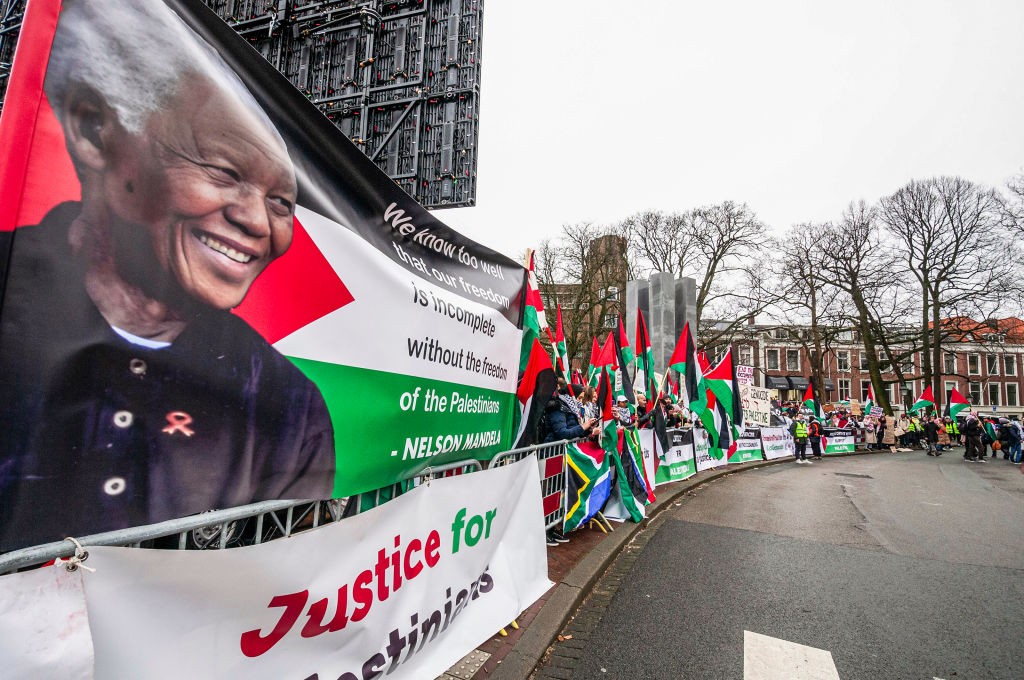
At this stage of the proceedings, the International Court of Justice is not required to rule definitively whether Israel has committed genocide. If previous cases are any indication, such a determination will take years. Under the Genocide Convention, the International Court of Justice can order so-called “provisional measures.” That is, the International Court of Justice cannot allow a party to commit a possible crime of genocide in the course of a required legal process and, under exceptional circumstances where there are possible violations of the Convention, and under emergency conditions, it can order the protection of populations under attack.
While the merits will ultimately be determined at a later date, South Africa has clearly established the framework for claiming that Israel committed genocide. Genocide is not just mass killing, which is certainly represented by the unprecedented scale of destruction caused by Israel in the Gaza Strip. Rather, the ruling requires the presence of genocidal intent, meaning that the perpetrator must intend to destroy a particular national, racial, religious or ethnic group. totally or partially.
The case for genocidal intent was presented by Thembeka Ngcukaitobi, and his argument was twofold. First, Israel’s conduct itself constitutes evidence of genocidal intent. After all, everyone knows what the consequences of dropping 2,000-pound bombs on neighborhoods, or snipers shooting at civilians, or targeting family homes, or ordering people to evacuate and then killing them as they flee, would be.
Second, Ngcukaitobi presented before the court the statements of Israeli political leaders, including, among others, Israeli President Isaac Herzog (“An entire people bears responsibility for what happened. What is said about the presence of unaware and uninvolved civilians is false”), and Defense Minister Yoav Gallant (who described the residents of Gaza as human animals and said, “Gaza will not return to what it was before. We will eliminate everything in it.”)
He played the famous clip in which Israeli Prime Minister Benjamin Netanyahu tells the soldiers: “You must remember what the Amalekites did to you.” This is a reference to the Biblical story, where God calls Saul to take revenge on the Amalekites by killing “their men, and their women, and their children, and their sucklings, and their herds, and their sheep, and their camels, and their donkeys.” Netanyahu repeated this again in a message to Israeli soldiers. The South African legal team also showed a widely circulated video of Israeli soldiers dancing and singing about how they would obey only one order in Gaza: “wipe out the line of Amalek.”
One of the most frightening pieces of evidence is linked to an action Israel took to boost the morale of its soldiers by calling up its oldest reservist, Ezra Yashin, aged ninety-five, and having him wear a uniform and talk to the soldiers. Yashin is a veteran who participated in the Deir Yassin massacre. On April 9, 1948, before the establishment of Israel, Zionist militias attacked the village of Deir Yassin, killed civilians, and wiped the village off the map. Accounts by perpetrators and survivors alike included tales of Palestinians being tied to trees, burned alive, lined up against walls, and killed with machine guns. There are also allegations of rape and sexual violence against Palestinian civilians. Deir Yassin was not the only Palestinian village wiped out during the Nakba, but it was reports of the Deir Yassin massacre that prompted many Palestinians to flee, making them refugees.
Hosting a veteran of one of the most notorious massacres of Palestinians sends a message in itself. In his address to the soldiers, Yashin said: “Be victorious, kill them, and do not leave any of them alive. Wipe their memory from your heads. Wipe out them, their families, their mothers, and their children. These animals should not live any longer.” His words were not limited to Gaza, but he told the soldiers: “If you have an Arab neighbor, do not wait, go to his house and shoot him.”
The legal team and South African representatives consistently insisted that the current genocide should be viewed in this longer context, spanning seventy-five years. South Africa’s ambassador to the Netherlands, Vusimuzi Madonsela, began his argument by noting the “ongoing catastrophe of the Palestinian people,” beginning with the founding of Israel in 1948, and stressed that Palestinians face apartheid within Israel and within the occupied Palestinian territories.
Israel’s defense
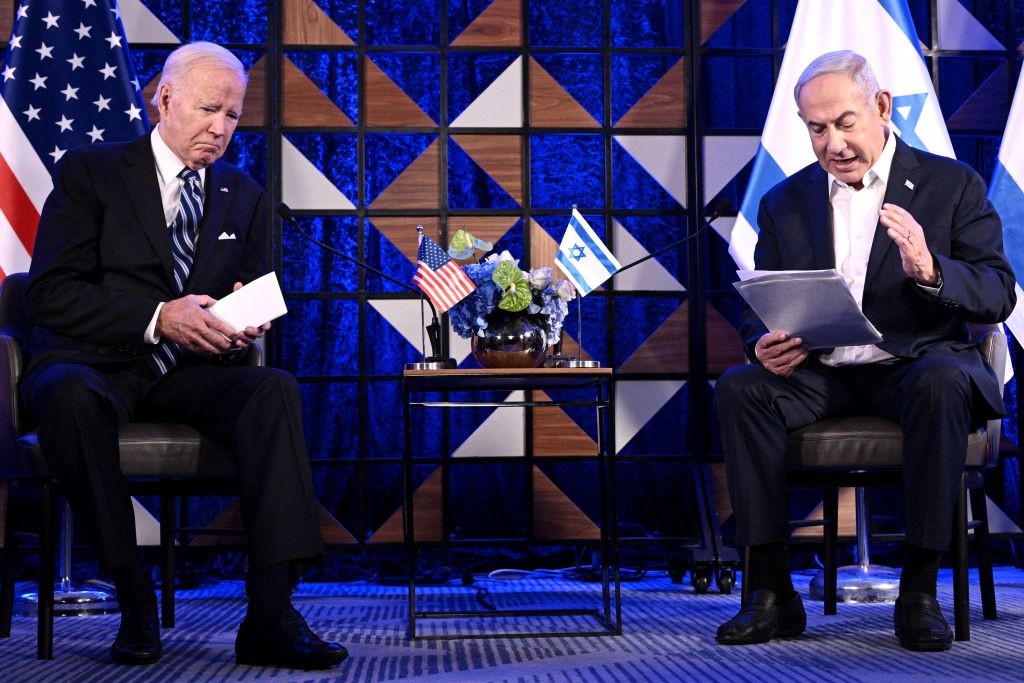
During its oral arguments, South Africa’s legal team preemptively answered why a case had not been brought against Hamas for the October 7 attack (which they condemned in both written arguments and oral arguments), and noted that the ICJ had no jurisdiction over a non-state actor.
However, the Israeli defense team cited the events of October 7, and presented some of the hostages during their case. Israel has claimed that South Africa is close to Hamas and that Hamas likely committed genocide, meaning that it was South Africa, not Israel, that most likely violated the Genocide Convention.
Most of Israel’s arguments were a mixture of denial of their state’s brutal practices, blaming Hamas, and justifying Israel’s actions. Tal Baker, legal advisor to the Israeli Foreign Minister, accused South Africa of citing unverified figures from Hamas when it claimed that more than 23,000 Palestinians had died (figures issued by the Ministry of Health in the Gaza Strip). He also stressed that South Africa did not mention the number of militants killed, Palestinians killed by Hamas, civilians helping in the war, or other legitimate targets.
Baker and another member of the legal team, Galit Raguan, made similar arguments about the number of homes destroyed. They claimed that some homes were legitimate military targets destroyed by Israel, and that other buildings were damaged by Hamas, either through booby traps or rockets that failed to launch.
The Israeli legal team also confirmed that the ambulances that were used to transport fighters and humanitarian aid shipments were smuggling weapons. They claimed that Hamas had turned schools, UN buildings, hospitals and mosques into military targets, hiding weapons, for example, in children’s bedrooms and incubators. They devoted an unreasonable amount of time defending military operations against the hospitals, insisting that Hamas was using them as command centers, to store weapons, and to hide hostages, and that many of the hospital workers were Hamas. Israel has made such claims before, but they collapsed under investigation.
While the International Court of Justice has jurisdiction over the Genocide Convention, it does not have jurisdiction over other war crimes. This has often been raised in Israel’s defense, implying that even if Israel’s actions amounted to war crimes, they were not genocide. Therefore, these matters were not within the jurisdiction of the International Court of Justice.
“We did what we could. Remember us »
During the South African’s presentation to the court, Graleigh showed two photographs, both of the same hospital whiteboard. In the first photo, the white board was devoid of surgical cases, and all that remained was a handwritten message from Dr. Mahmoud Abu Najila from MSF. “We did what we could,” the letter said. Remember us.” The second picture showed the same blackboard, containing the same message, but after an Israeli bombing of the hospital. The raid killed Dr. Mahmoud Abu Najila.
“South Africa is here before this court, in the Peace Palace. She did what she could. “It is doing everything it can,” Gralig told the International Court of Justice, urging them to take action. Israel is attacking one of the most beleaguered peoples on the planet, a people displaced, occupied and exposed to enemies throughout the period leading up to the latest assault, and Israel is still doing so because it has the support of the most powerful country in the world, the United States, which has shown its willingness to finance the massacre and protect its perpetrators. The United States was the only country to veto the UN Security Council resolution calling for a ceasefire.
For too long, many have been willing to accept any crime committed by Israel, and to tolerate any atrocities committed against the Palestinian people. International institutions have failed time and again. The choice is now in the hands of the International Court of Justice – it can order a halt to Israel’s campaign of genocide in Gaza, the first step towards finally achieving justice for the Palestinians, or it can be complicit in the suffering unfolding before us all.
This material was published in Jacobin magazine.