

اخبار لبنان – وطن نيوز
اخبار لبنان 24 – اخبار لبنان مباشر
W6nnews.com ==== وطن === تاريخ النشر – 2026-04-15 00:09:00
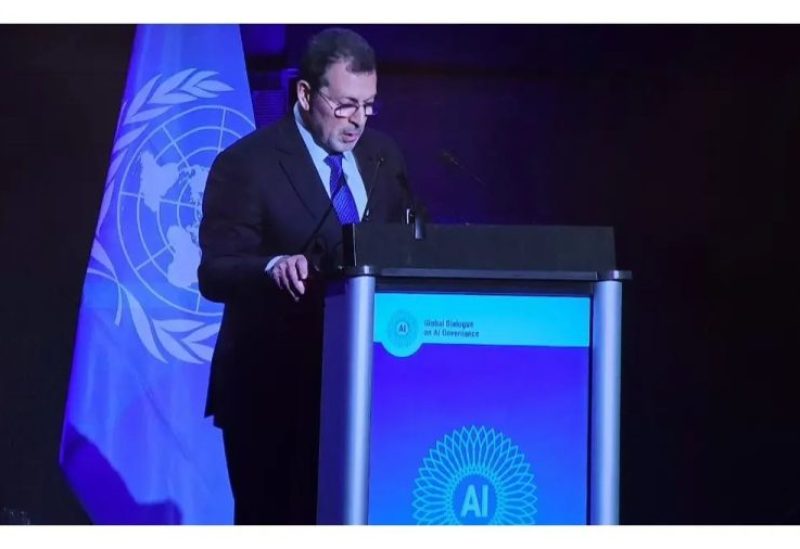
Introductions to the evening news bulletins for Tuesday 4/14/2026 * Introduction to the NBN news bulletins: Negotiations under fire. This is what the enemy confirmed again in his talk about Lebanon. In the past few hours, the aggression’s fire killed more than twenty citizens, who became martyrs in military aircraft and drone raids that included dozens of towns in the regions of Tire, Bint Jbeil, Nabatieh, Sidon in the south, and Sahmor in the Western Bekaa. As every day, the attacks did not destroy civilian facilities, infrastructure, and health facilities, as happened in Tibnin, where the government hospital was damaged after its surroundings were subjected to a hostile raid. On the land front, the Israeli occupation forces put all their weight on the axes led by Bint Jbeil, where violent battles take place with the resistance, in which these forces suffer human and material losses. The enemy authorities released some of these losses. After announcing the killing of two officers, they later indicated that ten soldiers had been wounded during face-to-face confrontations with the resistance in Bint Jbeil. These field incidents were recorded at the start of the Lebanese-Israeli meeting in Washington. In his first comment on the meeting, US Secretary of State Marco Rubio indicated that the existing complications will not be resolved in the next six hours, stressing that it is possible to begin moving forward and setting the general framework. According to circulating information, the Lebanese side will raise the issue of a ceasefire in the meeting in which US Secretary of State Marco Rubio participates. But the Israeli side received instructions not to accept the ceasefire, and the Hebrew media said that Israeli Prime Minister Benjamin Netanyahu sees the negotiations as his opportunity to buy time without stopping the war on Lebanon. Beyond Beirut and Tel Aviv, the negotiating path between Washington and Tehran received a dose of revitalization with Western reports confirming that a second round of negotiations will be held next Thursday in Islamabad or Geneva. However, the Islamic Republic confirmed that no date has been set yet, but it suggested that the second round be held this week or early next week. ======= * Introduction to “MTV” Forty-three years ago, we did not see today’s scene, but rather such a historic opportunity, as US Secretary of State Marco Rubio described it. Two Lebanese and Israeli official figures met face to face at the US State Department in Washington, under extraordinary American sponsorship, represented by the Minister of Foreign Affairs and the US Ambassador to Lebanon. It is the first direct Lebanese-Israeli negotiations since 1983. Thus, the taboo was broken after long and bitter years of wars and conflicts. But the historical picture is one thing and the result is another matter, as there are no indications that today’s preliminary meeting, which includes the ambassadors of Lebanon and Israel in America, will achieve what is required of it. Lebanon insists on a ceasefire before discussing anything else, while Israel wants to begin disarming Hezbollah. Will the two parties’ adherence to their positions lead to today’s meeting remaining an orphan, without follow-up or completion? Meanwhile, Hezbollah continues to fire at the negotiations. The latest “divorce” was issued by a member of its political council, Wafiq Safa, who confirmed that the party is not concerned with what the Lebanese state and Israel agree upon. Who installed Hezbollah as a state above the Lebanese state? Who elected Wafiq Safa as President Extraordinary of the Lebanese Republic to decide what is obligatory and what is not obligatory? Most importantly: Aren’t the military, human, and economic disasters that Hezbollah has implicated Lebanon in enough for us to involve us today in diplomatic and political problems that we do not need? While Hezbollah continues to make its fiery statements against the state, Israel continues to advance with fire in the south. Pictures and information indicate that the Israeli army has become stationed inside Bint Jbeil, which indicates that it is gradually tightening its control over the city. ======= * Introduction to “Al-Manar” They wanted it to be “Tuesday of Shame” for Lebanon in Washington, so the men of God referred it to “Tuesday of Laurel” in Bint Jbeil. They extended their hands, which were paralyzed constitutionally and patriotically, to shake hands with the Zionist occupier, who was deeply enraged by the blood of their people, while the people of the land were cutting off the hands and feet of his soldiers, which extended to Lebanese territory, sovereignty, and national dignity, and blocking the way for his military divisions and his field plan on all fronts of the confrontations in the south, from Bint Jbeil – the capital of steadfastness and dignity – to all its sisters, established during the era of resistance. There is no one who sees in the logic of those who are panting for illusions of surrender a rational or patriotic excuse to throw themselves and their authority into the deep swamp of negotiations, without any cards of strength or even a life jacket. Rather, the enemy exposed them to shame before they reached the scene of humiliation and shame in Washington, by declaring that there is no ceasefire with Lebanon, and that the only goal of negotiation is the disarmament of Hezbollah. A weapon that the Lebanese authority denied, and the Zionist admitted that it injured more than one hundred and fifty of its officers and soldiers during five days of confrontations in southern Lebanon, including thirty-five seriously injured. Although he refused, as usual, to acknowledge the true numbers of his dead, he could not ignore talking about the “difficult events” during the recent confrontations, which is the password for his losses that he does not want – or cannot bear – to disclose. They carry the nation on their palms, as strong men, who moisturize its soil with their flow of blood to forge a strong shield for it. They do not sleep like those drowning in a disgusting national slumber, but rather they rise with the mornings of Bint Jbeil, Naqoura, Al-Khiyam, Shebaa, and the villages of Arqoub – and they do not disappear, throwing the enemy deep into its being, and making their bodies a bridge for their homeland and their people towards a proud history in which there is neither surrender to an enemy nor subordination to a hater, but rather a history that resembles them and their honorable people, crossing all spectrums of the country and its regions, and will not be a group of people with political adventures or grudges. Historical, to lead the country to the option of surrender, or to tamper with its civil peace and national unity. No matter how much these people extend their hand to the enemy, their feet are on soft political ground, which makes these negotiations absurd, even unacceptable, and in need of a national consensus, as confirmed by the Secretary-General of Hezbollah, His Eminence Sheikh Naim Qassem, who called on the authority to stop the path of free concession and submission to the Zionist enemy, and advised it to withdraw from its decision to weaken the resistance and strip Lebanon of its strength. Surrender is rejected, and there is no choice but to confront this enemy. We will remain in the field until our last breath, according to His Eminence the Trustee of the Banner and the Blood. Rather, we will cut off the breath of the occupier in our land. This is what the men of God did, and this is how they will do it again, and if God gives you victory, there is no one who can defeat you. ======= * OTV Introduction: April 14, 2026 entered the book of detailed Lebanese histories through the broad door of Washington, where US Secretary of State Marco Rubio mediated with the Lebanese and Israeli delegations in a memorial photo at the US State Department, declaring that the opportunity is historic, pointing out that the issue will not be resolved in the coming hours because the matter is related to dealing with decades of complex history, and stressing that the goal is to put a final end to Hezbollah’s influence. As for the Lebanese reactions to the joint photo, they were divided between welcoming, condemning, and anticipating the results: Those welcoming expressed their opinions clearly through the media and social networking sites, and with political statements in audio and video, on the basis that the clock does not turn back, as opposed to the rule that history repeats itself, which the denouncers adopted, recalling the experience after the May 17, 1983 agreement, at a time when Hezbollah Political Council member Wafiq Safa deliberately made the statement via the Associated Press before Starting negotiations, the party is not bound by any agreements that may result from direct talks, saying: We are not interested or concerned with them at all. At the same time, Israel was talking about closing an account with terrorists in Bint Jbeil, according to the Israeli army spokesman, while Hezbollah announced that it had targeted at exactly six in the evening, that is, at the moment of the Washington meeting, the settlements of Kiryat Shmona, Metulla, Misgav Am, Kafar Giladi, Al-Malikiyah, Tel Hai, and Dishon, with simultaneous missile launches, stressing that this response will continue until the Israeli-American aggression against our country and our people stops, according to a Hezbollah statement. At the regional level, at a time when US Central Command was announcing that more than ten thousand American soldiers, more than a dozen warships, and dozens of aircraft were participating in the mission to tighten control of ships entering and leaving Iranian ports through the Strait of Hormuz, US President Donald Trump announced that talks on Iran may be resumed in Pakistan during the next two days, saying: We are more inclined to go there. ======= * LBC Introduction April 14, 2026, the date of the Lebanese-Israeli historical event in Washington. The Lebanese Ambassador and the Israeli Ambassador to Washington side by side at the US State Department. In the first direct meeting in forty-three years. The image of the event is more important than any content at the moment. Lebanon is entering today into a very precise and important historical stage. How will developments progress after this picture? The American shepherd, represented by US Secretary of State Marco Rubio, will he remain in control of the file? Or will he move away, as Washington did in 1983 and 1984, after the Marine bombing, after the American withdrawal, and abandoning Lebanon, leaving it to its fate? Perhaps today circumstances have changed. In 1982, Iran was at the peak of its rise, and the vanguards of the Iranian Revolutionary Guard were arriving in Baalbek, and Hafez al-Assad was in Syria, wanting to avenge his withdrawal from Beirut after Israel forced him to do so. The Soviet Union, Syria and Iran met to strike America, along with Israel, in Lebanon. Lebanon paid the price, May 17 and its effects fell, Syria returned and Iran became entrenched. Assad’s Syria fell, Iran was under siege, Israel returned again to the south, Hezbollah was fighting alone, and the Lebanese state took the decision to negotiate directly. We are here. How will things develop? Washington got the picture, but what comes after the picture? It is the first step in a journey of a thousand miles. ======= * Introduction to the “new” is the “zero” meeting, summarized in the image. Instead of planting the flag in Bint Jbeil, Israel obtained a “souvenir” in the context of bringing together the Lebanese ambassador next to the Israeli ambassador, just as the Lebanese and Israeli flags were placed side by side. But Lebanon was forced and heroic at the same time, as it delegated its command to the American, the Israeli guardian, and coinciding with the start of the Washington meeting, a ground aide carried out a “safe landing” on the land of Riyadh. In the new information, former Minister Ali Hassan Khalil left for Riyadh, delegated by President Berri, to meet Prince Yazid bin Farhan in Riyadh. The “emergency” visit comes after a Saudi move crystallized after the Washington meeting. The move revealed that the Saudi special envoy to Lebanon’s communication with Ain al-Tineh had intensified in the past days, and was a guarantee of internal calm, coupled with the fact that Iran had become more open to the Saudi role in Lebanon and considered it a factor of stability. The preliminary meeting comes as a continuation of the initiative launched by the President of the Republic for direct negotiations, ratified by the Presidency of the Government, and gained the approval of the Presidency of the House of Representatives, stating that if the matter was a ceasefire, then “land” would be better soon, as Prime Minister Nawaf informed Salam on the eve of a scheduled visit to the United States, before it was postponed due to the security circumstances of the hour. The preliminary tripartite Lebanese-Israeli-American meeting was hosted by the Ministry of Foreign Affairs and its session was opened with speeches by the head of US diplomacy, Marco Rubio, who blew the whistle to start moving forward, setting the general framework, and describing the Israeli-Lebanese talks as a historic opportunity. While Rubio stressed that not all of the complications will be resolved in the next six hours, he added that the matter is related to putting a final end to twenty or thirty years of Hezbollah’s influence. Before the start of the first round, the President of the Republic launched “marches” in the form of positions towards the Washington table, hoping that the meeting would constitute the beginning of ending the suffering of the Lebanese in general and southerners in particular. He said: “Stability will not return to the south if Israel continues to occupy its lands, and the solution is to redeploy the Lebanese army to the internationally recognized borders and assume responsibility alone.” As for the Israeli side, it came to the meeting carrying a road map that put the cart before the horse and talked about peace and negotiation under fire. Haaretz newspaper reported, citing sources, that the Israeli ambassador in Washington has instructions to reject the ceasefire while negotiations with Lebanon continue and that he will confirm the continuation of the war to disarm Hezbollah. During the negotiations, if Lebanon was a piece in the “Basel” of the region and a point in the “Hormuz” Sea, then the positions rejecting the direct Lebanese-Israeli meeting launched by Hezbollah Secretary-General Naim Qassem deviated from the path that Tehran took in direct negotiations with Washington, so how can Iran have the right to what Lebanon does not have the right to? What Qassem spoke about is that there is no national consensus on negotiation that is similar to entering into a war supporting Iran by order of an “Iranian revolutionary.” After the party’s commitment to a ceasefire for a year and a half and the unilateral decision to enter the war, Washington withdrew an important card from Iran’s hand under the auspices of the bilateral meeting. Based on its results, the talks will be completed under American supervision, mediation and control, and in parentheses, the talks are still at their beginning, and they may reach their conclusion “after a long life” or fail. Once the sticks are put in its wheels, when the storm between Washington and Tehran calms down, all the storms after that will become a storm in a cup, with the compass directed again towards Pakistan to restore the negotiating table between the two parties with American-Iranian signals crossing the Strait of Hormuz and aimed at heating up diplomacy over the phone lines between Iran and neighboring countries. Reuters reported that Islamabad is likely to hold the meeting during this week after receiving a positive response indicating Tehran’s openness to holding a second round. This is what the New York Post reported from Trump, saying that he is inclined to go to the Pakistan negotiations before leaning towards another position.