

اخبار ليبيا اليوم – وطن نيوز
اخر اخبار ليبيا- اخبار ليبيا الان
W6nnews.com ==== وطن === تاريخ النشر – 2026-04-15 14:39:00
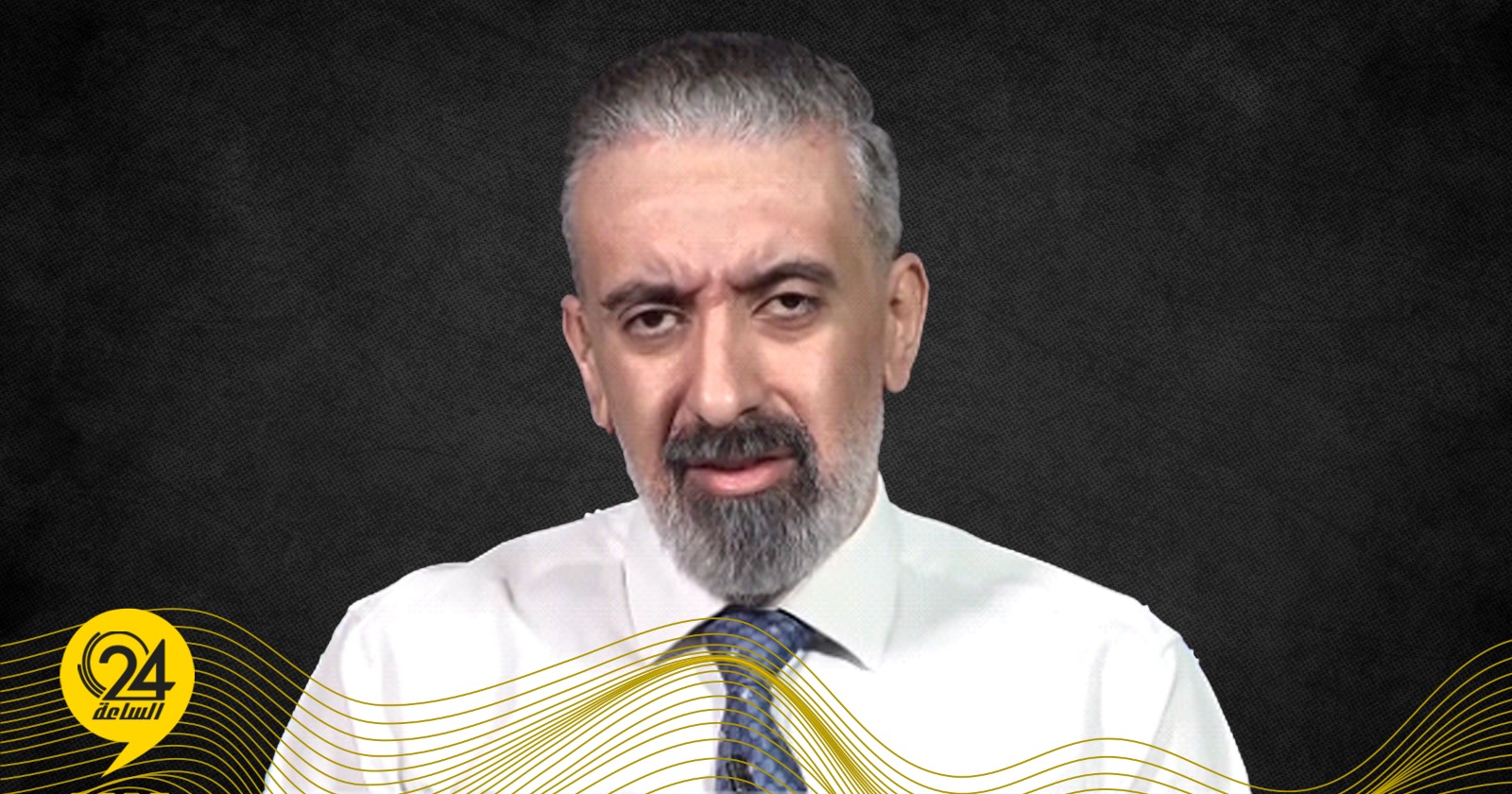
Former Ambassador Mohammed Al-Mardas considered that the “Flintlock 2026” exercise represents an important step in the field of military training, noting that this tactical exercise is well-known and is held annually in one of the countries, which gives it a continuous professional dimension, explaining that its value for Libya is reflected in its positive internal impact on the efficiency of the armed forces and their level of readiness. In a related context, Al-Mardas touched on the meeting that brought together the Deputy Commander-in-Chief and Abdul Salam Zobi, considering that it reflects a tendency towards peace, and may indicate a possible convergence of views regarding the unification of the military institution, pointing out that this step was welcomed by a wide segment of patriots, especially non-ideological moderates, whether in the public sphere or through social media. He added in his speech to “Al-Masar” TV, monitored by “24 Hour”, that this initiative is a blessed step at the international and local levels, and represents progress forward that enjoys the support of various national elites who put Libya’s interests first, expressing his belief that these moves may lead to the unification of the military institution at the hands of young leaders, and that what happened may be the beginning of a path followed by deeper subsequent steps. Al-Mardas continued, explaining that this step could also constitute An incentive for political actors to work on larger initiatives, pointing out that the boldness shown by the military leaders in this positive appearance may contribute to encouraging the political parties and the rest of the active forces, especially if these efforts receive international sponsorship and local support, which enhances the chances of building on them in the next stage. He also pointed out that these moves come in light of circulating talks about the possibility of unifying the government, and entering into a new transitional phase that precedes the elections, in addition to presenting scenarios for restructuring the Presidential Council according to the traditional divisions of the Libyan regions. “East, West and South,” considering that any initiative in this direction represents an overcoming of the stalemate, a breaking of the silence, and a push forward, in a way that contributes to moving stagnant waters and finds wide acceptance among the various parties. In another context, Al-Mardas indicated that there is a pessimistic view towards the issue of unifying the military institution, but he saw that this proposal does not provide realistic solutions, especially in light of the current political impasse, stressing that there is no practical option other than moving towards unifying the army, especially since Its primary tasks require protecting the country’s borders and spreading across the entire Libyan geography. Al-Mirdas stressed that adopting a pessimistic view at this stage does not serve the national interest, calling for optimism to prevail and support for all initiatives that seek to achieve rapprochement. He stressed that the role of elites and intellectuals is to provide a comprehensive reading of the scene, while focusing at the same time on the practical details that make a difference on the ground. He explained that what happened recently can be considered a real test of the extent of the possibility of achieving this unification, recalling previous experiences during which unification was achieved. Some institutions, such as the Central Bank and expenditure regulation, while other paths related to unifying the government and the military institution faltered. He indicated that despite the presence of problems in the western region, related to the military hierarchy and some manifestations of chaos associated with the armed formations, there are existing attempts that can be built upon, such as the experience of “Force 111” and some other brigades, which may join within a unified military institution if a consensus formula is available that satisfies the various parties, especially in light of any expected political settlement or reconciliation. He also indicated that the presence of Abdul Salam Zubi, in his capacity He occupies a political position as Undersecretary of the Ministry of Defense, which carried symbolic connotations, especially with his appearance in civilian clothing, which he considered a message that reflects openness to joint action between the civilian and military sides, and a willingness to participate in unification efforts. He touched on the increasing security challenges in southern Libya, noting that some reports warn of potential risks in the event of waves of displacement from neighboring countries, which may turn Libya into a major transit country, and double the irregular migration crisis, especially if the situation worsens. In countries such as Sudan, Mali, Chad, or Niger, he explained that these developments impose the necessity of a unified military institution capable of securing the borders, which intersects with the American vision, which sees the importance of the stability of North Africa as part of efforts to limit the flows of terrorism and migration. In response to the proposals related to the possibility of unifying the military institution under one leadership, Al-Mardas pointed out that the experiences of countries similar to the Libyan case often tended towards forming a supreme military council, instead of relying on a unified individual leadership, explaining that this model may be more realistic in the context. Al-Libi continued: Among the proposals discussed previously is the idea that the head of the Supreme Military Council should be assumed by the person who has the greatest influence at the level of the military regions. This is an approach that has been proposed for years, including during the period of the previous Government of National Accord, where the various military regions are represented within this council. He also pointed out the existence of other proposals related to the distribution of powers between the Minister of Defense, the Chief of Staff, and the Commander-in-Chief of the Army, in addition to proposing specific names for possible leadership roles, whether in the military institution or even within the Presidential Council. These scenarios reflect the nature of the overlap between the political and military tracks in managing this file. He explained that these solutions, regardless of their differences, fall within attempts to reach a unified formula for managing the military institution, whether by integrating it into a unified structure or restructuring it according to the historical regions of Libya. He pointed out that this path is considered a forced option in light of the complexities of reality, noting that the Libyans are seeking to reach this solution without resorting to war, warning that failure to achieve unification of the military institution through the peaceful path may push the country towards it. A military confrontation, at a time when there is an urgent need to protect the borders and maintain the stability of the state. Former Ambassador Mohammed Al-Mirdas added that what happened is considered a normal protocol matter within the framework of the forces’ participation with each other within the city of Sirte, explaining that showing praise and appreciation among military leaders on such occasions is considered usual behavior, especially since such statements are transmitted by the media and covered by newspapers, which requires that the messages issued in this context be calculated and bear a positive nature, stressing that one should not be surprised by this. This type of speech. He pointed out that Lieutenant General Saddam Haftar’s statements carried reassuring messages in their content, whether in terms of the language used or in terms of the reference to the formation of a “joint force,” considering that this proposal reflects a responsible speech that seeks to calm down and build confidence, rather than just a passing statement. In a related context, Al-Mardas rejected the proposal that the American presence in Sirte was imposed or coercive, stressing that the reality shows the opposite, as this step was preceded by a series of meetings and gatherings that were held in the regions. He explained that Lieutenant General Saddam Haftar held meetings with a number of military leaders, including Mahmoud Hamza, Sami Al-Juwaili, and Muhammad Al-Hassan, in addition to communicating with leaders from the Souq Al-Jumaa area and actors from the city of Zawiya. He also indicated that Lieutenant General Khaled Haftar also met with leaders from Misrata in the city of Sirte, which reflects the existence of an ongoing communication path between the various parties. He considered that these attempts were not spur of the moment. Rather, it was preceded by repeated and multiple local efforts, dating back to the period of Hurricane Daniel, which, despite being a humanitarian disaster, contributed to bringing viewpoints closer and strengthening communication channels between the parties, pointing out that entire brigades from the west of the country participated in the operations to recover bodies in Derna after the hurricane, including units from the Al-Arbaat Brigade, and Force 111 of Abdel Salam Zubi, in addition to elements of the Deterrence Service, as these formations worked side by side inside the city. Al-Mardas stressed that what is happening today cannot be described as an order It is imposed, explaining that the matter relates to regular military exercises known between armies, and are conducted annually in different regions, noting that these maneuvers were previously organized in regions such as the Horn of Africa and the Mediterranean Sea, and therefore they are not a new phenomenon or specific to Libya. He pointed out that similar exercises were recently conducted in Egypt under the names “Qadir 1” and “Qadir 2,” with the participation of the United States and Italy, which confirms that this type of international military cooperation is considered. It is a normal matter within relations between countries, and is not an exception specific to the Libyan situation. He added: The selection of sites for implementing these exercises is done according to military and logistical considerations, as they were previously held in the Red Sea, and in countries such as Italy and Turkey, and even within the framework of Egyptian-Russian cooperation in the Black Sea, which reinforces the idea that what is happening in Sirte comes within a broader international context. In the context of his talk about the path of unifying the military institution, Al-Mardas stressed that the first attempts were not entirely external, but rather were based primarily on a Libyan will, explaining that without this internal intention, there would not have been support or encouragement from international parties, including the United States and the international community. He also referred to the role of the “5+5” military committee, stressing that it has been holding periodic meetings in Sirte for several years, specifically since the ceasefire period, considering that this committee represents one of the most important paths that maintained channels of communication between the military parties. In this context, Al-Mardas recalled a number of incidents that reflect continued communication between the two sides, including the participation of a delegation from the General Command in offering condolences in the cities of Misrata and Tripoli, in addition to mutual visits and meetings held in several countries, including Turkey, the Emirates, and Egypt, stressing that these meetings exceeded a hundred meetings, which indicates that the path of unification was not absent at any stage. He added that what is happening today is not a new imposition or a sudden shift, but rather an extension of those previous efforts, but the difference is that the scene has become more clear and public, especially with the implementation of joint maneuvers on the ground, and the direct participation of forces from Tripoli and Misrata in Sirte. He explained that this development represents a qualitative shift in the Libyan scene, as forces that were previously on opposite sides are now participating within one framework and in international training held on Libyan territory, which reflects an advanced level of rapprochement and coordination. He continued: This type of meeting and consultation did not begin today. Rather, it has been in place since the ceasefire. However, what is new is the translation of these meetings into practical field steps, embodied by the participation of forces from different regions in joint training, which enhances the opportunities for building confidence and paves the way towards unifying the military institution. Returning to the file of international understandings, Al-Mardas stressed that reaching a clear formula is still a complex matter, noting that the United States, as the most influential major power in the international system, remains a major player in determining the paths of resolution, whether through the Security Council or through the United Nations. In this context, he addressed the criticisms that are sometimes directed at American policies, especially with regard to the lack of seriousness in supporting the unification of institutions in some countries, or even supporting a state of disintegration, as happened in previous experiences such as Iraq. However, he explained that these cases were linked to internal peculiarities, such as sectarian and religious diversity, which are factors that do not apply in the same way to the Libyan case. Al-Mardas stressed that Libya, despite going through a civil war, does not suffer from similar structural divisions, which makes there opportunities for its reunification if the appropriate conditions and political will are available. In a related context, Al-Mardas reviewed some facts that reflect the balance of power on the ground, noting that when the Prime Minister of the National Unity Government, Abdul Hamid Al-Dabaiba, tried to take steps against the deterrence apparatus, including moving towards the Mitiga base, he faced this with rejection and counter-moves from the other party, as forces were pushed towards Sirte, which ultimately led to the retreat of that step. He explained that this reflects the presence of a parallel weight within the western region, pointing out that some of the brigades in Tripoli, even if this is not declared, tend in their loyalty or moral connection to the General Command, indicating that a large part of these formations were originally within a military structure that emerged from Benghazi, before they later returned to the umbrella of the army. He added that these data, whether declared or undeclared, indicate that the General Command has now represented an umbrella for a significant portion of the weapons present in the capital, stressing that there are understandings that extend beyond Sirte, to include Tripoli, the western region, and the Western Mountain. He also pointed out that the movements of some military leaders, including Osama Al-Juwaili, are taking place in the context of these understandings, which reflects the existence of indirect coordination or implicit understandings that aim to rearrange the military scene. Al-Mardas stressed that what is happening today, whether at the level of declared or undeclared movements, is in the interest of the military establishment, pointing out that there have already been successes, whether publicly or behind the scenes, and that a large portion of the weapons in Tripoli are now, to varying degrees, within the scope of influence associated with the General Command, which reflects a gradual shift in the balance of power within the country. In response to a question regarding the possibility of reaching a complete unification of the military institution under one supreme command and one commander-in-chief of the Libyan army, in light of the current accumulations that begin with the “Flintlock” maneuvers, Al-Mardas explained that the consultations taking place today between the military directly appear, in his estimation, to be more efficient and effective compared to the previous paths that were managed through political channels. He explained that previous political experiences, with the meetings they entailed, were described as debates and did not achieve tangible progress. Rather, they were often characterized by attempts to “divide the divider,” and to recycle some political forces that had lost their presence locally and internationally, in reference to movements such as the Muslim Brotherhood and others, which seek – as he put it – to renew their presence through these paths. On the other hand, Al-Mirdas confirmed that today he notices greater seriousness at the international level in pushing towards the unification of the military institution, attributing this to the shift towards direct dealing with weapon bearers and decision-makers within the military institutions, as they are – in his words – both sides of the problem and the solution at the same time.

