
اخبار مصر – وطن نيوز
اخبار مصر اليوم – اخبار اليوم في مصر
W6nnews.com ==== وطن === تاريخ النشر – 2026-02-22 21:15:00
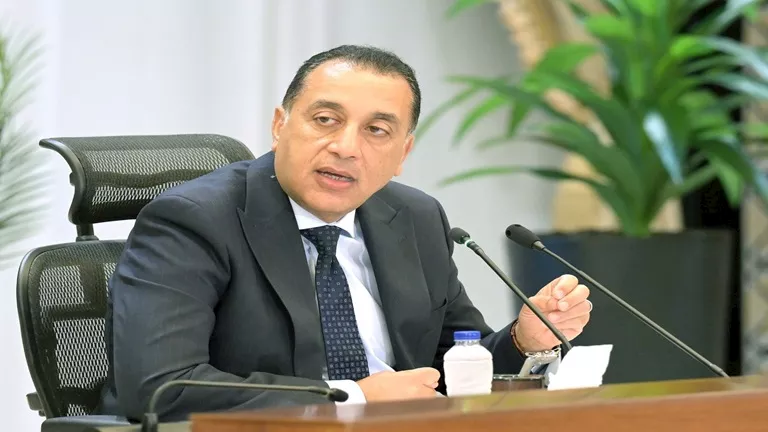
Today, Sunday, at the government headquarters in the new capital, Dr. Mostafa Madbouly, Prime Minister, held a meeting to review the vision of the Ministry of Planning and Economic Development and its work plan for the next three years, in the presence of Dr. Hussein Issa, Deputy Prime Minister for Economic Affairs, Dr. Ahmed Rostom, Minister of Planning and Economic Development, and a number of officials from the Ministry of Planning and Economic Development. The Prime Minister stressed that the Ministry of Planning and Economic Development plays a pivotal role in the economic group’s work files and in formulating the economic direction of the Egyptian state in general. Madbouly said: The recent period witnessed intense efforts to finalize the formulation of the Egyptian state’s vision for the post-agreement period with the International Monetary Fund, where the national narrative for comprehensive development was prepared with the participation of an elite group of experts and specialists. The Prime Minister added that this narrative has been updated and the various observations made by experts and economists have been accommodated, stressing: We are currently building on the achievements achieved in this file, and benefiting from the previous efforts, to have an integrated national economic program that includes a clear vision of work priorities during the coming years. The Prime Minister continued that a three-year budget framework is scheduled to be presented to Parliament, based on the state’s economic program, stressing the need for rapid action on these important files. The Minister of Planning and Economic Development reviewed the future vision of the ministry’s work during the next three years, explaining that the main determinants of the ministry’s direction and its work plan in the next phase are based on the directives issued by His Excellency Abdel Fattah El-Sisi, President of the Republic, to the government in its new formation. Rustom explained that the axes of the ministry’s plan are to focus on achieving economic development, maximizing production, enhancing energy resources, achieving food security, and building humanity. It also includes working to improve the economic situation, ensuring that this is reflected in the quality of life of the citizen, continuing to implement the state ownership policy with concrete steps, and increasing the participation of the private sector in economic activity, in addition to expanding into new areas to support the economy, especially in the sectors of information technology, rare metals, and related industries, as well as encouraging innovations and financing their research and applications. The minister continued that the main determinants of the future plan of the Ministry of Planning and Economic Development also include working to raise growth rates in various sectors, including ports, logistics, industry, agriculture, tourism, communications and information technology, and investment, in addition to increasing attention to the health of citizens and facilitating their access to therapeutic services, as well as sustainable improvement of the education system in its various aspects. These determinants also include emphasizing that the citizen represents the first priority, which means focusing on improving the quality and efficiency of all services provided to citizens. Dr. Ahmed Rustom went on to say that the determinants of the directions and work plan of the Ministry of Planning and Economic Development also include accelerating the implementation of the comprehensive health insurance system, studying ways for some insurance companies to participate and cooperating with them in implementing it in the governorates, in addition to personal, close and continuous follow-up of all assignments and projects, and conducting field visits to them on the ground to ensure their implementation according to the specified timetables. Rustom added: These determinants also include taking advantage of the plans and targets set by the state during the last period, evaluating the programs in terms of what has been achieved and what has not been achieved, monitoring the existing challenges and working to address them, as well as giving priority in the state’s investment plan to complete and complete the projects of the Presidential Initiative for a Decent Life. The Minister of Planning and Economic Development confirmed that the foundations of the ministry’s vision and future directions are based on “Egypt Vision 2030,” the “National Narrative for Comprehensive Development – Policies Supporting Growth and Employment” document, the “Government Action Program,” and the “National Program for Structural Reforms.” Rustom pointed out that the vision of the Ministry of Planning and Economic Development is based on improving the process of participatory development planning in all its aspects and mechanisms. To ensure the efficiency of public investment and maximize the impact of development projects, initiatives and programs, thus contributing to providing productive job opportunities and improving the quality of life for citizens. The Minister explained that the strategic objectives of this vision are to develop the planning system and improve public investment management to maximize the development impact of investment spending, advance the development planning process based on databases, and develop the national accounts system. It also includes ensuring the quality of economic growth that supports employment, enhancing private sector participation, encouraging digital transformation and innovation, stimulating entrepreneurship, and directing public investments towards the state’s priority sectors and areas, with careful monitoring of performance and implementation rates. Rustom added that the goals also include diversifying sources of development financing, interacting with development initiatives and efforts at the regional and international levels, supporting climate action efforts and the transition towards a green economy, in addition to providing qualified human resources to advance the development planning process. Dr. Ahmed Rustom, Minister of Planning and Economic Development, said that the axis of developing the planning system and improving public investment management, with the aim of maximizing the development impact of investment spending, is based on new controls for the governance of public investments. These controls include adopting complementary indicators to measure performance, and moving towards governance of the disbursement process through linking and integrating the Ministries of Finance and Planning and the National Investment Bank. This ensures the effectiveness of spending and is consistent with program budgets and performance. The Minister pointed out that, within the framework of the new controls for public investment governance, there is continuous coordination between the Ministries of Planning, Local Development and Environment with regard to spending in the governorates, to ensure that funds are directed towards actual, feasible projects, with the application of performance incentives, and training of cadres based on the investment plan system to ensure accuracy of data. Rustom added that within the framework of these controls, the “transfers” process will be organized through the electronic system. He also stressed not to start any new projects that fall within the activities that the state intends to exit from; The most important of which is the manufacturing industries, in implementation of the state ownership policy document and in support of the private sector. Dr. Ahmed Rustom continued: “In addition to the above, work will be done to develop the financing equation as a quantitative tool aimed at achieving a fair distribution of government investments between governorates and centers, based on a set of economic and social indicators that reflect the needs of each governorate and its level of development, in addition to continuing to implement performance excellence incentives at the level of central ministries to improve the efficiency of public spending.” The Minister moved on to review the axis of directing public investments to the state’s priority sectors and areas, with close monitoring of performance and implementation rates, most important of which is providing the necessary investments to complete the projects of the first phase of the presidential initiative “A Decent Life,” adding that priority has been given to the projects of the second phase of the initiative within the investment plan. Dr. Ahmed Rustom emphasized that the future vision in the human development axis is based on improving the quality of life of citizens, raising the standard of living, and achieving social justice, through a number of measures, the most prominent of which are: providing full coverage within the comprehensive health insurance system, improving the quality of the educational system, developing the infrastructure of educational facilities (pre-university, technical, and university), while stimulating scientific research, technology, and innovation and linking it to development fields, as well as directing investments to the areas and groups most in need, strengthening the social protection and care system to combat poverty, and using objective criteria for distributing Investments include population density, service gaps, and poverty indicators. The Minister of Planning and Economic Development continued: With regard to the future vision of priorities in the areas of infrastructure, they aim to achieve a number of axes, namely: improving the quality of life of the citizen and raising the standard of living, enhancing social justice, supporting energy security, water and food security, protecting from the dangers of floods, protecting beaches and ports, and developing sustainable smart green transport networks and logistics, through a package of measures that include: completing the “Decent Life” initiative with a focus on drinking water and sanitation facilities as one of the sustainable solutions for the citizen, expanding social housing projects and developing unplanned areas, Bridging technological gaps, expanding renewable energy projects and diversifying the national electricity grid to accommodate added capacities, supporting the Dabaa nuclear reactor project, expanding seawater desalination projects in partnership with the private sector, recycling agricultural wastewater in treatment plants, protecting beaches, and comprehensive development of commercial ports to contribute to Egypt’s transformation into a global logistics center. The Minister pointed out that the future vision for regional planning aims to work on three main axes: The first of which is “the axis of improving the quality of life of citizens and raising the standard of living,” where the implementation of priority infrastructure projects and basic services will be expanded, which includes paving and paving roads, constructing and raising the efficiency of bridges and tunnels belonging to the governorate’s jurisdiction, in addition to lighting works and covering canals and drains within residential blocks. The vision is also committed to supporting development plans and meeting the urgent and pressing needs of the governorates, while implementing urban development program projects and comprehensive and integrated urban development at the governorate level. Rustom added: With regard to the “green transformation and environmental improvement axis”, within the future plan for regional planning, the ministry’s vision is based on supporting solid waste management and renewable energy activities and raising their efficiency, in addition to establishing sanitary landfills, intermediate stations, and solid waste recycling factories. In order to ensure the sustainability of environmental resources and improve the quality of the environment surrounding citizens. The Minister of Planning continued: As for the third axis, related to “local economic development,” within the future vision of regional planning, it focuses on developing and raising the efficiency of industrial zones and economic blocs (agricultural, industrial, and crafts) in the governorates, with special importance given to the governorates of Upper Egypt. This includes providing the necessary training and qualifications to improve craft and environmental products and increase their competitiveness locally, in addition to enhancing investment opportunities within the governorates. Which contributes to increasing job opportunities and raising local employment rates. With regard to the axis of ensuring the quality of economic growth that supports employment, enhancing private sector participation, technological transformation, innovation, and stimulating entrepreneurship, within the strategic objectives of the ministry’s vision, the Minister of Planning and Economic Development pointed to the overall targets for performance indicators (2026-2029), which include (growth, employment, inflation); Noting that with regard to the economic growth rate, the action plan aims to achieve an upward path to reach this rate to a range between 6.5% – 7.5% by the end of 2030, with a focus on growth driven by production, the real economy sectors, and exports, which contributes to providing decent job opportunities, and continuing the implementation of the national program for structural reforms. With regard to employment, the Minister explained that this is based on launching new employment initiatives, with the activation of the minimum wage. The Minister also touched on talking about a new employment initiative, which is: (Employment and Development: Establishing productive clusters), with a focus on income-generating activities for medium-sized projects in the construction and agricultural industries (labor-intensive) sectors. With the aim of providing new job opportunities. The Minister of Planning and Economic Development referred to the proposal regarding entrepreneurship and innovation through establishing the Egypt Entrepreneurship Fund. With the aim of establishing an entity to quickly support entrepreneurship projects and startups, ensuring unified efforts in this file. The Minister addressed the axis related to advancing the development planning process based on databases and developing the national accounts system, within the strategic objectives of the Ministry’s vision, explaining that accordingly, work will be done to develop this system over a period of three years, through two axes: the technological axis by launching a platform for economic data and expanding institutional connectivity with the authorities related to detailed data such as taxes, customs and insurance, in addition to activating electronic connectivity with all economic bodies. During the meeting, the Minister of Planning touched on the topic of diversifying sources of development financing and interacting with development initiatives and efforts. Whether at the regional or international level, in an effort to shift towards innovative and mixed financing with its multiple tools and forms, which is one of the important axes within the objectives of the Ministry of Planning’s future vision. Rostom stressed the continuation of implementing national initiatives and projects, such as the “Decent Life” project, the Egypt Award for Government Excellence, the comprehensive health insurance system, in addition to the national initiative for smart green projects, and others.