

اخبار فلسطين – وطن نيوز
فلسطين اليوم – اخبار فلسطين اليوم
W6nnews.com ==== وطن === تاريخ النشر – 2024-02-03 13:26:08
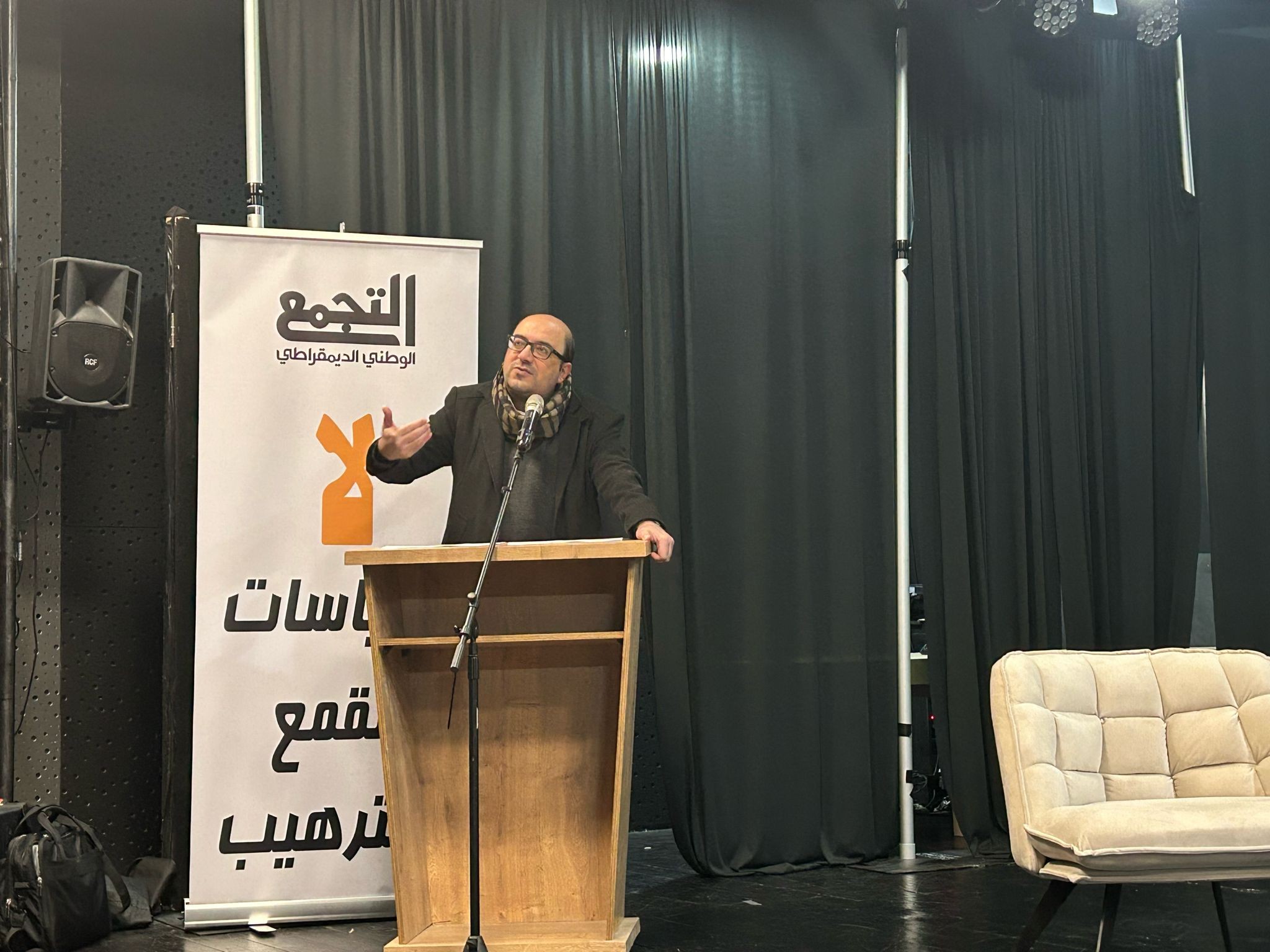
Yesterday evening, Friday, the National Democratic Rally concluded a study day, which it had organized in the city of Nazareth, under the title “Palestinians in Israel – The political and legal situation in light of the war on Gaza… and a future vision,” in which a number of members of the National Democratic Rally and intellectuals participated, And university students, in which many interventions were presented in three sessions, and important discussions took place on fundamental issues in which the attendees participated by asking questions and open dialogue.
Continuous coverage on the “Arab 48” website channel on “Telegram”
The school day, which was held in the Al-Henein Theater hall in Nazareth, began with a minute’s silence for the souls of the martyrs, followed by an opening speech by the head of the National Democratic Rally Party and the former MP. Sami Abu ShehadehIn which he said that the study day comes as part of a series of meetings, reviews, and movements aimed at developing the discussion, within the party and with the political forces and activities inside the Palestinian territories, in addition to developing the discussion with Israeli society, and benefiting from past experiences in preparation for the party’s eighth general conference, which will be held during the next few months. .
The discourse of the Jewishness of the state without equality will not lead to any results
Abu Shehadeh described these meetings as important and constructive, and intellectuals, political activists, and media professionals sometimes participate in them in an attempt to understand what happened before October 7th, what is happening after it, and to hear different ideas.
Abu Shehadeh stopped at the racist Israeli discourse that talks about the Jewishness of the state, saying that it does not lead to any results as long as it talks about democracy without equality, and their attempts to exclude Arab citizens from the protests against the judicial reform plan, which preceded the events of October 7, for fear of increasing extremism. The racist right-wing movement that supports the coup plan against the judiciary.
He pointed out that at the beginning of the war, Prime Minister Benjamin Netanyahu declared war on the Arabs at home, describing them as a “home front,” and that Israel is fighting on four fronts, including the home front, that is, the Arab citizens of Israel. In his speech, Abu Shehadeh touched on the transformations of the Israeli project from the new Middle East and peace led by Shimon Peres, through the conflict management policy led by Netanyahu, then the conflict reduction policy led by Naftali Bennett, all the way to the genocide, which if it had occurred in Gaza would not have stopped. Then, it would have applied to the Palestinians in the West Bank and then to the Palestinians inside as well, so that the two-state solution discourse would now return with force after Israel understood that it could not do everything it wanted, and would even find itself accused in the International Court of Justice.
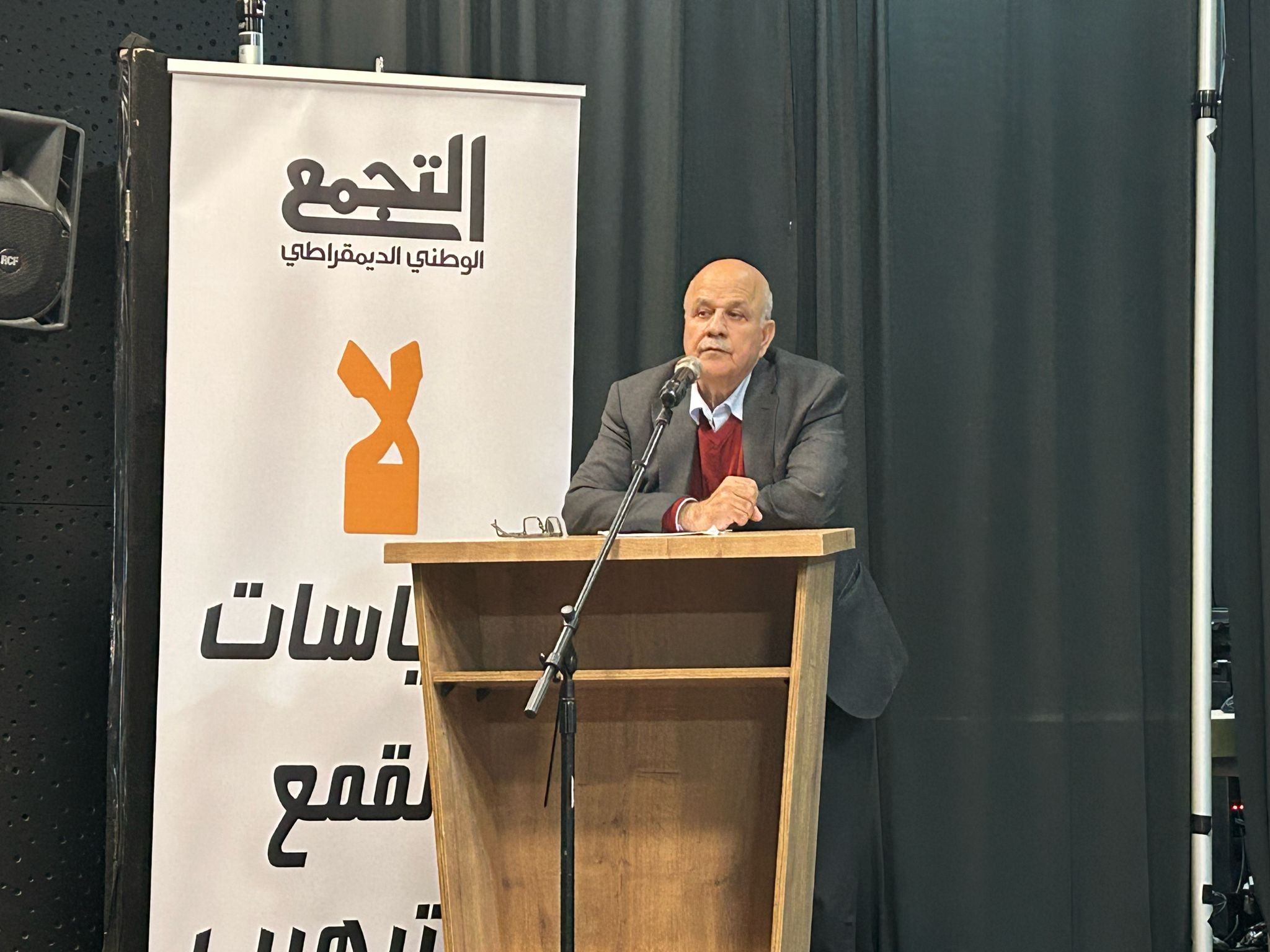
And participated in First session Researcher Dr. Mahmoud Muhareb, lawyer Hassan Jabareen, Director General of the Adalah Center, and Dr. Hunaida Ghanem, Director General of the “Madar” Center, and Dr. Mtanes Shehadeh, member of the political bureau of the Tagammu Party, and the media session was moderated by Maryam Farah.
Dr.. warrior He said that no one expected this scale of massacres committed by Israel in Gaza, in an unequal war during which the Palestinians and all their health, educational and vital institutions were targeted, in addition to the killing of children and women, amid consensus and support from Israeli society for genocide. He added that the state was ready from the beginning to deal with the Palestinians internally as enemies.
He continued: Israeli society has developed values that contradict normal human values. These are values that support killing, and even enjoy killing, bombing, arresting, and destroying. These are racist, anti-Arab values, by assuming the role of the victim and classifying themselves as the better people.
In light of this situation, Dr. Muhareb said that what is required of the Arabs inside Israel today is to adhere to their rights, their Palestinian identity, their national affiliation, and their historical narrative, stressing that the leadership should not be afraid of repression and the pressure exerted on it. Likewise, the struggle must be continued towards building a follow-up committee and acting as a cohesive national minority, and priority should be given to organizing and institutionalizing it. Young people, professionals and women, for resilience, emphasizing the phrase “this is our destiny here”.
We are facing a formative political moment
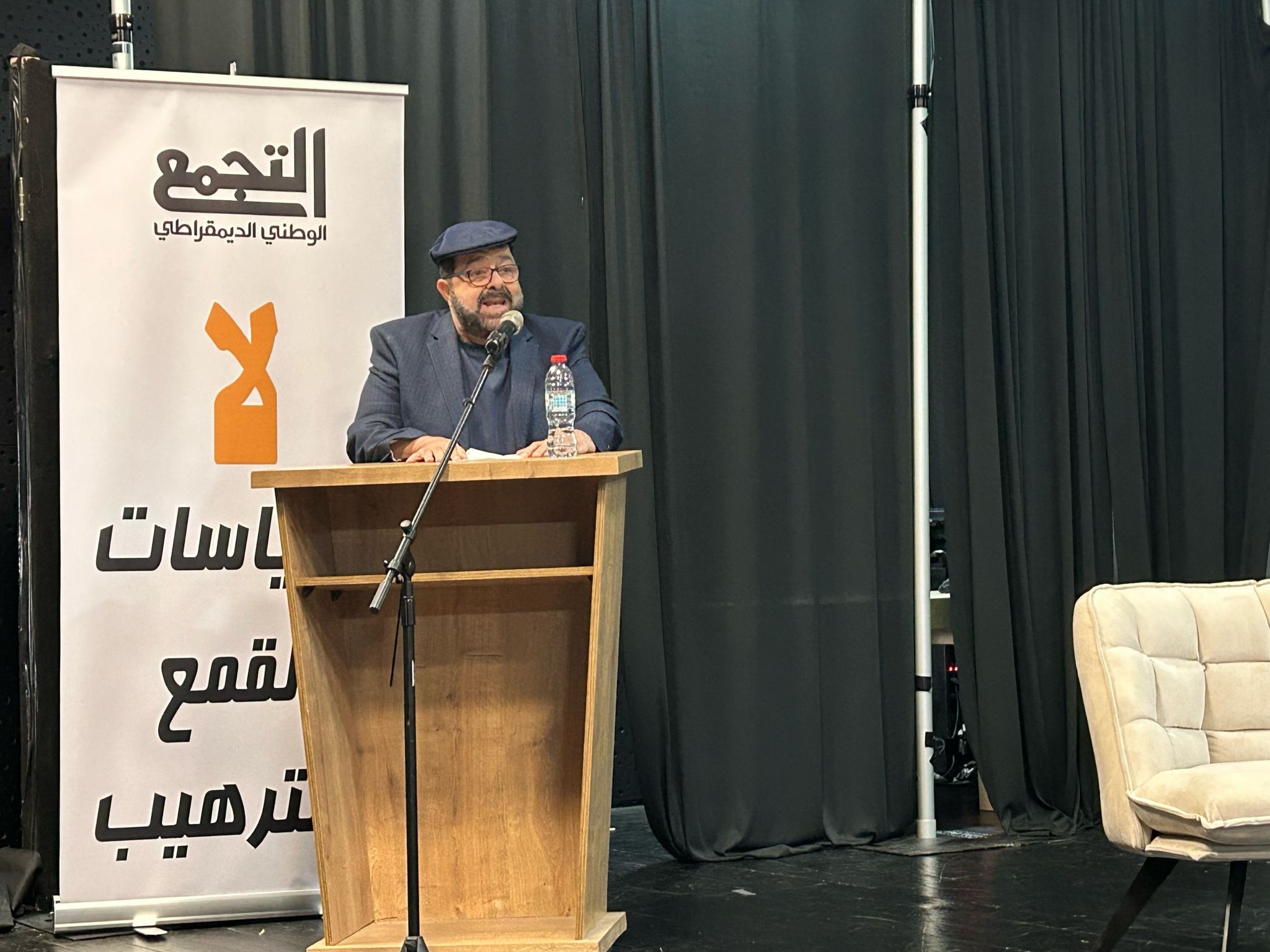
For his part, the lawyer said, Hassan Jabbarin “We are facing a formative political moment, after which everything will change. It is a third historical stage similar to the stage after the Nakba in 1948, and after the 1967 war. For Israel, this October 7 attack is the most important event after the Holocaust. A safe place is no longer safe, which is what… It was not imaginable for the Jew, and the same is true for us. If displacement and transfer were not imaginable, then today we stand before the genocide of an entire society.”
He said that the post-war period will raise important questions about the future of living together and not a future in which one party gets rid of the other, noting that the war will not lead to a resolution for either party.
And I spoke Dr.. Hnaida Ghanem Regarding the stage that preceded the October 7th attack, in which the settlers were dominated to an unbearable extent, after the destruction and liquidation of the Palestinian cause and the two-state solution, these settlers pushed the Palestinians to the wall through arrogance, orgy, recklessness, arrogance, and tyranny during the last ten years. They did not deal with the Palestinians as human beings. .
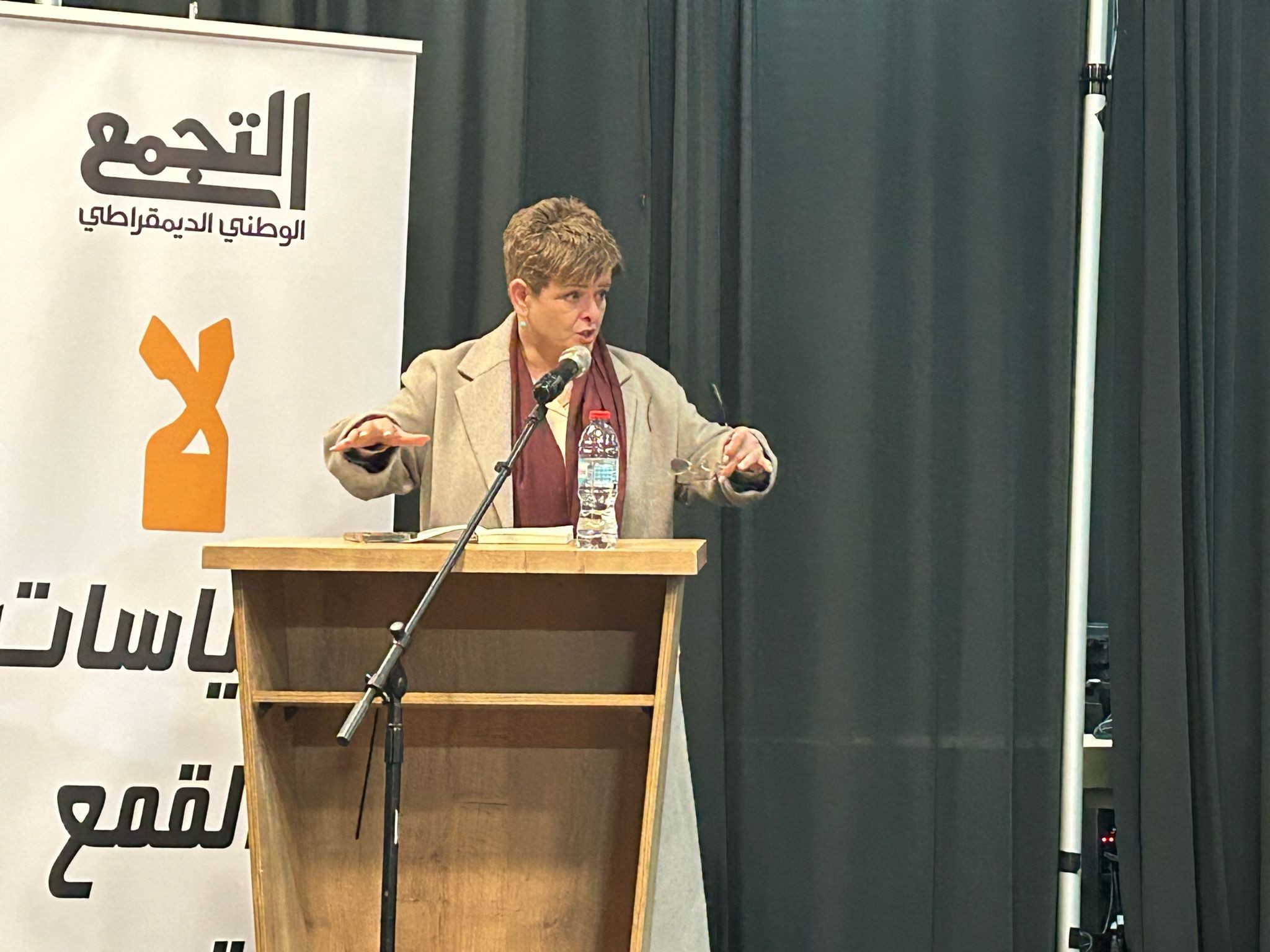
She added: “We have emerged from this stage into a more dangerous stage. The project of extermination and expulsion has not ended and is still fluid and viscous. No one can predict where it might go.”
She continued that the focus today must be on ending the occupation, stopping the theft of lands, establishing a joint Arab-Jewish framework, and making room for a Jewish-Arab movement that believes in the foundations of democracy and a state for all citizens, so that the Arabs in the country do not feel like orphans at the tables of meanness.
Dr. spoke. Imtans Shehadeh That the demonstrations against “judicial reforms” and the war on Gaza broke the models of the security and political doctrines in Israel and broke the model of influence among the Palestinian Arabs at home, this model that was launched with the establishment of the Joint List and has had an impact on Israeli politics.
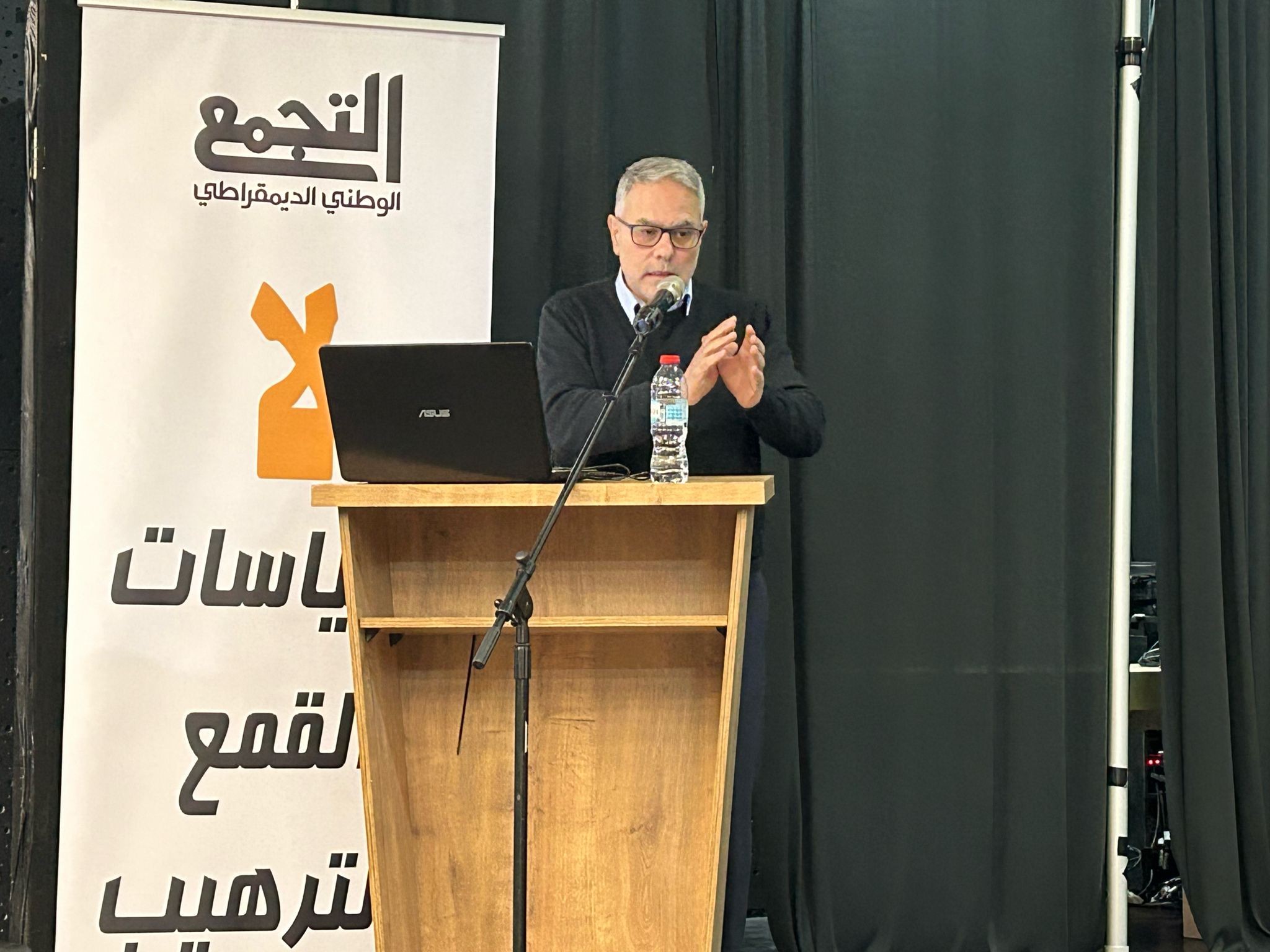
He said, “From the first hour of the start of the war on Gaza, the state dealt with us on the basis that we were a hostile front. We became citizens outside of citizenship and were prevented from demonstrating and from exercising the slightest margin of democracy, because the state is in danger!!!”
Charges of terrorism haunt Arab students in universities
He participated in Second session From the school day, Youssef Taha, the center of the Joint Authority of Student Blocs, lawyer Uday Mansour, from the “Adalah” human rights center, and Nidaa Nassar, the general director of the “Baladna” association, while the session was moderated by Rami Haidar.
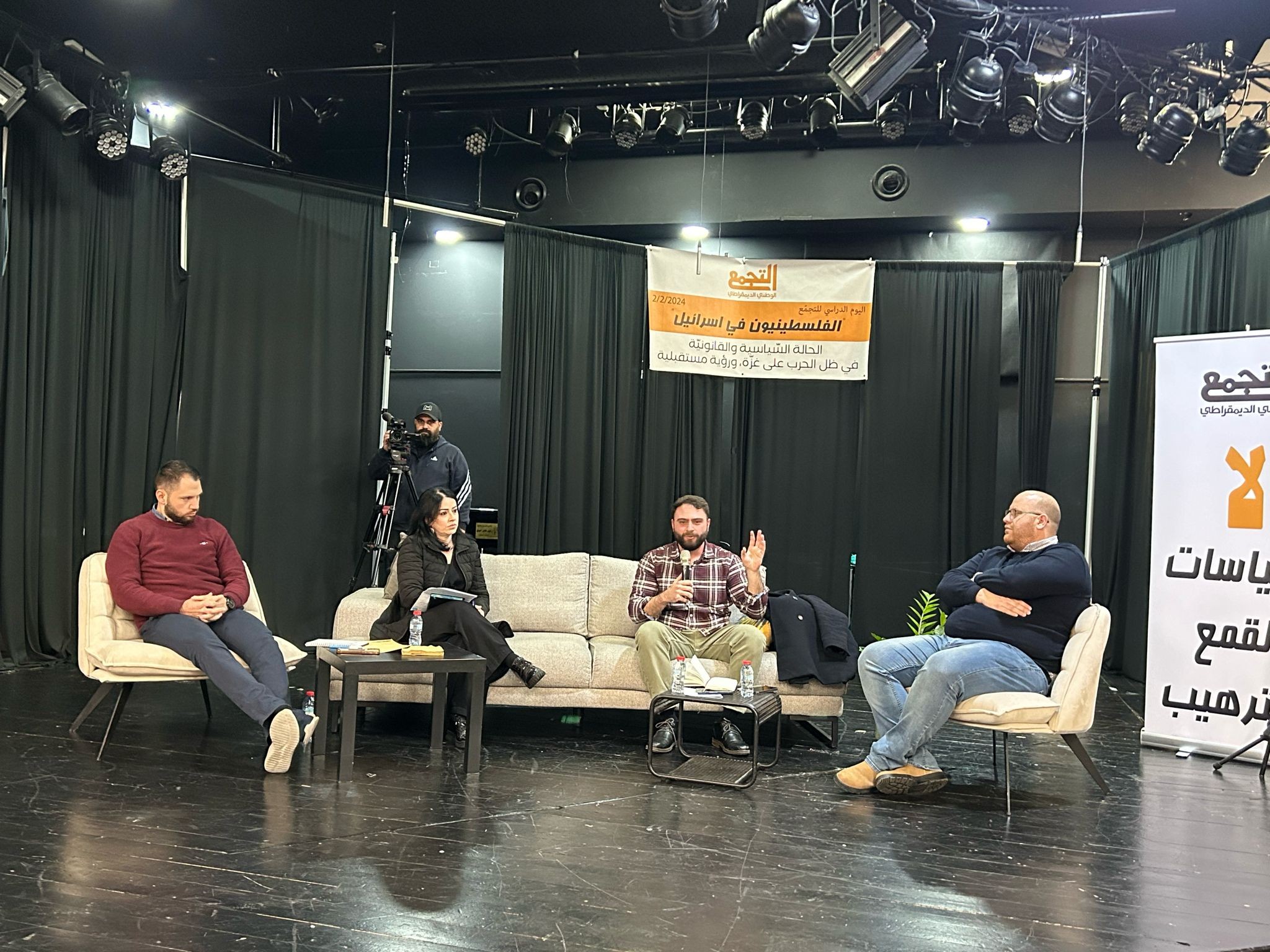
The speakers reviewed the policy of how higher institutes and colleges deal with Arab students, about 140 of whom are facing charges related to supporting terrorism, identifying with a hostile organization, incitement to terrorism, and other charges.
Lawyer Uday Mansour He talked about summoning students to appear before the obedience committee for ridiculous reasons aimed at suppressing the students and finding out what they are thinking, what is on their minds, and the extent of their loyalty to the university and the state. He reviewed some of the cases in which students were accused of supporting terrorism, which had no basis other than the hostile view in which these academic institutions view Arab students, and in return they condoned all racist and inflammatory writings calling for the killing of Palestinians, because this incitement is consistent with state policy.
And he spoke Youssef Taha About the attack on Arab students in various Israeli higher institutes, but it appeared greatly in institutes where the number of Arab students is large, most notably the University of Haifa.
Taha said that the accusation of terrorism has haunted the Arab student for years, and it has become more severe following the organization of activities on national occasions and the anniversary of the Nakba, especially at Ben Gurion and Tel Aviv universities, where Palestinian flags were raised in huge numbers, leading to shock in the Jewish street, and since then the fierce attack on The Palestinian flag, which came as an excuse to hold the Arab student accountable.
In her speech, she touched on: Nassar’s call To the exaggerated cases of repression facing students in the Negev, which she said exceeds all limits, in addition to the tight surveillance to which students are exposed on campus.
Nassar reviewed government policies and practices that aim to suppress youth movements on the one hand, versus the policy of control, economic containment, and development linked to Israelization, and all of this comes in light of the decline of the national movement that began since the founding of the Joint List, and the disintegration of society due to crime, violence, and the contradictions that the Palestinian youth lives between his Palestinian identity. And his involvement in Israeli society.
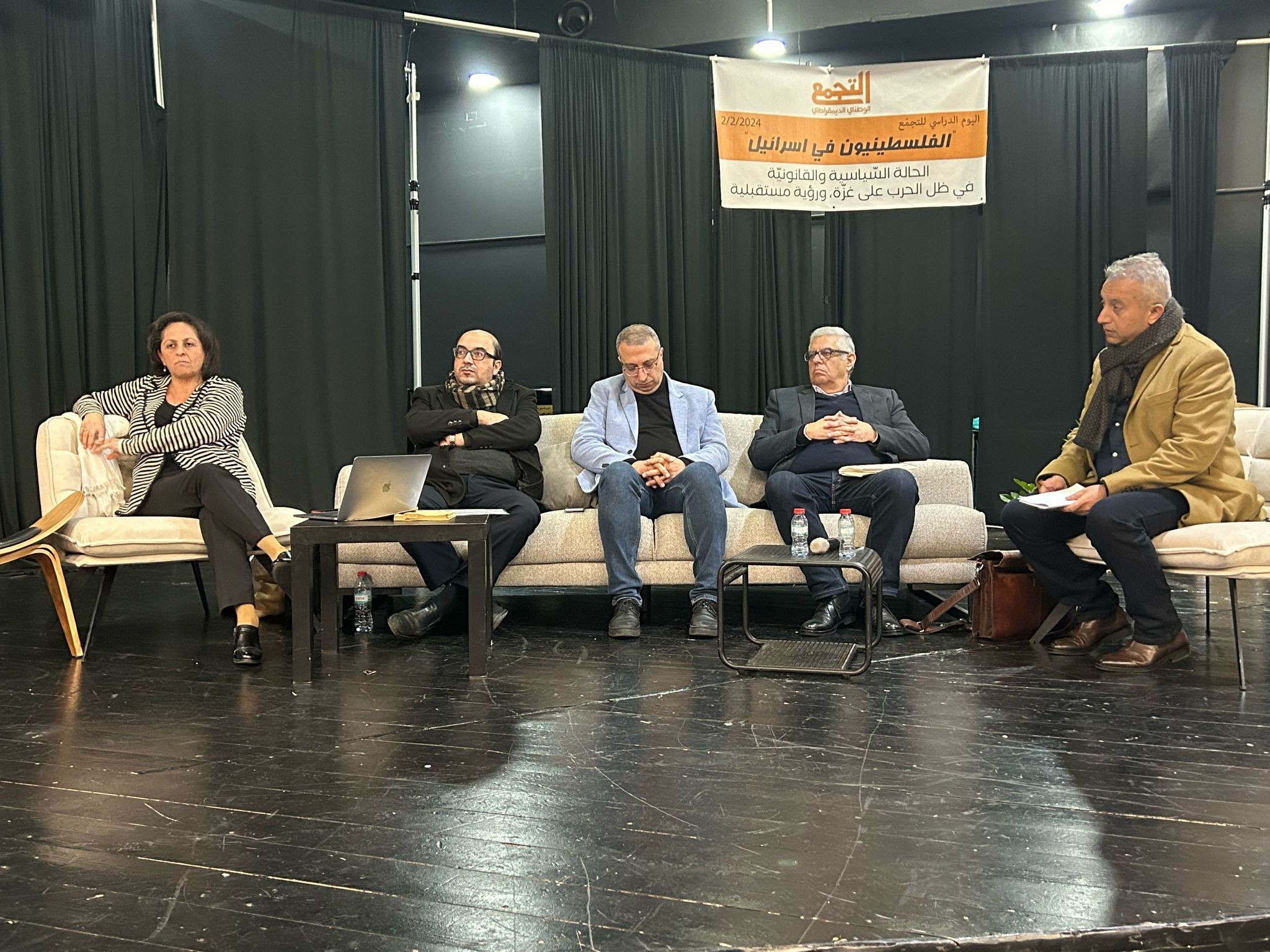 And participated in Third session Which was managed by Dr. Heba Yazbek, member of the political bureau of the gathering, and political activist Dr. Areen Hawari and Dr. Muhannad Mustafa, Director General of the Mada al-Carmel Center, Bakr Awawda, the organizational and strategic advisor, Antoine Shalhat, the researcher and writer, and Sami Abu Shehadeh, head of the National Democratic Rally Party. The session discussed the future of Palestinian politics at home.
The Arab silence inside is fear or wisdom?
She praised Dr.. Hawari’s den With the student movement in Israeli universities and called for its support by the national movement, which shows inability and silence that is unnatural, unreasonable, and incomprehensible, and Dr. tried. Hawari shed light on the reasons for this silence, which opened a discussion about whether Arab silence inside Palestine is wisdom or fear!!
And it was considered Bakr Awawda In his speech, the events of October 7th are a strategic turning point between doubt and certainty. The Jews’ certainty that they are safe in their homeland has changed into a kind of doubt, and the doubts of the Arab citizen that his citizenship in this country provides him with protection, and both parties live in a state of doubt and fear.
Awawdeh also touched on the status of the Palestinian Arab internally as he is outside the whole and said, “We are outside the official Palestinian and political whole, just as we are outside the Jewish-Israeli-Zionist whole and we are paying the price,” considering that Arab citizens have no choice but to adhere to the humanitarian democratic discourse and work to build national institutions that provide Protection for them.
Dr.. Muhannad MustafaHe spoke about readings issued in recent years by the Mada al-Carmel Center that produced enough knowledge about what is happening today. He said that the Palestinians in Israel are facing two paths, neither of which is an inevitable path, namely the path of retreat, which may lead to further weakness as a result of the state of fear, considering Internal silence is neither wisdom nor resistance, but rather fear, not only of political persecution, but of a second Nakba and displacement. This fear has subsided today after it became clear that Israel cannot do everything it wants and today it finds itself in the dock before the International Court of Justice. .
The second path is to make the war an opportunity to rethink everything that was said about the fragility of the Palestinian political field. Dr. reviewed. Mustafa explained the reasons for the fragility of the political field and the necessity of working to strengthen this field through local sources of support. He touched on the role of civil society, which plays a stronger role than parties.
I hate Arabs if I exist
For his part, he invited the writer and researcher Antoine Shalhat He pointed out the need to get rid of two tendencies: the tendency to claim that we have accumulated knowledge, and the tendency of blindness. He said that what Israel is doing today shows its true face, and “this is the Israel we know”!
Shalhat returned by talking about the gift of Jerusalem and Al-Aqsa in the year 200, which produced the “Ur” Committee, which has worked since then to eliminate the collective political project, came up with a civil service project for youth, and worked to eliminate the role of parties in local authorities and restore familial and sectarian control over them. He said that during his rule, Netanyahu established three foundations: a free economy, ensuring governance, and nationalist extremism, reviewing a group of statements by rabbis and prominent figures that called for hatred and justified the killing of Arabs, stressing that the issue of genocide was a clear title for all of these statements.
In conclusion, he spoke Sami Abu ShehadehAbout Arab steadfastness and steadfastness, by saying that the natural person does not exist in Gaza and Palestine, because the normal person flees when he feels fear, but those who lived through the Nakba realized that whoever leaves his home will not return to it, and this model applies not only to the people of Gaza, but to the people of Jish and Fasuta as well!
He said that no one is satisfied when he sees his people being slaughtered while he is unable to move, and this stems from a clear Israeli threat to shoot demonstrators and demonstrators, and here silence may be wise because everyone knows the balance of power and knows Israel’s brutality. The point of light lies in the return of the Palestinian issue to the forefront of the international arena, with millions taking to the streets and opinion polls among American youth. This is the first time that Israel may be held accountable for the annihilation of a people.
Abu Shehadeh spoke about marginalizing this part of the Palestinian people in institutions and decision-making positions, and placing the Palestinian Arabs inside the country on the sidelines of all projects that determine the fate of this people, including the “two-state solution,” which Abu Shehadeh said “will fall on us with all its weight and all its pressure, after War, so we must have a role through which we present our project and vision.”