


اخبار سوريا اليوم – وطن نيوز
سوريا اليوم – اخبار سوريا عاجل
W6nnews.com ==== وطن === تاريخ النشر – 2024-02-16 13:13:23
The political relations between Iran and China are expanding to the point that Tehran completely turns a blind eye to its ideological propaganda about protecting the “oppressed” in the Islamic world, and that the “Guardian Jurist” regime speaks in the name of this marginalized, weak, and outcast group that is being subjected to oppression.
Just as the “Jerusalem Road” in Tehran’s agenda does not pass through Palestine, but rather through involvement, or more precisely, the formation of entities parallel to state institutions in Lebanon, Syria, and Yemen, the Uyghur Muslims in China, with all the human rights violations against them, have no share in Beijing’s policies and activities.” The so-called revolutionary.
Despite the ideological distance and dissimilarity between Beijing and Tehran, with the latter having a theocratic religious rule, while the former also adopts an ideological rule, but in complete contrast to scientific socialism, what unites the “Guardian Jurist” and the “Chinese Communist Party” is the adoption of ideology by each of them. Totalitarianism to spread oppression and tyranny, whether in the name of religion and the protection of the sect or the “proletariat.”
Therefore, everything outside these narrow circles becomes an enemy and adversary, and any civil and citizenship rights are denied according to the constitution. Here we find minorities accumulating significantly in these countries and societies become in a state of division and without integration, due to arbitrary policies that lead to the absence of development from the areas where these oppressed and marginalized forces are located, in addition to systematic oppression through random arrests and executions, or rather extrajudicial killings, not to mention Discrimination, which in many cases is similar to what is practiced by “apartheid” regimes.
China and crimes against the Uighurs
The crimes being committed against the Uyghurs in China, which are full of foreign human rights reports, are hardly different from what is happening against the Baloch, Kurds, Sunnis, Baha’is, or Mandaeans. In all cases, there is arbitrariness in policies, whether in Beijing or Tehran, against what is classified as outside the official frameworks of the party or the “guardian jurist.”
There is also complete similarity and conformity between the policies here and there, as these groups are forced to submit to the central authority through policies of “divisionalization” and the forced imposition of doctrine, which is taking place in Beijing through camps that have been revealed, and they are camps called “education camps.” , to rehabilitate Uyghur citizens under humiliating and oppressive conditions of forced detention on coercive principles and values that would change some identity-related convictions.
At the end of 2022, the United Nations High Commissioner for Human Rights called on the international community to deal “urgently” with the “credible” violations against the Muslim Uyghur minority who are present in the Xinjiang region, and among these human rights violations and violations is torture and sexual violence.
According to the UN Commission in its report, the crimes may amount to “crimes against humanity,” and he continued: “The scope of the arbitrary and discriminatory detention of individuals from the Uyghurs and other Muslim-majority groups… may rise to the level of international crimes, specifically crimes against humanity.”
But Beijing, as usual, rejected what was stated in the UN report, and described the camps in which Uighurs and others from Muslim ethnic groups are detained as mere “vocational training centers” to confront religious fundamentalism.
But the American newspaper “The New York Times” quoted the executive director of the Ottawa-based “Defending Uyghur Rights” Project, Mehmet Tohti, as saying: “Despite well-documented evidence of state-sponsored torture and the intentional destruction of entire Uyghur ethnic groups through mass detention camps and physical torture.” Psychological issues, mass displacement, forced sterilization to prevent population growth, and separation of children from their parents. The United Nations report falls short of calling the crime by name.”
On the other hand, human rights organizations accuse China of forcibly employing Uighurs in factories linked to international supply chains in various sectors ranging from clothing to cars. According to Human Rights Watch, about 16,000 mosques in Xinjiang, or 65 percent of their total number, have been destroyed or damaged as a result of Chinese government policies since 2017.
Not only that, Western studies based on official documents, victim testimonies, and statistical data accuse Beijing of detaining at least a million people, most of them Uighurs, in camps, performing “coercive” sterilizations and abortions, or imposing “forced labor.” While the United Nations does not confirm this number, it notes that a “large proportion” of Uyghurs and Muslim minorities have been detained there.
Forced deportation from Iran to China is among the areas of suspicious cooperation between two countries with long records of humanitarian and human rights crimes.
Academics and NGO activists have long maintained and condemned that strict birth control measures in Xinjiang since 2017 (including the imposition of sterilization quotas and forced contraceptive implantation) are part of a deliberate Chinese attempt to reduce births to ethnic minorities. When China denied these accusations, it claimed that it had implemented a birth restriction policy across the country.
The Uyghurs live in the Xinjiang region, northwest of China, and constitute the majority of its population of about 26 million people, along with the Kazakhs and Han. Most of the Uyghurs are Sunni Muslims, and they constitute the main ethnic group in Xinjiang, with an estimated number of about 12 million people.
The Uighurs constituted the majority there before the communists took power in 1949, but today they constitute only 45 percent of the region’s population.
Iran and its alliance with China
Despite this long record of crimes and violations against many Chinese and minorities, and even political opponents from various trends and references, whether religious, national, ethnic or political, Iran stands in the same box of international isolation and faces international sanctions because of its human rights file and its policies of aggression against global security. , blocks its field of vision and continues its strategic cooperation with the Chinese ally, from several commercial, economic, and security aspects.
Therefore, this makes it logical for the Kayhan newspaper, whose editor-in-chief is appointed by the Iranian leader, to describe the Uighur Muslims as “terrorists,” in the face of the criticism directed at Iranian President Ibrahim Raisi for his silence on what was happening to them during his visit to China about a year ago. Rather, the extremist and fundamentalist newspaper accused the Uighurs of having links to “Israel, England, and America.” It is a ready accusation against anyone who appears to be an opponent of the mullahs.
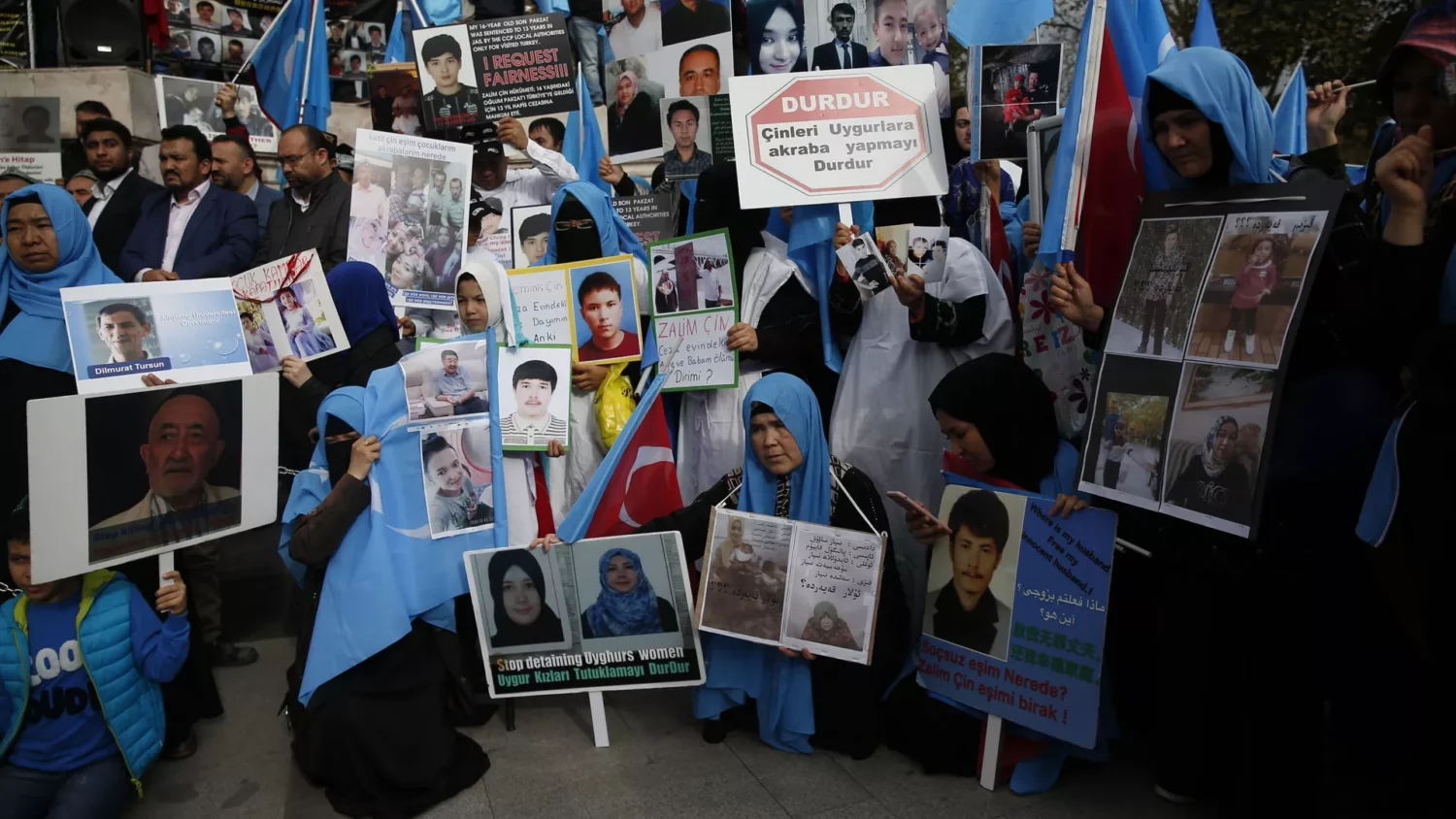
In this context, it would not seem outside of logic or strange for Iran to be involved in handing over a Uyghur Muslim to the Chinese authorities, who in turn arrested him and sentenced him to about 15 years in prison. What happened with Abu Al-Hashim Tursun is very similar to the Iranian practices that target its opponents abroad and forcibly kidnap them, transfer them to Tehran and then force them to undergo mock trials without meeting the conditions for defense, but rather forcefully accepting false accusations that end with them being imprisoned for long periods or executed.
Forced deportation from Iran to China is among the areas of suspicious cooperation between two countries that have rich records in humanitarian and human rights crimes, as well as their advanced position at the top of the reports of countries that carry out death sentences.
According to media outlets, the citizen was sentenced to 15 years in prison in Beijing after being convicted as a “criminal” due to his previous visit to the Emirates.
The UAE is among the countries that Beijing classifies on the list of “sensitive countries,” where visiting it is a pretext and pretext for detaining individuals in “reeducation camps.”
According to Abolhashem Tursun’s brother, despite having a Chinese passport and obtaining a work visa, he was detained at Khomeini Airport in Tehran and interrogated for 20 days. According to “Iran International”. She added: “After there was no news about him, Abu Al-Hashem’s brother, Abu Al-Qasim Tursun, went to the Iranian consulate in Istanbul to obtain information about his brother, but the consulate officials did not mention anything about his arrest and deportation to China.”
While Mehmet Tahti, Director of the Legal Committee of the World Uyghur Congress, condemned the forced deportation of Abu Al-Hashem Tursun to China, accusing Tehran of violating international agreements, pointing to the movements of the “Legal Committee” that he chairs with international organizations concerned with human rights issues. He continued: “It is impossible that they did not know that he was a Muslim Uyghur. They conducted a lot of investigations and collected a lot of information.”
Silence in exchange for economic interests
A few years ago, the issue of Tehran’s defense of the violations carried out by China against Uyghur Muslims was the subject of debate between officials and the political elite in Tehran. Parliament member Ali Motahhari tweeted against his country’s biases towards China, exposing its silence as a result of economic interests, and described this silence as “insulting.” On the other hand, fundamentalists launched violent attacks against him, going so far as to describe him as “mentally disabled,” as MP Mahmoud Ahmadi Begash put it.
The altercation reached far beyond mere verbal harassment, as the extremists engaged in a conflict that had a regional context, but revealed interests and contradictions. Mehdi Hassanzadeh hinted, in the “Khorasan” newspaper affiliated with the fundamentalist movement, that China’s crises are only with “the Takfiri Wahhabis supported by the Kingdom of Saudi Arabia,” which, according to its claim, seeks to promote this ideology in the province inhabited by the Uyghurs.
Ebrahim Raisi’s rise to the top of the Iranian executive branch represents an embodiment of the internal political conflict over China’s growing influence in Iran.
Raisi called several times during his election campaign for “looking east” toward China to revive the economy. The “turn east” theory stems from the mistrust of the pro-Raisi camp in the United States and Europe.
In their vision of China, the hardliners are based on “civilizational” solidarity and their perception of Beijing as a “natural strategic partner,” according to the Emirates Policy Center, as it is a central, dictatorial system consistent with the culture of governance in Iran. The hard-line camp believes that China is the only non-Western economic power capable of providing an effective and sustainable economic alternative for Iran. In addition, this camp appreciates China’s standing with Iran during the nuclear agreement negotiations, despite Beijing’s approval of most of the sanctions issued in the Security Council, and Chinese companies’ compliance in most cases with US sanctions.
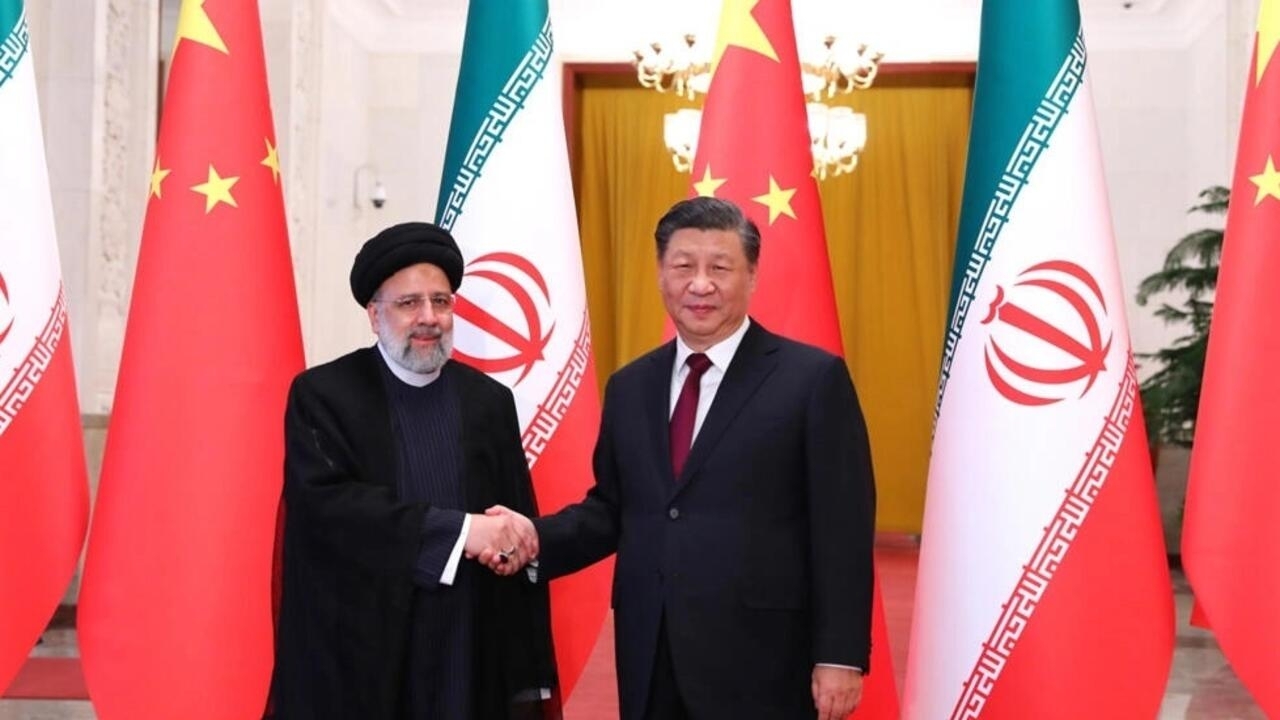
But, on the other hand, moderates and reformists deal with China from a very pragmatic approach, and view their country’s relations with Beijing as a complement to broad ties with the world outside the framework of Iran’s international isolation, and within the need to diversify Iran’s partnerships between the East (China and Russia) and the West (the United States). United States and the European Union), according to the Emirates Policy Center.
He added: “Moreover, reformists look with suspicion at Iran’s increasing dependence on China, represented by the “Look East” theory that Raisi called for, based on China’s opposition to any democratic transformation in Iran and its support for the ruling theocratic regime. For example, during the Green Movement demonstrations in 2009, demonstrators objecting to the election results met extremist chants of “Death to America” with chants of “Death to China,” which they accused of providing the regime with tools to suppress demonstrations and spy on opponents.”
But feelings of opposition to China’s growing influence also extended to the camp supporting Raisi through two issues, as the Emirates Policy Center points out, the first of which is “China’s policies in suppressing Uyghur Muslims in the Xinjiang region,” and the second of which is “the recently signed 25-year comprehensive strategic partnership agreement.”
Influential clerics have led the wave of criticism of China for its treatment of the Uighur minority in the past, including Ayatollah Yousef Sanei, the spiritual leader of the reform movement and one of the staunchest former opponents of President Mahmoud Ahmadinejad. But this criticism also included Ayatollah Makram Shirazi and Ayatollah Nouri Hamidani, who are two of the most ardent clerics who support the regime.”


