
اخبار فلسطين – وطن نيوز
فلسطين اليوم – اخبار فلسطين اليوم
W6nnews.com ==== وطن === تاريخ النشر – 2026-02-09 09:43:00
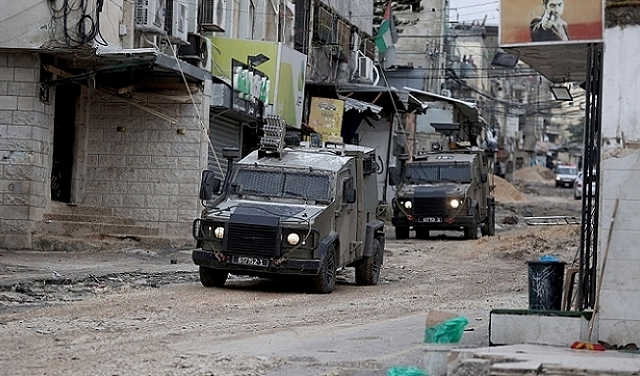
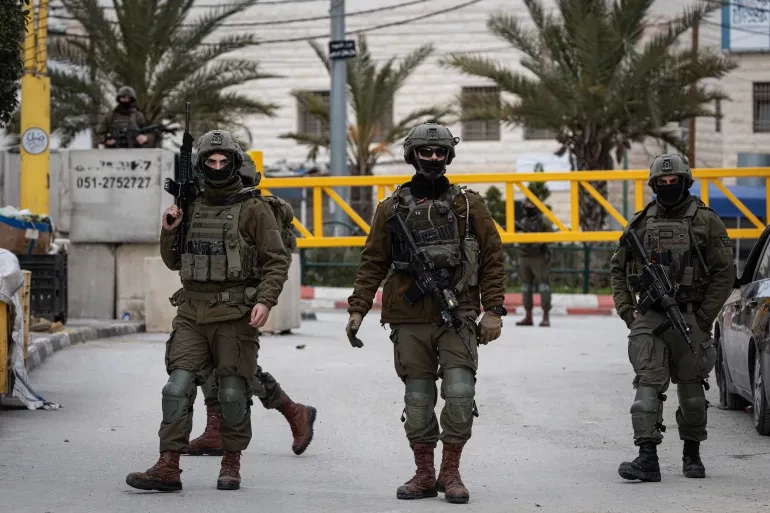
Exclusive – Quds Network: Day after day, the Israeli occupation authorities take unprecedented decisions towards complete control of the West Bank within the framework of the “annexation” project, amid the absence of any official Palestinian reactions to that, while the forces and factions gathered during an interview with the “Quds Network” on the necessity of taking effective steps from the Palestinian Authority towards canceling the agreements with the Israeli occupation. In its meeting yesterday evening, the Israeli political-security cabinet approved a series of decisions proposed by the Finance Minister of the extremist occupation government, Bezalel Smotrich, along with the Minister of the Occupation Army, Yisrael Katz, that would completely cancel the “Oslo and Hebron” agreements, leading to the deepening of the actual annexation of areas in the West Bank. These decisions would change the regulations of land purchase systems in the West Bank, and allow the occupation forces to demolish Palestinian-owned buildings in Areas A and B, in addition to transferring planning powers in the city of Hebron and the vicinity of the Ibrahimi Mosque and Bethlehem to the occupying state. The various Palestinian factions condemned the recent decisions issued by the occupation government, describing them as a new step within the framework of the systematic war of genocide against the West Bank. In this context, Ahmed Murad, a member of the Central Committee of the Popular Front for the Liberation of Palestine, confirmed in his interview with the Quds Network that the decisions of the so-called Zionist “cabinet” to abolish the law prohibiting the sale of lands in the West Bank to the Zionists, and transfer planning and licensing powers to what is known as the “Civil Administration,” in addition to tightening the grip on the areas classified (A) and (B), represent a dangerous escalation and an advanced step in the annexation project. Creeping, and a public coup against the signed agreements, most notably the Hebron Agreement, in addition to being a clear violation of the rules of international law. Murad explained that these measures come within an integrated colonial plan aimed at resolving the conflict by imposing new legal and administrative facts on the ground, and undermining the possibility of establishing an independent Palestinian state. He added that what is happening does not fall within the framework of temporary procedural amendments, but rather constitutes an attempt to re-engineer the legal reality in the West Bank. He pointed out that accelerating and expanding settlement and deepening Zionist control over the land is being prepared in preparation for the actual annexation of the West Bank, and the establishment of an apartheid regime that strips the Palestinian people of their land and rights, considering that these steps come in the context of the Zionist government investing in American support, and exploiting the state of international impotence and silence to impose a fait accompli that will be difficult to undo in the future. Murad stressed that what is required today from the Palestinian Authority and the PLO is to leave the box of waiting and betting, then move to a comprehensive national strategy based on stopping all restrictive obligations, most notably security coordination, and activating the decisions of the National and Central Councils regarding disengagement from the Oslo Accords, in addition to accelerating the achievement of national unity through a comprehensive dialogue that rebuilds the Palestinian political system on the basis of partnership and resistance. The Popular Front also stressed the necessity of adopting comprehensive popular resistance and supporting the steadfastness of the Palestinians in the West Bank and Jerusalem in the face of settlement and annexation, in addition to serious action in international forums to isolate the occupation and prosecute it legally as an occupying force practicing illegal annexation and settlement policies. Murad pointed out that the Palestinian people will not accept the imposition of guardianship or the legalization of settlements, and will continue their legitimate struggle until the occupation is ended and their national rights are fully and undiminished. In turn, the leader of the Islamic Jihad movement, Abu Samer Musa, said in an interview with the Quds Network that the decisions issued by the occupation government represent a dangerous escalation and a described crime that falls within the framework of the policy of ethnic cleansing and systematic Judaization. He explained that these policies clearly reveal that the occupation government is continuing to impose colonial facts by force, far from any commitment to the signed agreements, especially the Oslo Accords. He added that what is happening in the city of Hebron cannot be considered an administrative measure, but rather an actual annexation step that aims to dismantle the Palestinian geography, break away from all agreements, and pass the policies of the extremists in the current government, which represents an extremist movement that seeks to attack the historical existence of the Palestinian people, and turn illegal settlement into a legal matter through invalid colonial legislation that lacks any legitimacy. Moussa stressed that these decisions constitute a blatant violation of the Fourth Geneva Convention, a flagrant violation of the Hebron Agreement, and pave the way for a new official annexation of the Palestinian territories. He pointed out that the international silence regarding this crime makes the international community a partner in it, whether directly or indirectly, and confirms the failure of its system to protect the peoples under occupation. He added that the comprehensive violations of all international laws and conventions that the Gaza Strip witnesses daily constitute further evidence that this entity is not deterred except by force. The leader of the Islamic Jihad Movement stressed that the real response to these policies requires a unified Palestinian political and diplomatic escalation, activating the international legal process without selectivity, in addition to strengthening resistance in all its forms, including popular resistance, in Hebron and the rest of the West Bank, and exposing these crimes in the media as a fully-fledged colonial annexation project. Based on this, Moussa called on the Palestinian Authority to take a clear, frank and strong position, instead of continuing in a state of submission or seeking to appease the occupation and the American administration. He also stressed the need for the Palestine Liberation Organization, despite the crisis of legitimacy it is suffering from, and the Palestinian Authority, to work seriously to confront this Zionist project, by achieving true Palestinian unity and holding elections that are not based on the condition of recognizing the Oslo Accords or the so-called “international legitimacy” under which recognition of the Israeli entity was imposed. Moussa considered that for many years after the signing of the Oslo Accords in 1993, the Israeli entity and the American administration did not give any weight to the Palestinian Authority or the PLO, especially after abandoning the options of resistance and jihad, which revealed the falsity of bets on a settlement, and reaffirmed that national rights can only be won through struggle. Dwikat pointed out that the fascist occupation targets the entire Palestinian presence, without any regard to the signed agreements, in particular the Oslo Accords, which were practically bypassed through the occupation’s policies and field decisions. He added that the leadership of the Palestinian Authority is still running in vicious circles, under the illusion that the ill-fated Oslo Accords, rejected by the Palestinian forces, and the protocols that followed, most notably the Paris Economic Protocol, could form the basis for a political solution, despite the fact that the occupation itself has turned its back on it, while the Palestinian leadership continues to cling to it unilaterally, which reflects the state of impotence it suffers from. Based on this reality, the Democratic Front renewed its call on the leadership of the Palestinian Authority to immediately call for a comprehensive national meeting that includes all Palestinian forces and factions, with their various political orientations, to discuss this continuing escalation and come up with practical mechanisms that strengthen the steadfastness of the Palestinian people and confront the American-backed Zionist policies. She stressed that this call is not new, as the Democratic Front and other political forces have long demanded it in order to return to the unified national decision. Dweikat stressed that the time has come for a comprehensive national dialogue, without exception for any political force, whether Islamic or national, with the aim of formulating a unified strategy capable of confronting these aggressive policies, especially in light of the continuing crimes in the Gaza Strip and attempts to separate it from the West Bank. Dweikat explained that the Palestinians are living in one of the most dangerous stages of their national cause, a stage that requires a high degree of wisdom based on national unity and the activation of all forms of resistance in the face of the occupation. She explained that Palestinians today have no choice but to unite to confront the colonial project that targets the land, people, and identity. As for the Fatah movement, it was confirmed by a member of its Revolutionary Council, Kifah Harb, in a statement to the Quds Network, that settlement activity in the West Bank continues at an increasing pace, and what is happening in the Gaza Strip is not separate from what is happening in the West Bank, but rather falls within one plan whose grand title is the displacement of the Palestinian people and the seizure of their land. She explained that these decisions come in the context of an attempt to place this plan within a legal framework within the occupying state, despite the fact that all forms of settlement are illegal and constitute a clear violation of international legitimacy resolutions that recognize the establishment of the Palestinian state on the lands of 1967, do not recognize the legitimacy of the occupation, and confirm that the existing and planned settlement is illegal in all its forms. Harb added that the occupying state rebels against the resolutions of international legitimacy and international law, and treats itself as above the law, as it is not satisfied with perpetuating the occupation. She pointed out that all of this is taking place in light of the occupation’s feeling of protection due to the use of its veto within the United Nations with American cover. She stressed that the Palestinian people, with all its components, including authority, factions, forces and society, suffer from these blatant violations and from a state of condescension to the system of international legitimacy and human rights. In response to Quds’s question about what is required of the Palestinian Authority to confront these decisions, Harb stressed that the primary Palestinian mission today is to confront the project of displacement, to remain steadfast on the ground, to strengthen the steadfastness of the people, and to work to fortify this steadfastness by supporting citizens, whether through the role of the government and the authority in stabilizing, supporting, and compensating them, or through the role of the national factions whose responsibility it is to support the people in the battle of steadfastness and steadfastness. Harb described the Fatah movement as “the largest faction” and that it remains alongside the Palestinian people, present with them in the field, and seeks to ward off the dangers facing them by providing assistance within the available capabilities, alongside the Palestinian Authority and all National Action factions, despite the financial blockade and movement restrictions imposed by the checkpoints, and the many challenges and violations, in addition to the issue of prisoners and what the Gaza Strip is exposed to. He stressed that these issues constitute the basic principle of resistance to the occupation, in addition to the diplomatic and political efforts aimed at establishing recognition of the State of Palestine and expanding the circle of international recognition of it. In her answer to Quds’s question about the necessity of stopping the implementation of agreements with the occupying state. She said, “Any step taken by the authority or the factions must be within the framework of the national consensus, and after careful study of its consequences and ramifications, as no party, including the Palestinian Authority, can confront these occupation projects alone.”