
اخبار البحرين – وطن نيوز
W6nnews.com ==== وطن === تاريخ النشر – 2026-02-28 01:34:00
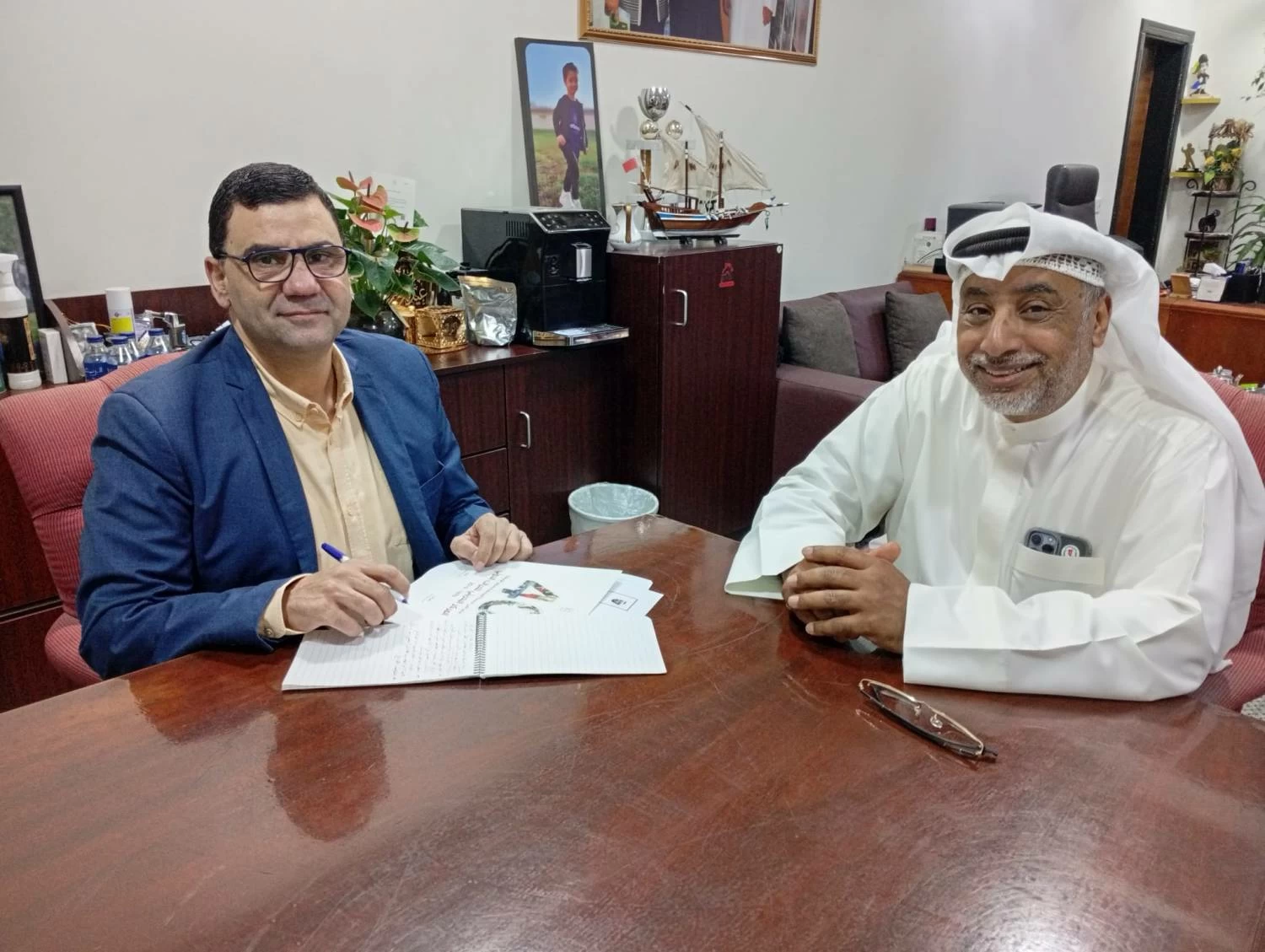
Hamdi Abdel Aziz – The speech of the nation’s leader, “You are our pride.” The journey was shortened. The year 1982 was the turning point, with a moment in the wheelchair that changed my life. The first international participation was in 1983, followed by a Paralympic medal in 1984. In 1992, a new chapter began and I transformed from a hero to a maker of sporting heroes. The institutional work in the period from 1987 to 2012 was not easy, but it was necessary. In the leadership stage. “2012 – until today” I launched a new phase of development – in “Al Freej” that formed my awareness that a person is not based on his circumstances, but rather on his values and actions. Since his birth in one of Muharraq’s “Furjan” in 1966, the head of the Bahraini Center for International Movement, Adel Al-Mutawa, did not feel any discrimination in the family and Al Freej due to his disability, and he has accompanied the values and behaviors of the people of Muharraq and its Farjans from his childhood until now. He entered the field of volunteering in 1982 when he drove a wheelchair, and a month later he won the gold medal in the local championship in the running race, after which regional, international and Paralympic medals followed, before he went from being a champion to making champions, for ten years before taking the institutional path since 1987, then he received the secretariat from the first group, and assumed the presidency of the “Movement”, from 2012 until now, where he left his mark and made it an inclusive platform for people with disabilities. And their issues. In his interview with Al-Watan, Al-Mutawa recounts interesting memories, about sports and the making of sports heroes, in the company of Sheikh Daij bin Khalifa Al Khalifa and the first generation in Bahrain and the Gulf countries, noting that the Bahraini Center for International Movement works as one family, so he had a share and share when he married “Umm Sultan.” He pointed out that his journey was not easy, but it was honest. It began in 1982 with a small dream, and grew with the nation’s support and wise leadership, where it succeeded in presenting many successful initiatives. Throughout the course of more than 4 decades, Al-Mutawa received national and Arab honors, but the best honor he received was the words of His Majesty the King: “You are our pride.” Regarding his humanitarian, sporting and volunteer career, we had this dialogue: Do you remember your birth and the memories of the beginnings that shaped your personality? – In the beginning, values were formed. I was born in 1966, in one of Muharraq’s Furjans, and grew up in an environment that did not know discrimination, but rather instilled values in its children. Equality, respect, and standing with others. There, my first personality was formed, and my awareness was formed that a person is not defined by his circumstances, but by his values and actions. What I learned in Al Freej was the basis of everything I did later, where everyone is one family, in strong interdependence and solidarity, and I seek to convey all of this in the context of relations with members of the Bahrain Center for International Mobility. In your educational career… Is there another memory that contributed to determining the course of life after that? – I studied primary and middle school at Omar Bin Al Khattab School, and secondary school at Omar Bin Al Khattab School. Ancient guidance. One of the unforgettable memories is that the sports teacher at Omar Bin Al Khattab School, Mr. Khalifa Al Amer, encouraged me to join the Bahraini Center for International Mobility. It was a story worth dwelling on, and I will mention it later. What about working and earning a living after education? – I worked at a young age, less than 18 years old, at the Electricity and Water Authority in 1983 until my retirement in November 2012. With my volunteer work, I established a workshop to manufacture and install driving devices for people with disabilities, and I contributed to establishing and encouraging many to open special stores with supportive devices for people with disabilities in Kuwait, Saudi Arabia, and the Sultanate. Oman and Singapore. A defining moment occurred in your life in 1982. Can we take it back? – 1982 was not an ordinary year; It was the turning point. In the gym, I sat in an athletic wheelchair for the first time. A short moment, but it changed the course of my life, as I discovered a new passion, and I saw in sports a door to confidence, freedom, and self-provement. And after less than one year, it was the first achievement. Before we talk about the story of the first gold medal… How did you see the first generation of leaders in the disability sector? – Professor Khalifa Al-Amer put me at the starting point, and there I met Hanan Kamal, Munira Bin Hindi, Issam Kamal, and others. These people not only encouraged me to train and excel in sports, but they were good human companions. They influenced my conscience and personality, which helped me in my sports and volunteer leadership work, to serve the nation, society, and people with disabilities. Between the beginning of the dream and a gold medal and a decade of achievement is another story.. that we would like to tell? – At the beginning of the dream, I achieved the first gold medal in 1983, and in the same year I had my first international participation in Britain, followed in 1984 by: achieving a Paralympic medal in the running race. Chairs. The medals were not just numbers, but clear messages: “People with disabilities are able to compete, represent honorably, and create pride.” During the period from 1982-1992, I participated in: national, Gulf, regional, international, and Paralympic tournaments. During which I won many medals, raising the name of the Kingdom of Bahrain in sports forums, before I made a new decision: to move from individual achievement to making a collective impact. After ten years as a player… where did I go? – In 1992, I began a new chapter. I turned from a champion to a champion maker, as I turned to training, took continental and international Paralympic courses, and contributed to preparing generations of athletes with motor disabilities. The real achievement is to create someone after you who will continue the journey. Behind your marriage is a story…what is it? – The “Movement” Center brought us together like members of one family, and there was communication between everyone within the framework of family values. I asked Faten Kamal to propose to her and she agreed, and things went well, and the marriage took place during the liberation of Kuwait in 1991. Praise be to God, our marriage resulted in a family of 3 boys and one girl. God Almighty blessed us with Sultan, 31 years old, who works for Garmco, Salman, 29 years old, who works as an officer in the Ministry of Interior, Badr, 28 years old, who works in the Defense Force, and Munira, 26 years old, who is married and works at the Polytechnic. Salman is also married and has two sons, and Sultan and Badr will get married, God willing, after the blessed month of Ramadan. Have you passed on to your children the values of family and freedom? – Yes. I taught my children what their mother and I had learned in Al-Farej and the Center, especially friendliness, cheerfulness, and giving, and they became natural volunteers, and we did not ask them to do that. They all volunteer in “Movement” activities, in civil society programs, and in their workplaces, and some of them volunteer internationally. What are the personalities who helped you at the beginning of your career? – Behind my achievements were many, most notably Hanan Kamal, Sabah Al-Thawadi, Youssef Nabhan, and others. I do not forget Sheikh Daij bin Khalifa Al Khalifa, the maker of champions for people with disabilities and the pioneer of the sports experience for them in Bahrain. I remember that in 1992 we were in an international tournament in Barcelona, and Sheikh Daij was the head of the delegation. He gave me confidence and made me the first responsible for the delegation in the Olympic Village. He followed up with me, day by day, on the needs of the delegation members and the schedule of exercises and competitions. He also asked me to arrange the competitions that we would go to watch. At this stage, you have reached an advanced stage thanks to this trust and this paternal kindness. Before your presidency of the Bahrain Center for International Mobility, you went through a long path in institutional work. Isn’t it? – Yes, institutional work was the most difficult path from 1987 to 2012. In 1987, I joined the board of directors of the Bahraini Center for International Mobility, and in 1993 I contributed to establishing the first specialized sports committees for people with motor and hearing disabilities. At this stage, the work was not easy, but it was necessary to build a sustainable entity that serves people with disabilities and protects their rights. When did you assume the presidency of the Bahrain Center for International Mobility? What are your fingerprints in it? – During the stage of leadership and responsibility (2012 – until today), you assumed the presidency of the Board of Directors of the Bahrain Center for International Mobility, continuing the journey of the first generation and launching a new phase of development. The Center witnessed the expansion of educational programs, the development of health and rehabilitation services, the promotion of community sports, and national and Gulf partnerships, and it became a comprehensive platform for issues of people with disabilities in Bahrain. How has the honorary presidency of Her Highness Sheikha Zain bint Khalid Al helped you? Khalifa? – We worked to expand the center’s programs under the honorary presidency of Her Highness Sheikha Zain bint Khalid Al Khalifa, and we seek to reach the largest number of beneficiaries through Al-Harak Kindergarten, the Muneera Bint Hindi Center for Early Intervention, the Her Highness Sheikha Zein Center for Physical Therapy, and the Delivery Department. We sought to cooperate with associations and centers in the disability sector, so we launched the Disability Health Conference, and we are preparing to launch its third annual edition. We also celebrate World Disability Day annually with a theme that highlights efforts. To serve them and enhance their participation. Marriage is linked to society’s acceptance of people with disabilities, and employment is linked to their independence and participation. Have you implemented initiatives that made a difference? One of the most influential milestones is: In 2006, we implemented mass marriage for people with disabilities under royal patronage. In 2025, we participated in the launch of the Bahraini Parliament for People with Disabilities: A Direct Voice for People of Determination under the dome of the National Dialogue. We also implemented the Disability Health Conference as a sustainable scientific and community platform, and employment, empowerment, and independence initiatives. One of your most important fingerprints is the “Parliament for People with Disabilities.” Isn’t it? – The “movement” cooperated with the House of Representatives to organize the “Bahraini Parliament for People with Disabilities.” It was a very distinguished experience, and reflects the government’s support for Bahraini youth with special needs, and the endeavor to develop education and public services, provide job opportunities, involve them in decision-making institutions, hone their abilities, and develop their skills, out of belief in the importance of their role, and in confirmation of their contributions to serving their country. I have received many honors. What is the most beloved to your heart? – Generosity from God Almighty, and I have been greatly honored throughout my career, which exceeds 4 decades. But the saying of His Majesty the Great King, “You are our pride.”.. is an unforgettable moment. The highest honor was a sincere word from the leader of the nation: “You are our pride,” a word that shortened a journey and gave meaning to every effort. What is your vision after the achievement? – In addition to public work, I have always been a person close to people, believing that Family, values, and humility are the foundation of any true success. I transferred what I learned to my children, and to everyone I worked with, so volunteering became a way of life, not a job. I see that the next stage requires: unifying the efforts of organizations for people with disabilities, enhancing sustainability, building broader partnerships, and empowering young people with disabilities. And that “one hand is capable of creating a better future.” In conclusion, what is your message to readers and people of determination? My journey was not easy, but it was honest. I started in 1982 with a small dream, and grew with the support of my country and wise leadership. My message to everyone and every young man and woman with disabilities: Believe in yourselves, and make your impact, for the nation has room for everyone, and a person is immortalized by what he offers, not by what he confronts. Adel Al-Mutawa during his interview with “Al-Watan”