
اخبار تونس- وطن نيوز
اخر اخبار تونس اليوم – اخبار تونس العاجلة
W6nnews.com ==== وطن === تاريخ النشر – 2026-03-07 13:57:00
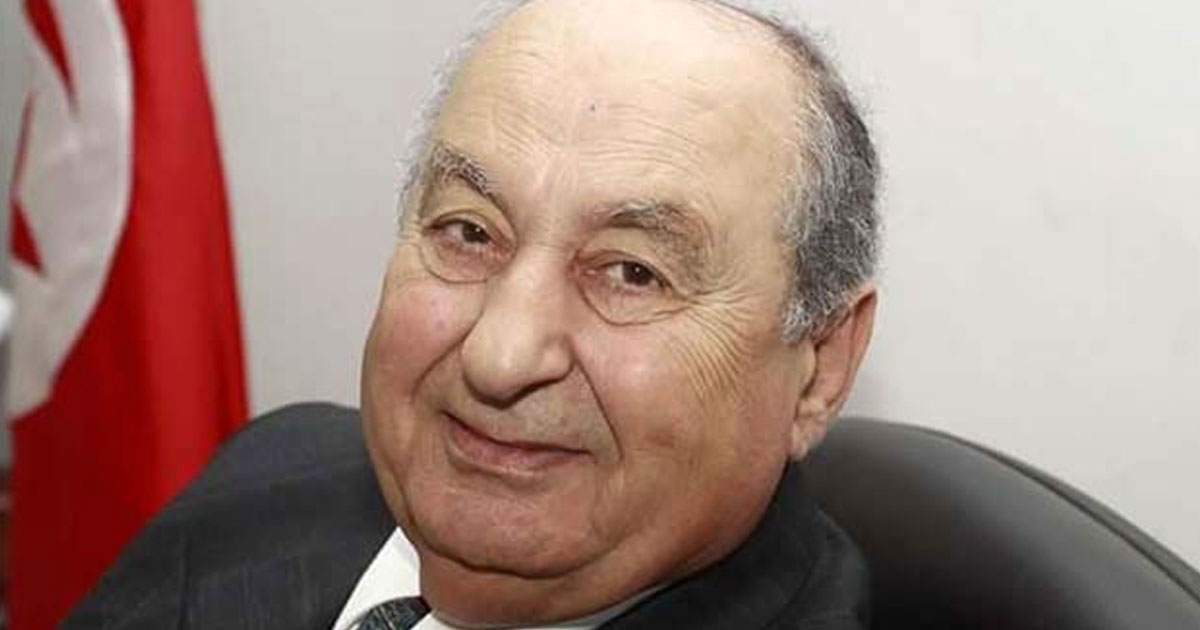
This Saturday morning, professor of constitutional law and former dean of the Faculty of Law and Political Science in Tunisia, Professor Sadiq Belaid, left us at the age of 87 years. Adel Ben Youssef I did not know the deceased closely during the period of my study in Tunisia because he had then left the deanship of the college when my brother was studying law there to devote himself to supervising third-year students in public law in Tunisia: certificates of in-depth studies and doctorates, university qualification files, managing the scientific research laboratory that he headed, and presenting academic lectures at his college and major law colleges and scientific research centers in Tunisia, France, England, and the United States of America… but after the year 2011, the name of Professor Al-Sadiq returned. Belaid is back on the public scene following the vacancy that occurred at the top of the hierarchy of power in Tunisia following the departure of President Zine El Abidine Ben Ali from the country on the eve of January 14, 2011, heading to the city of Jeddah in the Kingdom of Saudi Arabia. Following the dispute that worsened since the end of 2021 between the Prime Minister and the Presidency of the Republic, I called him with the intention of interviewing him on my radio program “Live Testimonies” on Monastir Radio. He welcomed me on Wednesday, March 30, 2022. He received me warmly with the program team at his home in the beautiful suburb of Mornag, south of the capital, where I recorded three complete episodes for him, during which he reviewed his long career, starting with his upbringing and primary studies in the Grand Castle and then secondary school at the Sadiqia School. The Supreme Council of the Sorbonne, passing through his professional career in many senior positions in higher education and scientific research, all the way to the existing dispute between the heads of the executive authority and the atmosphere within the Assembly of People’s Representatives and the solutions that would ensure the country’s exit from this constitutional impasse. These three episodes were broadcast on Sundays, April 3, 10, and 17, 2022. In order to generalize the benefit, I deemed it necessary to introduce the path of the deceased of the Tunisian University and Tunisia to the current generations who do not know him and have never seen his writings and positions. Growing up, studying, and excelling, Professor Sadiq Belaid was born on March 2, 1939 in Qalaa El-Kubra, into a well-to-do, constitutional, national family, where his father was a teacher and a real estate owner in the city, keen on educating his children. He practiced his primary education at the Modern Qur’anic Primary School, Ibn Khaldun, in the Great Castle. After obtaining his primary education certificate, he joined Al-Sadiqiya School, where he obtained a school diploma and a baccalaureate certificate. In 1955, he joined the Higher Institute of Postgraduate Studies in Tunisia (specializing in law), then the National School of Administration, from which he graduated in 1958, and was appointed in charge of the state budget at the head of the government in the Kasbah during the era of Professor Bahi Al-Adgham. But in 1960, he left the administration to join Paris and prepare a doctorate in constitutional law at the Sorbonne. He succeeded in doing so with distinction in June 1963, with teaching experience as an assistant at the University of Paris. In the year 1971, he successfully passed the public law debate (first in his class), so the Dean of the Faculty of Law, Professor Chadli Al-Ayari, contacted him to ask him to return and take over the administration of the college following his appointment as Minister of Education. Between the deanship, teaching, supervision and scientific research in fulfillment of his national duty, Professor Sadiq Belaid returned to Tunisia and joined the Faculty of Law and Political Science as a lecturer and was elected in the same year as its dean for two consecutive terms until June 1977. His colleagues and students and his mother attest to him that he was one of the best professors of public law and constitutional law in Tunisia, where many professors of constitutional law graduated from him, the most prominent of whom are Professor Sadiq Shaaban and Farhat Al-Harchani Ayyad Ben Ashour, Salim Al-Laghmani, Muhammad Reda bin Hammad, and Wahid Al-Farshishi… He is one of the most staunch deans in defense of democracy within the Faculty of Law, to the extent that in 1973 he allowed the students to hold a general session while the police surrounded the faculty to consult about continuing the general strike. In fact, they decided to continue the strike. In his capacity as Dean of the Faculty of Law and Political Sciences and Head of the Higher Education Division, he suggested to President Bourguiba that he give six lectures on his career and the history of the Tunisian National Movement. He responded to the request and between October 13 and December 15, 1973, gave six lectures in the Grand Auditorium of the Faculty of Law and Political Sciences in Tunisia in the presence of students from the Institute of Journalism and News Sciences, law students, and university institutions in Tunisia. The party administration issued them in the book “Habib Bourguiba: My Life, My Opinions, My Jihad.” Publications of the State Information Office, Tunisia 1978, 246 pages. On the occasion of these lectures, Bourguiba gave permission to establish the Center for Legal Studies at the college. He inaugurated it himself on the occasion of supervising Science Day at the end of June 1975, in the presence of the Minister of Education, Professor Idriss Guiqa. As a result of this deanship experience, he held several scientific and legal positions in his field of specialization, namely: Member of the Tunisian Council for Scientific and Technological Research. Member of the Tunisian Association for Constitutional Law. Member of the International Academy of Constitutional Law. President of the Free University of Tunisia. Member of the Tunisian Association of Sciences, Literature and Arts “House of Wisdom”. Legal advisor to the Arab League. Member of the Constitutional Court of the Arab Maghreb Union and editor of the text of the Marrakesh Treaty on February 17, 1989. Visiting professor at the Universities of Essex in England, Princeton University in the United States, the Universities of Rome and Sapienza in Italy, the Universities of Marseille, Toulouse, Nice and Perpignan in France and the University of Bucharest. (Bucarest) in Romania, and the universities of Kuwait, Morocco, Algeria…etc. In 1978, he was commissioned by the Prime Minister, Professor Hedi Nouira, to draft Tunisia’s report before the International Court of Justice in The Hague in the case of the continental shelf between Tunisia and Libya, which is rich in polymineral rock deposits known as “Les nodules polymétalliques.” But in 1982, the International Court ruled that Libya had full right to the continental shelf, which led to depriving our country of huge quantities of oil, gas, fish and mineral resources, despite the willingness of the late Colonel Muammar Gaddafi to share the wealth of the continental shelf equally between the two countries. The new return to the public arena on the evening of January 14, 2011 On the evening of January 14, 2011, Professor Sadiq Belaid was the first to realize the necessity of returning to Article 57 instead of Article 56 in the event that the position of the President of the Republic becomes vacant and the presidency is transferred to the Speaker of the House of Representatives instead of the Prime Minister… He was also invited to lecture at the Supreme Council for the Democratic Transition and Achieving the Goals of the Revolution and then at the National Constitutional Council during the drafting of the new constitution or the Constitution of the Second Republic, which was concluded in January 27, 2014. On July 12, 2011, he presented a preliminary draft of the constitution, which stipulated major principles, such as: establishing freedom of conscience, abolishing the death penalty, and complete equality of rights…etc. On October 23, 2011 of the same year, he ran for the legislative elections on the “Al-Kafaa” list in the Ben Arous district, obtaining 4,391 votes. In July 2016, he supported the Carthage Document initiative proposed by Beji Caid Essebsi with the aim of forming a national unity government. On May 1, 2022, he was appointed by President Kais Saied to head an advisory committee charged with drafting a new constitution for Tunisia after the suspension of the Constitution on January 27, 2014 and the dissolution of the Assembly of People’s Representatives on July 25, 2021 as a result of the many disagreements between the Prime Minister and the President of the Republic and the tense atmosphere within the Assembly. Professor Amin Mahfouz was appointed with him to draft the constitution, and they made extensive contacts with highly qualified and experienced Tunisians residing in Tunisia and abroad in all specializations, including economy, finance, agriculture, industry, trade, culture, security, and the army… to listen to their proposals. On June 20, 2022, he handed over the draft of the new constitution to the President of the Republic, Professor Kais Saied, but it was not adopted in the constitution of July 25, 2022, which affected him healthily and psychologically. Dozens of scientific books and articles in Tunisia and abroad throughout his academic career. Professor Sadiq Belaïd published more than 12 individual or collective books (in collaboration with) on constitutional law, the history of legislation in Islam, the law of groups, globalization, administrative law…, in French, Arabic and English, in Paris, Tunisia and London, the most important of which are: – Sadok Belaïd Essai sur le pouvoir creation et normatif du juge, Paris, Librairie general de droit et de jurisprudence, collage. « Bibliothèque de philosophie du droit », 1974, 360 p. – Sadok Belaïd, Organization and economic institutions, La Soukra, Arab Institute of Chefs Enterprises, 1987, 49 p. – (Avec Francis Delpérée and François Luchaire), La loi aujourd’hui, Tunis, Faculté de droit de Tunis, 1989, 346 p. – Sadok Belaïd (Dir.), L’œuvre jurisprudentielle du Tribunal administratif Tunisien, Tunis, Center de recherches et d’études administratives, 1990, 562 p. – Sadok Belaïd and I. William Zartman, Les expériences d’intégration régionale in les pays du tiers-monde, Tunis, Center de recherches et d’études administratives, 1993, 376 p. – Sadok Belaïd, Islam et droit: a new lecture from “prescriptive verses” in the Qur’an, Tunis, University Publication Centre, 2000, 544 p. – Sadok Belaïd and Yadh Ben Achour and Slim Laghmani, Publications and International Affairs, Tunis, University Publication Centre, 2003, 306 p. – Sadok Belaïd & Abdelfattah Amor & Habib Ayadi, The story of Dali Jazi, Tunis, University Publication Center, 2010, 190 p. – Sadok Belaïd (en) Adeed I. Dawisha and I. William Zartman, Beyond Coercion: Durability of the Arab State, Londres, Routledge, 2016, 322 p. – Sadok Belaïd, the constitutions in Tunisia depuis the constitution of Carthage at the next day. J.C. Jusqu’à la constitution de 2022, (manuscript). – Al-Sadiq Belaid, The Qur’an and Legislation: A New Reading of the Verses of Rulings, University Publishing Center, Tunisia, 1999, 346 pages. He also has dozens of scientific articles published in peer-reviewed academic journals in the most prestigious universities and research centers in France, England, Tunisia, and the Gulf countries. It was the focus of many newspaper articles, especially after 2011, the most important of which was: “Débat électoral: les premières élections démocratiques in Tunisie”, on spma-sciencespo.com, October 6, 2011. “Anciens doyens”, on fdspt.rnu.tn. «Edito», at the University of Tunisia. “Nominations”, Journal officiel of the Republic of Tunisia, no. 19, 5 March 2002, p. 535. “Tunisia – List of members of Beit al-Hikma,” on espacemanager.com, 27 September 2012 (consulted 10 August 2016). (en) « Sadok Belaid », on tunisia-live.net, 16 October 2011. « Tunisia. Please refer to the current record for the Haute instance », on September 9, 2011 (consulted on August 11, 2016). « Sadok Belaid: « I bring candidat to the Constitution », on tunistribune.org, 4 September 2011. « New Constitution: the project of doingyen Sadok Belaid », on Leaders, 16 July 2011. on babnet.net, 7 août 2016. (ar) “Tunisie: a new constitution written in the name of the president for the former prochain government », on aawsat.com, 9 août 2016. « Politique: Sadok Belaid criticizes the BCE and qualifies his fils from « Bahloul », on directinfo.webmanagercenter.com, 9 August 2016. businessnews.com.tn, May 20, 2022 (consulted May 20, 2022). « Tunisia: There is a difference between Islam and the Constitution’s project », Le Point, June 6, 2022. « Sadok Belaïd decided to publish the Constitution’s project at JORT », on Mosaïque FM, July 3, 2022 (consulted on July 3, 2022). «In a letter, Sadok must declare the project of Saïed’s constitution! », on businessnews.com.tn, July 3, 2022 (consulted July 3, 2022). « The original version of the Constitution’s project », on webdo.tn, July 3, 2022. by Frédéric Bobin, « Tunisia: “The new Constitution’s project is dangerous” », Le Monde, July 3, 2022. « Decrets and arrêtés », Journal of the Republic of Republic tunisienne, no. 58, 18-22 September 1981, p. 2156. “Essay on the pouvoir creation and normatif of juge,” International Review of Droit Comparé, vol. 27, no. 4, 1975, p. 955-958. Professor Sadiq Belaid has received many medals, the most important of which are: the first class of the Order of the Republic from President Habib Bourguiba in 1981. He is married and the father of three daughters. May God have mercy on the deceased of the Tunisian University and Tunisia, and grant his family, relatives, students, and fellow law professors and men great patience and solace. As the Arab poet Abu Bakr bin Duraid says: “A person is only a narration after his time, so be a good narration for him who is aware.”