
اخبار الجزائر – وطن نيوز
اخر اخبار الجزائر اليوم – اخبار الجزائر العاجلة
W6nnews.com ==== وطن === تاريخ النشر – 2026-04-28 20:46:00
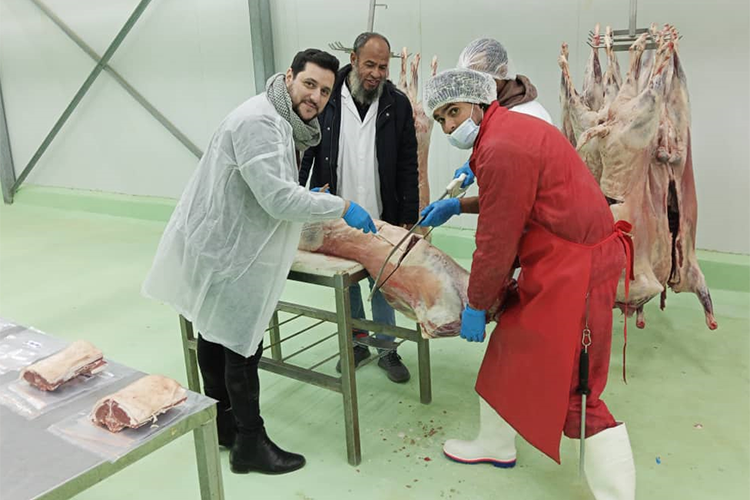
With research projects complementary to the state’s strategy for development: Algerian institutions of higher education and scientific research have been able, in recent years, to make an exception and a difference through their active involvement in the path of economic transformation and the orientation towards entrepreneurial and entrepreneurial thought to create wealth and contribute to building society and the national economy. Since taking office in 2020, President Abdelmadjid Tebboune has bet on Algerian competencies and researchers in the sector of higher education and scientific research, raising the slogan of “the productive university” and “contributing scientific research”. In the national economy and development,” a bet whose features and fruits began to reap on the ground with insistence and follow-up, especially from the Minister of the Sector, Professor Kamal Badari, who believed that building Algeria begins with reforming the university and restoring the status of scientific research centers, and the results were as great as a dream. The Research Center in the Arid Regions…a Pioneering Model Within the framework of keeping pace with the Algerian state’s trends to advance industry and national production, the Research Center for Scientific and Technical Research in the Arid Regions stands out as an honorable model for the achievements and innovations achieved by the higher education and scientific research sector in Algeria for projects that have today become active economic institutions in the national market. The director of the Scientific and Technical Research Center in the Biskra Directorate, Mohamed Seif Allah Kashbar, confirmed in a statement to Echorouk that the role of the research centers is to look into field problems. In fact and then look for solutions to it. Production of animal feed and protection of energy facilities… promising models. The speaker pointed out that the goal of researchers today is to provide support to economic partners and contribute effectively to economic development. He mentioned in the context the model of the “Innovative Animal Feed” project that researchers at the center were able to bring to light, and today it is a product available in the markets after a partnership with the Ministry of Agriculture, the Ministry of Higher Education and the Algerian Red Meat Foundation. He explained that this product, the idea of which was launched at the Center for Scientific and Technical Research in Arid Regions, bears the tag of a project. It is innovative, and it is animal feed that is very much in demand in the market. Algeria used to import it at exorbitant prices. Today, through this product, it is possible to ensure proper nutrition for sheep and reduce the cost of importing together. Kashbar added, “Algerian research centers have become an effective element in finding solutions to many problems and in creating wealth as well.” Research innovations in the service of transportation networks. In addition to this project, which was embodied in the creation of a productive economic institution that contributes to the national economy, the speaker revealed another project developed by researchers at the center to confront the phenomenon of “widowhood” that affects railway lines and energy facilities, as it is relied upon a lot, he added, in Algeria’s largest project, the “Ghar Djebilat mine line.” Kashbar explained that this project is a technology to protect railway installations and infrastructure from the dangers of sand accumulation, especially since the program The President of the Republic is building on expanding the railway network towards the Sahara and African countries, but there is often a problem of disruption of the railway due to sand and may even lead to deviation, and this is what prompted – say – the researchers who owned the project to think about developing a technology to confront these risks, as work on the project was launched in partnership with the National Railway Transport Company, and these projects are a small sample of what the Algerian university and research centers can offer in terms of ideas and patents that reshape the features of the coming period and the foundations of economic construction. And its mechanisms. 6 years of work… the dream comes true. After 6 years of work and toil, the “Animal Feed” project was able to see the light and become embodied in an independent economic institution, with Algerian hands under the chairmanship of Dr. Samira Moradi, Dr. Fakhreddine Shakkal and Dr. Zeineddine Ben Qafa, who are researchers specialized in animal production, in addition to Engineer Fatiha Mansouri (veterinary doctor) as research support engineer, and the high technician Saeed Ziad. From date waste to innovative feed. Dr. Fakhr El-Din Shakkal, one of the team members, tells us the stages of completing this project, which was launched with an idea by the animal production team at the CRSTRA Center. He worked on it for approximately 6 years of research and experiments, until obtaining a patent. The researchers worked to develop an innovative feed formula based on date waste. The same speaker explained that the idea was born from a field observation and research at the same time, during which the research team noticed the presence of large quantities of date waste. The unexploited areas in the desert areas, especially in southern Algeria, while breeders rely heavily on imported feed such as high-cost corn. This contradiction between the availability of a neglected local resource and the need for expensive feed – says the doctor – prompted the research team to think about finding a practical scientific solution, which is valorizing date waste and converting it into balanced animal feed that could be an economical and sustainable alternative. From an idea to a productive economic partnership, Dr. Chakal said that this idea turned into a reality, as the team was expanded within the framework of a partnership between the Ministry of Higher Education and Scientific Research and the Ministry of Agriculture, in which researchers from CRSTRA, Chakal Fakhr al-Din and Ben Qafa Zein al-Din participated in cooperation with ESSAIA, in addition to the agricultural production institutions DCAS Bahri, Amira, and ALVIAR in Ain al-Ibl – Djelfa. Chakal continued: “Field experiments were conducted on about 408 heads of sheep, and the fodder was tested.” “Developed in real conditions inside model farms, the results achieved were very satisfactory, both in terms of animal growth and production yield,” and he added: “This integration between long-term scientific research, technical support, and field experimentation allowed the transformation of a scientific idea into a practical, applicable product, and reflects a successful model for linking scientific research to economic development in the agricultural sector.” Production capacity from 150 to 200 quintals per day. In a pivotal step towards its actual embodiment, the same speaker indicated that a factory was established to produce animal feed, especially innovative fodder, with a production capacity ranging from 150 to 200 quintals per day, and it is affiliated with the economic branch of the center. This is with the support and recommendations of the Ministry of Higher Education and Scientific Research and the Research Directorate, in addition to the great role of the director of the center who believed in the idea and contributed to its embodiment in the field. Thus, this innovation found the appropriate legal and institutional environment thanks to Combined efforts of various actors. Quality of meat and protection of livestock. After working for several years and with Algerian assistance, researchers were able to develop a scientific formula for this feed, taking into account the nutritional value of date waste, the needs of sheep for energy and protein, and the suitability of the feed for the local environment. This project falls within the state’s strategic direction to contribute to achieving self-sufficiency, as the product was able to contribute to the healthy growth of sheep and contribute to the quality of meat. Shakal stated that this product, thanks to the support of public authorities and coordination between various sectors, was able to see the light as a real economic project that can be achieved. To embody it as a company or an industrial production unit, he said: “It is a successful model, highlighting how scientific research can be transformed into real economic value that contributes to supporting national development.” He continued: “The economic benefit of the project is that it is based on valuing a local resource available in significant quantities, by integrating it into the animal feed industry, which creates local wealth instead of losing it.” He added: “The market value of this material will represent an important financial resource for farmers and producers in the Dates Division and will contribute to reducing Dependency abroad, supporting the home economy, enhancing food security, and strengthening economic sovereignty.” According to the spokesman, the project will open great horizons in the field of job creation, as the production chain (collection, transportation, transformation, manufacturing, distribution) allows for the employment of a significant number of workers at the level of several states, especially in the desert areas that produce dates, as well as revitalizing the local economy by supporting farmers and creating industrial mobility in the field of fodder, while encouraging investment in manufacturing industries. He described the process of reaching the production stage of the project. Animal feed represents a “moment of pride and pride” for the research team, because it represents – according to him – the culmination of many years of scientific work and field experiments, as the project today has become a tangible reality that embodies the real transition from a scientific idea in the laboratory to a marketable industrial product. This achievement also reflects a firm conviction that scientific research is not just theoretical studies, but can be transformed into practical solutions to real economic problems, especially when it is linked to the needs of the field. He added: “We see that the future of scientific research in Algeria is very promising, especially in light of It provides high-level human competencies, including researchers, engineers, and creative youth who possess the ambition and ability to innovate.” “Arm technology”… protection for energy installations. In another context, the project “Protecting energy installations and infrastructure from the dangers of sand accumulation” stands out, which falls within the field of innovative Algerian technologies to enhance transportation and energy security. It was completed by a research team composed of researchers Abdel Kamel Sabaa, Mohamed El Hafez Kharaz, and Nawar Boualghra, Director of the Department of Combating Desertification and Sand Accumulation at the Center for Scientific and Technical Research in Arid Regions. The latter told us the story and idea of this project, which was launched with a field observation of the climatic environment that prevails. Algeria, where the desert and semi-desert environment represents approximately 85 percent of the area of Algeria, is constantly exposed to the effects of drought, desertification, and environmental and biological degradation. The area of dunes and sand systems exceeds half a million square kilometers, making them an important source of sand sediments transported by the wind. All of these factors, the spokesman says, pose a threat to the safety and efficiency of road and railway infrastructure, basic, industrial and energy facilities, and areas. Urban and even agricultural reclamation projects, and then the center began to think about finding solutions to these problems, so research and field work on the project began in 2009, and after years of in-depth research and experiments – the doctor explains – since 2016, and the experiments continued successfully until 2023. This project, which restores life and preserves energy facilities in the heart of the arid desert, through which Algerian researchers provide conclusive evidence that scientific research centers today are the godfather of economic transformation in Algeria through his leadership. To revolutionize technological research and technical solutions, as the “earth bumpers” technology emerged from being merely research papers locked in drawers, and turned into a tangible reality that proves day after day that the higher education sector is the key to development and prosperity for any country. Strengthening the ability of major investments… to confront desertification. Dr. Nawar pointed out that the “Earth Barrier Technology” project aims to enhance the ability of major investments to confront the risks of desertification and sand accumulation. It also falls within the research work that the Center for Scientific and Technical Research in Arid Regions is undertaking to develop effective and innovative technologies, with special attention paid to technological transfer for the benefit of the public and private user sectors, in order to accompany national policies in development and investment. A research product protected by a patent since 2021. Regarding this technology, Dr. Nawar explained that it is a research product of the Center for Scientific and Technical Research in Arid Regions protected by a patent at the National Institute of Industrial Property in 2021, as the “arm” works to control the speed of the wind loaded with sand sediments and change its direction, ensuring the protection of desert linear infrastructure such as roads, tracks and railways from the dangers of sand accumulation. As for the results achieved, the same spokesman said The “arm technology” has been successfully tested in desert environments for the benefit of the public works and transportation sector, in addition to the railway transportation sector, where the technology has contributed to greatly alleviating the effects of sand accumulation on roads and railways during sandstorm seasons, and this is what contributed, he says, to protecting the railway line and its technical and mechanical equipment from the effects of erosion and collisions due to sand sediments and their accumulation, which would ensure the maintenance of the efficiency of devices and equipment, just as it helps in avoiding accidents. And disturbances in flights transporting passengers and goods. A reasonable budget that competes with expensive projects. Dr. Nawar pointed out that this technology can contribute to rationalizing the expenses incurred by the Algerian state, amounting to 146 billion Algerian dinars, which were previously allocated to sand removal operations by manual and mechanical methods, which represents a gain for companies active in the energy sector and for the public treasury. He pointed out that the research center is currently working on completing studies to protect the Oran-Béchar railway line from the dangers of sand accumulation at the request of the National Transport Corporation. By rail. The silent guard of sensitive facilities. This technology, presented by researchers at the Center for Scientific and Technical Research in Arid Regions, reflects the bet and challenge adopted by the Algerian state during the economic take-off stage in order to preserve national security in its various dimensions: “food, energy, health, governance.” Researcher Nawar points out that the “earthen buffer technology,” in addition to its reasonable and competitive financial cost, combines its integration into the desert environmental environment and its adaptation to various wind systems with high dynamic energy. A green, environmentally friendly technology that runs on renewable wind energy, which gives it the advantage of efficiency and sustainability. Nawar said that this technology is like a protective shield for sensitive facilities. It is not only a technology for protecting roads and railways, but it has proven its effectiveness in protecting oil wells and major energy installations from the invasion of sand. It has also effectively contributed to protecting equipment and devices, reducing the cost of maintenance and ensuring a safe, sustainable and cost-effective work environment. Beyond just research…it is a matter of sovereignty. The same speaker stressed that engaging in economic and social development goes beyond adopting the optimal developmental research approach to ensure the efficiency and sustainability of field management and control of its resources, which is what has been achieved today through the approach taken by the state, which aims to enhance the contribution of scientific research to accompany public policies. The trend towards scientific research that produces innovative and effective knowledge and skills inevitably leads to the creation of an economy that produces opportunities, wealth and sovereignty. And through these honorable models of what the education sector provides Higher education and scientific research. It can be said that the research system in Algeria today stands as a strategic support for public policies, transforming scientific research from mere theories into an economic engine that produces knowledge, creates wealth, and preserves national sovereignty.