

اخبار لبنان – وطن نيوز
اخبار لبنان 24 – اخبار لبنان مباشر
W6nnews.com ==== وطن === تاريخ النشر – 2026-05-08 23:57:00
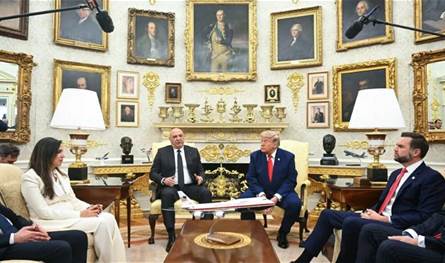
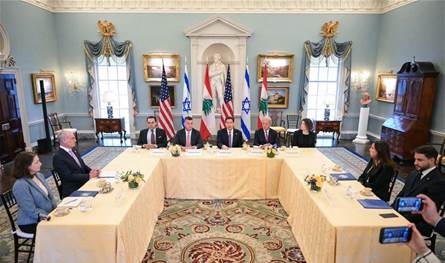
Introductions to the evening news bulletins for Friday 5/8/2026 * Introduction to the “NBN” news bulletin: The scandalous Israeli violation of the truce is still in effect, translated into the fire of raids, artillery shelling, and targeting, in addition to warnings that today included seven villages in the Nabatieh and Tyre districts. The field today recorded a remarkable development with the arrival of resistance missiles to Haifa, Akka and Nahariya in the occupied interior for the first time since the truce entered into force in a message that carries field dimensions that redraw the scene of the confrontation after the Israeli targeting of the southern suburb. In the positions, the President of the Republic, Joseph Aoun, affirmed Lebanon’s adherence to the ceasefire and all military actions to begin negotiations to end the current turbulent situation in the south in preparation for the redeployment of the army to the international border, the release of Lebanese prisoners, and the return of the displaced to their towns and villages. Beyond Lebanon, Hebrew media revealed that the security and military establishment is experiencing feelings of bitterness as a result of the results of Operation “Assad’s Roar” against Iran, due to the inability to predict the decisions of the American president, which makes Israel’s management of the fighting on the open fronts very complex. Trump’s decisions, oscillating between escalation and negotiation, were translated into an attack last night that targeted the areas of Bandar Abbas, Minab, and Qeshm Island in the Strait of Hormuz, at a time when he continues to claim that the ceasefire agreement is still in place and that the strikes that were carried out are only a light slap, as he put it. This American military adventure was described by Iranian Foreign Minister Abbas Araqchi as reckless and comes every time a diplomatic solution is proposed, and he stressed that the Iranians never yield to pressure. ======= * MTV Introduction: Official Lebanon continues to prepare its papers, as next week is not normal. Attention is turning to a new, reliable negotiation round to shape the features of the next stage, amid a political and diplomatic race between the opportunity to stabilize… and the danger of a return to escalation. At this precise time, Ambassador Simon Karam will move tomorrow to the American capital, Washington, assigned by the President of the Republic, and supported by the government and its decisions, on a mission that goes beyond the traditional diplomatic dimension, to engage in a path aimed at recovering the land and prisoners, and fully establishing the ceasefire. In this context, the movement of the US Ambassador to Lebanon, Michel Issa, emerged during the last two days, while the international messages became clear: support for completing the negotiation process, and pressure towards establishing a ceasefire, in parallel with a renewed emphasis on the necessity of strengthening the authority of the Lebanese state and extending its control, as a basic foundation for stability. To the south, the field remains under the microscope. The declared ceasefire does not include what the Israeli army calls the “yellow zone,” which it continues to target and sweep, leading to more casualties and injuries and an expansion of the scale of destruction. Hence, the negotiation process seems more than necessary to end this turmoil, through the establishment of a state that protects all its people and restores its economic health. While waiting, the Lebanese remain stuck between war and looking forward to getting out of the crisis, hoping that the opportunity to remove Lebanon from the circle of open fire and move to the stage of establishing stability and peace will not be lost again. The beginning of the negotiations. Thursday is the stabilization of the ceasefire, and Friday is a dive into the details… ======= * Introduction to “Al-Manar” There is no trust in the Zionist era or the promise of American protection, there is no security in our country, and there is no security except in the promise of the honorable resistance fighters who defend Lebanon and its people, stand on the neck of the occupier and make the land water with the most precious blood, and work to stabilize the equations. As the Secretary-General of Hezbollah, His Eminence Sheikh Naeem Qassem, said: There is no return to before the devastating storm, when the Zionists were killing and destroying, and when the state was unable to protect, and the resistance when it was patient and pledged to a ceasefire, today there is no safety for an occupier who has broken all agreements and no ceasefire with all this Zionist crime, killing and destruction. Accordingly, the resistance’s high-quality missiles were landing a million Zionists today in shelters in the north, reaching the leadership headquarters of the Golani Brigade and positioning the Egoz force at the “Sharaga” base. South of Nahariya, in response to the Zionist aggression that targeted the southern suburb of Beirut, and the continuing killing across the southern area. Just as you heard the sirens in Haifa, you will hear what comes after Haifa if the occupier continues to kill and destroy and violate the equations drawn up for the rules of engagement, which are open to all possibilities. The attack helicopters, missiles, and all possible arsenal will remain able to draw equations and be applied to the occupier’s options until the land is liberated and Lebanon is protected. As in Al-Bayada, Rishaf, and Beit Al-Siyad, as well as in Adshit Al-Qusayr and Deir Saryan, the difficult incident was the headline of the Hebrew media when talking about the condition of their soldiers who were under the crosshairs of the resistance fighters in the field, where the injuries were certain and the losses were confusing to the political and military leadership in the entity. There is no cure for their predicament, despite the expansion of their crime area, the intensification of raids, and the commission of massacres, as in “Zarriya,” “Deir Antar,” and others. All of this did not change the position of the people of the resistance who refused to bargain for their blood, their land, and the sovereignty of their country. As for the masters of the people of power, they were busy preparing for the third round of negotiations with the Zionist killer, with a superior delegation, greater confusion, and with no negotiating papers, except the love of their American friend and his false promises, such as his promise to sponsor a truce soaked in the blood of hundreds of martyrs killed with the weapons and approval of the American and the Israeli hand. In the Strait of Hormuz, the American hand set fire to the already inflamed waters, and since yesterday the intensity of the clashes between two blockades has increased, and the incidents of exchange of fire are increasing, which is not known whether they will push the negotiating ships towards a breakthrough or an explosion, and if the American says that what is happening is not a collapse of the truce or a renewal of the war, but the logic of things says that it is impossible to remain in this deteriorating state. ======= * Introduction to OTV: Amid widespread regional and international anticipation, indirect negotiations between the United States and Iran continue to shape the features of the next stage in the Middle East, at a time when questions are increasing about the possibility of reaching an understanding that reduces the level of tension, or sliding towards an open confrontation that transcends all borders. After more than two months of political and security escalation, Washington and Tehran appear to be facing a new test, in which nuclear calculations intersect with the complexities of the burning arenas in the region, from Gaza to southern Lebanon, passing through Iraq, Yemen, and the Red Sea. While some diplomatic circles talk about cautious progress on some technical and political points, basic issues are still pending between the two parties, most notably the sanctions, the level of uranium enrichment, and Iran’s regional role, in addition to the guarantees that Tehran demands for any possible agreement. As for the American administration, whose president is preparing to visit China, for its part, it is seeking to prevent the collapse of the negotiating path, without making major concessions that might be interpreted internally as a political retreat, especially in light of the increasing pressures within the United States and the calculations of the upcoming elections. In parallel, the countries of the region are monitoring the course of the negotiations with great caution, based on the conviction that any agreement or failure to reach it will not remain confined between Washington and Tehran, but rather will be directly reflected in the conflict files and regional balances. South Lebanon remains one of the most prominent arenas related to the outcome of this path, in light of the continuing border tension, and the fear that any local escalation will turn into a broader confrontation, at a time when Lebanese officials, on the eve of the third round of Washington’s talks with Israel, reiterate the condition of a ceasefire for negotiation, while the reality on the ground indicates the opposite. In the most prominent positions today regarding the Iranian and Lebanese affairs, the US Secretary of State announced that his country is awaiting a response from Iran today, hoping that it will be a serious offer. As for the Lebanese file, he stressed not to negotiate with Hezbollah and to focus on supporting the Lebanese government. On the other hand, the Iranian Foreign Minister launched an attack on Washington, considering that every time a diplomatic solution is proposed, America embarks on a reckless military adventure. He asserted that Iran’s stockpile of missiles and its launching capacity are not stuck at 75% compared to the day the war began, but rather the correct number is 120%, as he put it. ======= * LBC Introduction: The negotiations have proceeded, and next week attention will shift to Washington, where the first round of negotiations will be held between the Lebanese delegation headed by the former ambassador to Washington, Simon Karam, and a senior Israeli delegation full of experts, which suggests that Israel attaches great importance to the negotiations. In parallel, Lebanon has drawn up a plan for the negotiation process, and the next two days will be a serious test for what follows in terms of the location of the negotiation, if not in Washington, and its duration, especially since it cannot continue indefinitely. Lebanon’s position was expressed by the President of the Republic, who affirmed that Lebanon is committed to the ceasefire and all military actions in order to begin negotiations to end the current turbulent situation in the south in preparation for the redeployment of the army to the international border, the release of Lebanese prisoners, and the return of the displaced to their towns and villages. From the Israeli side, what is notable is the participation of the head of the strategy department in the army, Amichai Levin, in the direct negotiation session. Levin heads a delegation, which includes a team of military personnel and professionals, and his participation in the negotiation means that the file has entered the stage of understandings about arrangements on the ground in the next stage. In this atmosphere, France is trying to get in line by making diligent efforts to have a role in the force that will be deployed in the south in parallel with the completion of the agreement. The question remains: If the US-Iranian war continues, can it be resolved in the Lebanese file? The reason for this question is what was reported this evening from an Iranian lawmaker, stating that Tehran will face the American naval blockade with a military response, starting now. At the level of efforts, a source familiar with the talks said that US Vice President J.D. Vance is holding a meeting with the Prime Minister of Qatar to discuss negotiations with Iran. ======= * Introduction to “Al-Jadid” On daily fragility and vibration, the truce is faltering to the point of falling into the abyss of escalation, and on the path of the belligerents, the shooting continues across borders, distances, and countries, from southern Lebanon to the Strait of Hormuz, and it ranges from a dangerous violation, through the exchange of accusations, until the ceasefire is still in effect. As it continues in effect, a series of Israeli raids continue on the towns and villages of Tire, Bint Jbeil, and Nabatieh, all the way to the Bekaa, with Hezbollah launching its missiles towards northern Haifa for the first time since the April ceasefire. The Israeli army subsequently announced that the Air Force attacked the platform from which the missiles were launched. At the borders of the southern platform, the Israeli escalation stands until now, in exchange for Lebanon beginning its preparations for the third Lebanese-Israeli meeting in Washington next Thursday, over a period of two days, and the timing of US President Donald Trump’s visit to China on the same day. Here, Lebanon succeeded in quietly jumping over the danger zone (and interrupting) the White House meeting between President Joseph Aoun and Israeli Prime Minister Benjamin Netanyahu, which Trump wanted as a picture of an achievement in the Oval Office to carry with him on his visit to China. As for Washington’s bilateral negotiations under American auspices, Lebanon, according to official sources, is satisfied with the American understanding of Lebanese privacy on the one hand and with Arab support on the other hand. The sources add to the news that, coinciding with the Washington negotiations headed by Ambassador Simon Karam, who was provided with a stock of presidential directives prior to his travel, the meetings will be accompanied over a period of two days through a work cell and support from Beirut, in full coordination between the Presidency of the Republic and the Prime Minister, with Parliament Speaker Nabih Berri being informed of all the details. In the details of the Lebanese proposal, the first line in the negotiating notebook is a firm and real ceasefire in preparation for moving on to other titles, from withdrawal to releasing prisoners, stabilizing the borders, stopping attacks, and other field and border arrangements. According to official sources, everything beyond that awaits coordination with the Arab position to move towards any supposed options or meetings with full Arab support and embrace, and accordingly Lebanon is preparing itself for a relatively long and not quick negotiating path. On the ground, and in conjunction with the negotiating preparations, Lebanon is confident in the American understanding of the Lebanese reading, but there is no confidence in the extent of the Israeli commitment and response to American demands. Based on his statements about the constants of the Lebanese position regarding the exclusivity of weapons and the confirmation that the state is the negotiating party through its constitutional institutions and that the horizon of negotiations according to Lebanon’s vision leads to an end to the state of conflict between Lebanon and Israel, Prime Minister Nawaf Salam is preparing to visit Syria tomorrow at the head of a ministerial delegation and to meet with President Ahmed Al-Sharaa. Among the details of the visit related to strengthening relations in the fields of economy, transportation, and energy and addressing outstanding issues, the political aspect appears, represented by exchanging opinions on political issues in the region, the first of which is negotiation. Political sources tell Al-Jadeed that the topic of negotiations with Israel and exploring indicators of the correlation between the Lebanese track and the Syrian track will not be absent from the scenes of the meeting in the People’s Palace. And backstage in Islamabad, where Pakistani indicators are positive and waiting for the Iranian response to an American proposal that is still under study. At the same time, US Vice President Jay DeVance boarded the negotiation flight and headed towards Doha. There, on the seventieth day of the outbreak of war, mediations took place and settlements were built with cautious anticipation and optimism that began to consolidate its foundations on the lines of the expected settlement.